
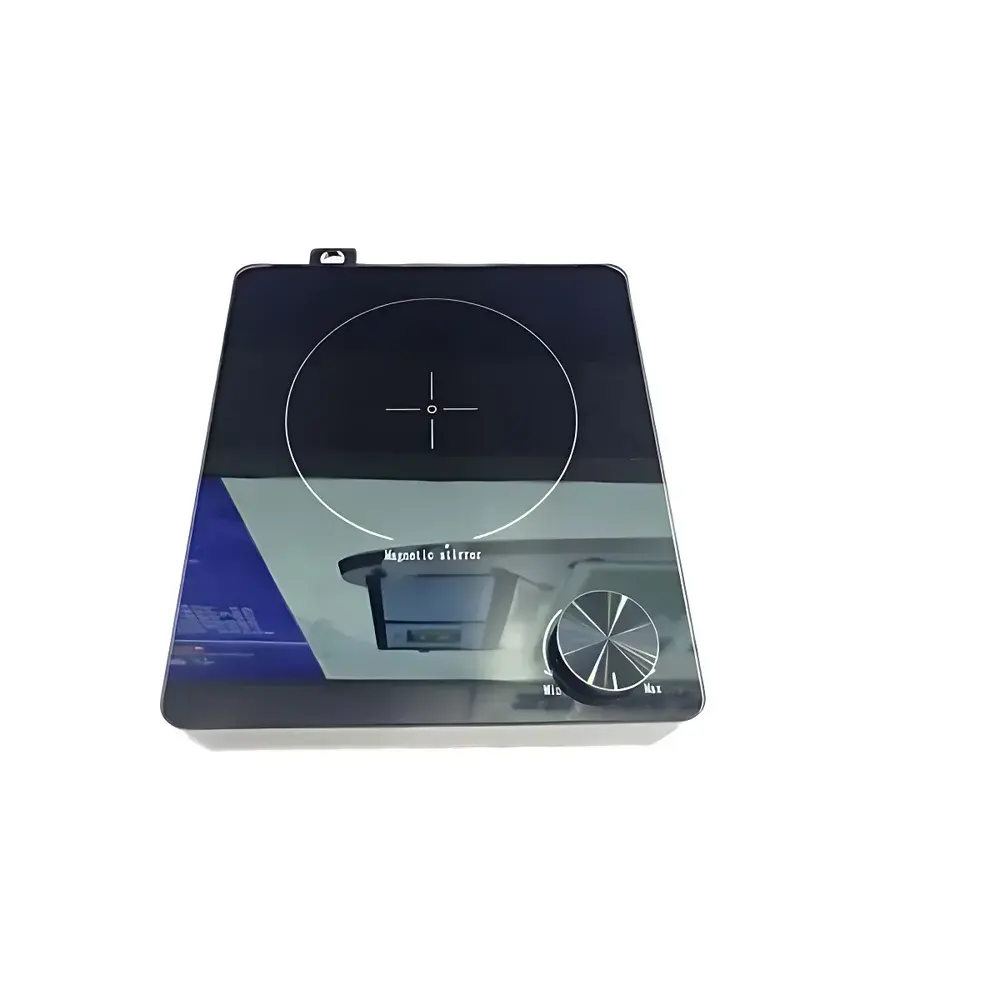
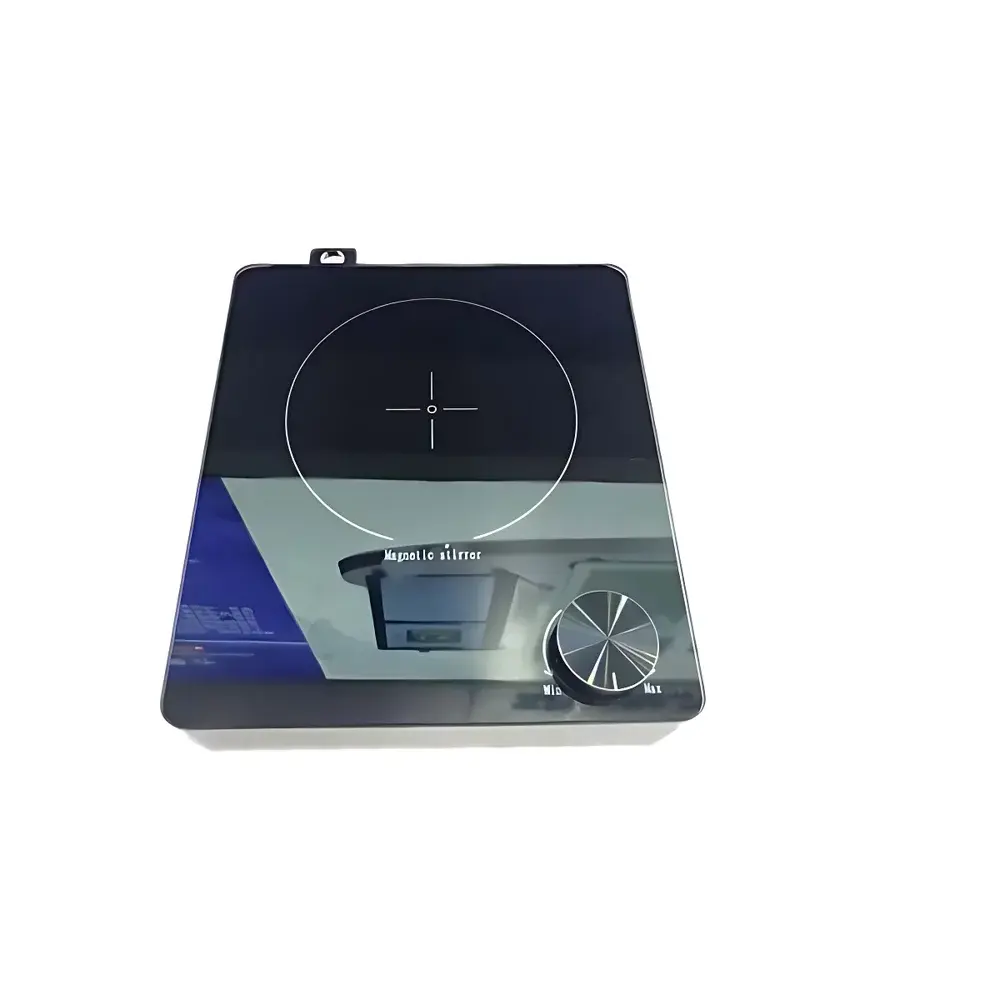
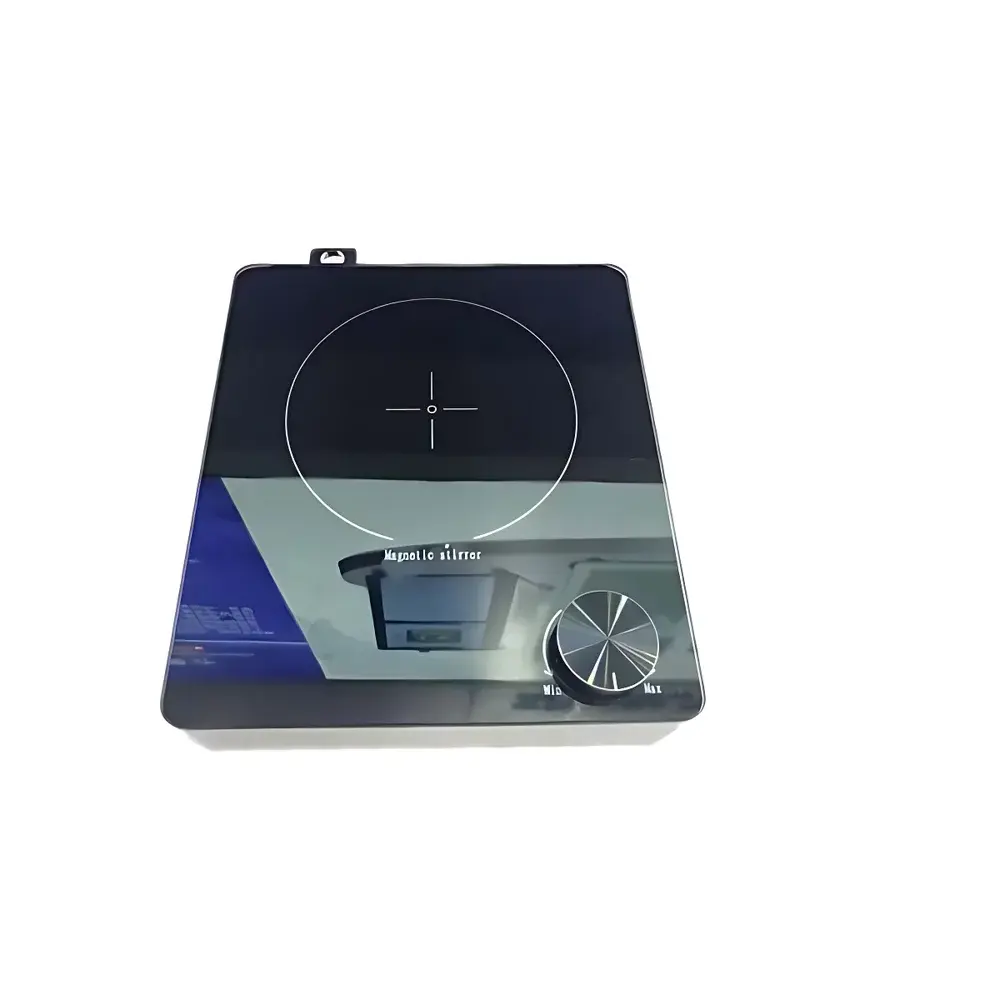
Gongyi Yuyi RTC-C Heavy-Duty Magnetic Stirrer
| Brand | Gongyi Yuyi Instrument |
|---|---|
| Origin | Henan, China |
| Manufacturer Type | Authorized Distributor |
| Country of Origin | China |
| Model | RTC-C |
| Instrument Type | Magnetic Stirrer |
| Max. Stirring Volume | 20 L |
| Speed Range | 0–2500 rpm |
| Heating Function | Integrated PID Temperature Control (Optional) |
| Compliance | CE-marked per EN 61010-1 for laboratory use |
Overview
The Gongyi Yuyi RTC-C Heavy-Duty Magnetic Stirrer is an engineered laboratory instrument designed for robust, continuous mixing of low-to-medium viscosity liquids and heterogeneous solid–liquid suspensions. It operates on the fundamental principle of magnetic coupling: a rotating permanent magnet or electromagnetic drive beneath the work surface generates a time-varying magnetic field, inducing synchronous rotation in a PTFE- or glass-coated magnetic stir bar placed inside the vessel. This contactless torque transfer eliminates mechanical shaft seals, minimizing contamination risk and enabling operation under sealed or inert-atmosphere conditions. Unlike basic stirrers, the RTC-C integrates high-torque motor architecture and thermally stabilized drive electronics to sustain stable rotational output across its full 0–2500 rpm range—even at maximum load (20 L aqueous or organic media). Its structural design prioritizes thermal management and vibration damping, ensuring long-term operational stability during extended protocols such as dissolution testing, catalyst suspension, or buffer equilibration.
Key Features
- High-torque DC motor with closed-loop speed regulation, delivering consistent rotational performance across the entire 0–2500 rpm range with ±2 rpm repeatability (at 1000 rpm, 1 L water, 25°C ambient)
- Stainless steel housing with IP20-rated enclosure, corrosion-resistant top plate, and integrated heat dissipation fins for sustained operation
- Programmable digital controller with LED display showing real-time speed and—when equipped with heating module—temperature setpoint and actual bath temperature
- Adjustable ramp-up/down profiles to prevent splashing or vortex instability during startup/shutdown
- Overheat protection circuitry that automatically disables heating if surface temperature exceeds 350°C (heating model) or motor winding temperature exceeds safe thresholds
- Compatibility with standard laboratory glassware (round-bottom flasks, beakers, crystallizers) up to Ø150 mm base diameter
Sample Compatibility & Compliance
The RTC-C supports mixing of aqueous solutions, organic solvents (e.g., ethanol, acetone, ethyl acetate), polymer solutions (up to 5% w/v), and fine-particle suspensions (e.g., TiO₂, CaCO₃, activated carbon). It is not intended for highly viscous fluids (>10,000 mPa·s), abrasive slurries, or exothermic reactions requiring active cooling. All electrical components comply with EN 61010-1:2010 for safety in laboratory environments. The device meets EMC requirements per EN 61326-1:2013 and carries CE marking. While not certified to ISO/IEC 17025 or GLP-specific validation standards out-of-box, its digital interface supports manual calibration logging and audit-ready parameter recording when used within validated lab workflows.
Software & Data Management
The RTC-C operates via standalone front-panel control; no proprietary software or PC connectivity is required. However, its digital interface enables manual documentation of operating parameters (speed setpoint, duration, temperature setpoint) for inclusion in electronic lab notebooks (ELNs) or paper-based SOP records. For laboratories adhering to FDA 21 CFR Part 11 requirements, external data loggers (e.g., USB-connected thermocouple + tachometer systems) may be employed to capture time-stamped speed and temperature traces—provided such systems are qualified per internal validation protocols. The unit’s firmware does not store historical run data or support user account management.
Applications
- Preparation and homogenization of calibration standards and reference solutions in environmental testing (e.g., EPA Method 300.0, ASTM D8084)
- Buffer and media preparation in pharmaceutical QC labs, including phosphate-buffered saline (PBS) and microbial growth media
- Catalyst dispersion in R&D-scale hydrogenation or oxidation studies
- Extraction protocol support in food safety labs (e.g., pesticide residue analysis per AOAC 2007.01)
- Crystallization initiation and supersaturation control in fine chemical synthesis
- Waste stream homogenization prior to ICP-MS or AAS analysis in municipal and industrial wastewater labs
FAQ
Does the RTC-C support external temperature probe feedback for precise bath control?
Yes—when configured with the optional heating module, it accepts input from a PT100 sensor placed directly in the vessel, enabling PID-controlled temperature regulation within ±0.5°C accuracy (at 25–100°C range).
Can it operate continuously for 72+ hours?
Yes—its thermally optimized motor and passive cooling design permit unattended operation over extended durations, provided ambient temperature remains ≤30°C and ventilation is unobstructed.
Is the stir bar included with the unit?
A standard 30 mm × 8 mm PTFE-coated stir bar is supplied; additional sizes (15–60 mm) and chemically resistant variants (e.g., AlNiCo + PFA coating) are available separately.
What is the maximum allowable container weight?
The platform supports vessels weighing up to 5 kg—including liquid, glassware, and stir bar—without compromising speed stability or positional accuracy.
Does it meet explosion-proof requirements for solvent-heavy environments?
No—the RTC-C is not rated for Class I, Division 1 hazardous locations; users handling flammable solvents must implement supplemental engineering controls (e.g., fume hood operation, static grounding).



