
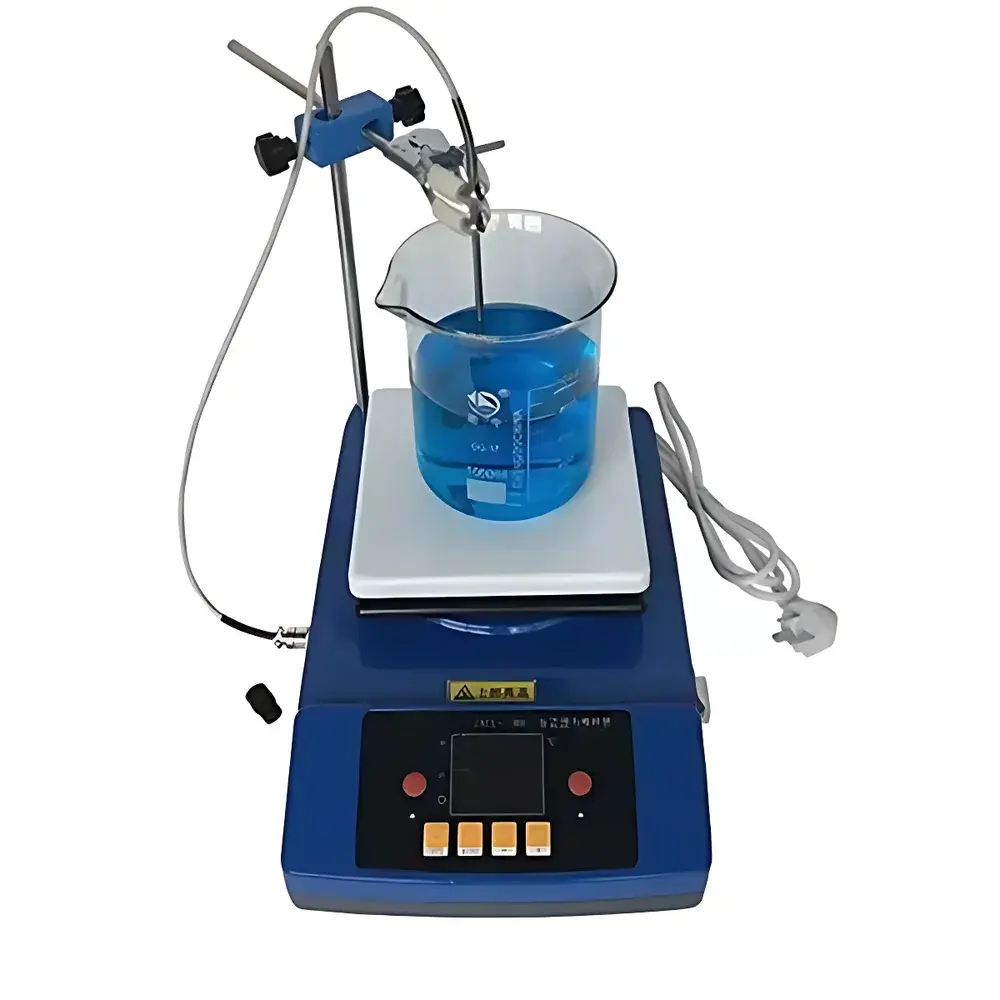
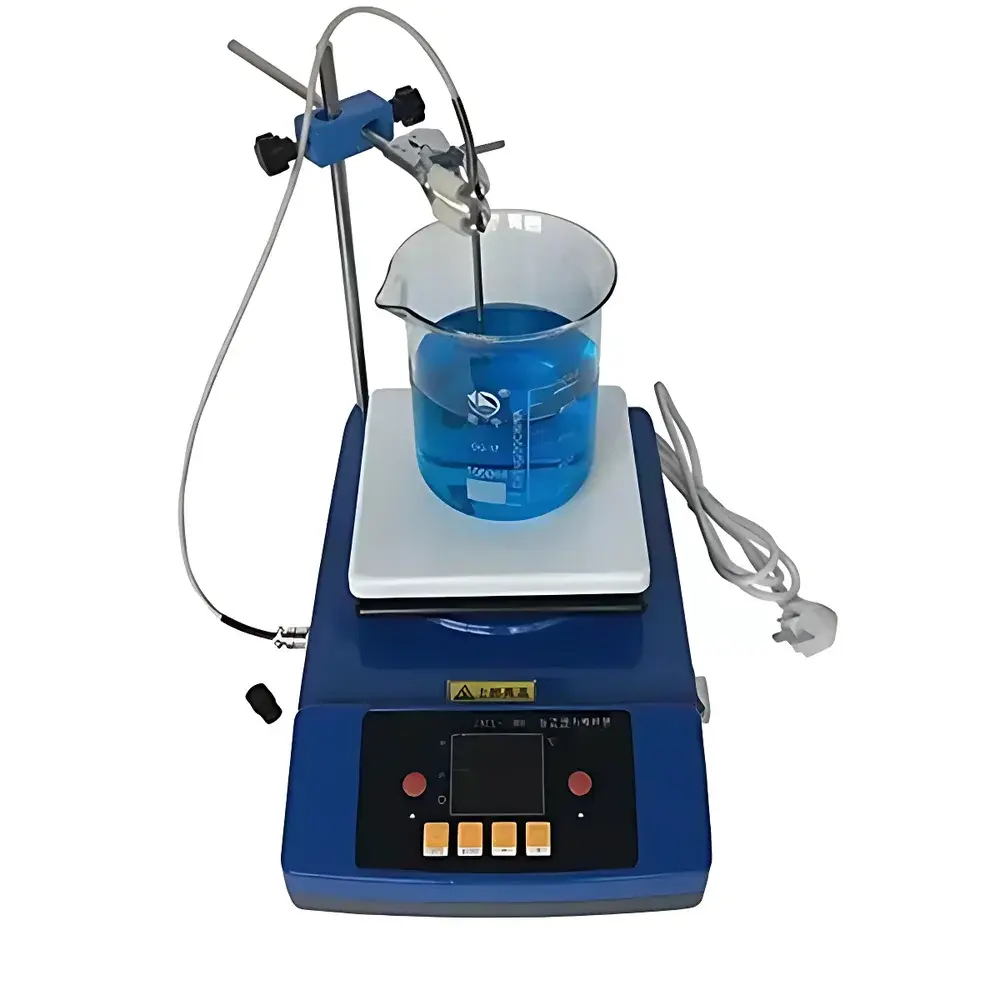
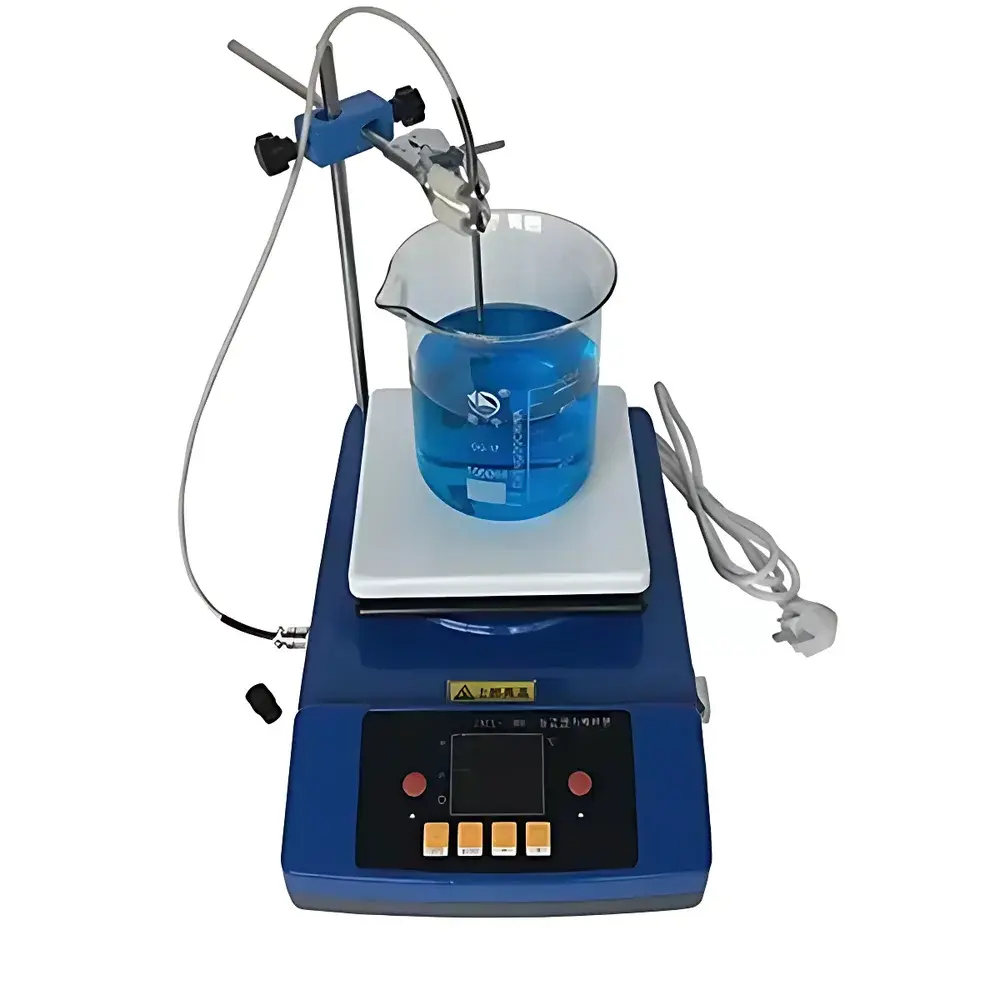
Gongyi Yuyi ZNCL-BS Digital Display Heating Magnetic Stirrer
| Brand | Gongyi Yuyi Instrument |
|---|---|
| Origin | Henan, China |
| Model | ZNCL-BS |
| Stirrer Type | Heating Magnetic Stirrer |
| Max. Stirring Volume | 50–5000 mL |
| Speed Range | 50–1800 rpm |
| Temperature Control Range | Ambient to 380 °C |
| Heating Plate Options | 140×140 mm, 180×180 mm, 230×230 mm, 280×280 mm |
| Heating Power | 260–350 W (model-dependent) |
| Motor Power | 40 W (DC 14–24 V) |
| Control Method | Fuzzy PID Algorithm with Dual Digital Display |
| Temperature Accuracy | ±1 °C |
| Sensor Type | Dual Thermocouple (Internal & External) |
| Voltage Range | 160–240 V AC, 50 Hz |
| Safety Features | Thermocouple Break Protection, Over-Temperature Cut-off, Insulated Metal Housing |
| Panel Material | Black Crystal Ceramic or Enamel-Coated Aluminum |
| Operating Time | Continuous |
| Compliance | Designed for general laboratory use under GLP-aligned workflows |
Overview
The Gongyi Yuyi ZNCL-BS Digital Display Heating Magnetic Stirrer is an engineered benchtop instrument designed for precise, simultaneous temperature control and magnetic agitation in chemical synthesis, sample preparation, dissolution testing, and routine analytical workflows. It operates on the principle of electromagnetic induction—where a rotating magnetic field generated beneath the heating plate couples with a magnetic stir bar immersed in the sample—to deliver consistent rotational motion without mechanical contact. Integrated resistive heating elements (Cr20Ni80 alloy wire) enable rapid thermal response and uniform surface temperature distribution across multiple plate sizes. The system employs a fuzzy PID control algorithm to minimize overshoot and stabilize setpoints within ±1 °C, supporting applications requiring thermal stability from ambient up to 380 °C—well beyond standard hotplate-stirrer limits.
Key Features
- Fuzzy PID temperature regulation with auto-tuning capability and dual digital display for independent monitoring of setpoint and real-time plate temperature
- Black crystal ceramic or enamel-coated aluminum heating surface—chemically inert, scratch-resistant, and thermally stable at sustained high temperatures
- Brushless DC motor (40 W, 14–24 V DC) delivering smooth, low-noise operation across the full 50–1800 rpm range with stepless speed adjustment
- Dual thermocouple input (internal + external probe support) enabling accurate feedback control and cross-validation of sample or vessel temperature
- Wide-input voltage compatibility (160–240 V AC, 50 Hz) ensures stable performance in variable power environments common in multi-site laboratories
- Comprehensive safety architecture including thermocouple break detection, over-temperature cut-off, and insulated metal housing rated for continuous duty
- Ergonomic 30° inclined control panel optimized for both seated and standing operator positions, with tactile single-button interface
- Four standard plate dimensions (140×140 mm, 180×180 mm, 230×230 mm, 280×280 mm) to accommodate diverse vessel geometries—from small vials to 5 L reaction flasks
Sample Compatibility & Compliance
The ZNCL-BS accommodates a broad range of container types—including borosilicate glass beakers, round-bottom flasks, crystallization dishes, and non-magnetic metallic or polymer vessels—provided they are compatible with magnetic stirring and thermal exposure up to 380 °C. Its design supports ISO/IEC 17025-aligned method validation when paired with calibrated thermocouples and traceable stir bar geometry. While not certified to specific regulatory standards (e.g., FDA 21 CFR Part 11), its dual-sensor architecture, audit-ready temperature logging (via optional external data acquisition), and deterministic control logic make it suitable for GLP-compliant environments where instrument performance verification is documented per SOP. The unit meets general electrical safety requirements per IEC 61010-1 for laboratory equipment.
Software & Data Management
The ZNCL-BS operates as a standalone analog-digital hybrid controller with no embedded firmware or network interface. All operational parameters—including speed, temperature setpoint, and real-time readings—are displayed locally via dual LED screens. For integration into regulated workflows, users may connect external thermocouples and data loggers compliant with ASTM E2877 or USP guidelines to record time-stamped temperature and speed profiles. The unit’s analog control outputs (e.g., 0–5 V or 4–20 mA signals, available on select configurations) allow synchronization with centralized lab management systems or PLC-based process controllers. No proprietary software is required; calibration and verification procedures follow manufacturer-recommended protocols using NIST-traceable references.
Applications
- Controlled-temperature dissolution studies in pharmaceutical QC labs (e.g., USP Apparatus II simulation)
- Homogenization of viscous polymer solutions, catalyst slurries, or nanoparticle dispersions prior to rheological or spectroscopic analysis
- Accelerated aging tests in materials science, where thermal ramping and constant agitation simulate long-term environmental exposure
- Sample digestion and extraction in environmental and food safety labs—particularly for heavy metal analysis requiring open-vessel heating
- Preparation of calibration standards and buffer solutions under reproducible thermal-agitation conditions
- Teaching laboratories requiring robust, intuitive instrumentation for undergraduate chemistry and chemical engineering curricula
FAQ
What is the maximum recommended vessel size for stable stirring at 1800 rpm?
Stable operation at full speed is validated for cylindrical glass vessels up to 2 L volume when using a 30 mm PTFE-coated stir bar; larger volumes (up to 5 L) require reduced speeds (≤800 rpm) and optimized bar geometry.
Can the ZNCL-BS maintain 380 °C uniformly across the entire heating surface?
Surface temperature uniformity is ±8 °C across 90% of the active area at 380 °C, per factory thermal mapping reports; actual gradient depends on vessel thermal mass and ambient airflow.
Is external temperature probe input mandatory for accurate sample temperature control?
No—it is optional but strongly recommended for process-critical applications; internal sensor regulates plate temperature only, while external probe feedback enables closed-loop sample temperature control.
Does the unit support programmable ramp-soak temperature profiles?
No—the ZNCL-BS implements fixed-setpoint control only; programmable thermal profiles require integration with external PID controllers or PC-based automation systems.
What maintenance is required to ensure long-term accuracy?
Annual verification of thermocouple calibration against a reference thermometer and visual inspection of ceramic plate integrity are advised; no user-serviceable components require periodic replacement under normal operating conditions.



