
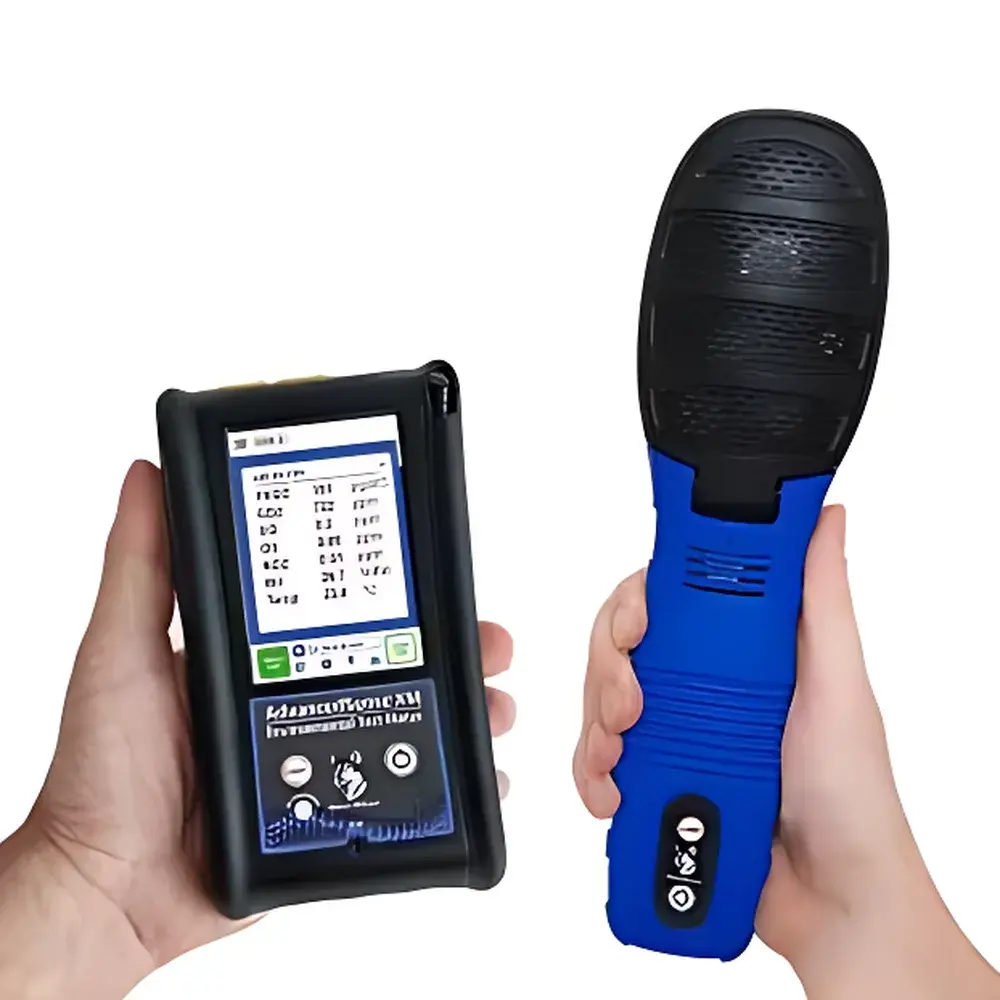
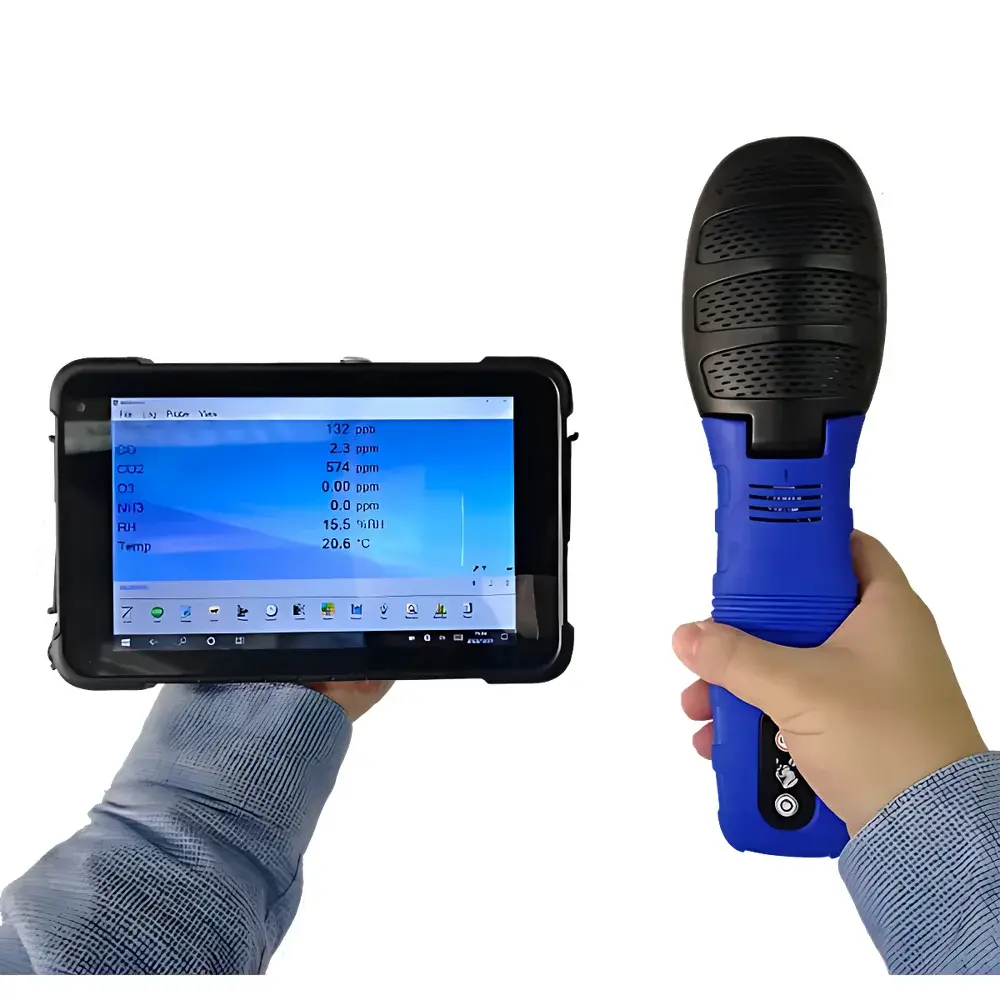
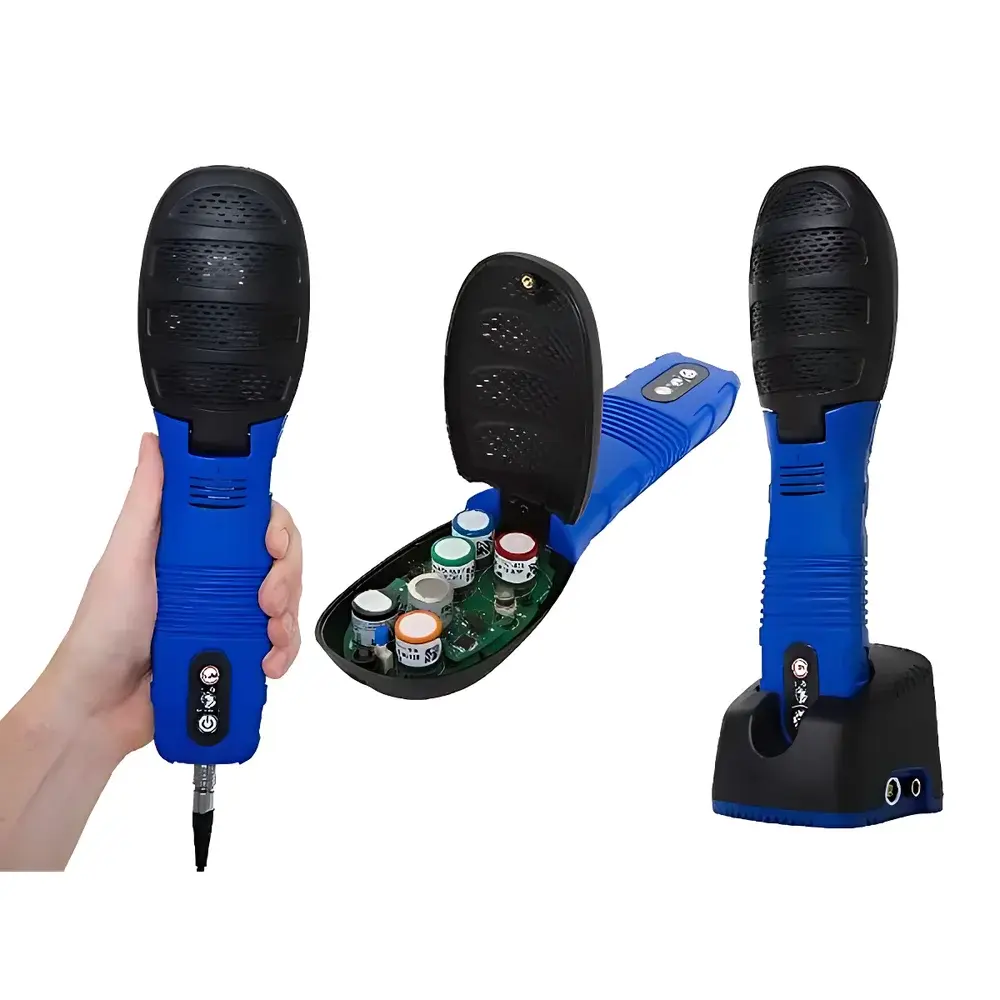
Graywolf DSII-3 Handheld Photoionization Detector (PID)
| Brand | Graywolf |
|---|---|
| Model | DSII-3 |
| Detection Principle | Photoionization Detection (PID) |
| Instrument Type | Portable |
| Typical Configuration | Total Volatile Organic Compounds (TVOC) Analyzer |
| Sampling Method | Diffusion |
| Measurement Range | 0–50 ppm (isobutylene equivalent) |
| Resolution | 1 ppb |
| Accuracy | ±3% of reading |
| Response Time (T90) | <60 seconds |
| Origin | Beijing, China |
| Distribution Status | Authorized Distributor |
| Country of Manufacture | China |
| Unit Conversion Options | ppm, ppb, mg/m³, µg/m³, % vol |
Overview
The Graywolf DSII-3 Handheld Photoionization Detector (PID) is a precision-engineered portable instrument designed for real-time detection and quantification of volatile organic compounds (VOCs) in ambient air, indoor environments, and occupational settings. Utilizing ultraviolet (UV) light at 10.6 eV photon energy, the PID sensor ionizes VOC molecules with ionization potentials below this threshold—enabling selective, non-destructive, and highly responsive measurement without chemical consumables or flame-based excitation. Unlike flame ionization detectors (FIDs), the DSII-3 operates on solid-state photoionization physics, eliminating combustion risks and enabling safe use in confined, potentially explosive atmospheres (Class I, Division 2 compliant when used per manufacturer guidelines). Its low-noise analog front-end and temperature-compensated microcontroller architecture ensure stable baseline performance and sub-ppb resolution across varying environmental conditions—critical for IAQ benchmarking, leak detection, remediation verification, and regulatory screening.
Key Features
- Modular multi-parameter platform: Single host supports simultaneous connection of up to eight interchangeable smart probes—including TVOC PID, formaldehyde (HCHO), CO₂, CO, O₂, NH₃, SO₂, O₃, NO₂, H₂S, Cl₂, and environmental sensors (temperature, relative humidity, differential pressure, airflow velocity).
- Flexible configuration: Users may add, swap, or calibrate probes in-field without firmware reflash or service intervention; each probe retains independent calibration history and NIST-traceable coefficients.
- Dual operational modes: Real-time spot monitoring with live graphical display (bar graph + numeric overlay) and time-synchronized logging; or scheduled continuous acquisition (intervals from 1 sec to 24 hrs) with onboard storage for >1 million data points.
- Multi-unit concentration reporting: Instant conversion between ppm, ppb, mg/m³, µg/m³, and % volume—automatically adjusted for molecular weight, temperature, and pressure using embedded ideal gas law calculations.
- Wolf OS embedded operating system: Linux-based real-time OS with GUI optimized for glove-compatible touch operation; supports voice annotations, geo-tagged image capture, and timestamped text notes synchronized to measurement records.
Sample Compatibility & Compliance
The DSII-3 PID sensor exhibits broad sensitivity across aliphatic, aromatic, chlorinated, and oxygenated VOCs—including benzene, toluene, xylene, styrene, acetone, ethanol, and ethyl acetate—while maintaining minimal cross-sensitivity to methane, CO₂, and water vapor. It complies with ISO 16000-29 (indoor air—determination of VOCs using PID), meets EN 15251:2012 criteria for IAQ monitoring instrumentation, and supports audit-ready data integrity per GLP and ISO/IEC 17025 requirements. Data files include full metadata (probe serial numbers, calibration dates, operator ID, GPS coordinates if enabled), ensuring traceability for regulatory submissions under EPA Method TO-15, ASTM D5197, and EU Directive 2004/107/EC.
Software & Data Management
Data export is supported via USB-C, Bluetooth 5.0, or optional Wi-Fi module to Graywolf’s cloud-enabled EnviroLink Analytics Suite. The software provides automated report generation (PDF/CSV/XLSX), statistical trend analysis (rolling averages, percentile distributions, exceedance alerts), and customizable dashboards aligned with ASHRAE Standard 62.1, LEED IEQ credits, and WELL Building Standard v2. All data transactions adhere to FDA 21 CFR Part 11 principles: electronic signatures, audit trails, role-based access control, and immutable record retention. Firmware updates are digitally signed and delivered over secure HTTPS channels.
Applications
- Indoor Air Quality (IAQ) assessment in offices, schools, hospitals, and residential buildings per ANSI/ASHRAE Standard 62.1 and ISO 16000 series.
- Occupational exposure monitoring for compliance with OSHA PELs, ACGIH TLVs®, and EU-OELs—particularly during solvent handling, painting, cleaning, or maintenance activities.
- Environmental site assessments: rapid screening of soil vapor intrusion, landfill perimeter monitoring, and post-remediation verification.
- Public health surveillance: screening of transportation hubs, hotels, museums, and correctional facilities for VOC accumulation events.
- Building commissioning and HVAC performance validation—correlating VOC spikes with ventilation rate changes, filter efficiency loss, or material off-gassing events.
FAQ
What VOCs can the DSII-3 detect?
The 10.6 eV lamp detects most VOCs with ionization potentials ≤10.6 eV—including aromatics, ketones, aldehydes, amines, and sulfur compounds—but not methane, ethane, or Freons.
Is calibration required before each use?
Field zeroing is recommended prior to critical measurements; full span calibration with isobutylene standard is advised every 30 days or after exposure to high-concentration VOCs.
Can the instrument operate in high-humidity environments?
Yes—the PID sensor includes active humidity compensation; however, condensation on the lamp window must be avoided; optional hydrophobic filter kits are available for >90% RH applications.
Does the DSII-3 support external pump integration?
No—the unit relies on passive diffusion sampling; for active sampling, Graywolf offers the optional FP-1000 flow probe with integrated pump and flow meter.
How is data security ensured during wireless transmission?
Bluetooth and Wi-Fi connections use AES-128 encryption; cloud uploads require TLS 1.2+ and OAuth 2.0 authentication; local storage employs encrypted SQLite databases with FIPS 140-2 validated modules.







