
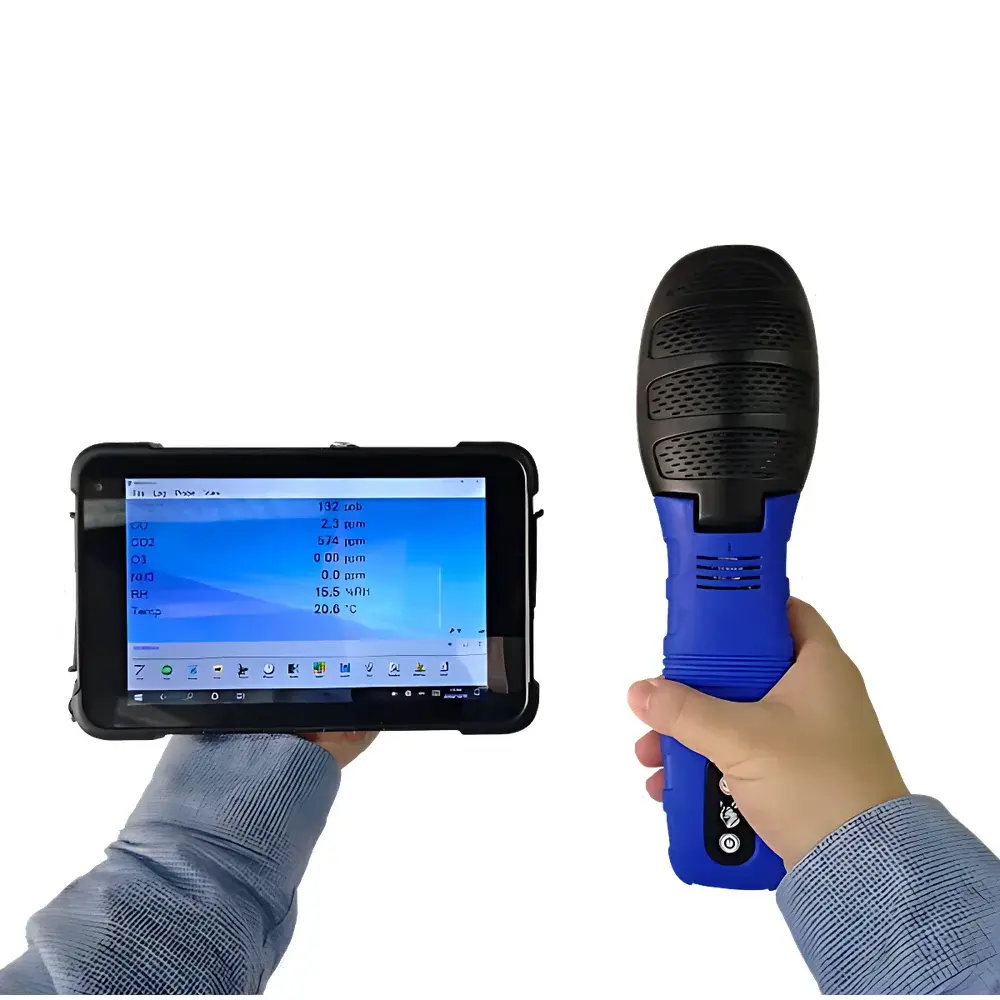
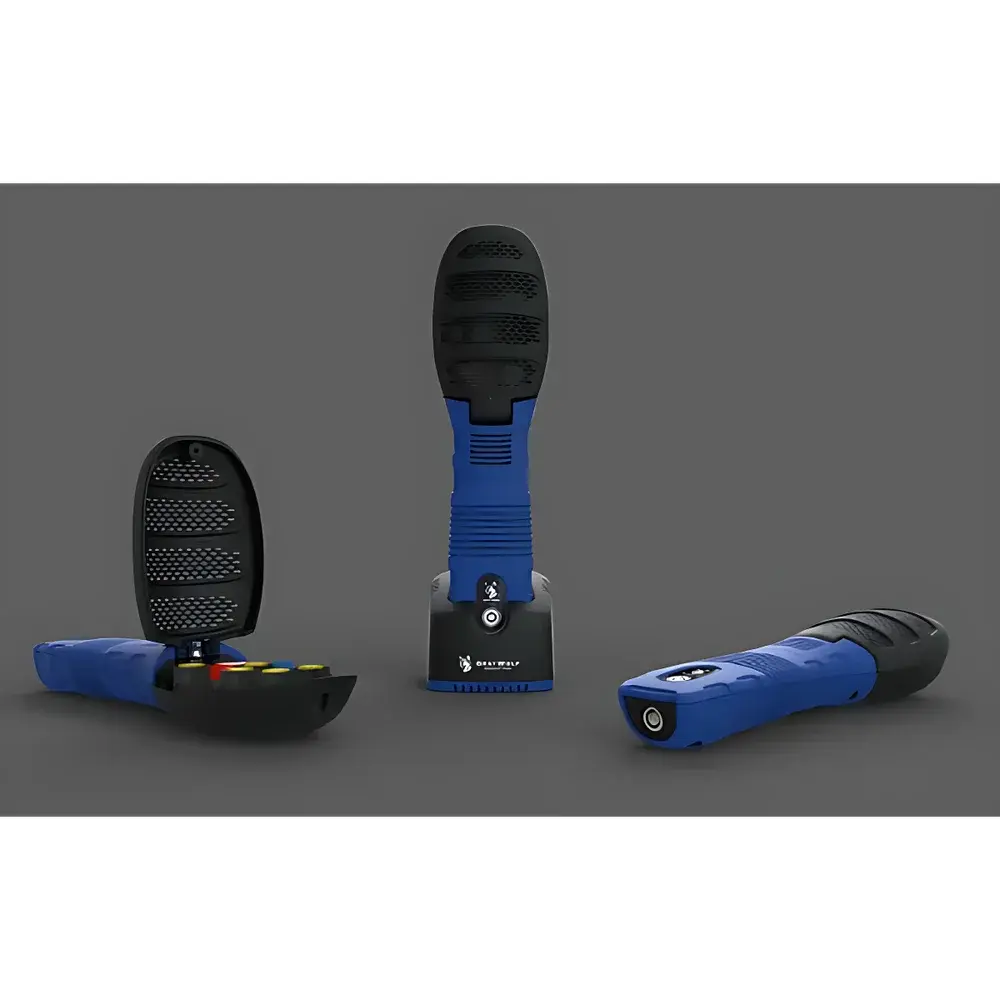
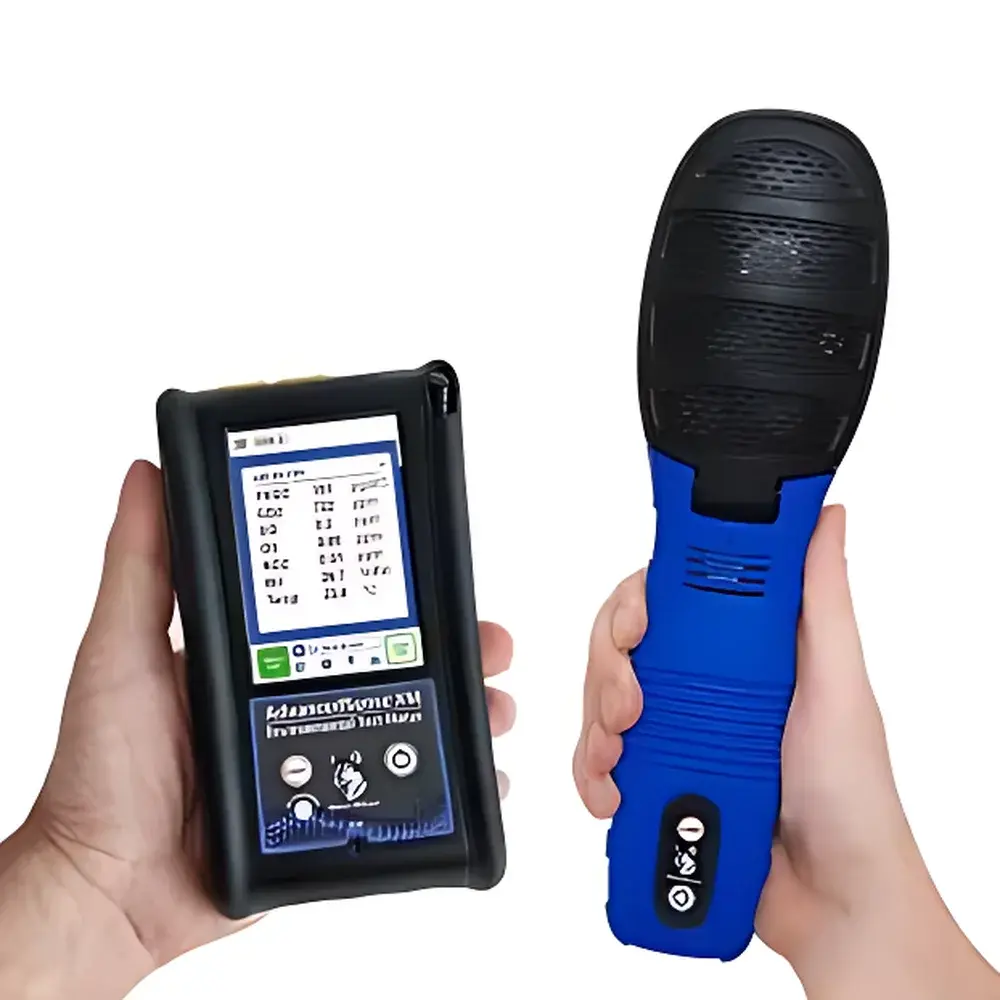
Graywolf DSII-3 Portable TVOC Detector with PID Sensor
| Brand | Graywolf |
|---|---|
| Model | DSII-3 |
| Detection Principle | Photoionization Detection (PID) |
| Instrument Type | Portable |
| Sampling Method | Diffusion |
| Measurement Range | 0–50 ppm |
| Resolution | 1 ppb |
| Accuracy | ±3% of reading |
| Response Time (t₉₀) | < 60 s |
| Operating Environment | 0–50 °C, 0–95% RH (non-condensing) |
| Data Logging | Internal memory + SD card export |
| Power Supply | Rechargeable Li-ion battery (up to 12 h continuous operation) |
| Compliance | CE, RoHS, ATEX optional (Zone 2/22) |
Overview
The Graywolf DSII-3 Portable TVOC Detector is a field-deployable, real-time monitoring instrument engineered for precision measurement of total volatile organic compounds (TVOC) in indoor and occupational environments. It employs a high-sensitivity 10.6 eV ultraviolet photoionization detector (PID), enabling selective ionization of VOCs with ionization potentials below this energy threshold—including benzene, toluene, xylene, aldehydes, ketones, and many halogenated hydrocarbons—while excluding common interferents such as methane, CO₂, and water vapor. Unlike flame ionization detectors (FIDs), the PID sensor operates without combustion, ensuring intrinsic safety, low power consumption, and stable baseline performance across variable ambient conditions. The DSII-3 is designed for both spot-check diagnostics and time-weighted average (TWA) exposure assessment, supporting compliance with OSHA, NIOSH, and EU Directive 2004/101/EC on indoor air quality.
Key Features
- Modular multi-parameter platform: Single host accepts up to eight interchangeable smart probes simultaneously—including TVOC, formaldehyde (HCHO), CO₂, CO, O₂, NH₃, SO₂, O₃, NO₂, H₂S, temperature, relative humidity, differential pressure, airflow velocity, and particulate matter (PM₁₀/PM₂.₅).
- Expandable architecture: Users may add or replace sensors in-field without recalibration; each probe features embedded calibration coefficients and automatic recognition upon connection.
- Dual operational modes: Real-time display with instantaneous logging (1–60 s intervals) or scheduled long-term monitoring (up to 30 days at 1-min intervals) with timestamped data stored internally and exportable via microSD card.
- Flexible concentration units: Switch between ppm, ppb, mg/m³, µg/m³, and %LEL directly on-device—unit conversions apply NIST-traceable molecular weight and ideal gas law assumptions.
- Wolf OS embedded operating system: Proprietary real-time OS supports on-device annotation (text notes, voice memos, JPEG image capture), customizable alarm thresholds (audible/visual/vibratory), and configurable data visualization (trend graphs, histograms, scatter plots).
Sample Compatibility & Compliance
The DSII-3 is validated for use in non-explosive atmospheres (standard configuration); optional ATEX-certified housing (II 2G Ex ib IIB T4 Gb / II 2D Ex ib IIIB T135°C Db) enables deployment in Zone 2/22 classified areas. All gas sensors undergo factory calibration against NIST-traceable standards (e.g., certified isobutylene for TVOC response factor). The instrument meets ISO 16000-29 (indoor air—determination of VOCs using PID), ASTM D6196 (selection of sorbents, sampling, and thermal desorption analysis), and supports GLP/GMP data integrity requirements through encrypted audit trails, user-access controls, and electronic signature capability (FDA 21 CFR Part 11 compliant when paired with Graywolf CloudLink software).
Software & Data Management
Data acquisition, post-processing, and reporting are managed via Graywolf CloudLink—a secure, browser-based platform compatible with Windows, macOS, and Linux. Raw binary files (.gwd) import automatically with full metadata (GPS coordinates, operator ID, calibration history, environmental conditions). Advanced analysis tools include baseline correction, peak integration, trend forecasting (moving averages, linear regression), and automated report generation (PDF/Excel) per ISO 17025 templates. Audit logs record every data modification, user login, and firmware update—retained for ≥10 years with configurable cloud or on-premise storage.
Applications
- Indoor Air Quality (IAQ) Assessment: Pre-occupancy verification, post-renovation off-gassing surveys, HVAC system validation, and mold-related VOC screening per ASHRAE Standard 62.1.
- Occupational Health Monitoring: Short-term exposure limit (STEL) and time-weighted average (TWA) evaluation in laboratories, printing facilities, paint booths, and semiconductor cleanrooms.
- Environmental Screening: Brownfield site characterization, landfill perimeter monitoring, and fugitive emission detection in petrochemical infrastructure.
- Public Health Surveillance: School and healthcare facility compliance audits, transportation hub air quality mapping, and wildfire smoke impact studies.
FAQ
What VOCs does the DSII-3 detect with its PID sensor?
The 10.6 eV lamp detects most VOCs with ionization potentials ≤10.6 eV—including aromatic hydrocarbons, aliphatic ketones, esters, and chlorinated solvents—but excludes methane, ethane, and CO₂.
Is field calibration required before each use?
Zero calibration is recommended prior to critical measurements using clean synthetic air; span calibration is advised every 30 days or after exposure to >100 ppm VOC concentrations.
Can the DSII-3 measure formaldehyde separately from total VOC?
Yes—when equipped with the dedicated electrochemical HCHO probe (optional), it provides selective, interference-compensated formaldehyde quantification independent of the PID channel.
Does the device support wireless data transmission?
Bluetooth 5.0 enables local telemetry to smartphones/tablets; LTE-M and LoRaWAN modules are available as OEM add-ons for remote networked deployments.
How is measurement traceability maintained?
Each unit ships with a NIST-traceable calibration certificate; sensor-specific response factors, zero drift logs, and calibration event records are embedded in every data file and synchronized to CloudLink.
Related Products







