
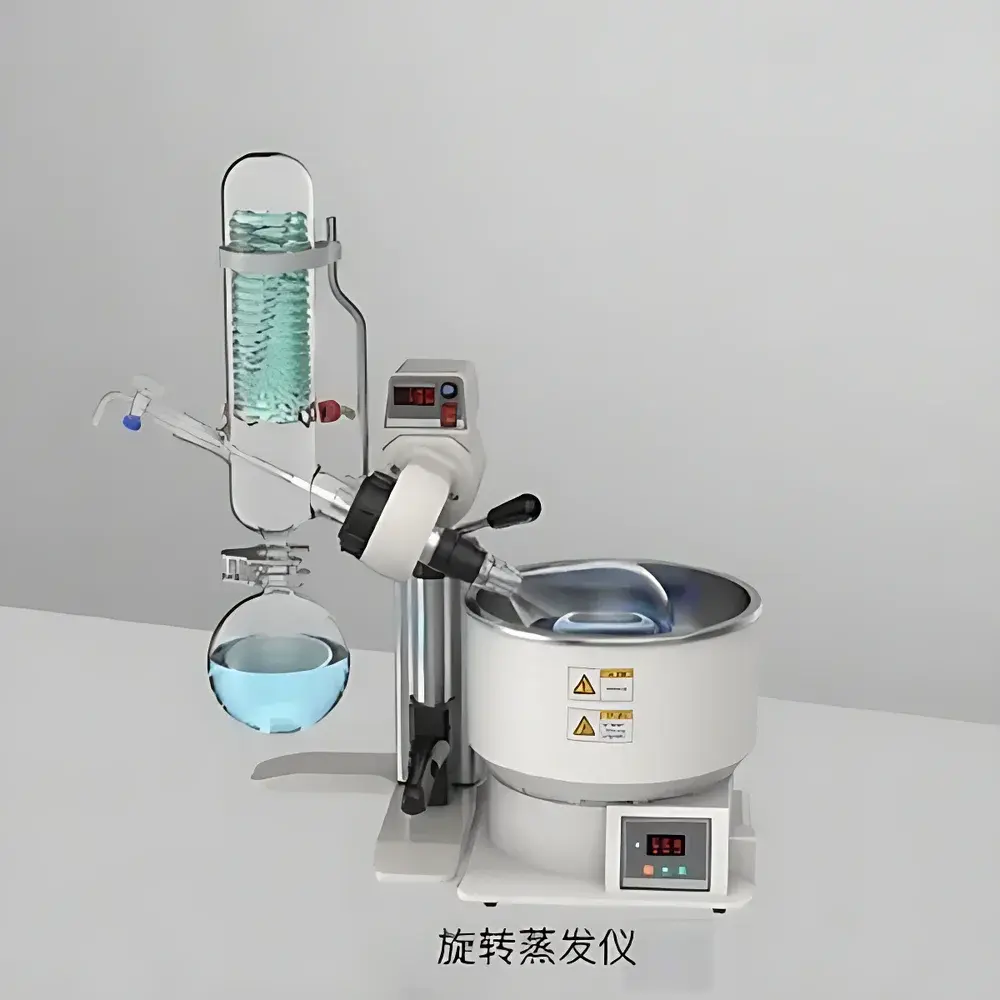
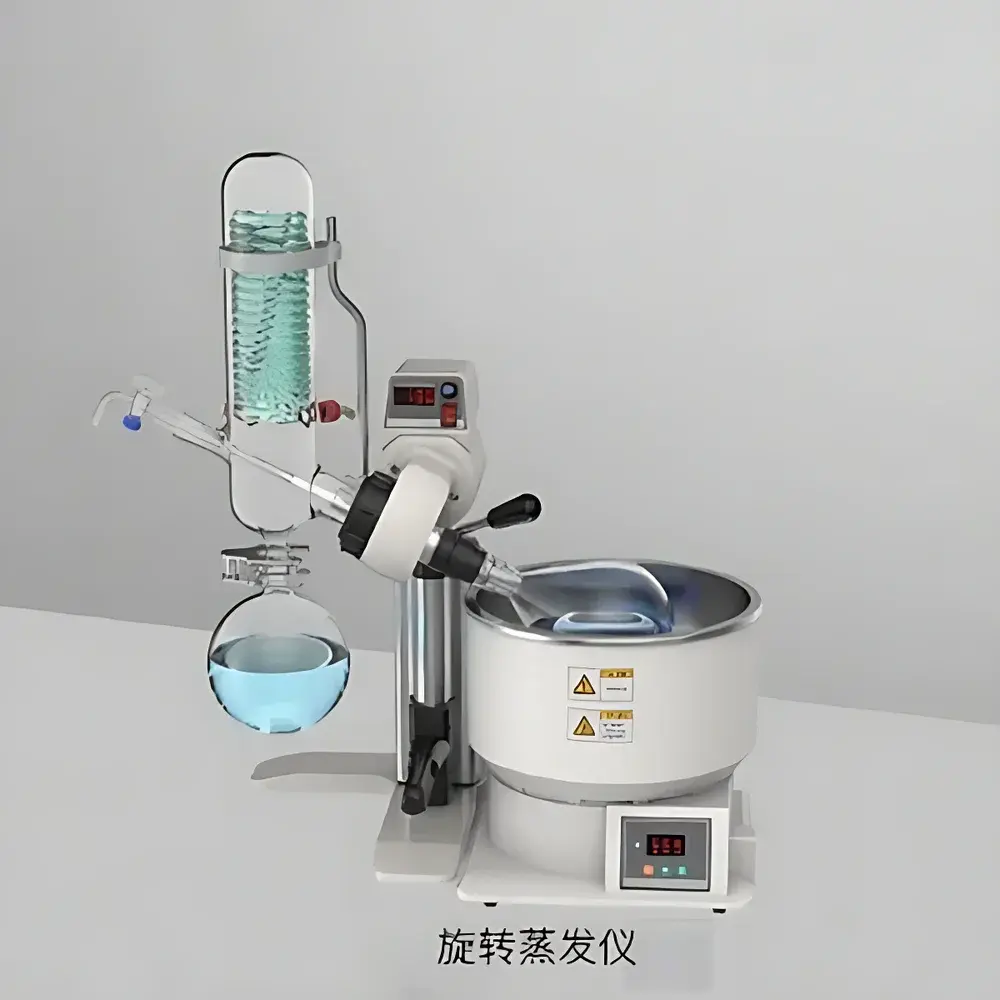
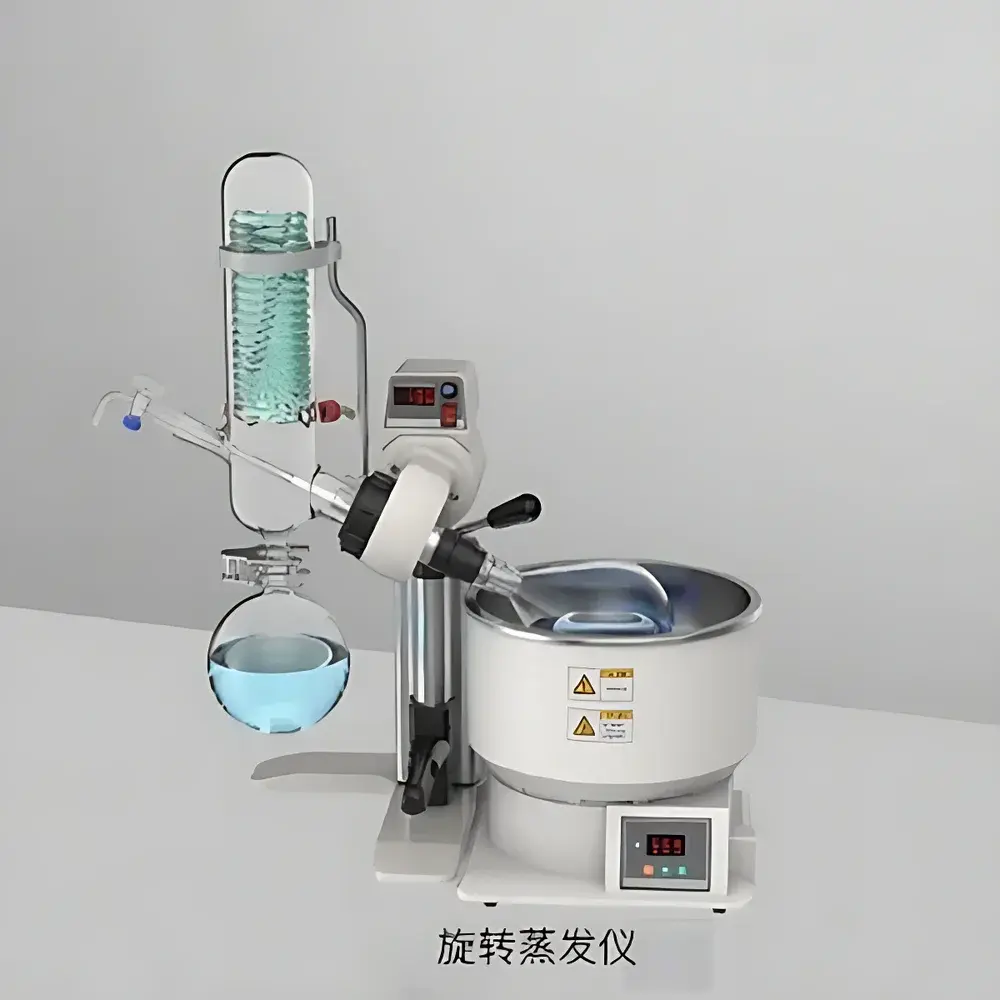
Great Wall R-1001VN Rotary Evaporator
| Brand | Great Wall |
|---|---|
| Origin | Henan, China |
| Manufacturer Type | Authorized Distributor |
| Country of Manufacture | China |
| Model | R-1001VN |
| Evaporation Flask Capacity | 500 mL or 1000 mL |
| Rotation Speed Range | 20–180 rpm |
| Condenser Cooling Area | 0.126 m² |
| Sealing Material | Dual-seal with PTFE and Fluoroelastomer (FKM) |
| Heating Bath Configuration | Separable from main unit |
| Temperature Control | PID-regulated |
| Drive System | Motor-coupled worm-gear transmission |
| Display | Digital speed readout |
| Safety Feature | Lower-positioned vacuum inlet on condenser |
Overview
The Great Wall R-1001VN Rotary Evaporator is an engineered solution for efficient solvent removal, concentration, and purification under reduced pressure. Operating on the principle of thin-film evaporation—where a rotating flask generates a uniform liquid film across its inner surface—the system enables rapid, controlled vaporization at lowered boiling points. This process minimizes thermal degradation of heat-sensitive compounds, making it indispensable in synthetic organic chemistry, natural product isolation, pharmaceutical formulation development, and analytical sample preparation. The R-1001VN integrates a separable thermostatic heating bath, precision rotational drive, and high-efficiency vertical condenser to deliver reproducible performance across routine and demanding laboratory workflows.
Key Features
- Dual-material sealing system: Combines chemically resistant PTFE (polytetrafluoroethylene) and FKM fluoroelastomer to ensure long-term vacuum integrity up to ≤0.1 mbar, compatible with aggressive solvents including chlorinated hydrocarbons, esters, and low-boiling ethers.
- Optimized condenser geometry: Vertical condenser with 0.126 m² effective cooling surface area, featuring a downward-positioned vacuum inlet that reduces risk of bumping and improves vapor path stability during high-rate evaporation.
- Modular architecture: Independent bath and mainframe design allows flexible integration with external chillers (e.g., recirculating coolers), vacuum sources (diaphragm or water aspirator pumps), and temperature controllers—supporting custom system configurations per ISO/IEC 17025-compliant lab setups.
- Precision motion control: Worm-gear motor drive ensures smooth, vibration-damped rotation from 20 to 180 rpm with digital speed feedback; adjustable lift mechanism provides linear vertical travel with mechanical lock at user-defined height positions.
- Stable thermal regulation: PID-controlled heating bath maintains setpoint accuracy within ±0.5 °C over time, with independent temperature display and programmable ramp-hold profiles suitable for gradient evaporation protocols.
Sample Compatibility & Compliance
The R-1001VN accommodates standard ground-glass jointed flasks (ISO K 29/32 or NS 29/32) in 500 mL and 1000 mL volumes, supporting both batch and semi-continuous operation. Its construction meets general electrical safety requirements per IEC 61010-1 for laboratory equipment. While not certified to UL or CE for standalone sale in North America or the EU, the unit is routinely deployed in GMP-aligned environments when integrated into validated systems—including those requiring audit trails for temperature, rotation, and vacuum parameters (per FDA 21 CFR Part 11 Annex 11 considerations). It complies with common lab-scale purification practices referenced in USP , ASTM E2654, and ISO 17025 clause 5.4.2 regarding equipment suitability verification.
Software & Data Management
The R-1001VN operates as a stand-alone analog-digital hybrid instrument with local parameter monitoring only. No embedded software or network interface is included; however, its analog outputs (0–10 V or 4–20 mA optional via third-party adapters) support connection to external data loggers or SCADA platforms for time-stamped recording of speed, bath temperature, and vacuum level. For labs implementing electronic lab notebooks (ELNs) or LIMS, manual entry of operational parameters is supported by standardized SOP templates aligned with GLP documentation standards.
Applications
- Solvent recovery and reuse in synthetic chemistry workflows
- Concentration of crude extracts prior to HPLC or GC analysis
- Removal of volatile reaction byproducts (e.g., THF, dichloromethane, ethyl acetate)
- Preparative-scale dehydration of hygroscopic intermediates
- Parallel evaporation support when coupled with multi-position heating baths
- Teaching laboratories for demonstrating phase equilibrium, Raoult’s law, and vacuum thermodynamics
FAQ
What vacuum level can the R-1001VN achieve with standard accessories?
When paired with a diaphragm vacuum pump rated for ≤0.095 mbar and using the dual-seal system, typical operating vacuum ranges between 1–10 mbar depending on solvent vapor pressure and cooling efficiency.
Is the heating bath interchangeable with other Great Wall models?
Yes—the R-1001VN uses standardized mounting interfaces compatible with Great Wall’s R-100 series baths, enabling cross-model reuse of thermostatic units and temperature controllers.
Can this unit be used for rotary distillation of high-boiling-point solvents like DMSO or NMP?
With appropriate cooling capacity (e.g., −20 °C recirculating chiller) and extended dwell time, it supports distillation of solvents with boiling points up to ~250 °C at 10 mbar, though prolonged exposure above 180 °C requires validation of seal longevity and bath stability.
Does the R-1001VN include a vacuum controller or pressure sensor?
No—vacuum regulation must be managed externally via a throttle valve or programmable vacuum controller; no built-in pressure transducer or feedback loop is provided.
What maintenance intervals are recommended for the PTFE/FKM seals?
Under normal use (≤8 hrs/day, non-corrosive solvents), inspect seals every 6 months; replace annually or after exposure to halogenated solvents or strong bases to maintain leak-tight performance.



