
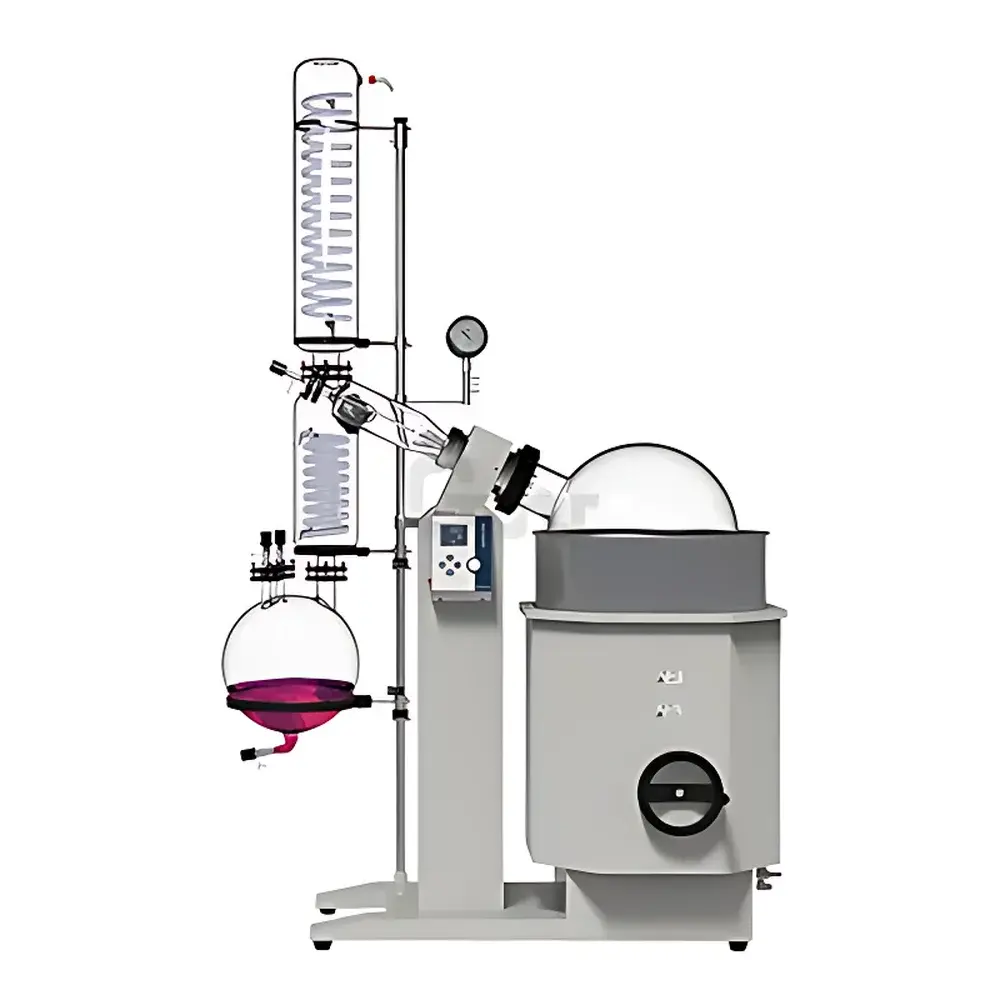
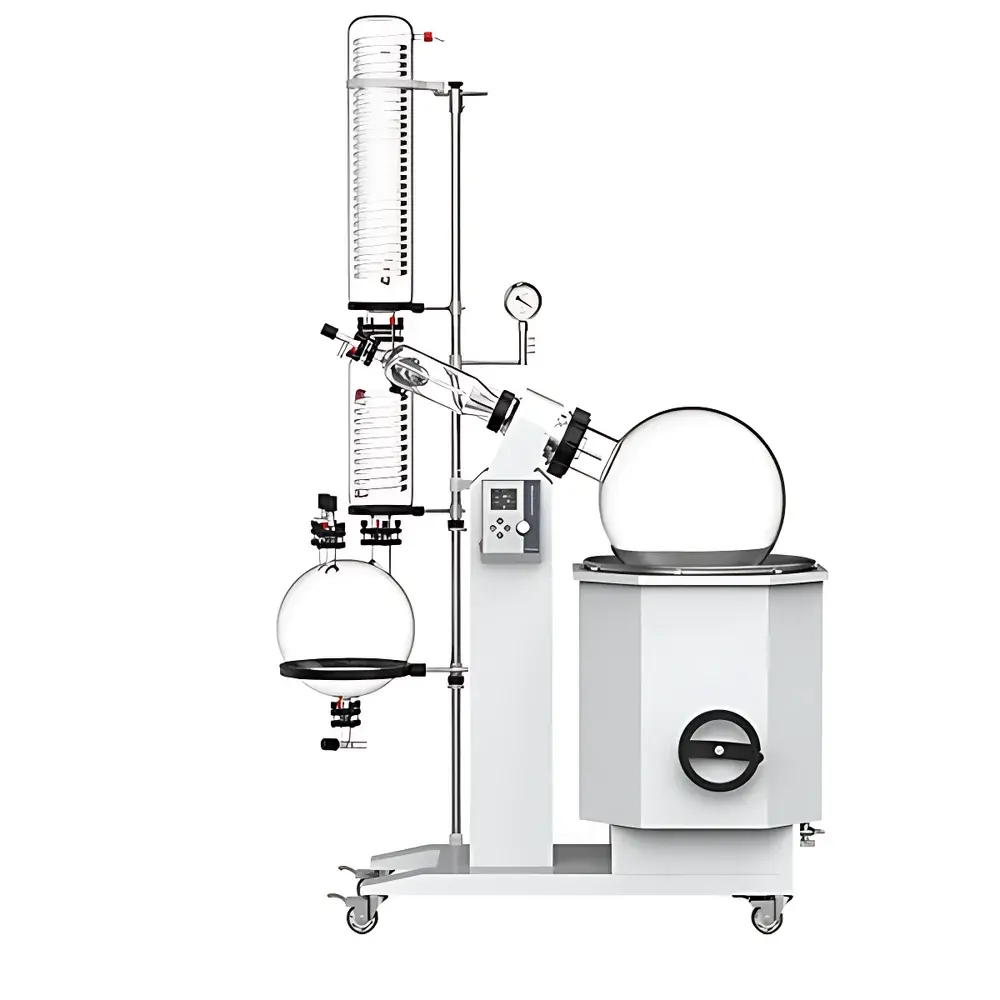
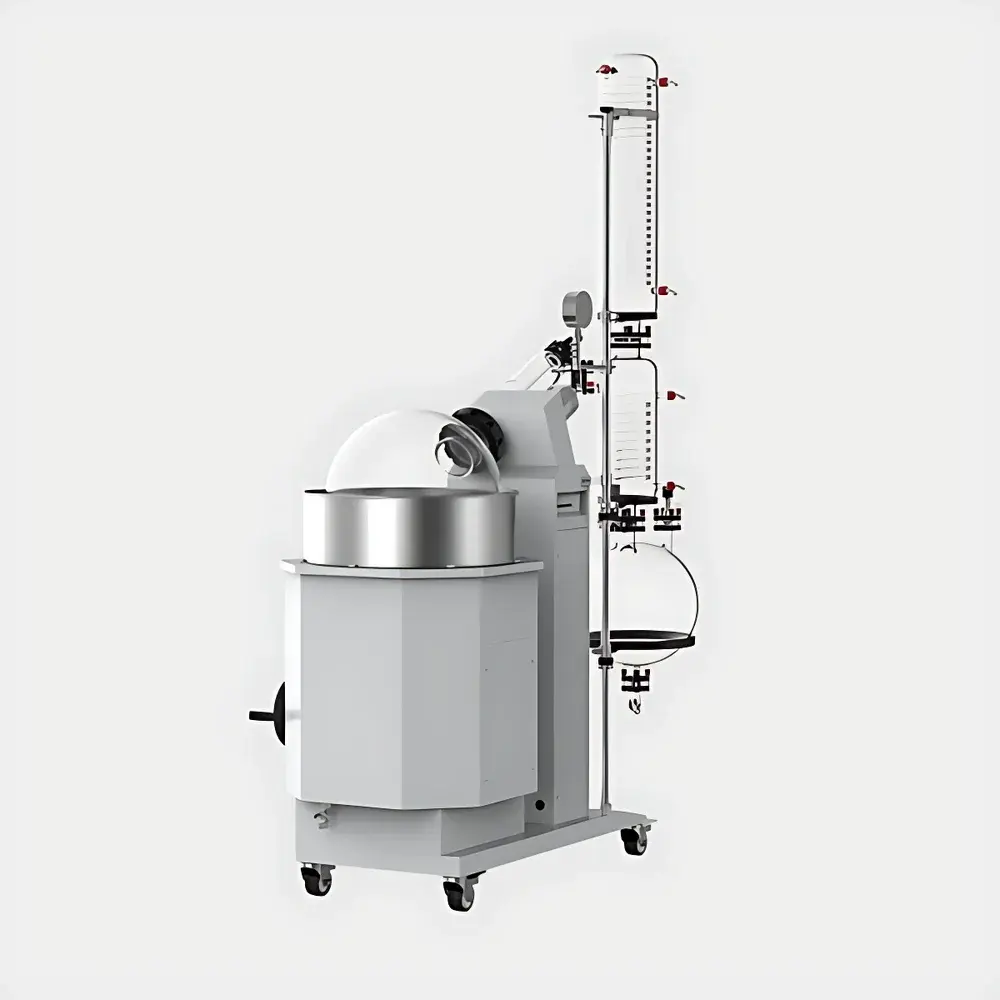
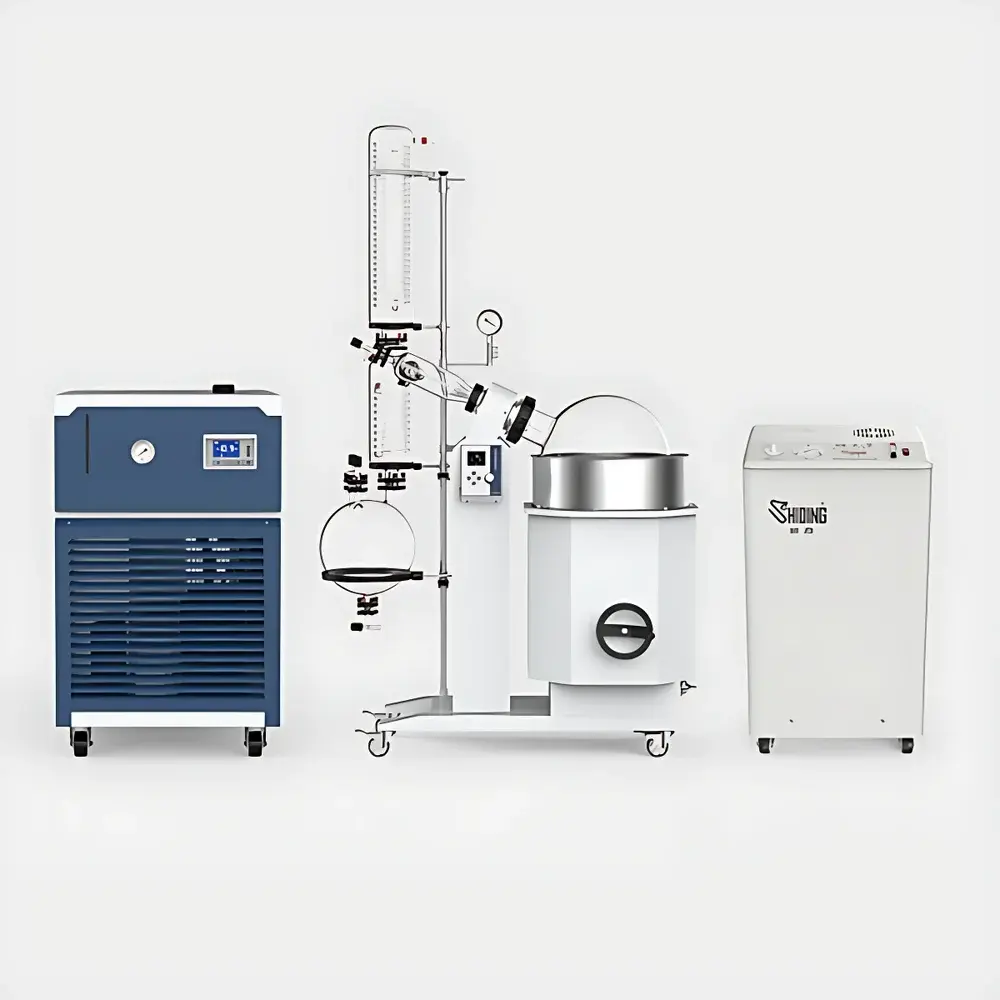
Great Wall R-1050 Large-Scale Pilot Rotary Evaporator
| [Brand | Great Wall |
|---|---|
| Origin | Henan, China |
| Model | R-1050 |
| Capacity | 50 L |
| Ultimate Vacuum | 399.9 Pa |
| Rotation Speed | 10–110 rpm |
| Bath Temperature Range | Ambient to 99 °C |
| Temperature Control Accuracy | ±1 °C |
| Condenser Surface Area | Primary 0.91 m² + Secondary 0.52 m² |
| Power Supply | 3-phase, 380 V / 50 Hz |
| Total Power Consumption | 6.3 kW |
| Dimensions (W×D×H) | 1345 × 770 × 2230 mm |
| Net Weight | ~180 kg] |
Overview
The Great Wall R-1050 is a large-scale pilot rotary evaporator engineered for robust, reproducible solvent removal and concentration under reduced pressure in laboratory, pilot plant, and small-batch production environments. Based on the fundamental principle of thin-film evaporation—where rotation generates a uniform, high-surface-area liquid film on the inner wall of a heated, evacuated flask—the R-1050 enables efficient heat transfer and rapid mass transfer under controlled thermal and vacuum conditions. Its 50 L rotating flask (φ125 mm standard taper flange) and dual-stage condensation system support high-throughput processing of thermolabile or high-boiling-point compounds common in pharmaceutical development, natural product isolation, fine chemical synthesis, and food-grade extract purification. Designed for continuous operation over extended duty cycles, the unit integrates mechanical stability, thermal uniformity, and vacuum integrity to meet the operational demands of GLP-compliant process development and scale-up studies.
Key Features
- Double-seal rotary joint combining PTFE (Teflon®) and fluororubber materials, ensuring long-term vacuum integrity down to 399.9 Pa and resistance to organic solvents and acidic/alkaline vapors.
- Variable-frequency drive (VFD) motor control enabling precise, stepless speed regulation from 10 to 110 rpm—optimized for both low-viscosity solvents and high-viscosity concentrates without slippage or torque loss.
- Dual condensation architecture: vertical primary condenser (0.91 m² surface area) paired with auxiliary secondary condenser (0.52 m²), configured as a triple-reflux system to maximize condensate recovery efficiency and minimize vapor bypass—even during high-load ethanol or acetone distillations.
- Electrically actuated bath lift (0–180 mm stroke) with manual override, facilitating safe, repeatable flask immersion/extraction while maintaining alignment and reducing operator fatigue during multi-hour runs.
- Stainless steel 304 water/oil bath with digital PID temperature controller (ambient to 99 °C), achieving ±1 °C setpoint stability across full load range; compatible with external heating media including silicone oil for elevated temperature applications.
- Integrated vacuum switching valve allows uninterrupted collection of distillate fractions without venting the system—critical for sequential isolation of multiple components or solvent recycling workflows.
- PTFE-coated discharge valve at the base of the receiving flask ensures corrosion resistance and leak-tight sealing during batch transfer or sterile sampling procedures.
Sample Compatibility & Compliance
The R-1050 accommodates a broad spectrum of sample matrices—including aqueous extracts, ethanolic tinctures, chlorinated hydrocarbon solutions, and viscous polymer solutions—provided volatility and thermal stability permit rotary evaporation within its operational envelope. The system complies with general safety standards for electrical equipment (IEC 61010-1) and is constructed using materials compliant with USP Class VI and FDA-recommended contact surfaces for pharmaceutical intermediates. While not certified for ATEX or IECEx hazardous-area use, its sealed motor housing and grounded chassis meet standard laboratory electrical safety protocols. For regulated environments, the digital temperature and rotation interfaces support audit-ready logging when integrated with validated third-party data acquisition systems compliant with 21 CFR Part 11 requirements.
Software & Data Management
The R-1050 operates via an embedded microcontroller-based interface with real-time display of bath temperature, rotation speed, and vacuum status (via optional external gauge integration). Though it does not include proprietary PC software or cloud connectivity out-of-the-box, all analog and digital I/O signals—including 4–20 mA temperature output and RS-485 Modbus RTU—can be interfaced with centralized SCADA platforms, LIMS, or custom LabVIEW-based monitoring systems. Users implementing GxP workflows commonly configure external PLCs or industrial HMIs to record timestamped parameter logs, enforce user-access levels, and generate electronic records meeting ALCOA+ data integrity principles. Firmware updates are performed locally via USB port, preserving traceability of configuration changes during qualification (IQ/OQ/PQ).
Applications
- Pharmaceutical: Solvent exchange in API crystallization, removal of residual ethyl acetate after extraction, and concentration of monoclonal antibody harvest supernatants prior to chromatography.
- Biotechnology: Downstream processing of fermentation broths, including ethanol precipitation buffer removal and polysaccharide concentrate thickening.
- Food & Nutraceuticals: Gentle concentration of heat-sensitive fruit essences, botanical extracts (e.g., curcumin, resveratrol), and omega-3 oil distillates under nitrogen sweep.
- Chemical R&D: High-volume solvent recovery in catalyst screening campaigns, workup of Grignard or organolithium reactions, and purification of liquid intermediates prior to distillation or recrystallization.
- Academic & Government Labs: Teaching instrument for unit operations courses, method development for EPA Method 3510C (liquid–liquid extraction), and scalable evaporation validation per ASTM D1296.
FAQ
What vacuum pumps are compatible with the R-1050?
The R-1050 is designed to interface with diaphragm vacuum pumps (for solvent-compatible, oil-free operation), circulating water aspirators (for aqueous systems), and low-temperature vacuum pumps (e.g., −20 °C cold traps) to enhance condensation efficiency for low-boiling solvents like dichloromethane or ether.
Can the R-1050 be used with heating oils instead of water?
Yes—the 304 stainless steel bath is rated for silicone or mineral oil media up to 99 °C; however, oil viscosity and flash point must be evaluated to ensure safe operation and optimal heat transfer uniformity.
Is the rotation speed calibrated and traceable to national standards?
The VFD-driven motor includes factory calibration against NIST-traceable tachometric reference; users may perform periodic verification using a handheld optical tachometer per ISO 27888 guidelines.
Does the unit support automated fraction collection?
Not natively—but the vacuum switching valve and standardized 24/40 or 29/32 ground-glass joints allow integration with third-party programmable fraction collectors (e.g., Gilson FC204, BUCHI F-100) via vacuum line synchronization.
What maintenance intervals are recommended for long-term reliability?
PTFE seal inspection every 500 operating hours; condenser coil cleaning with ethanol or isopropanol after each solvent class change; annual verification of bath temperature sensor drift and motor insulation resistance per IEC 60034-18-41.



