
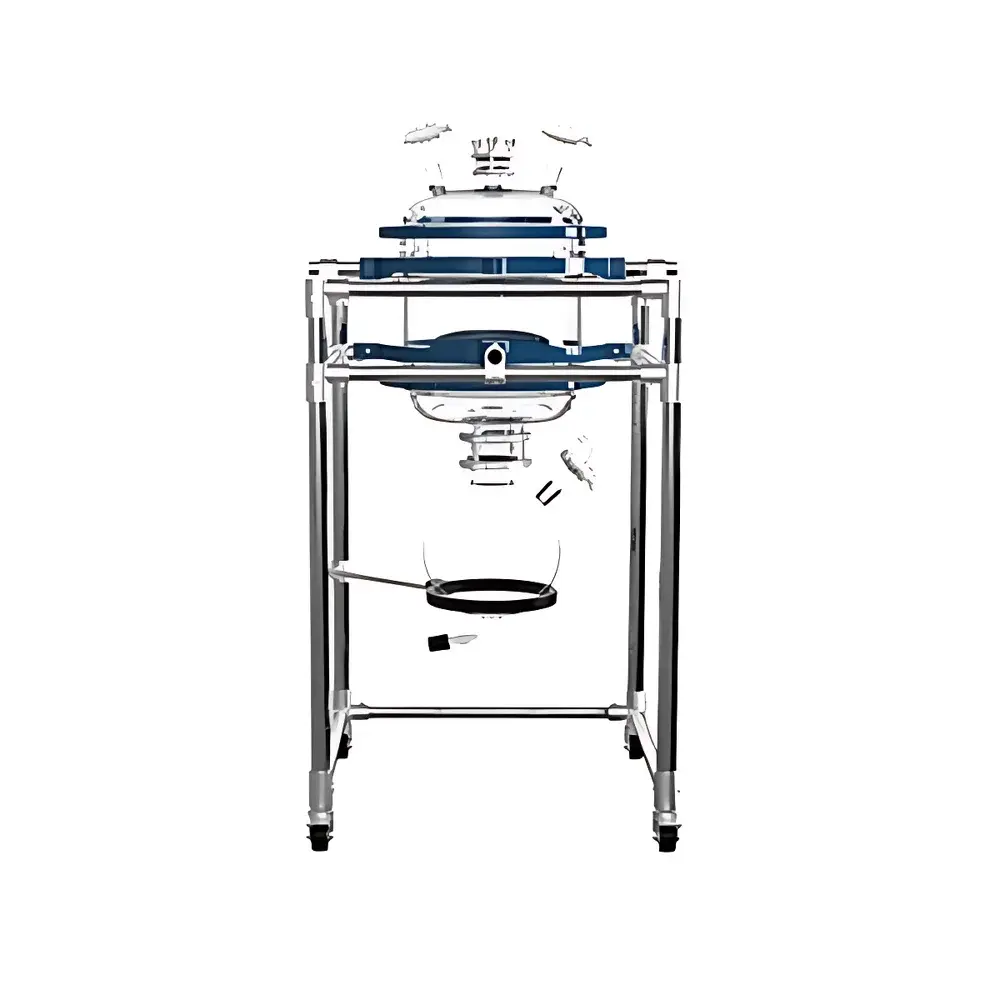
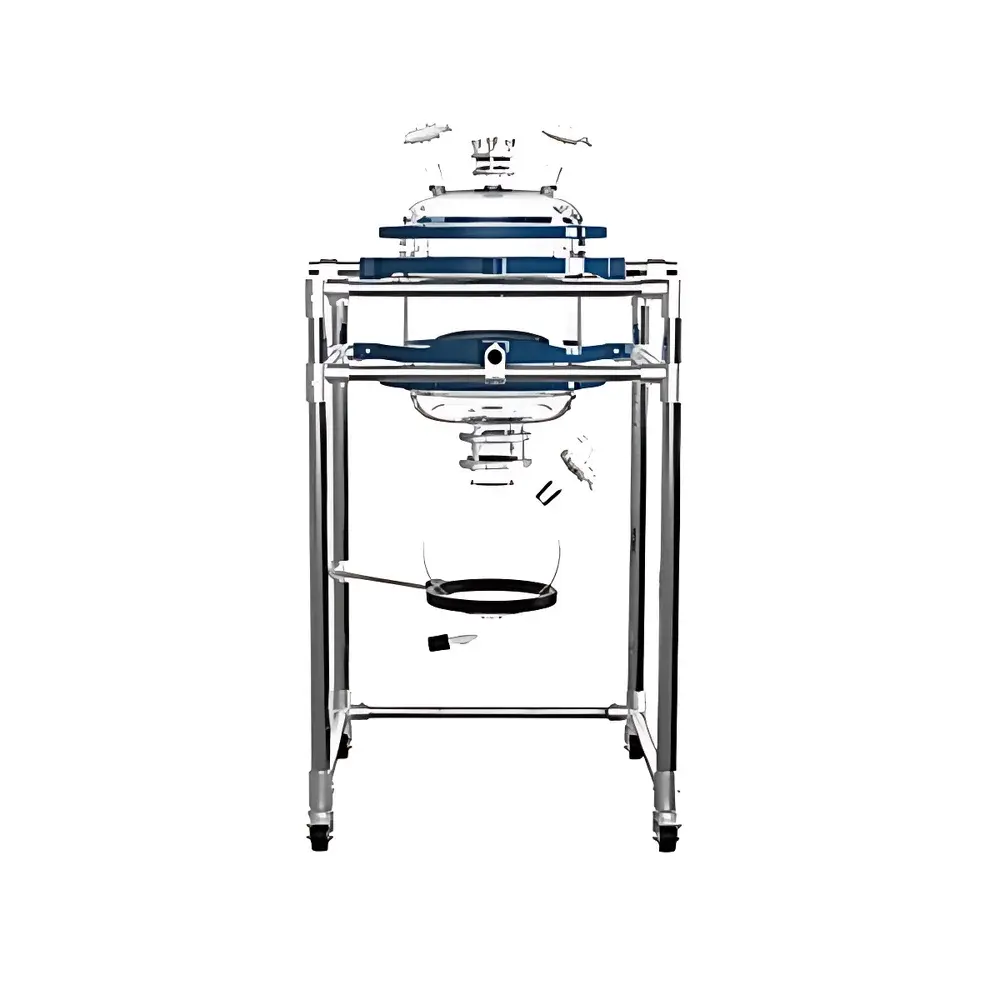
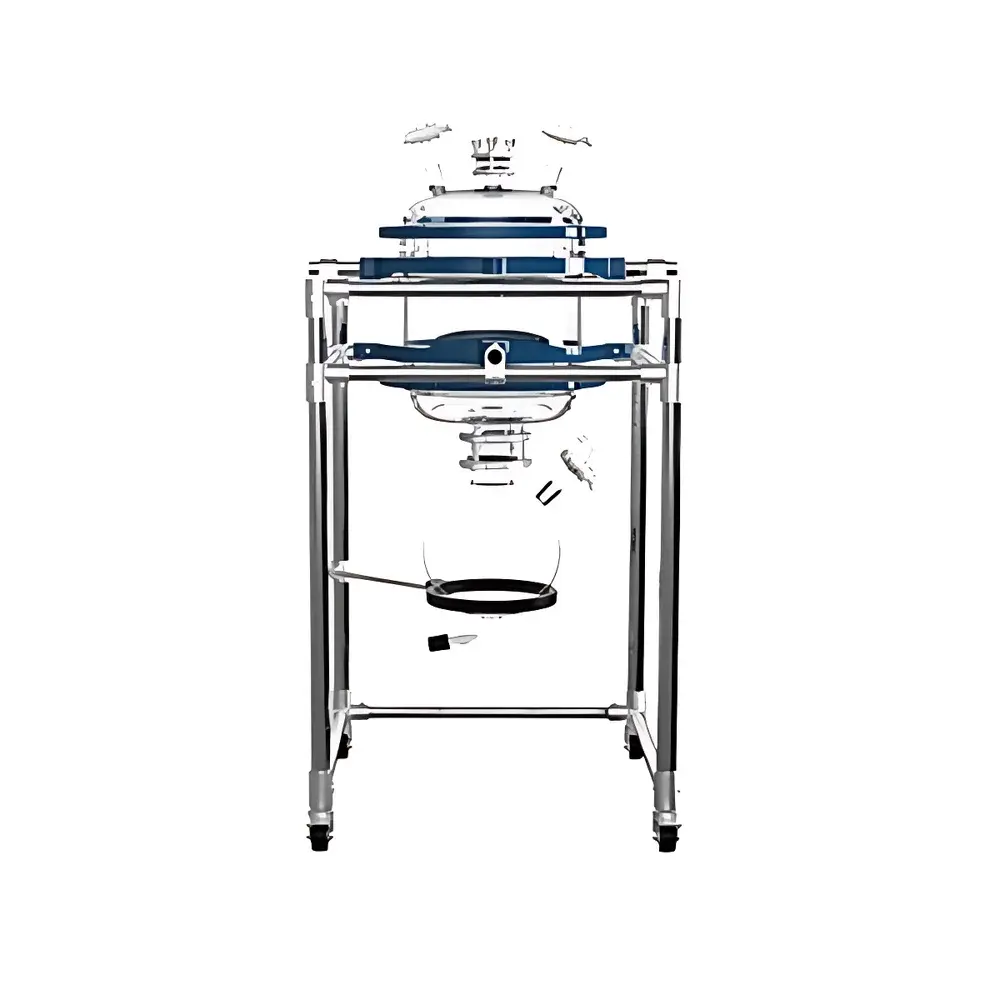
The Great Wall CLZZ-50 Vacuum Filtration Apparatus
| Brand | The Great Wall |
|---|---|
| Origin | Henan, China |
| Manufacturer Type | Authorized Distributor |
| Country of Origin | China |
| Model | CLZZ-50 |
| Vacuum Level | −0.098 MPa (98 kPa) |
| Operating Pressure Range | −0.1 MPa to 0.0 MPa |
| Temperature Range | −80 °C to +200 °C |
| Construction Material | Borosilicate Glass 3.3 (DIN ISO 3585) |
| Frame Material | Powder-Coated Q235 Steel + Anodized 6061-F Aluminum |
| Mobility | Locking Casters with Brake |
| Capacity | 50 L |
| Compliance | Designed for GLP-compliant laboratory filtration workflows |
Overview
The Great Wall CLZZ-50 Vacuum Filtration Apparatus is an engineered benchtop system designed for reliable, scalable solid–liquid separation under controlled negative pressure. It operates on the principle of vacuum-assisted gravity filtration, where differential pressure across a porous medium (e.g., filter paper, sintered glass frit, or membrane) drives rapid liquid phase passage while retaining suspended particulates. Unlike centrifugal or pressure-driven systems, this apparatus delivers consistent flow rates without shear-induced particle disruption—making it especially suitable for crystalline precipitates, biological cell pellets, and thermally sensitive organic intermediates. Its modular architecture integrates seamlessly into multi-step synthesis, purification, and quality control workflows in academic research labs, pharmaceutical development suites, and fine chemical manufacturing environments.
Key Features
- Borosilicate glass 3.3 (DIN ISO 3585) components—including filter flask, funnel body, and adapter—provide exceptional thermal shock resistance (ΔT ≥ 150 °C), hydrolytic stability (Class HGB 1 per DIN 12111), and resistance to concentrated acids, alkalis, and organic solvents.
- Wide operational temperature envelope from −80 °C (with dry ice/acetone cooling baths) to +200 °C (for hot filtration of saturated solutions), enabling applications ranging from cryogenic recrystallization to high-boiling-point solvent recovery.
- Stable vacuum performance up to −0.098 MPa (equivalent to ≤2 kPa absolute pressure), verified using calibrated digital manometers traceable to NIST standards; maintains steady suction during extended operation with minimal pump duty cycling.
- Structural frame combines powder-coated Q235 carbon steel for load-bearing rigidity and anodized 6061-F aluminum for corrosion-resistant mounting surfaces—both materials meet ASTM B117 salt-spray resistance requirements (>500 h).
- Four-position locking casters with integrated brakes allow precise repositioning within fume hoods or laminar flow cabinets and secure immobilization during active filtration cycles.
Sample Compatibility & Compliance
The CLZZ-50 accommodates standard ground-glass jointed accessories (ISO K 29/32, ISO K 45/50) and accepts filter media up to 150 mm diameter. It supports aqueous, polar aprotic (e.g., DMF, DMSO), and chlorinated solvent systems when used with chemically compatible gaskets (PTFE or silicone). All wetted parts comply with USP for Class VI plastics equivalency where applicable and conform to ISO 8573-1:2010 for compressed air–free operation (vacuum-only configuration). The system is routinely deployed in laboratories adhering to GLP (OECD Principles) and GMP (ICH Q7) frameworks; its mechanical simplicity ensures full auditability without embedded firmware or electronic logging dependencies.
Software & Data Management
As a purely mechanical vacuum filtration platform, the CLZZ-50 requires no embedded software, drivers, or network connectivity. This analog design eliminates cybersecurity vulnerabilities, firmware obsolescence risks, and validation overhead associated with regulated electronic systems. Process parameters—including vacuum level, duration, and filtrate volume—are recorded manually or integrated into existing LIMS/ELN platforms via external digital manometers or gravimetric balances (e.g., METTLER TOLEDO XSR series) with RS232/USB output. For FDA 21 CFR Part 11 compliance, users may pair the apparatus with validated electronic lab notebooks that enforce electronic signatures, audit trails, and role-based access control for raw filtration records.
Applications
- Isolation of crystalline APIs following antisolvent precipitation or cooling crystallization (e.g., ibuprofen, paracetamol).
- Removal of catalyst residues (Pd/C, Raney Ni) after hydrogenation or cross-coupling reactions.
- Clarification of microbial fermentation broths prior to chromatographic purification.
- Preparation of silica gel or alumina slurries for column chromatography packing.
- Recovery of metal-organic framework (MOF) nanoparticles from solvothermal synthesis mixtures.
- Environmental sample processing: suspended solids quantification in wastewater per EPA Method 160.2.
FAQ
What vacuum pumps are compatible with the CLZZ-50?
Diaphragm vacuum pumps (e.g., KNF N840.3FT.18, Welch 2045) rated for continuous operation at ≤2 kPa ultimate vacuum and ≥25 L/min free-air displacement are recommended. Oil-lubricated rotary vane pumps may be used with cold traps to prevent backstreaming contamination.
Can the CLZZ-50 be used for hot filtration above 100 °C?
Yes—provided the borosilicate glass components are preheated gradually and the vacuum line includes a condensation trap to protect the pump from solvent vapors.
Is the apparatus suitable for sterile filtration under aseptic conditions?
It can be adapted for sterile use when paired with 0.22 µm PES or PVDF membrane filters, autoclaved glassware, and ISO Class 5 laminar flow hood installation—but does not include built-in sterilization functionality.
Does the CLZZ-50 support automation or programmable control?
No—it is a manual, operator-actuated system. Automation requires third-party integration via vacuum controllers (e.g., Vacuubrand VACUU·SELECT) with analog I/O interfaces.
What maintenance is required for long-term reliability?
Routine inspection of ground-glass joints for scoring, replacement of elastomeric seals every 12 months under continuous use, and periodic cleaning of the stainless steel frame with pH-neutral detergent and passivation-grade alcohol.






