
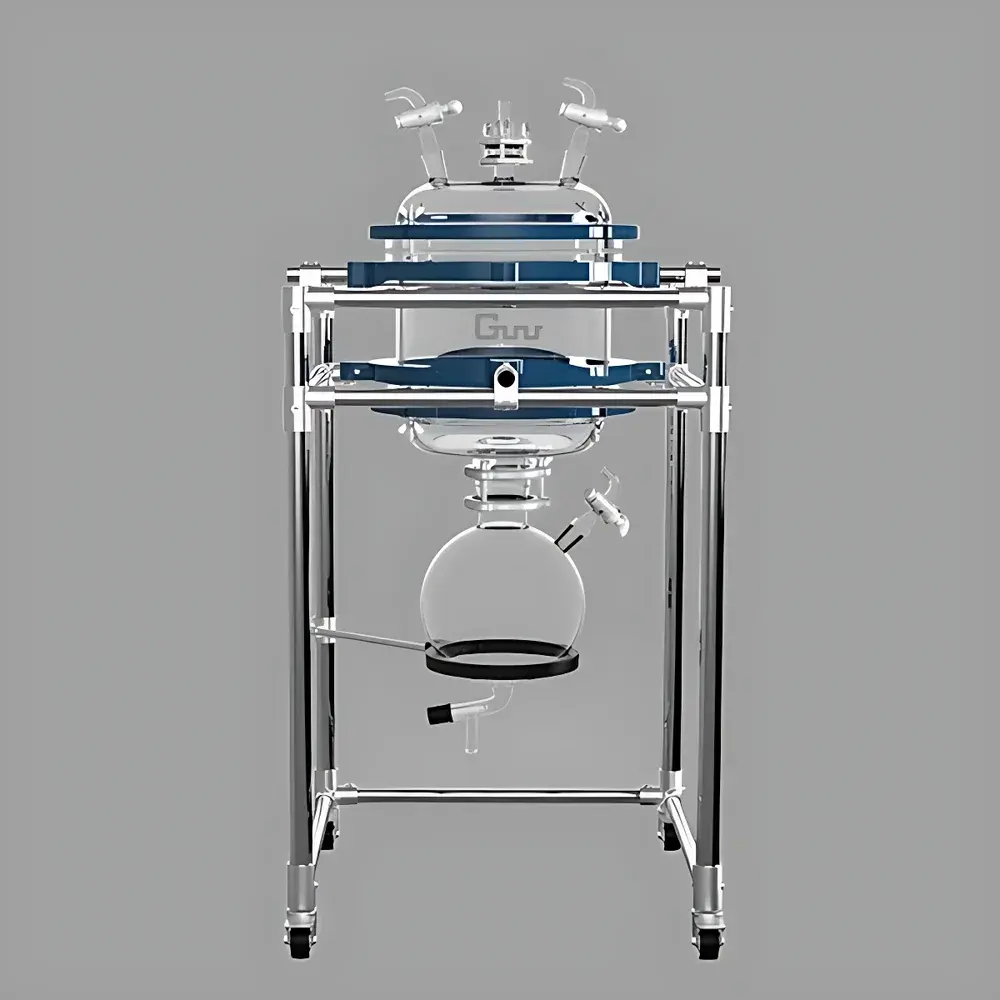
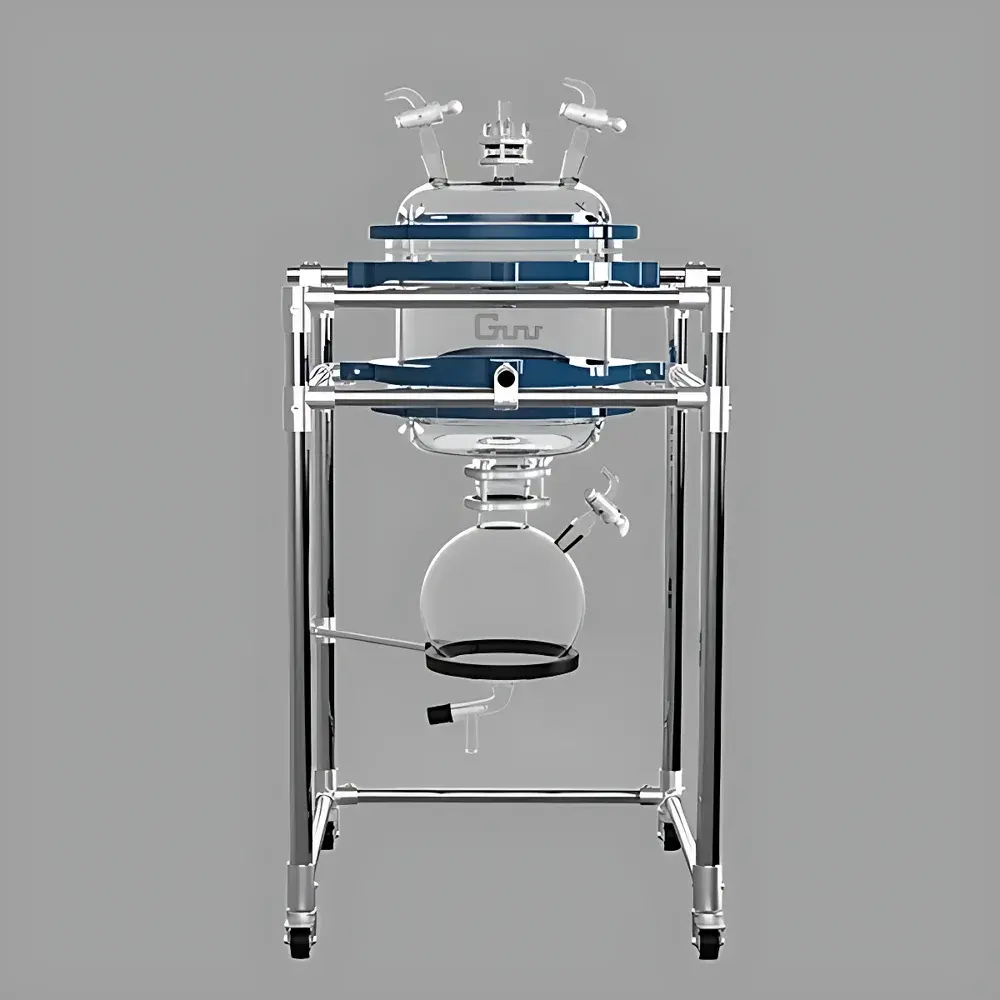
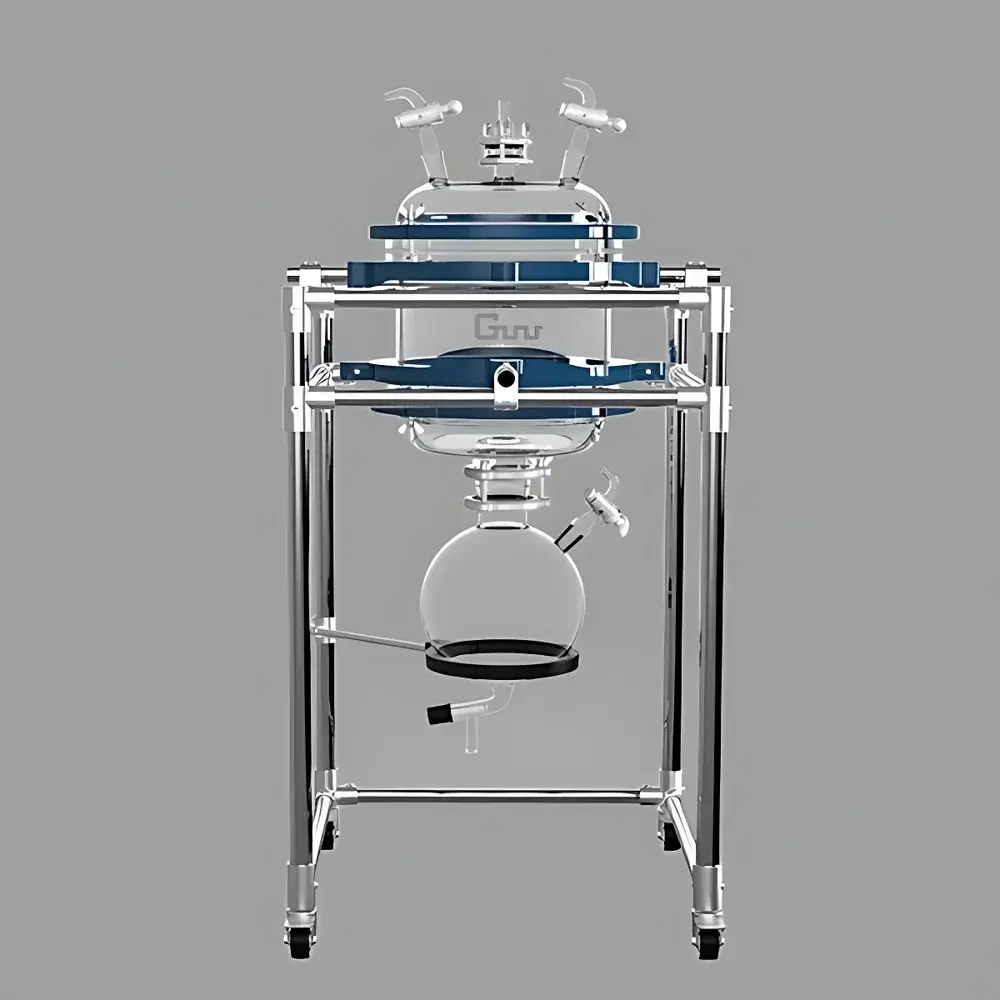
The Great Wall CZLL-20 Vacuum Filtration Apparatus
| Brand | The Great Wall |
|---|---|
| Origin | Henan, China |
| Manufacturer Type | Authorized Distributor |
| Origin Category | Domestic (China) |
| Model | CZLL-20 |
| Pricing | Available Upon Request |
Overview
The Great Wall CZLL-20 Vacuum Filtration Apparatus is a benchtop-to-pilot-scale pressure-assisted filtration system engineered for reliable, reproducible solid–liquid separation in chemical synthesis, pharmaceutical process development, and materials research laboratories. It operates on the principle of vacuum-driven cross-flow filtration through replaceable porous filter plates mounted within a transparent, chemically resistant reaction vessel. Unlike gravity-based or centrifugal methods, this apparatus enables controlled filtration kinetics, minimizes sample loss during cake formation, and supports real-time observation of slurry behavior—critical for optimizing crystallization, precipitation, and catalyst recovery workflows.
Key Features
- Structural frame fabricated from electropolished 304 stainless steel, providing high mechanical stability, corrosion resistance to organic solvents and mild acids/bases, and compliance with ISO 14644-1 Class 8 cleanroom-compatible surface finish standards.
- Reaction chamber constructed from borosilicate glass (Schott Duran®-grade equivalent), offering thermal shock resistance up to 150 °C, optical clarity for in-process monitoring, and compatibility with HCl, HNO₃, acetone, THF, ethanol, and other common laboratory reagents per ASTM E438 Type I, Class A specifications.
- Modular filter plate interface accommodating standard diameters of 90 mm, 110 mm, and 150 mm; plates available in sintered stainless steel (pore sizes: 5–40 µm), PTFE-coated stainless mesh, and borosilicate fritted glass (porosity grades G3–G5).
- Quick-release clamp mechanism enabling tool-free disassembly of the filtration head assembly; all wetted components are accessible for manual cleaning or ultrasonic decontamination without requiring recalibration.
- Integrated vacuum port with ISO-KF25 flange connection, compatible with diaphragm vacuum pumps (ultimate vacuum ≤10 mbar) and optional inline cold trap assemblies for solvent recovery applications.
Sample Compatibility & Compliance
The CZLL-20 is validated for use with suspensions containing particulates ranging from 10 nm colloidal precipitates to >500 µm crystalline aggregates. It complies with general laboratory safety requirements outlined in ANSI Z9.10 and EU Directive 2006/42/EC for non-powered mechanical equipment. While not certified as explosion-proof, its all-metal frame and static-dissipative design support safe operation in Class I, Division 2 environments when paired with intrinsically safe vacuum sources. Filter plate selection must align with material compatibility charts provided in the user manual; glass frits are recommended for aqueous alkaline systems, while sintered metal plates are preferred for high-pressure or abrasive slurries.
Software & Data Management
The CZLL-20 is a manually operated, analog instrumentation platform with no embedded electronics or digital control interface. All operational parameters—including vacuum level (monitored via external analog vacuum gauge), filtration time, and mass change—are recorded manually or integrated into existing LIMS or ELN platforms via standardized SOP documentation templates. The system supports full audit trail generation under GLP and GMP frameworks when used in conjunction with calibrated weighing instruments (e.g., METTLER TOLEDO XSR series) and timestamped procedural logs. Maintenance records—including filter plate replacement dates, seal inspections, and leak-test results—are tracked using the manufacturer’s recommended logbook format (ref. GW-CZLL-20-MR-Rev.3).
Applications
- Isolation of fine organic crystals following antisolvent precipitation in API intermediate purification.
- Recovery and washing of heterogeneous catalysts (e.g., Pd/C, Ni/Raney) in batch hydrogenation processes.
- Filtration of metal-organic framework (MOF) suspensions prior to solvent exchange and activation.
- Removal of silica gel or celite from crude reaction mixtures during workup procedures.
- Preparative-scale isolation of biopolymer precipitates (e.g., chitosan, alginate) under pH-controlled conditions.
FAQ
What is the maximum operating temperature for the glass vessel?
The borosilicate glass body is rated for continuous use up to 120 °C; short-term exposure to 150 °C is permissible if thermal gradients remain below 30 °C/min.
Is the apparatus suitable for corrosive halogenated solvents such as chloroform or DCM?
Yes—provided stainless steel hardware is passivated prior to first use and PTFE gaskets are employed; avoid prolonged contact with anhydrous HF or hot concentrated HBr.
Does the system include vacuum pump and tubing?
No—vacuum source, hose, and pressure regulator must be selected and supplied by the end user based on required ultimate vacuum and flow rate.
Are spare parts such as O-rings and clamps available separately?
Yes—original-specification Viton® and EPDM sealing kits, KF25 vacuum couplings, and torque-calibrated clamps are stocked and shipped globally within 5 business days.
How is calibration performed for quantitative filtration studies?
The apparatus itself requires no calibration; however, users must validate balance accuracy (±0.1 mg), vacuum gauge linearity (per ISO 2787), and filter plate porosity certification (via bubble point test per ASTM F316) as part of method qualification.
Related Products




