
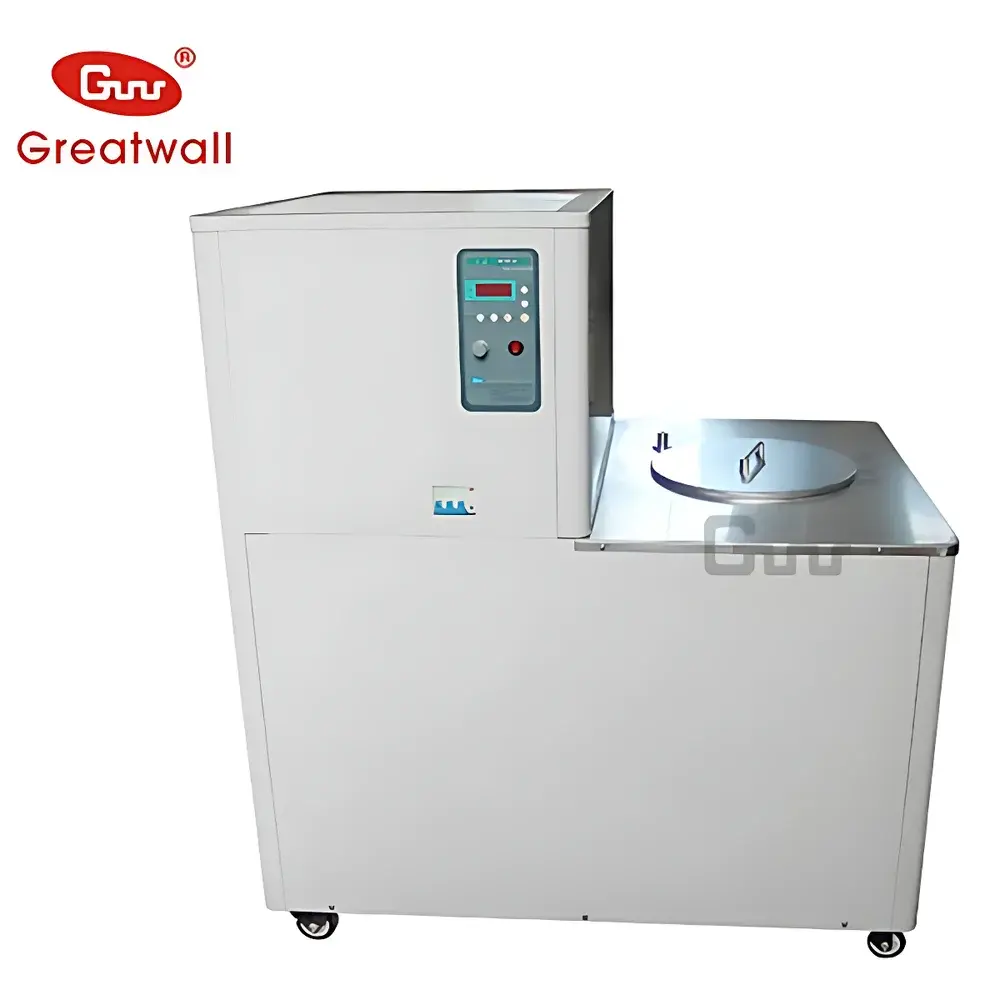
The Great Wall DHJF-1030 Ultra-Low-Temperature Stirred Reaction Bath
| Brand | The Great Wall |
|---|---|
| Origin | Henan, China |
| Manufacturer Type | Direct Manufacturer |
| Product Category | Domestic |
| Model | DHJF-1030 |
| Instrument Type | Constant-Temperature Bath |
| Circulation Mode | Internal Circulation |
| Temperature Control | Refrigeration & Heating Combined |
| Bath Volume | 30 L |
| Temperature Range | −100 °C to −60 °C |
| Temperature Stability | ±2 °C |
| Refrigeration Capacity | 620 W at −60 °C, 480 W at −80 °C, 200 W at −100 °C |
| Power Supply | 3-phase, 380 V, 50 Hz |
| Max Flask Capacity | 10,000 mL |
| Tank Dimensions (Ø × H) | 400 × 235 mm |
| Opening Diameter | Ø320 mm |
| Cabinet Material | Cold-Rolled Steel with Electrostatic Powder Coating |
| Overall Dimensions (L×W×H) | 1160 × 800 × 1310 mm |
| Net Weight | 180 kg |
Overview
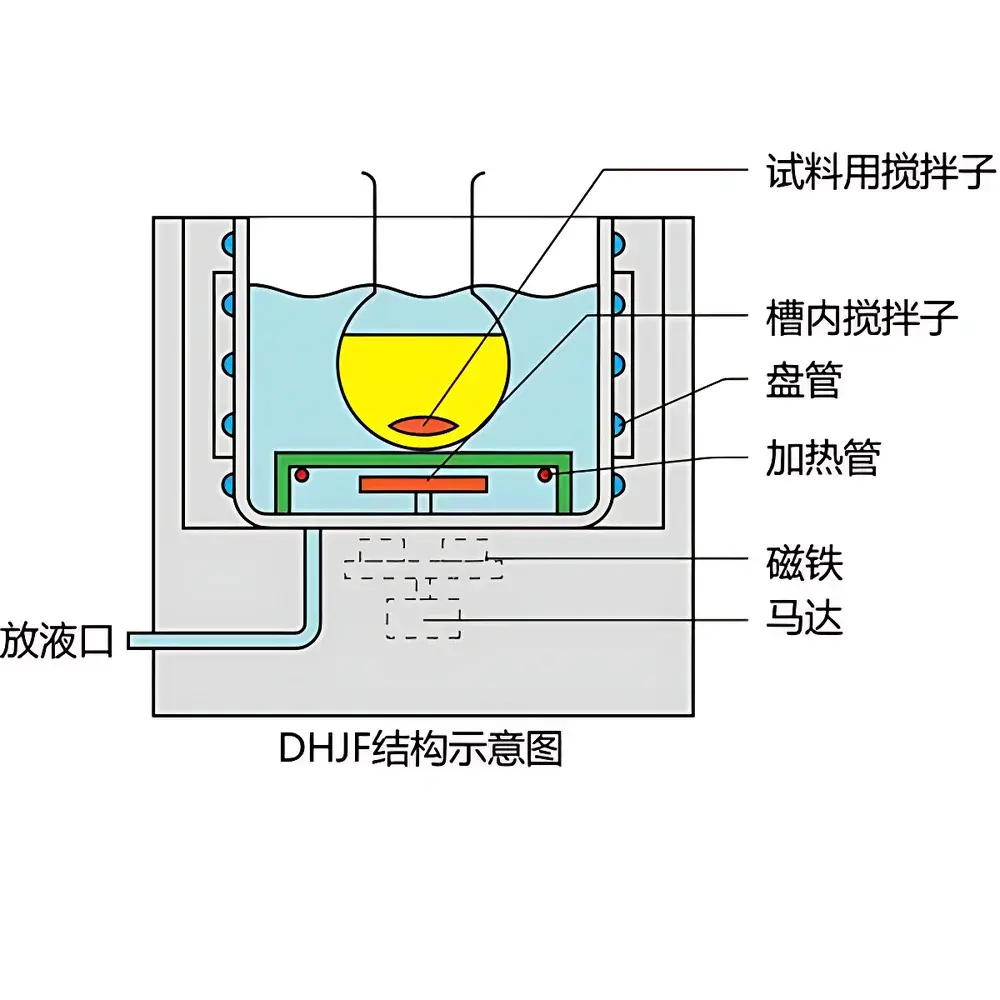
The Great Wall DHJF-1030 Ultra-Low-Temperature Stirred Reaction Bath is an engineered thermal management system designed for precise, stable, and reproducible low-temperature reaction control in synthetic chemistry, cryogenic material testing, and low-temperature catalysis studies. It operates on a single-stage compression fractional condensation refrigeration principle—optimized to deliver sustained cooling performance down to −100 °C without requiring liquid nitrogen or cascade compressor configurations. Unlike conventional recirculating chillers, the DHJF-1030 integrates mechanical stirring directly into the bath reservoir, enabling homogeneous temperature distribution and active mixing of reaction vessels immersed in the coolant medium. Its dual-mode (refrigeration + heating) capability supports dynamic temperature ramping and hold profiles, while the internal circulation loop ensures uniform thermal transfer across large-volume reactors (up to 10 L). This architecture meets fundamental requirements for controlled exothermic reaction quenching, low-temperature crystallization, and cryo-kinetic investigations where thermal inertia and gradient formation must be minimized.
Key Features
- Single-stage compression fractional condensation refrigeration system—engineered for reliable operation at −100 °C, eliminating dependency on external cryogens
- Integrated high-torque magnetic stirrer within the 30 L stainless-steel (304) bath tank, supporting continuous agitation during ultra-low-temperature operation
- Circulation loop constructed from 304 stainless steel and chemically resistant polymer components—resistant to corrosion from halogenated solvents, low-temperature alcohols, and cryogenic brines
- Digital PID temperature controller with membrane keypad interface and real-time LED display—enabling setpoint resolution of 0.1 °C and programmable ramp/soak cycles
- Reinforced cold-rolled steel cabinet with electrostatic powder coating—designed for long-term durability in laboratory environments with variable humidity and chemical exposure
- Three-phase 380 V power input with integrated overcurrent, overtemperature, and phase-loss protection circuits compliant with IEC 61000-6-2 EMC standards
Sample Compatibility & Compliance
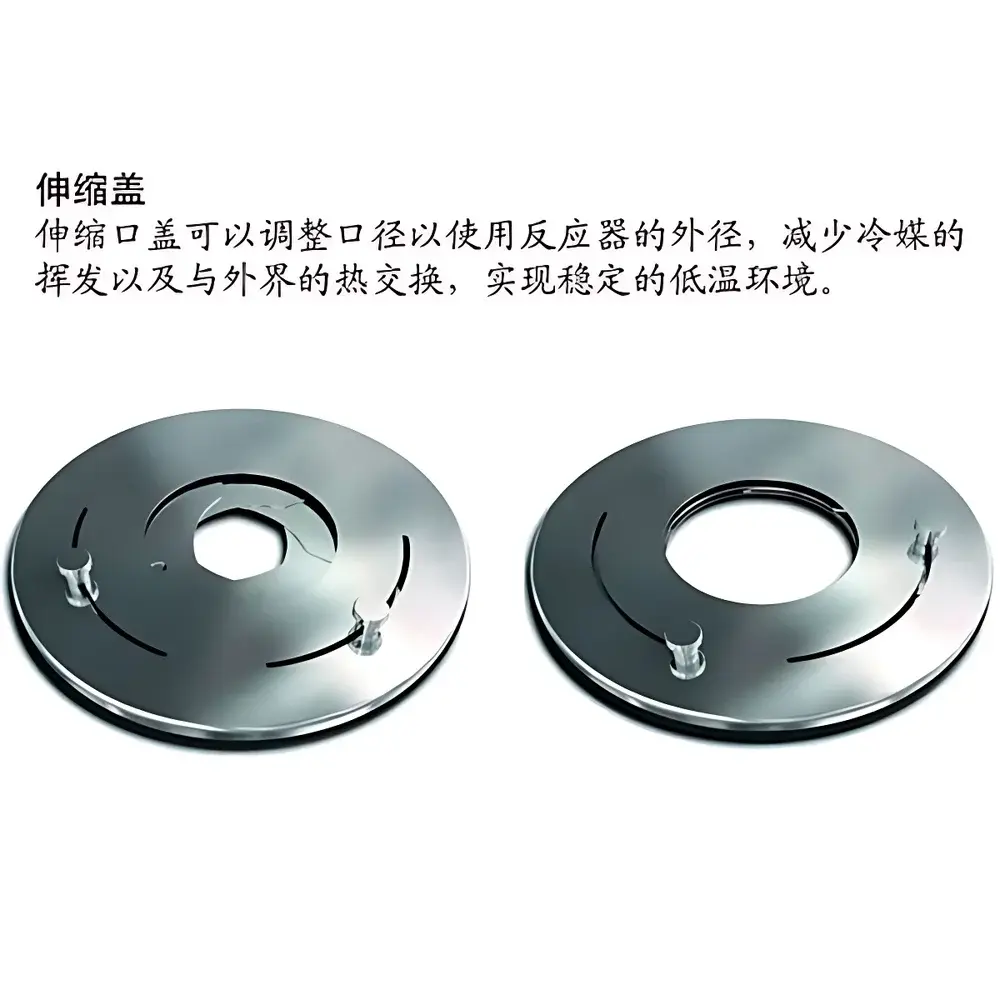
The DHJF-1030 accommodates standard laboratory glassware including jacketed reactors (up to 10 L), double-neck flasks, and custom cryo-reactors with external cooling jackets. Its open-top Φ320 mm aperture allows unobstructed access for condenser installation, thermometer insertion, and inert gas inlet lines. The bath fluid compatibility extends to ethanol, methanol, acetone, and specialized low-temperature heat-transfer fluids (e.g., silicone oils rated to −110 °C). From a regulatory standpoint, the system supports GLP-compliant workflows through traceable temperature logging (via optional RS485/Modbus interface), audit-ready operational records, and hardware-level safety interlocks aligned with ISO/IEC 17025 laboratory infrastructure requirements. While not certified to UL/CSA for North America, its electrical design conforms to GB/T 12801–2022 (Chinese national standard for safety in laboratory equipment) and incorporates grounding continuity verification per IEC 61010-1.
Software & Data Management
The DHJF-1030 operates autonomously via its embedded microcontroller-based temperature management system. For enhanced data integrity and process documentation, it supports optional integration with The Great Wall’s LabLink™ PC software suite (v3.2+), which provides time-stamped temperature logging at user-defined intervals (1–60 s), graphical trend visualization, export to CSV/Excel, and password-protected parameter locking. When connected via RS485 Modbus RTU, the unit enables remote monitoring and control within centralized lab automation platforms. All logged datasets include metadata such as ambient temperature, setpoint history, actual bath temperature, and error codes—facilitating FDA 21 CFR Part 11 compliance when deployed with validated electronic signature modules and secure network authentication protocols.
Applications
- Low-temperature Grignard and organolithium reactions requiring strict thermal control below −80 °C
- Cryogenic distillation and fractional freezing of high-purity solvents (e.g., THF, diethyl ether)
- Controlled nucleation and polymorph screening in pharmaceutical crystallization development
- Thermal aging studies of elastomers and battery electrolytes under sub-ambient stress conditions
- Calibration of low-temperature sensors and thermocouples in metrology laboratories
- Pre-cooling of NMR probe housings and superconducting magnet dewars prior to cryogen fill
FAQ
What bath fluids are recommended for operation at −100 °C?
Ethanol/methanol blends (e.g., 60/40 v/v) or specialized low-viscosity silicone oils (e.g., DC-200 series) are validated for use. Avoid aqueous solutions or glycols due to freezing point elevation and ice nucleation risks.
Can the DHJF-1030 maintain temperature stability during rapid flask insertion?
Yes—the system’s 620 W refrigeration capacity at −60 °C and high-mass 304 stainless-steel tank provide sufficient thermal inertia to absorb transient loads; stability recovers within ≤90 s after introducing a room-temperature 5 L flask.
Is external circulation possible with this model?
No—the DHJF-1030 is configured exclusively for internal circulation. For external jacketed reactor applications, consider the DHJF-1030E variant with dual-loop capability.
Does the unit support automatic defrost or frost mitigation?
It features adaptive evaporator temperature modulation to minimize frost accumulation during extended −100 °C operation; manual defrost is required only after >200 h of continuous use at minimum setpoint.
What maintenance intervals are recommended for long-term reliability?
Compressor oil and refrigerant levels should be verified annually; circulation pump seals inspected every 18 months; and PID calibration validated quarterly using NIST-traceable reference thermometers.



