
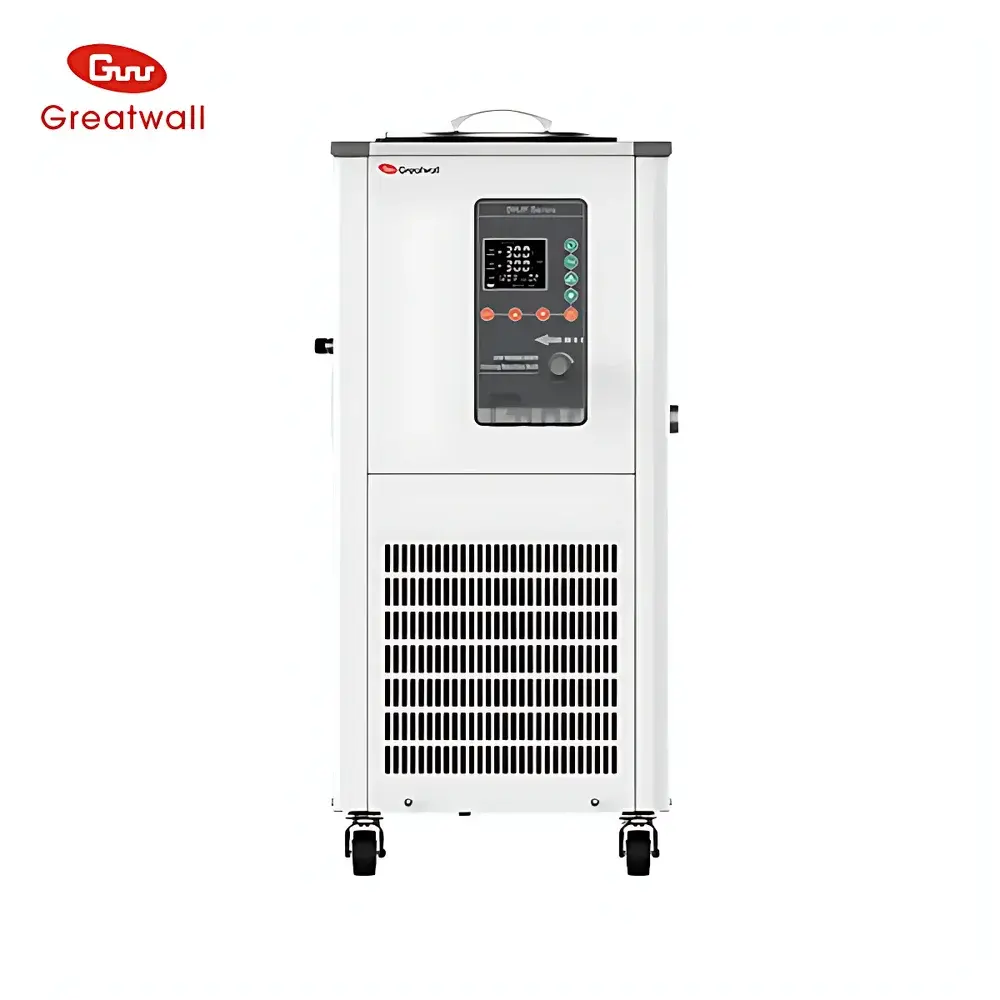
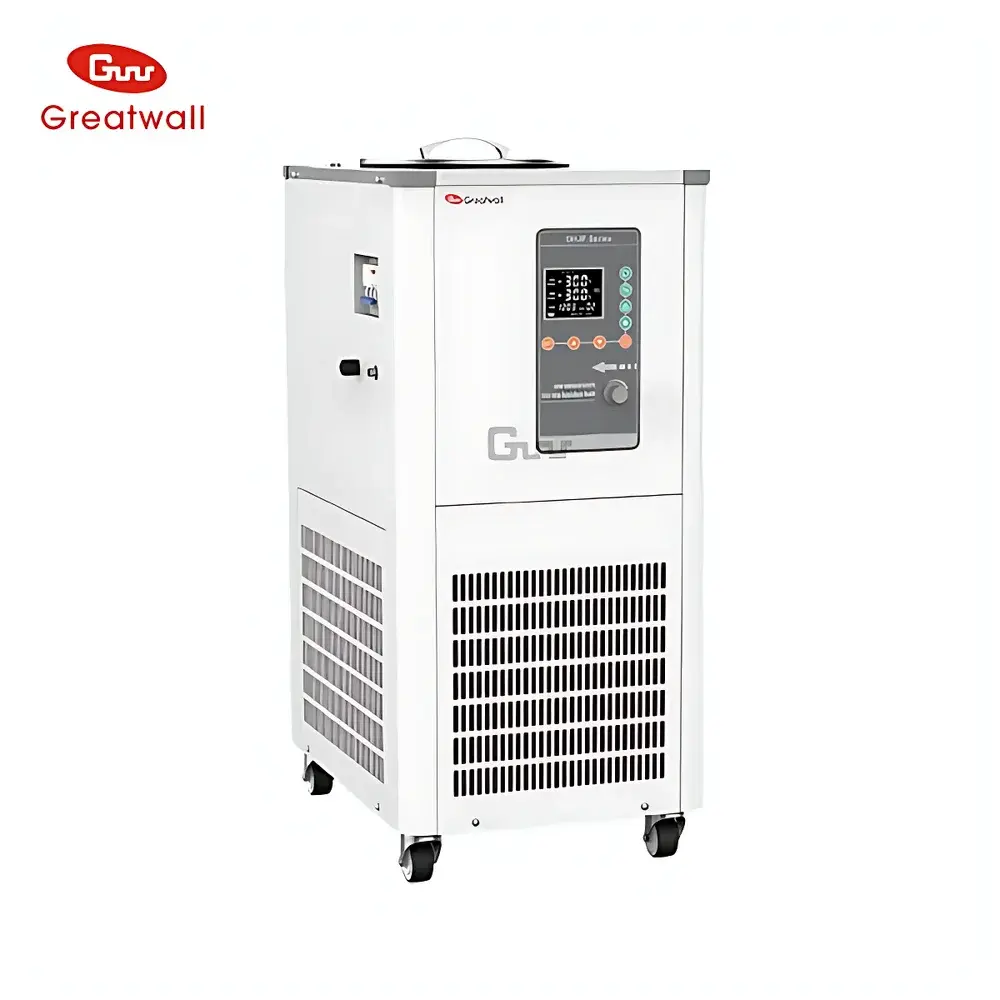
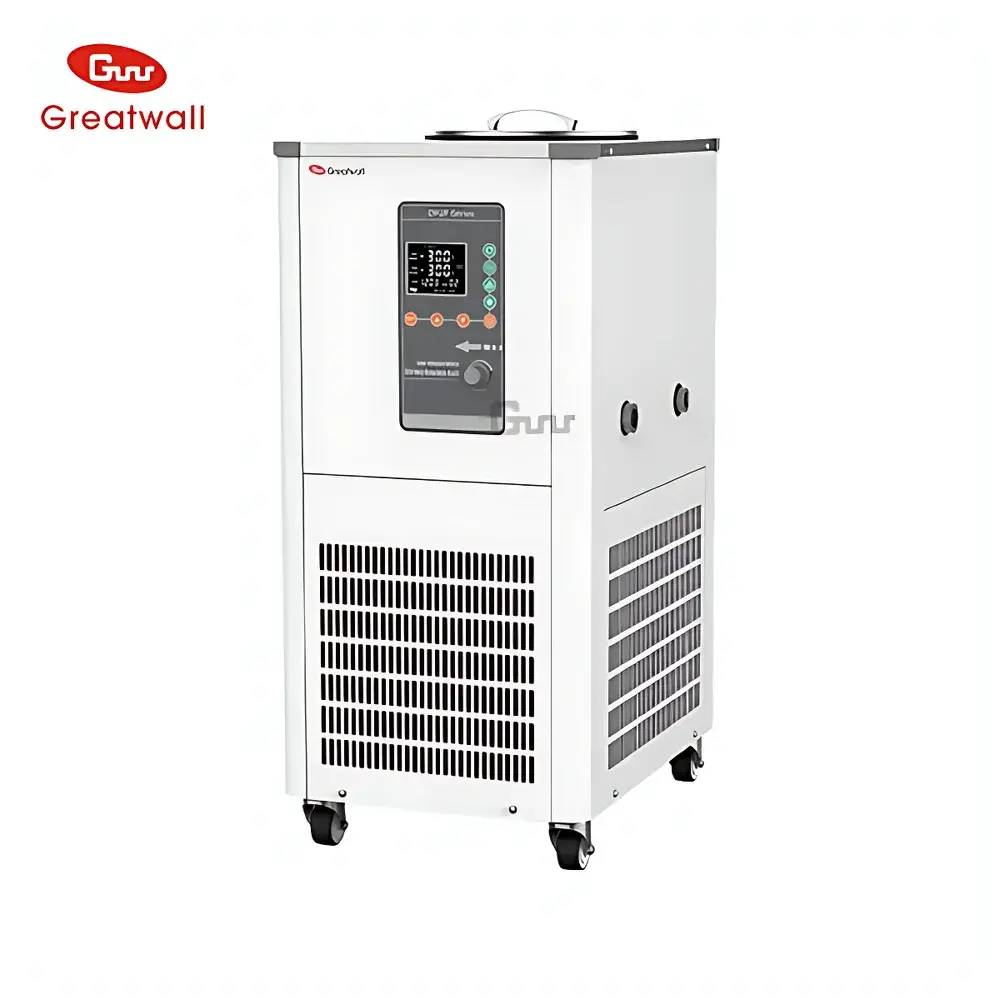
The Great Wall DHJF-3020 Cryogenic Circulating Thermostatic Bath with Magnetic Stirring
| Key | Brand: The Great Wall |
|---|---|
| Model | DHJF-3020 |
| Configuration | Vertical Benchtop Unit |
| Temperature Range | −30 °C to 99 °C |
| Temperature Stability | ±0.5 °C |
| Integrated Feature | Built-in Magnetic Stirrer |
| Cooling/Heating Medium | Ethanol/Water or Similar Low-Freezing-Point Fluid |
| Safety Protection | Dry-run Prevention (for heating models) |
| Compliance | Designed for GLP-compliant laboratory environments |
Overview
The Great Wall DHJF-3020 Cryogenic Circulating Thermostatic Bath with Magnetic Stirring is an engineered benchtop temperature control system designed for precise thermal management of chemical, biochemical, and pharmaceutical reaction vessels under controlled ambient conditions. Operating on the principle of forced-circulation liquid thermoregulation, it maintains stable bath temperatures across a wide operational range—from cryogenic cooling at −30 °C up to 99 °C—enabling substitution of hazardous or logistically complex coolants such as dry ice or liquid nitrogen in routine laboratory workflows. Its integrated magnetic stirring mechanism ensures homogeneous thermal distribution within both the bath fluid and the immersed reaction vessel, eliminating thermal gradients that compromise kinetic reproducibility or enzyme activity assays. This system is not a passive cooling block but an actively regulated, closed-loop thermal platform conforming to foundational requirements for ISO/IEC 17025-accredited testing laboratories where traceable, repeatable temperature conditioning is essential.
Key Features
- PID-based digital temperature control architecture delivering ±0.5 °C stability across the full −30 °C to 99 °C range, with real-time monitoring via high-resolution LED display.
- Integrated dual-mode magnetic stirrer: drives both bath-level stir bars and internal reaction vessel stir bars simultaneously, ensuring uniform heat transfer and minimizing localized thermal stratification.
- Adjustable telescoping lid with variable aperture—reduces solvent evaporation of low-boiling-point circulating media (e.g., ethanol/water mixtures) and limits parasitic heat exchange with ambient air.
- Modular stainless-steel support frame compatible with standard laboratory glassware clamps, burette holders, external temperature probes (e.g., Pt100), and pH or DO sensor mounts.
- Dry-run protection circuitry on heating-capable variants prevents heater element damage during low-fluid-level operation—critical for long-duration unattended experiments.
- Vertical footprint optimized for space-constrained fume hoods or laminar flow cabinets; all fluid pathways constructed from corrosion-resistant 304 stainless steel and fluoropolymer-lined components.
Sample Compatibility & Compliance
The DHJF-3020 accommodates standard laboratory vessels including round-bottom flasks (up to 2 L), jacketed reactors, immersion-type bioreactors, and multi-well plates mounted on custom adapters. Its open-bath design supports direct immersion of temperature-sensitive biological samples—including enzyme kinetics studies, protein folding assays, and cell lysis protocols requiring sub-zero stabilization. The unit meets mechanical and electrical safety standards per IEC 61010-1:2010 for laboratory equipment. While not intrinsically rated for Class I Division 1 environments, its sealed circulation pump and non-sparking stir motor enable safe use with flammable solvents when operated within certified ventilation systems. Documentation packages include factory calibration certificates traceable to NIST standards, supporting audit readiness for GLP, GMP, and ISO 9001 quality systems.
Software & Data Management
The DHJF-3020 operates as a standalone instrument with local PID setpoint control; optional RS485 or USB interface modules enable integration into centralized lab automation platforms. When paired with third-party SCADA or LIMS software (e.g., LabVIEW, DeltaV, or Thermo Fisher SampleManager), it supports time-stamped temperature logging, alarm event capture, and remote parameter adjustment—fully compliant with FDA 21 CFR Part 11 requirements when deployed with validated electronic signature and audit trail configurations. Internal memory retains last-used parameters and error logs for post-experiment forensic review, facilitating root-cause analysis during method validation or regulatory inspections.
Applications
- Kinetic studies of cold-adapted enzymes and thermolabile catalysts requiring stable sub-zero incubation.
- Controlled crystallization of active pharmaceutical ingredients (APIs) where nucleation onset is highly temperature-dependent.
- Low-temperature Grignard and organolithium reactions demanding strict exotherm suppression.
- Calibration of reference thermometers and RTDs against NIST-traceable bath standards.
- Pre-conditioning of chromatographic columns and detector cells prior to HPLC/UHPLC method development.
- Cell culture cryopreservation staging and thawing protocol optimization in academic and clinical research labs.
FAQ
What circulating fluids are compatible with the DHJF-3020 at −30 °C?
Ethanol/water (30/70 v/v), methanol/water, or commercially available low-temperature heat transfer fluids with pour points below −40 °C are recommended. Avoid ethylene glycol–water mixtures below −20 °C due to increased viscosity and reduced pump efficiency.
Can the unit maintain temperature while stirring viscous reaction mixtures?
Yes—the magnetic drive system delivers consistent torque up to 1,200 rpm and is rated for loads up to 500 g, accommodating high-viscosity media when used with appropriately sized stir bars and optimized bath geometry.
Is external temperature feedback supported?
The standard configuration uses internal Pt100 sensing; optional external probe input (via analog 0–5 V or 4–20 mA) allows process temperature control based on reactor jacket or sample core readings.
How often does the system require recalibration?
Annual verification against a calibrated reference thermometer is advised per ISO/IEC 17025 Clause 6.5. Calibration intervals may be extended to 24 months if historical performance data demonstrate ≤±0.3 °C deviation over six consecutive quarterly checks.
Does the DHJF-3020 meet environmental disposal regulations for refrigerants?
It employs no volatile refrigerants; cooling is achieved via resistive heating combined with Peltier or compressor-based chillers (depending on configuration)—eliminating F-gas reporting obligations under EU Regulation (EU) No 517/2014.



