
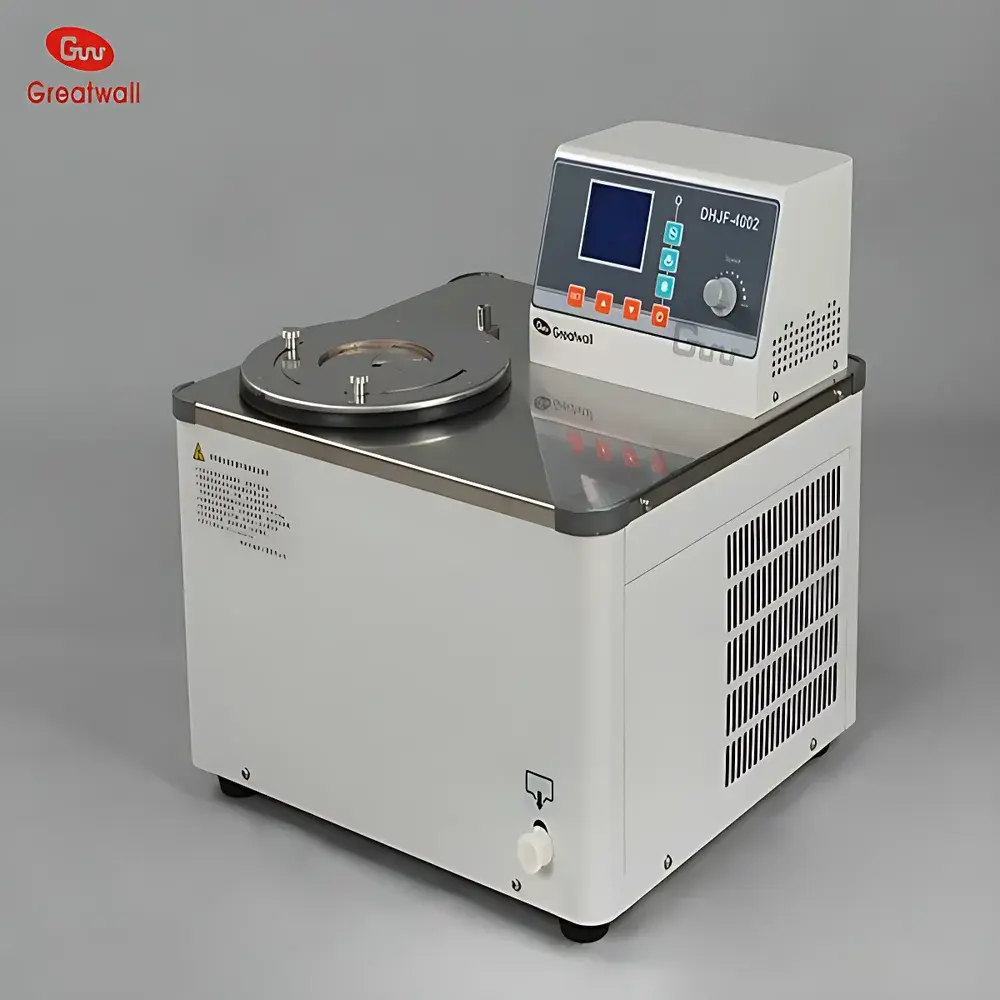
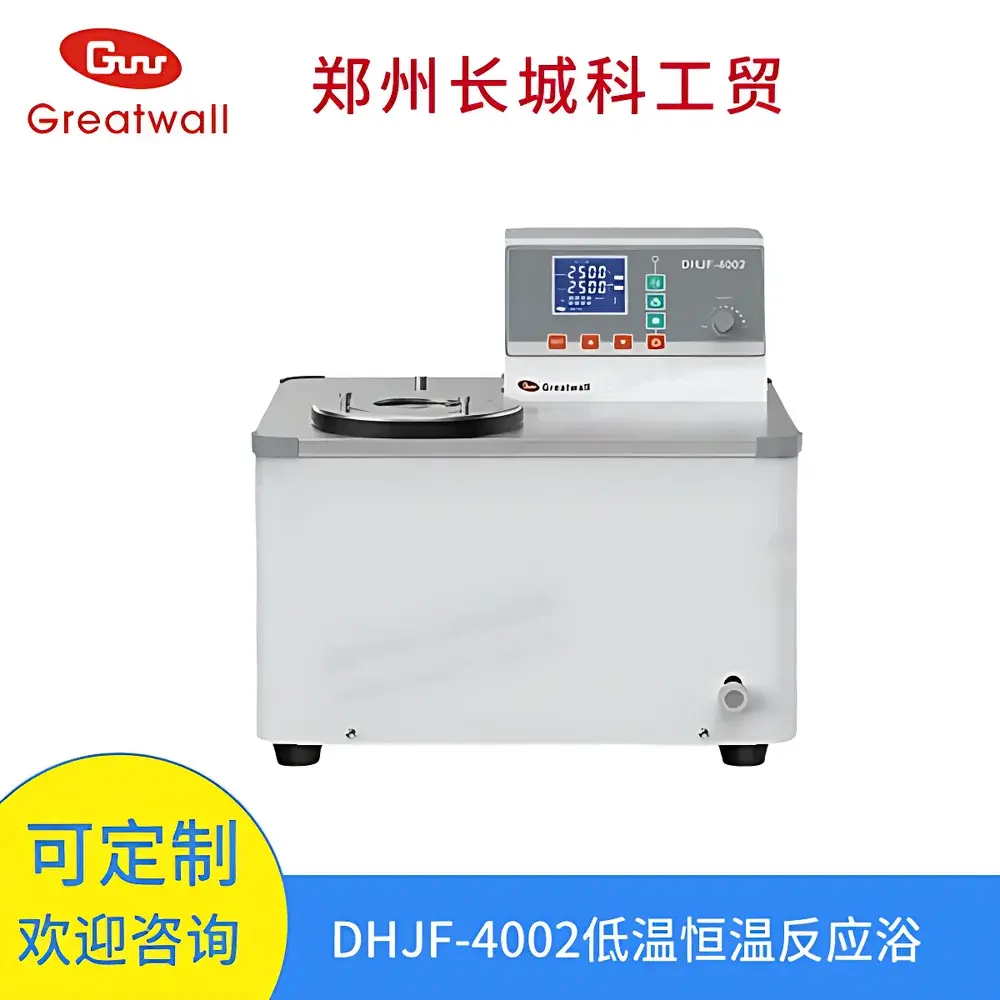
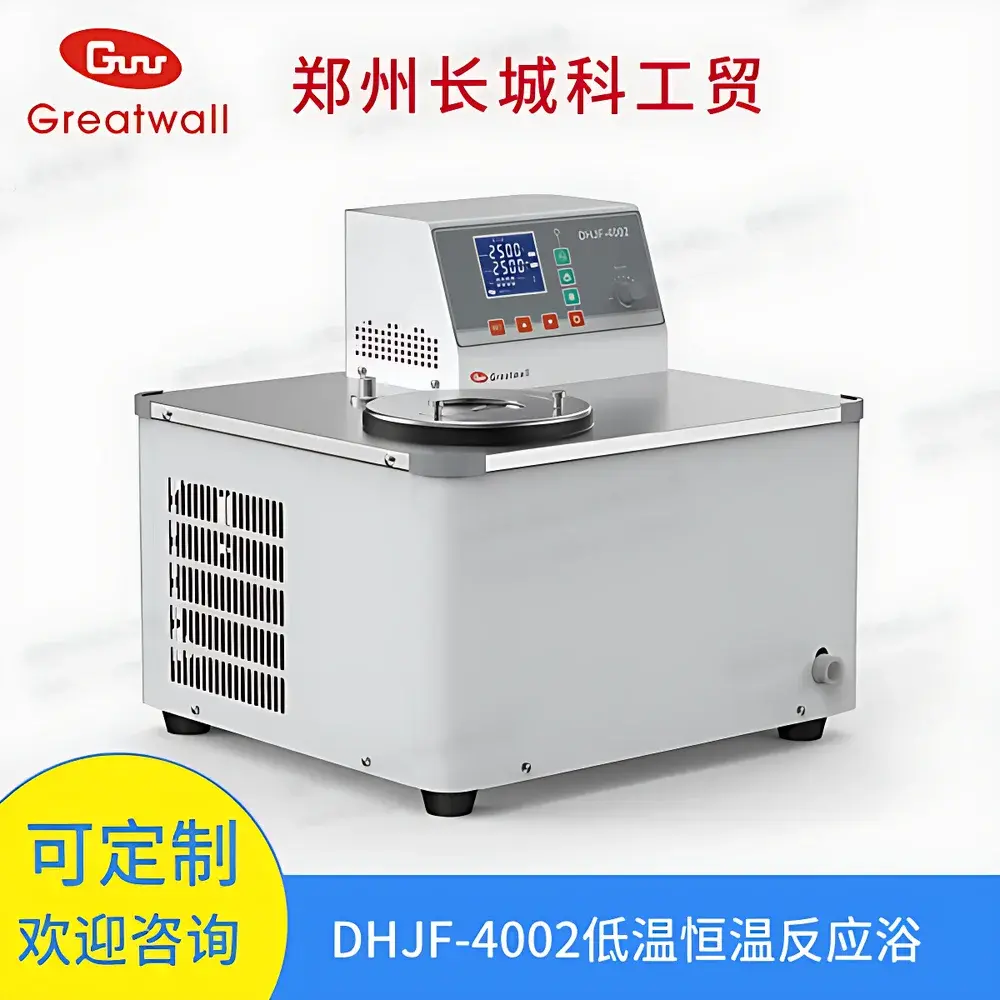
The Great Wall DHJF-4002 Low-Temperature Constant-Temperature Circulating Bath
| Brand | The Great Wall |
|---|---|
| Origin | Henan, China |
| Manufacturer Type | Direct Manufacturer |
| Product Category | Domestic |
| Model | DHJF-4002 |
| Instrument Type | Constant-Temperature Bath |
| Circulation Mode | Internal Circulation |
| Temperature Control | Refrigeration & Heating |
| Bath Volume | 2 L |
| Temperature Range | −40 °C to 99 °C |
| Temperature Stability | ±0.2 °C |
Overview
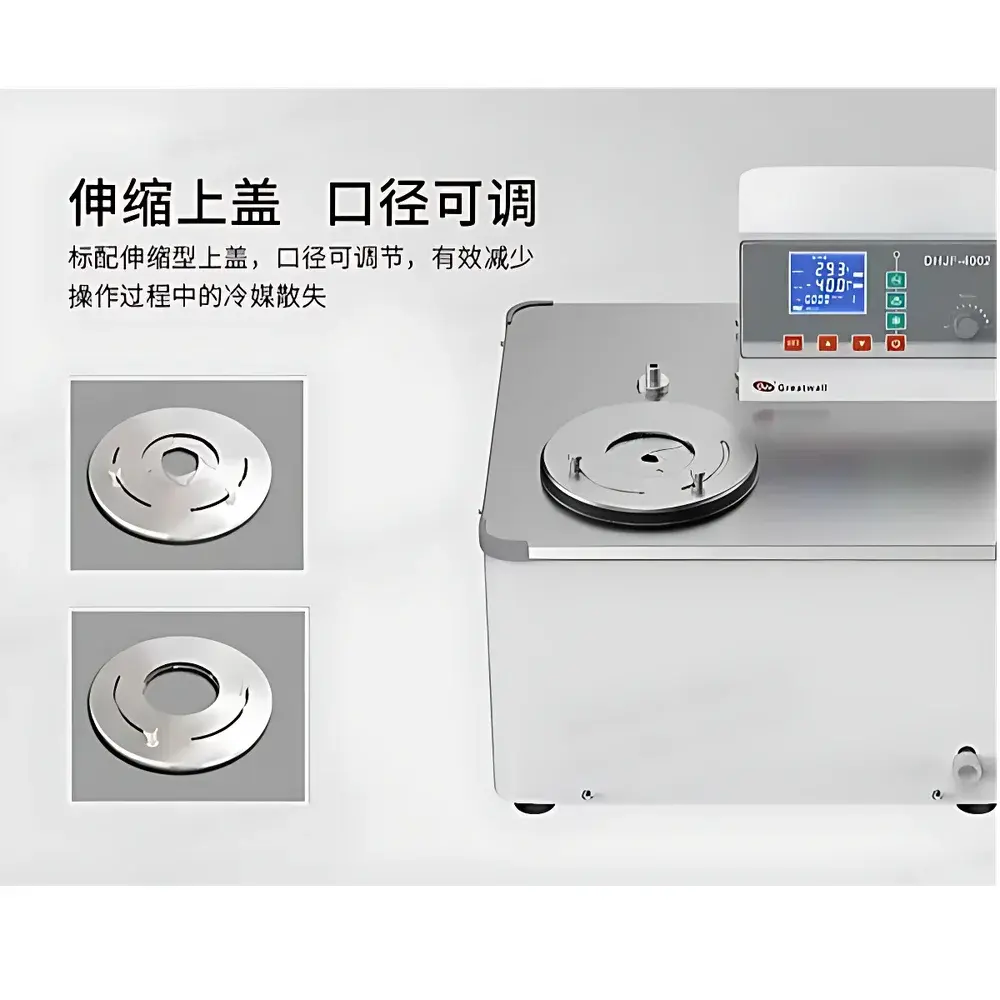
The Great Wall DHJF-4002 Low-Temperature Constant-Temperature Circulating Bath is a precision-engineered thermal management system designed for laboratory applications requiring stable, bidirectional temperature control across an extended operational range. Built upon a dual-mode thermodynamic architecture—integrating vapor-compression refrigeration and resistive heating—the DHJF-4002 maintains accurate thermal setpoints from −40 °C to +99 °C with a stability of ±0.2 °C under steady-state conditions. Its core function is to provide uniform, controllable thermal environments for external equipment (e.g., rotary evaporators, spectrophotometer cells, reaction vessels) or internal sample immersion via its 2-liter stainless-steel bath reservoir. Unlike passive water baths, the DHJF-4002 features active internal circulation to ensure homogeneous temperature distribution and minimize thermal gradients—critical for reproducible kinetic studies, calibration procedures, and low-temperature synthesis protocols.
Key Features
- Hermetically sealed, imported reciprocating compressor delivering reliable long-term refrigeration performance with low acoustic emission (<58 dB(A))
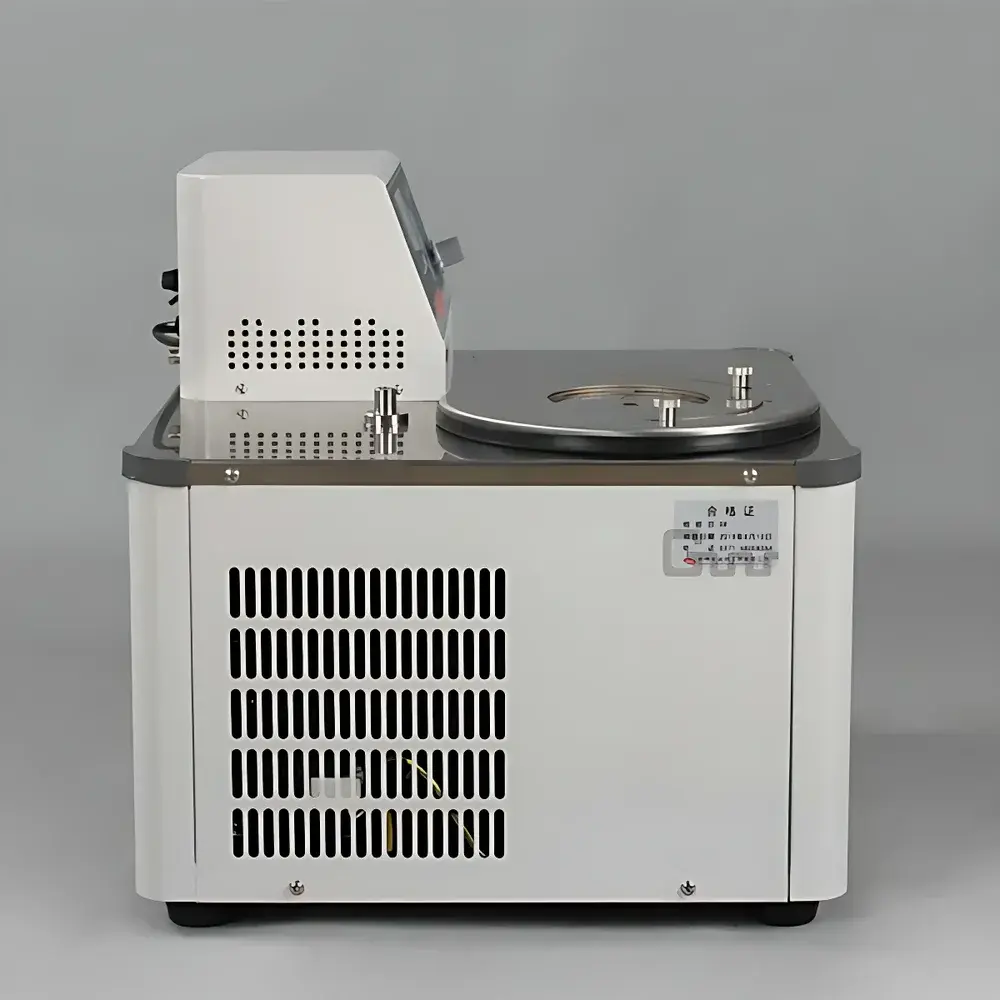
- High-efficiency air-cooled condenser with oxygen-free copper spiral tubing for enhanced heat transfer and simplified maintenance
- 304 stainless-steel coil-type evaporator directly immersed in the bath reservoir—designed to withstand freeze-thaw cycling without structural compromise
- Externally mounted 304 stainless-steel tubular heating element compliant with JB/T 2379 industrial standards for electrical safety and thermal durability
- PID-based digital temperature controller with five-segment programmable ramp-soak profiles, enabling complex thermal protocols without external software
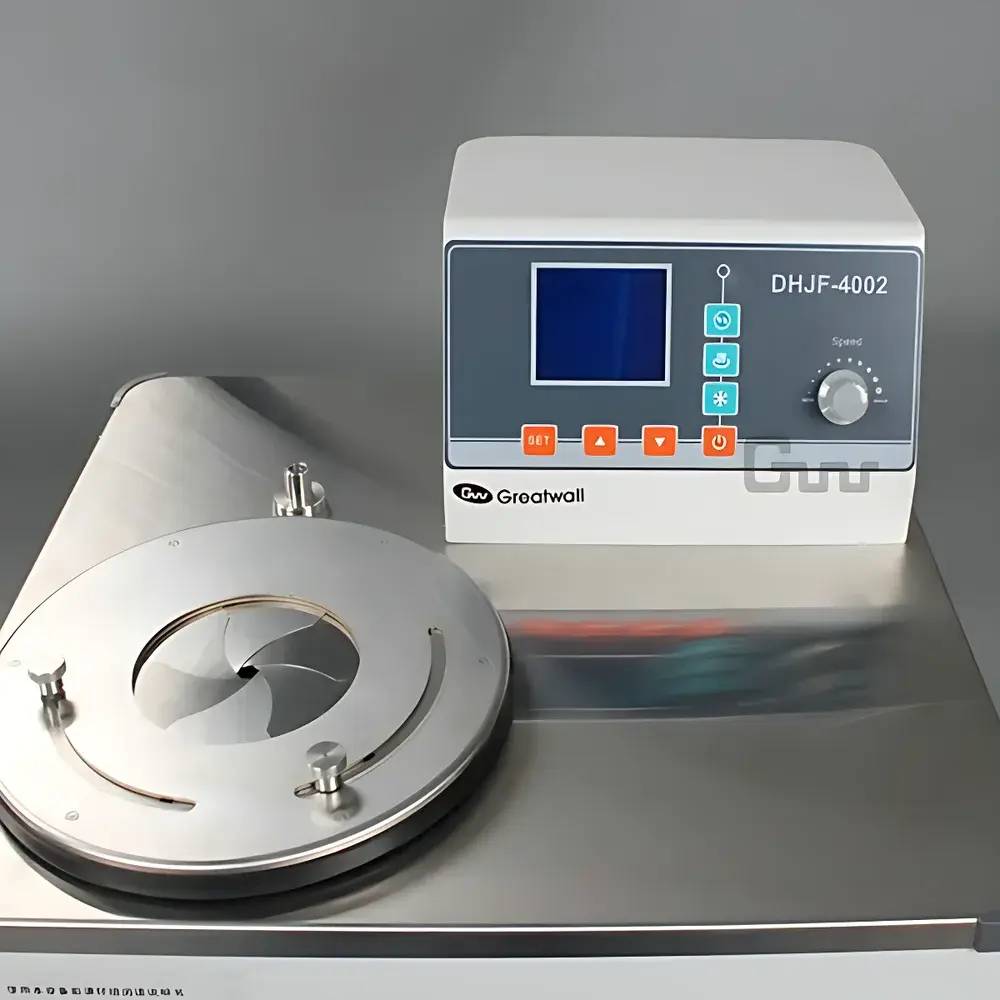
- Backlit LCD interface with intuitive menu navigation, real-time setpoint/actual temperature display, and status indicators for compressor, heater, and circulation pump
- Integrated internal recirculation pump (non-magnetic impeller, max. flow rate: 12 L/min) ensuring consistent fluid dynamics and minimal temperature deviation across the bath volume
Sample Compatibility & Compliance
The DHJF-4002 accommodates aqueous solutions, ethanol/water mixtures, silicone oils (up to 100 cSt), and other non-corrosive, non-flammable heat-transfer fluids compatible with 304 stainless steel and fluoropolymer seals. It supports immersion of glassware (e.g., jacketed reactors, condensers), probe-based sensors, and externally connected apparatus via standard 1/4″–3/8″ NPT or G1/4″ ports. While not certified for hazardous area use (ATEX/IECEx), the unit complies with GB 4793.1–2019 (Safety Requirements for Electrical Equipment for Measurement, Control, and Laboratory Use) and meets electromagnetic compatibility requirements per GB/T 18268.1–2010. Its design facilitates integration into GLP-compliant workflows through traceable temperature logging (via optional RS485/Modbus RTU output) and supports audit-ready operation when paired with validated calibration records.
Software & Data Management
The DHJF-4002 operates as a standalone instrument with no bundled PC software; however, its optional RS485 serial interface enables communication with third-party data acquisition systems using Modbus RTU protocol (addressable register mapping provided in technical manual). Users may log temperature setpoints, actual bath temperature, compressor/heater status, and error codes at configurable intervals (1–60 s). When deployed in regulated environments, the device supports 21 CFR Part 11–aligned practices via external software platforms that implement electronic signatures, audit trails, and user access controls—though native electronic record generation is not embedded. Calibration certificates (traceable to NIM, China) are supplied with each unit, and field recalibration of the Pt100 sensor is supported using standard reference baths.
Applications
- Low-temperature crystallization and polymorph screening in pharmaceutical development
- Thermal conditioning of optical components prior to interferometric measurement
- Controlled cooling of exothermic Grignard or lithiation reactions in synthetic organic chemistry
- Calibration of thermocouples, RTDs, and infrared thermometers across sub-zero to near-boiling ranges
- Stabilization of laser diodes and photodetectors requiring precise thermal biasing
- Viscometry support for rotational rheometers operating below ambient temperature
- Environmental stress testing of microfluidic devices and MEMS sensors
FAQ
What types of heat-transfer fluids are compatible with the DHJF-4002?
Deionized water, 30%–50% ethylene glycol/water mixtures, and low-viscosity silicone oils (≤100 cSt) are recommended. Avoid halogenated solvents, strong acids/bases, or fluids with freezing points above −40 °C.
Can the DHJF-4002 be used for external circulation to cool a rotary evaporator?
No—it supports internal circulation only. For external jacket cooling, consider the DHJF-4005 or DZT series models equipped with dual inlet/outlet ports and higher pressure-rated pumps.
Is the temperature sensor calibrated before shipment?
Yes. Each unit ships with a factory calibration certificate referencing NIM-traceable standards, covering three points: −20 °C, 25 °C, and 70 °C.
How often should preventive maintenance be performed?
Compressor oil inspection every 24 months; condenser coil cleaning every 6 months in dusty environments; annual verification of PID tuning parameters using a calibrated reference thermometer.
Does the unit meet ISO/IEC 17025 requirements for accredited laboratories?
The DHJF-4002 itself is not ISO/IEC 17025 certified, but its metrological performance, documentation, and traceable calibration support compliance when incorporated into a laboratory’s validated equipment management system.



