
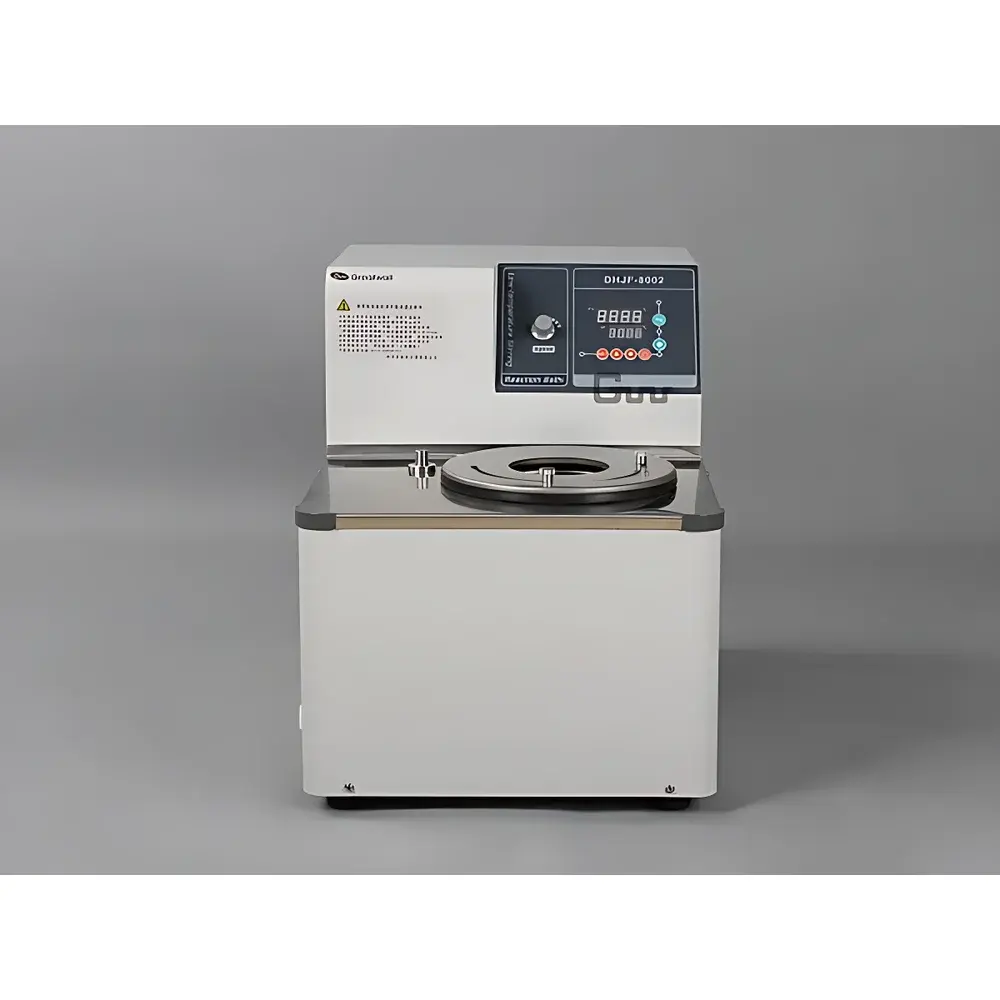
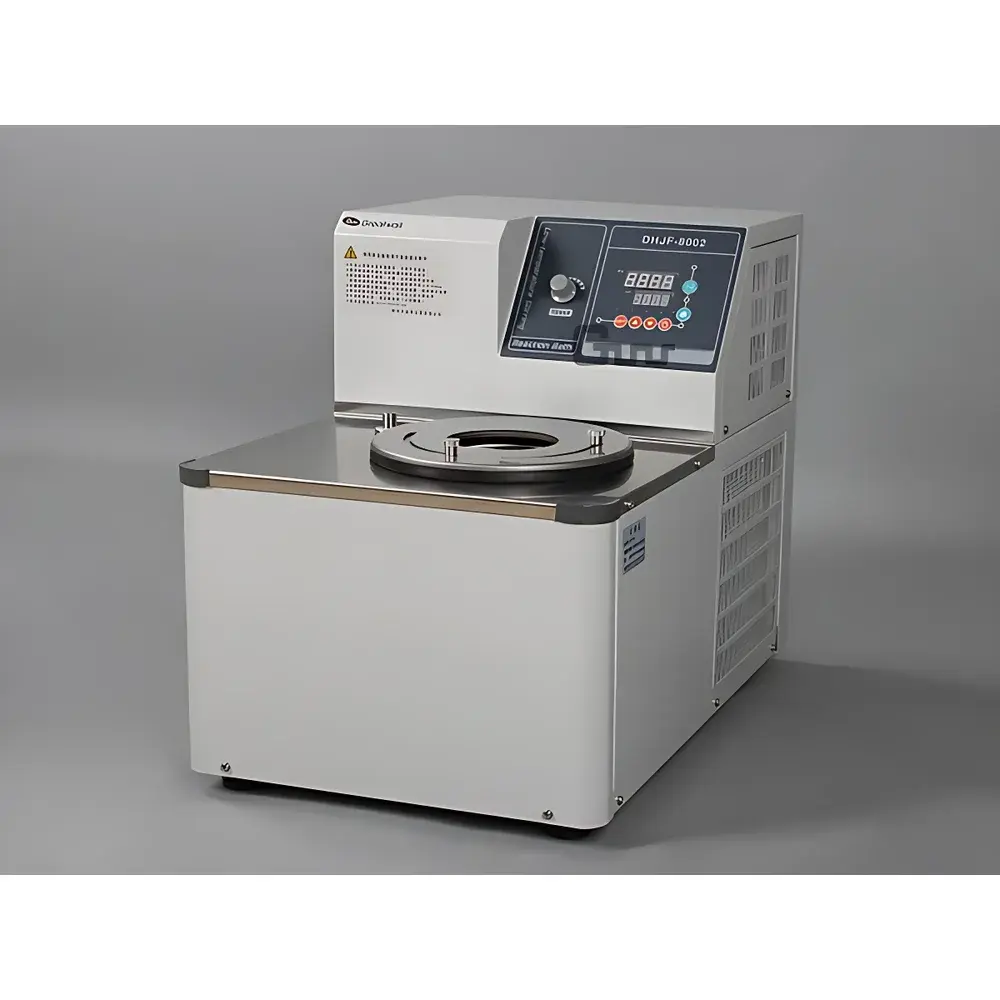
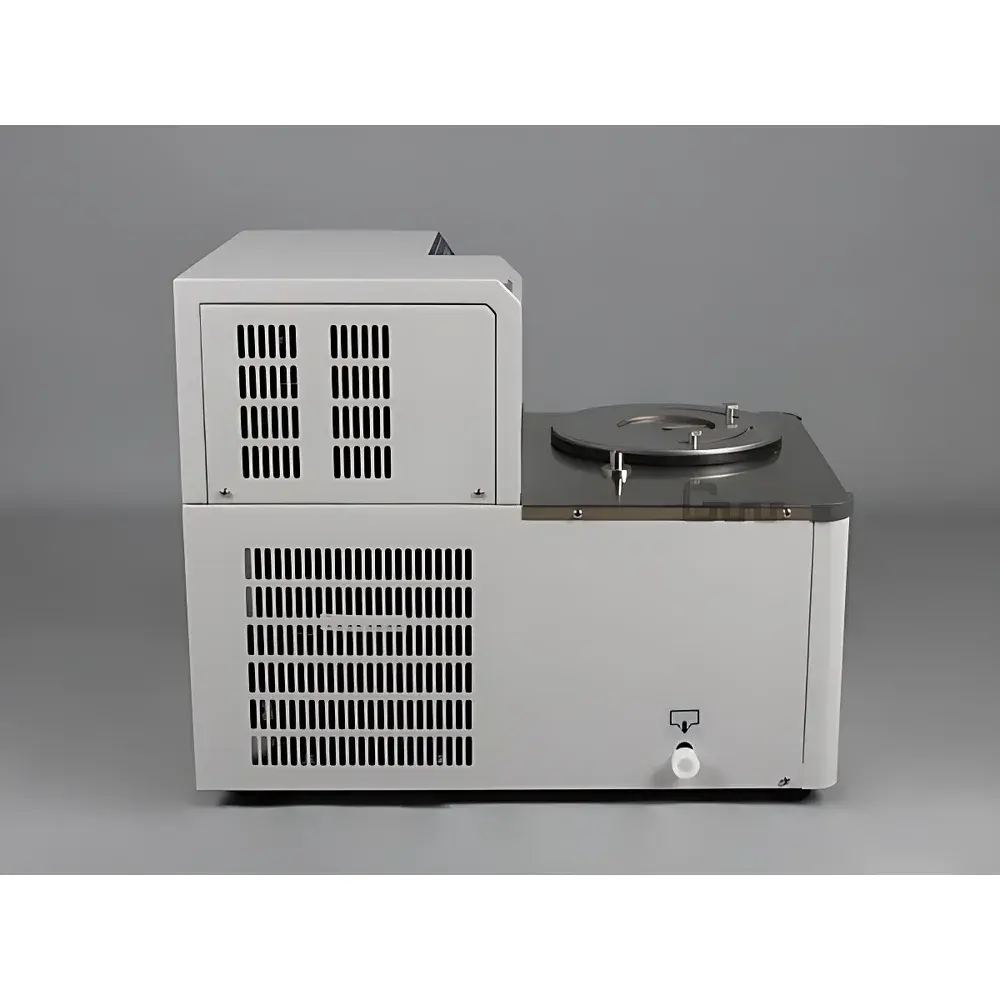
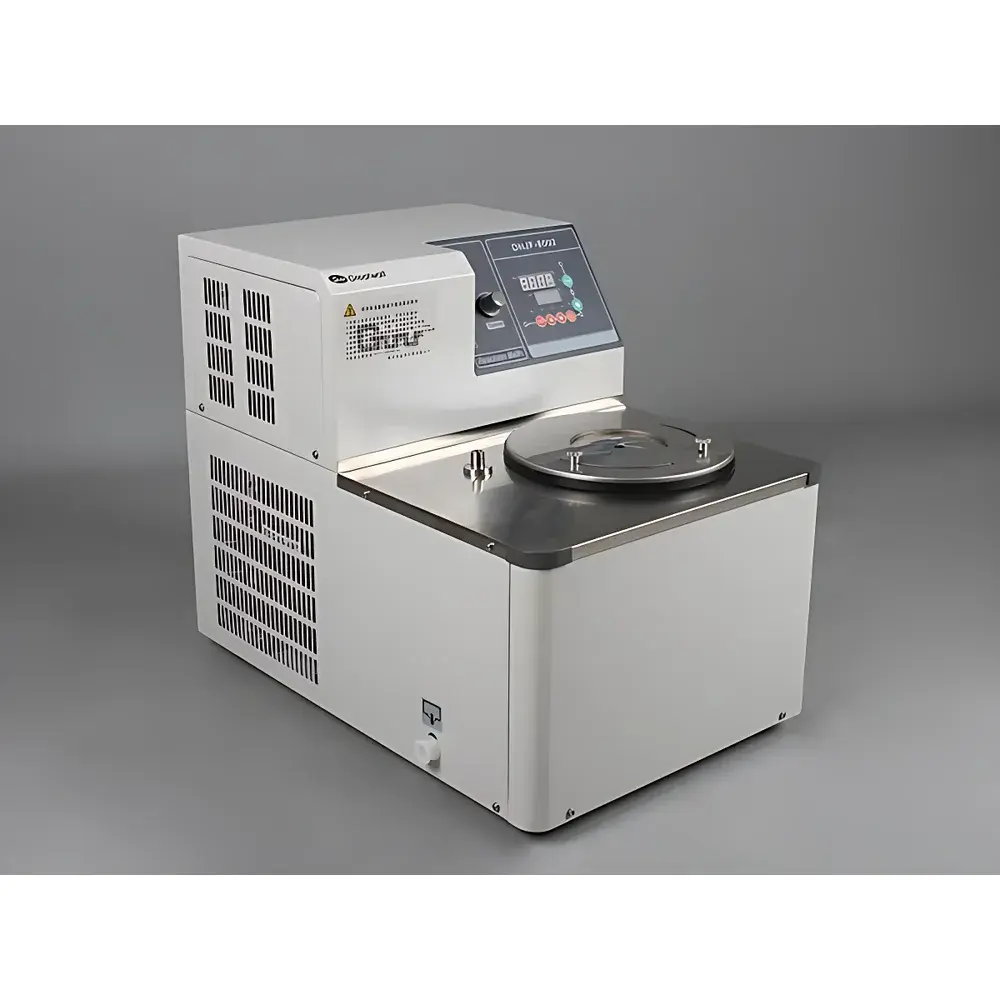
The Great Wall DHJF-8002W Low-Temperature Constant-Temperature Stirring Bath
| Brand | The Great Wall |
|---|---|
| Origin | Henan, China |
| Manufacturer Type | Direct Manufacturer |
| Country of Origin | China |
| Model | DHJF-8002W |
| Price | Upon Request |
| Tank Capacity | 2 L |
| Temperature Range | −80 °C to +10 °C |
| Temperature Stability | ±2 °C |
| Total Power | 1020 W |
| Refrigerants | R404A & R23 |
| Cooling Capacity | 200 W at −40 °C / 120 W at −60 °C / 60 W at −80 °C |
| Magnetic Stirring Power | 50 W |
| Stirring Speed | 100–1000 rpm |
| Ambient Operating Temperature | 5–35 °C |
| Max. Relative Humidity | ≤70% |
| Power Supply | 220 V~, 50 Hz |
| Opening Diameter | Ø140 mm |
| Tank Dimensions | Ø160 × 105 mm (D × H) |
| Max. Flask Volume Supported | 500 mL |
| Tank Material | 304 Stainless Steel |
| Overall Dimensions | 410 W × 610 D × 495 H mm |
| Net Weight | 68 kg |
| Safety Protections | Dry-run prevention (for heating models), overcurrent, overtemperature, and startup delay protection |
Overview
The Great Wall DHJF-8002W Low-Temperature Constant-Temperature Stirring Bath is an integrated laboratory thermal management system engineered for precision temperature control and active mixing in chemical synthesis, low-temperature catalysis, cryogenic reaction monitoring, and material characterization workflows. It operates on a dual-refrigerant cascade cooling architecture utilizing R404A (high-stage) and R23 (low-stage) refrigerants, enabling stable operation down to −80 °C—critical for reactions requiring deep-cryogenic conditions such as organolithium chemistry, Grignard reagent preparation, or low-T polymerization kinetics studies. Unlike passive cold baths or dry-ice slurry setups, the DHJF-8002W delivers closed-loop PID-controlled temperature regulation with ±2 °C stability across its full operating range (−80 °C to +10 °C), ensuring reproducible thermal environments essential for kinetic modeling and thermodynamic parameter derivation. Its stainless steel (304) reservoir provides corrosion resistance against common organic solvents and aqueous electrolytes, while the sealed bath design minimizes refrigerant loss and ambient moisture ingress during extended operation.
Key Features
- High-stability PID temperature control algorithm with real-time feedback from dual-sensor monitoring (bath fluid and external probe input optional), minimizing thermal overshoot and drift.
- Integrated high-torque magnetic stirrer (50 W, 100–1000 rpm) capable of synchronously rotating both internal bath stir bars and reaction vessel stir bars—enabling uniform heat transfer and homogeneous reaction mixtures without mechanical shaft penetration.
- Adjustable telescoping lid with concentric aperture (Ø140 mm max opening) reduces convective heat exchange and cryogen evaporation by >40% compared to fixed-open baths, extending operational duration at sub-zero temperatures.
- Dedicated mounting rail and universal clamping interface support auxiliary instrumentation including burettes, Pt100 temperature probes, pH electrodes, reflux condensers, and inert gas inlet lines—facilitating multi-parameter reaction monitoring under controlled atmospheres.
- Comprehensive safety architecture includes delayed startup sequencing, overcurrent cutoff, overtemperature shutdown, and (in heating-equipped variants) dry-burn protection—fully compliant with IEC 61010-1:2010 safety requirements for laboratory equipment.
Sample Compatibility & Compliance
The DHJF-8002W accommodates standard laboratory glassware up to 500 mL capacity (e.g., round-bottom flasks, jacketed reactors, and Schlenk tubes) via its Ø160 mm × 105 mm 304 stainless steel reservoir. Its non-reactive tank surface and chemically inert refrigerant circuit ensure compatibility with aliphatic/aromatic hydrocarbons, chlorinated solvents (e.g., CH₂Cl₂, CHCl₃), ethers (THF, diethyl ether), and polar aprotic media (DMF, DMSO). The system meets CE marking requirements per Directive 2014/30/EU (EMC) and 2014/35/EU (LVD), and its electrical insulation and grounding design conform to GLP-compliant laboratory infrastructure standards. While not intrinsically rated for Class I Division 1 hazardous locations, it may be deployed in fume hoods or ventilated enclosures when used with flammable cryogens or reactive substrates.
Software & Data Management
The DHJF-8002W operates via front-panel membrane keypad with LED display; no embedded software or USB connectivity is provided in the base configuration. However, analog output (0–5 V or 4–20 mA) is available for external data logging systems, supporting integration into centralized lab automation platforms (e.g., LabArchives, DeltaV, or custom SCADA). When paired with optional PT100 external temperature sensors and third-party DAQ hardware, users can achieve time-stamped temperature/stirring profiles traceable to NIST-traceable calibration sources—meeting audit requirements under ISO/IEC 17025 and FDA 21 CFR Part 11 (when validated electronic records are implemented at the system level). Firmware updates are performed manually via factory service only; no remote firmware modification capability exists.
Applications
- Cryogenic organic synthesis requiring strict thermal control below −60 °C (e.g., deprotonation steps, lithiation, asymmetric epoxidation).
- Low-temperature enzymatic assays where activity and conformational stability are highly temperature-sensitive.
- Calorimetric pre-conditioning of samples prior to DSC or TGA analysis.
- Controlled crystallization studies of pharmaceutical intermediates under sub-ambient supersaturation conditions.
- Stabilization of thermally labile catalysts (e.g., Pd-nanoparticles, chiral ligands) during hydrogenation or cross-coupling reactions.
- Supporting cryo-microscopy sample preparation stages where precise thermal ramping avoids ice recrystallization artifacts.
FAQ
What refrigerants does the DHJF-8002W use, and are they compliant with current environmental regulations?
The unit employs a cascade system with R404A (GWP = 3922) and R23 (GWP = 14800). While these refrigerants remain permissible for laboratory equipment under Article 11 of EU F-Gas Regulation No. 517/2014 (exemption for low-charge, hermetically sealed systems), users should consult local regulatory authorities regarding phaseout timelines and reporting obligations.
Can the DHJF-8002W maintain −80 °C continuously with a 500 mL flask immersed?
Yes—under ambient conditions ≤25 °C and ≤60% RH, the unit sustains −80 °C in the bath fluid with a 500 mL flask containing ≤300 mL of solvent. Actual setpoint stability depends on thermal mass, solvent thermal conductivity, and flask wall thickness; empirical validation is recommended for critical protocols.
Is external temperature feedback supported for closed-loop control?
The device accepts optional external Pt100 input (via rear terminal block) for dual-sensor control mode, allowing the system to regulate based on reactor jacket temperature rather than bath fluid temperature—enhancing accuracy in exothermic or poorly conductive reaction systems.
What maintenance intervals are recommended for long-term reliability?
Compressor oil and refrigerant levels require verification every 24 months by authorized service personnel; condenser coil cleaning is advised quarterly in dust-prone environments. The magnetic stirrer bearing assembly is rated for ≥10,000 hours of continuous operation at mid-range speeds (400–700 rpm).



