
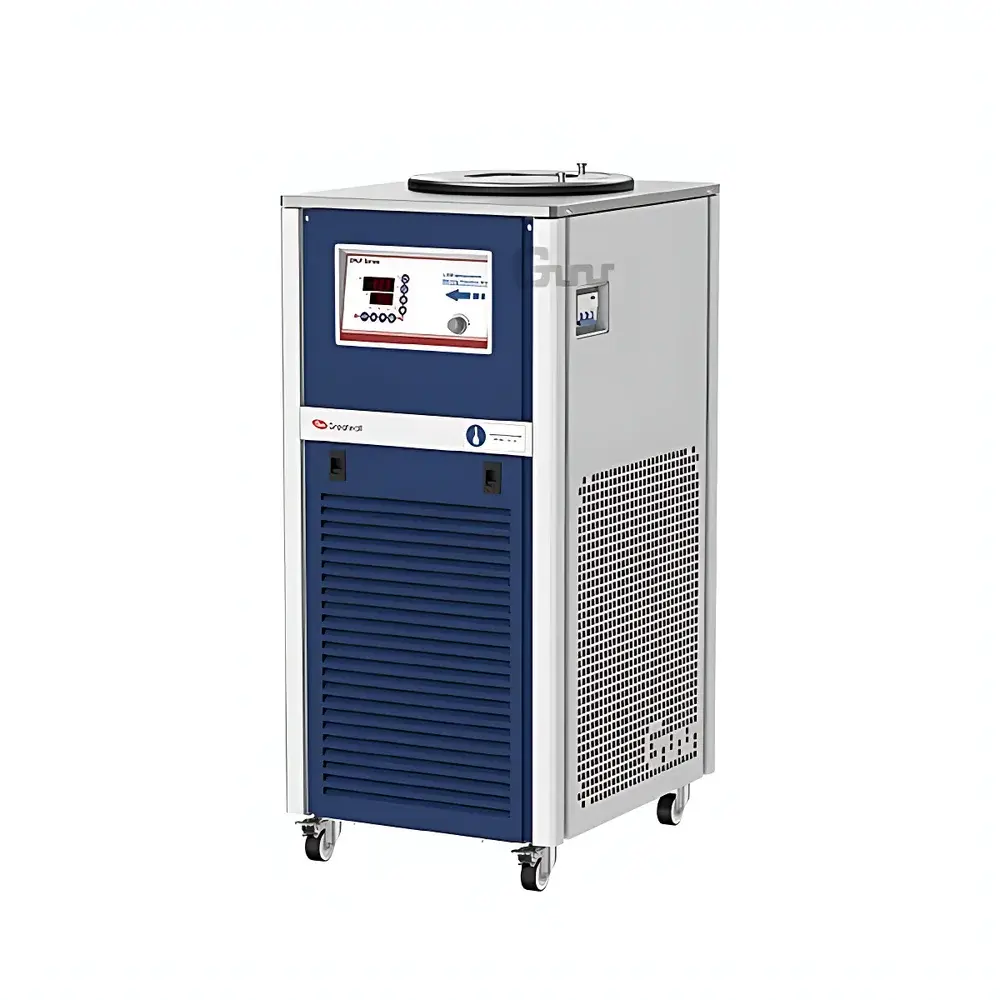
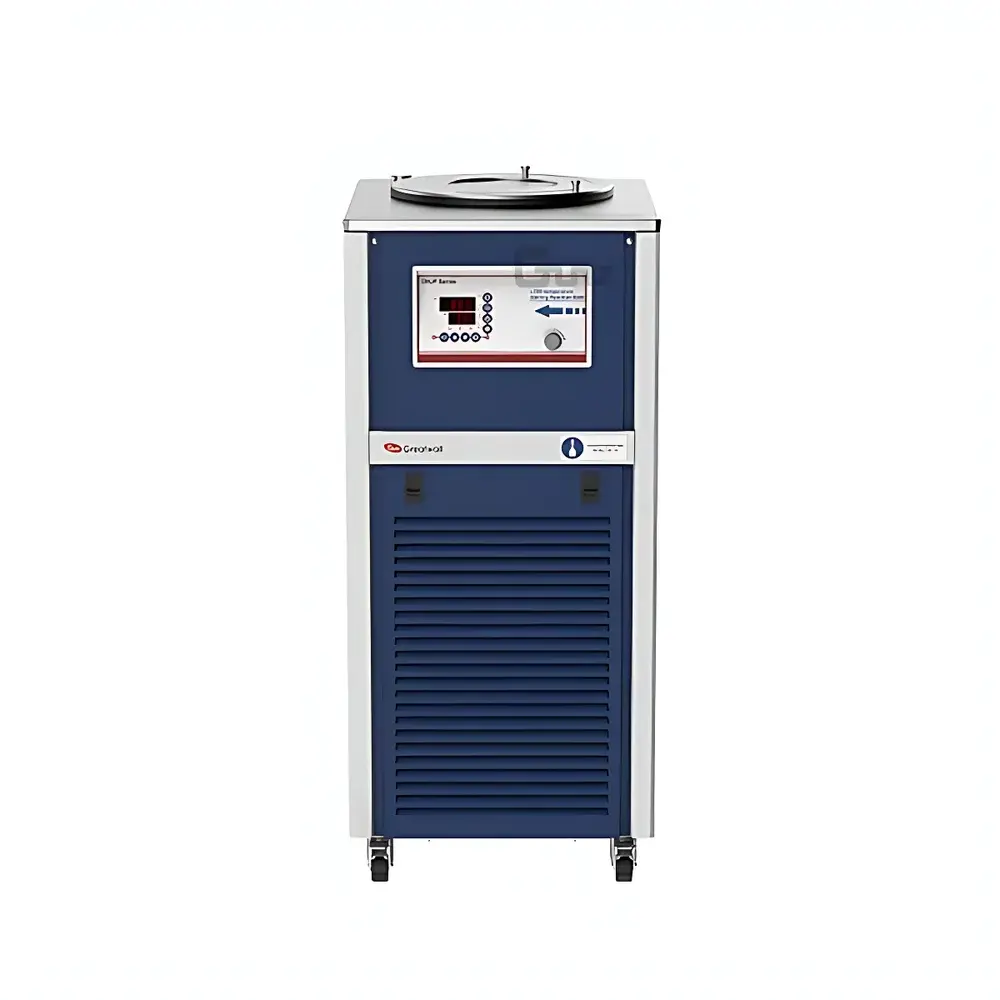
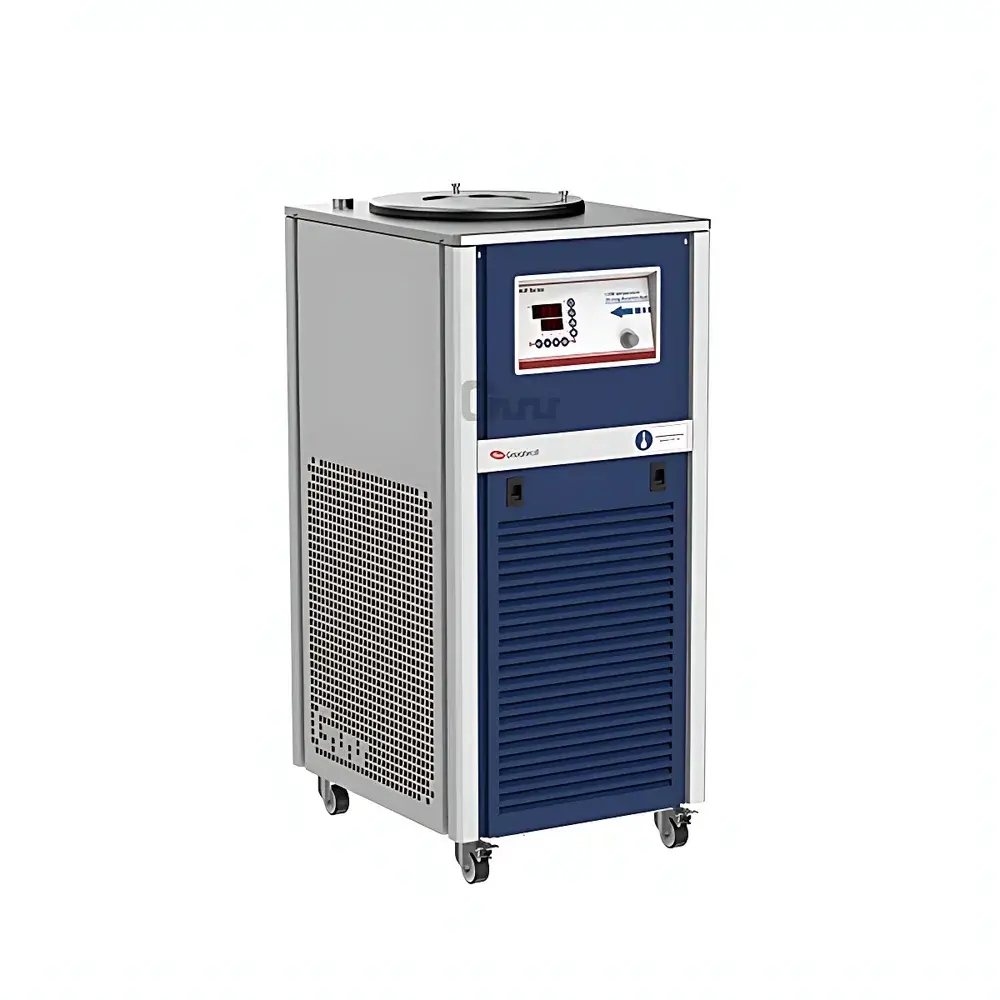
Great Wall DHJF-8005E Low-Temperature Constant-Temperature Circulating Bath with Magnetic Stirring
| Brand | The Great Wall |
|---|---|
| Origin | Henan, China |
| Manufacturer Type | Direct Manufacturer |
| Instrument Type | Constant-Temperature Circulating Bath |
| Circulation Mode | External Circulation |
| Temperature Control | Refrigeration & Heating Dual-Mode |
| Bath Volume | 5 L |
| Temperature Range | −80 °C to +99 °C |
| Temperature Stability | ±0.2 °C |
| Stirring | Integrated Magnetic Stirrer (Dual-Point: Bath & Sample Vessel) |
| Lid | Adjustable Telescopic Cover |
| Accessories | Universal Mounting Bracket for Burettes, Probes, and Sensors |
| Safety | Dry-Burn Protection (Heating Mode) |
Overview
The Great Wall DHJF-8005E is a precision-engineered low-temperature constant-temperature circulating bath designed for demanding laboratory applications requiring stable thermal control across an extended range—from cryogenic cooling at −80 °C to precise heating up to +99 °C. Unlike conventional water or oil baths limited to ambient or moderate temperature ranges, the DHJF-8005E integrates a dual-mode refrigeration–heating system based on cascade compressor technology, enabling rapid thermal equilibration and high-fidelity setpoint maintenance. Its core function is to serve either as a self-contained reaction environment—equipped with magnetic stirring for homogeneous thermal distribution—or as an external thermal source/sink for peripheral instrumentation (e.g., spectrophotometers, calorimeters, or flow reactors) via its externally plumbed circulation port. The system operates on a PID-controlled feedback loop, continuously monitoring bath temperature via a calibrated Pt100 sensor and dynamically modulating compressor output and heater duty cycle to sustain ±0.2 °C stability under dynamic load conditions. This level of thermal fidelity supports kinetic studies, crystallization protocols, enzyme activity assays, and low-temperature synthesis where thermal drift directly impacts reaction reproducibility and product selectivity.
Key Features
- Dual-mode thermal regulation: Independent refrigeration and heating circuits enable seamless transition between sub-zero and near-boiling operating points without manual reconfiguration.
- Integrated dual-point magnetic stirring: A submerged stir motor rotates both the internal bath stir bar and—via coupling—the stir bar inside the immersed reaction vessel, ensuring uniform thermal conduction and eliminating stratification artifacts.
- Adjustable telescopic lid: Reduces evaporation of low-volatility heat-transfer fluids (e.g., ethylene glycol/water mixtures or silicone oils) and minimizes parasitic heat exchange with ambient air, critical for maintaining stability at extreme setpoints.
- Modular mounting bracket: Precision-machined aluminum rail accommodates standard 10–16 mm diameter glassware supports, pH electrodes, temperature probes, burettes, and reflux condensers—enabling full experimental rig integration within a single platform.
- Dry-burn protection circuitry: Automatically deactivates the heating element if fluid level falls below the minimum operational threshold, preventing thermal runaway and extending heater longevity.
- External circulation interface: 3/8″ BSP threaded ports support closed-loop connection to auxiliary equipment; flow rate adjustable via integrated bypass valve to match system impedance and prevent cavitation.
Sample Compatibility & Compliance
The DHJF-8005E accommodates standard laboratory glassware—including round-bottom flasks (50–1000 mL), jacketed reactors, and immersion-cooled cuvettes—within its 5 L stainless-steel bath chamber. It is compatible with aqueous, glycol-based, and silicone oil heat-transfer media, supporting viscosity ranges from 1 cP to >1000 cP at operating temperatures. While not certified to ISO/IEC 17025 or ASTM E2465 for metrological traceability, its thermal performance aligns with common GLP practices for method validation in QC laboratories. The unit meets CE safety directives (2014/35/EU Low Voltage Directive and 2014/30/EU EMC Directive) and complies with RoHS 2011/65/EU material restrictions. Its dry-burn protection and over-temperature cutoff (set at +105 °C) satisfy fundamental requirements outlined in IEC 61010-1 for laboratory electrical equipment safety.
Software & Data Management
The DHJF-8005E operates via a front-panel membrane keypad with dual-line LCD display showing real-time bath temperature, setpoint, and status indicators (e.g., “Cool”, “Heat”, “Stir”, “Alarm”). While it does not feature native USB or Ethernet connectivity, analog 0–5 V or 4–20 mA output signals are available for external data logging systems. Users may integrate the unit into centralized LabVantage or LabWare environments using optional third-party analog-to-digital converters and custom SCADA scripting. All parameter changes—including setpoint ramp rates, hold times, and stir speed—are manually configured and retained in non-volatile memory. Audit trails are maintained through operator logbooks per GLP Annex 11 guidance, and calibration records for the Pt100 sensor should be updated annually against NIST-traceable references.
Applications
- Catalytic hydrogenation and Grignard reactions requiring strict −20 °C to −78 °C control.
- Protein folding and aggregation studies monitored by CD or fluorescence spectroscopy at defined thermal ramps.
- Calibration of thermocouples, RTDs, and infrared pyrometers across multi-point temperature spans.
- Viscosity benchmarking of polymer melts and lubricants using rotational viscometers with external temperature control.
- Long-duration stability testing of pharmaceutical formulations under accelerated aging conditions (e.g., ICH Q1A).
- Support of FTIR and Raman spectroelectrochemistry cells requiring electrode temperature stabilization during redox cycling.
FAQ
What heat-transfer fluids are recommended for operation below −40 °C?
Ethylene glycol/water (30/70 v/v) is suitable down to −45 °C; for −80 °C operation, use specialized low-temperature silicone oils (e.g., DC-200 series) with pour points ≤ −90 °C.
Can the DHJF-8005E maintain temperature stability while circulating fluid externally at 2 L/min?
Yes—its 120 W circulation pump and 800 W combined thermal capacity ensure ±0.3 °C stability under nominal external load; stability degrades to ±0.5 °C above 3 L/min due to increased thermal lag.
Is the magnetic stirring torque sufficient to rotate a PTFE-coated stir bar in a 500 mL thick-walled jacketed reactor?
The 1200 rpm, 50 mN·m motor delivers adequate coupling torque for vessels ≤1 L with wall thickness ≤2.5 mm; for thicker glass or metal jackets, direct-drive stirring is recommended.
Does the unit support programmable temperature ramps?
No—ramp profiles require external controller integration via analog setpoint input; the onboard interface supports only static setpoints and manual step changes.
How often should the refrigerant charge be verified?
Refrigerant integrity should be confirmed every 24 months via pressure–temperature correlation checks against manufacturer-specified saturation curves; service must be performed by certified HVAC-R technicians.
Related Products



