
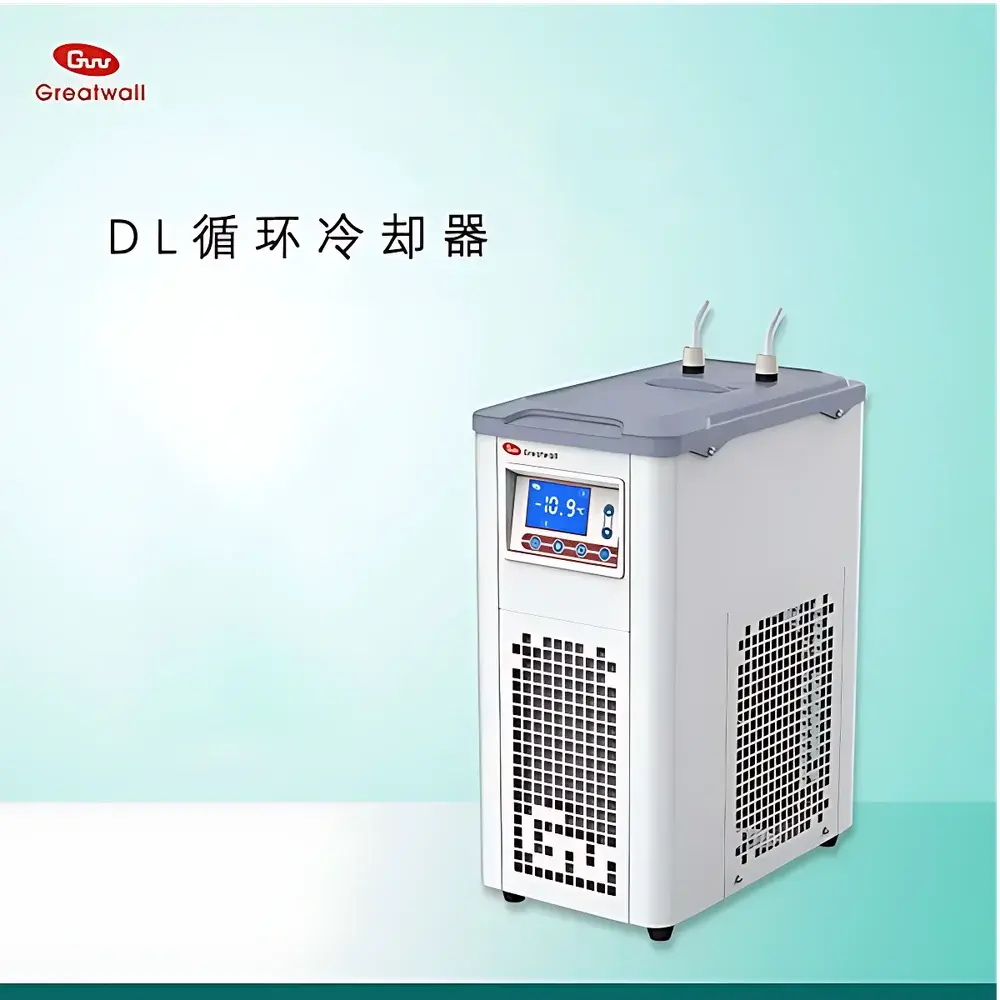
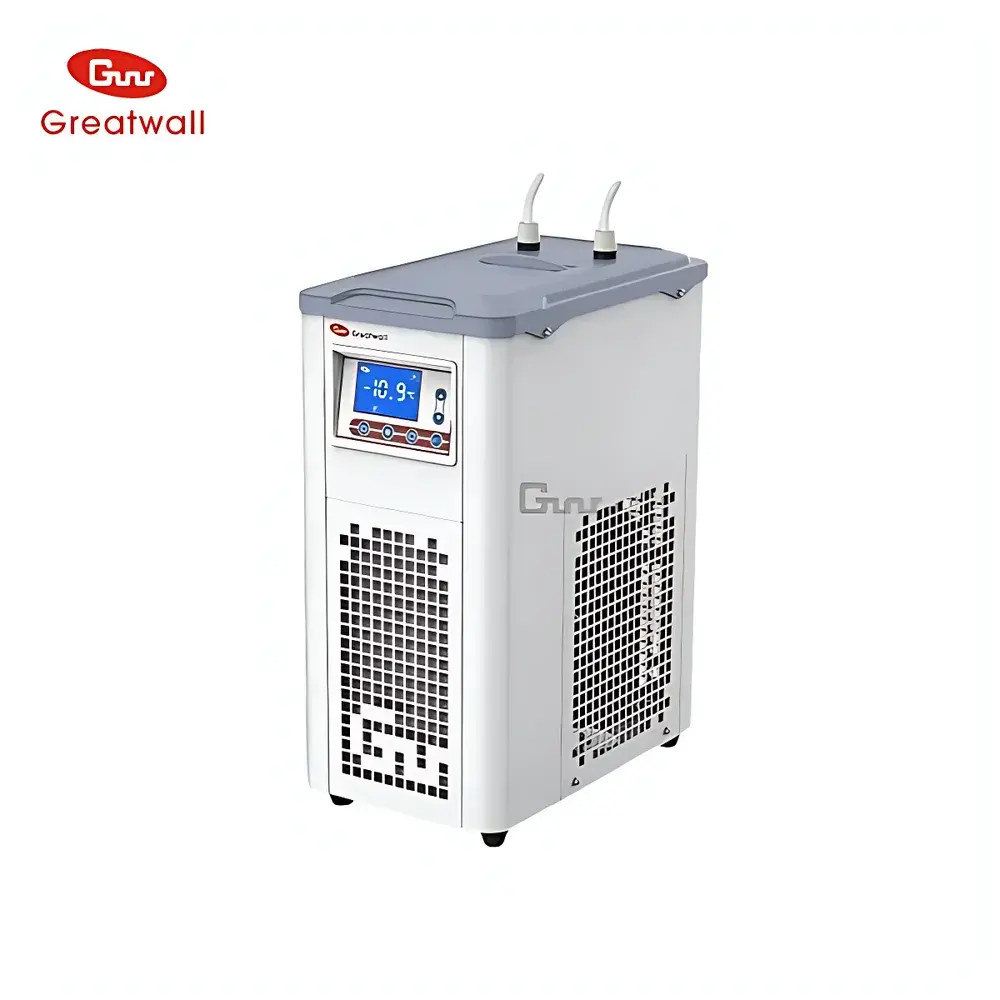
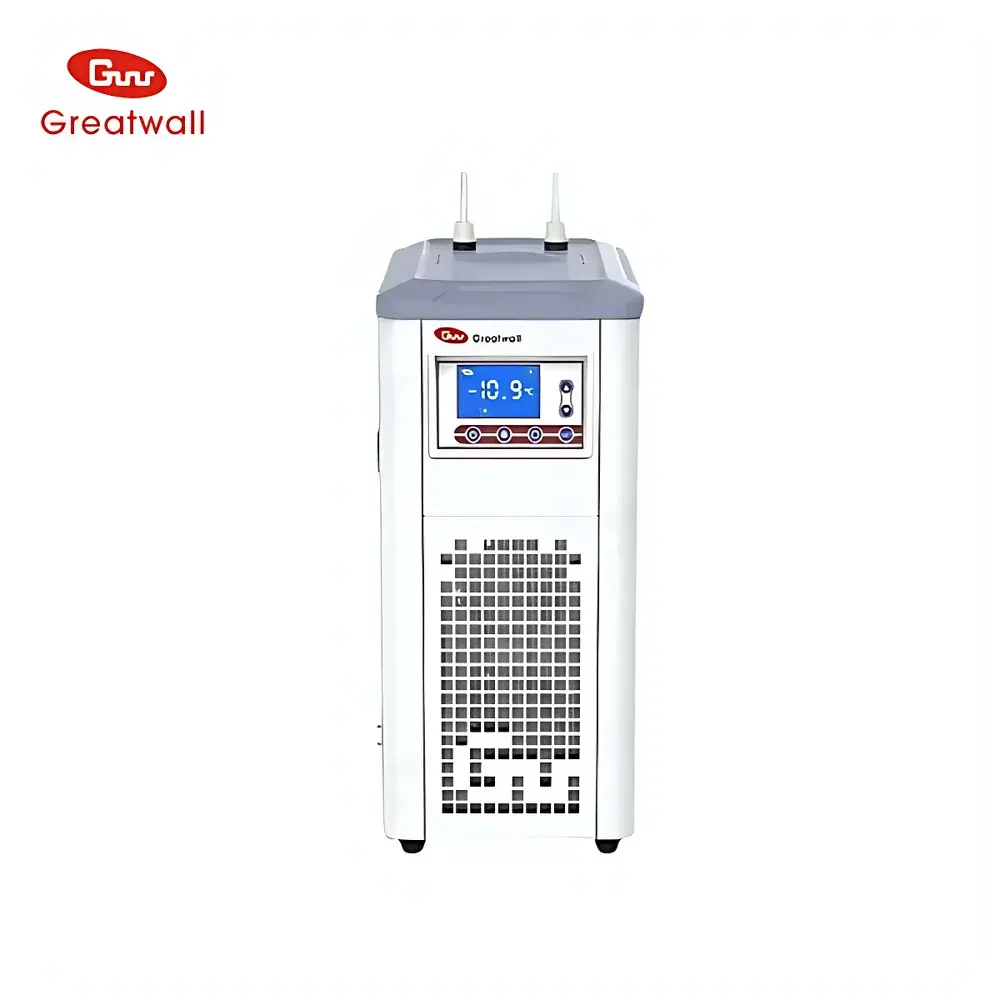
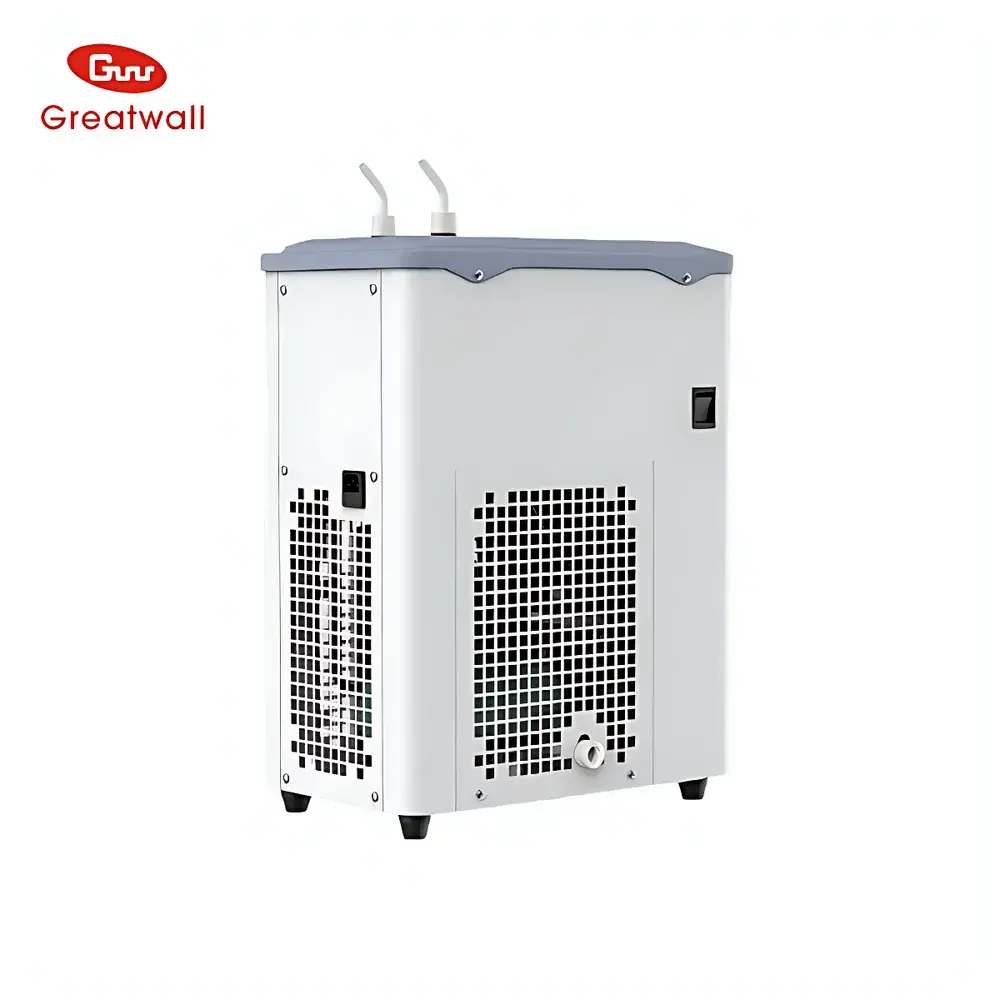
The Great Wall DL-400 Circulating Chiller
| Brand | The Great Wall |
|---|---|
| Origin | Henan, China |
| Manufacturer Type | Direct Manufacturer |
| Model | DL-400 |
| Instrument Type | Integrated Unit |
| Cooling Method | Air-Cooled |
| Temperature Control Range | −15 °C to 25 °C |
| Refrigeration Capacity | 400 W at 0 °C |
| Temperature Stability | ±2 °C |
| Circulation Pump Pressure | 0.2 bar |
| Circulation Flow Rate | 17 L/min |
| Reservoir Volume | 3 L |
| Operating Mode | Continuous |
| Display Resolution | 0.1 °C (LCD) |
| Sensor Type | Pt100 |
| Safety Protections | Compressor Delay Start, Thermal Overload Protection, Overcurrent Protection |
| Refrigerant | R134a |
| Power Supply | 220–240 V~, 50 Hz |
| Ambient Operating Conditions | 5–35 °C, ≤70% RH |
| Reservoir Material | SUS304 Stainless Steel |
| External Connection | Ø10 mm OD fitting, compatible with silicone tubing (Ø13 × Ø9 mm) |
| Dimensions (W×D×H) | 260 × 410 × 550 mm |
| Net Weight | 26 kg |
| Certification | CE (TUV certified) |
Overview
The Great Wall DL-400 Circulating Chiller is an integrated, air-cooled refrigeration system engineered for precise thermal management of laboratory equipment requiring stable low-temperature fluid circulation. Designed primarily for compatibility with small-scale rotary evaporators, vacuum concentrators, and analytical instrumentation, the unit operates on a closed-loop principle—circulating a temperature-controlled coolant (typically water or water-glycol mixtures) through external devices via a built-in centrifugal pump. Its thermodynamic architecture employs a hermetic compressor, finned-tube air-cooled condenser, and capillary tube expansion device, using environmentally compliant R134a refrigerant. The chiller maintains setpoint temperatures within ±2 °C across its operational range of −15 °C to 25 °C, enabling consistent heat extraction under continuous duty cycles. Its compact footprint (260 × 410 × 550 mm) and dual placement flexibility—on benchtop or floor—support space-constrained lab environments without compromising thermal performance.
Key Features
- Integrated air-cooled design eliminates need for external water supply or drain lines—ideal for labs with limited infrastructure;
- LCD digital display with 0.1 °C resolution and Pt100 platinum resistance thermometer input ensures accurate real-time temperature monitoring;
- 360° rotatable fluid coupling port simplifies hose routing and minimizes mechanical stress during connection to external apparatus;
- Comprehensive electrical and thermal protection suite: compressor delay start (prevents high-inrush current damage), thermal overload cutoff, and dual-stage overcurrent protection;
- SUS304 stainless steel reservoir resists corrosion from aqueous and mildly aggressive coolants, ensuring long-term fluid integrity and reduced maintenance;
- Stable 17 L/min flow rate at 0.2 bar pressure supports efficient heat transfer across typical lab-scale condensers and jackets;
- TÜV-certified CE marking confirms compliance with EU Machinery Directive 2006/42/EC and Low Voltage Directive 2014/35/EU.
Sample Compatibility & Compliance
The DL-400 is optimized for use with standard laboratory thermal loads up to 400 W at 0 °C—including rotary evaporator condensers (e.g., 1–5 L capacity systems), spectrophotometer Peltier modules, and small-volume reaction chillers. It accommodates common coolant media such as deionized water, 30% ethylene glycol/water blends, or other non-flammable, low-viscosity fluids compatible with stainless steel and silicone elastomer wetted parts. All materials in contact with coolant meet ISO 8502-3 cleanliness standards for laboratory-grade stainless steel. While not intrinsically rated for hazardous area use, the unit complies with IEC 61000-6-3 (EMC emission limits) and IEC 61000-6-2 (immunity requirements), supporting integration into GLP-compliant workflows where environmental stability and traceable operation are required.
Software & Data Management
The DL-400 operates as a standalone analog-digital hybrid controller with no embedded software stack or network interface. Temperature setpoints and status indicators are managed exclusively via front-panel LCD and tactile buttons—ensuring deterministic response, immunity to firmware vulnerabilities, and zero dependency on external computing resources. For laboratories implementing 21 CFR Part 11–compliant data governance, manual logbook entries or external USB data loggers (e.g., calibrated thermistor-based recorders) may be used to document setpoint history, runtime duration, and ambient condition correlation. The absence of cloud connectivity or remote access functionality inherently satisfies strict IT security policies governing instrument control in regulated pharmaceutical or clinical research settings.
Applications
- Condenser cooling for rotary evaporation of heat-sensitive organic solvents (e.g., diethyl ether, dichloromethane) under reduced pressure;
- Temperature stabilization of laser sources, CCD detectors, or NMR preamplifiers requiring sub-ambient thermal sinks;
- Process cooling support for benchtop synthesis reactors operating below ambient, particularly in exothermic Grignard or lithiation steps;
- Thermal conditioning of HPLC column ovens or autosampler trays during method development involving gradient elution at controlled low temperatures;
- Backup cooling for cryogenic traps or cold fingers in vacuum distillation or freeze-drying pilot systems.
FAQ
What is the minimum achievable temperature when operating at full load?
The DL-400 achieves −15 °C only under no-load (empty reservoir) conditions per test standard EN 60068-2-1. At rated 400 W thermal load and 25 °C ambient, the practical lower limit is approximately −5 °C to 0 °C depending on coolant composition and flow resistance.
Can this chiller be used with flammable solvents like acetone or ethanol as coolant?
No. The unit is designed exclusively for non-flammable, water-based coolants. Flammable liquids pose fire hazard risks due to proximity to compressor motor windings and electrical components.
Is the reservoir volume sufficient for uninterrupted operation with a 5 L rotary evaporator?
Yes—the 3 L capacity, combined with 17 L/min flow rate and thermal mass of typical glass condensers, provides adequate buffer against short-term temperature drift during transient load changes.
Does the unit support external temperature feedback control (e.g., from a probe in the application jacket)?
No. The DL-400 uses internal Pt100 sensing only; it does not accept external PID input signals or offer analog/digital communication interfaces.
What maintenance intervals are recommended for sustained reliability?
Inspect air intake filters quarterly; clean condenser fins biannually with compressed air; verify coolant pH and conductivity annually; replace R134a only if verified leak-induced depletion occurs—no routine refrigerant replenishment is specified.



