
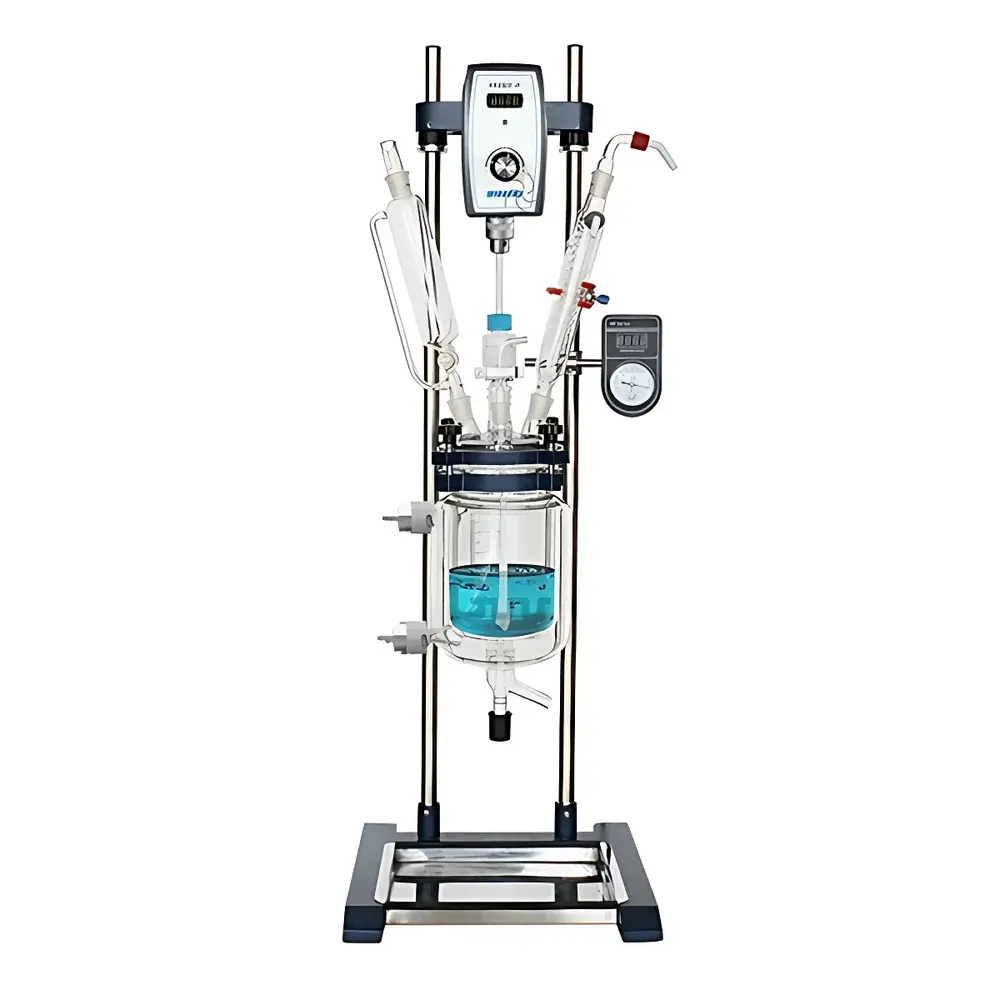
Great Wall GR-3L Benchtop Glass Reactor
| Brand | Great Wall |
|---|---|
| Origin | Henan, China |
| Manufacturer Type | Authorized Distributor |
| Origin Category | Domestic (China) |
| Model | GR-3L |
| Instrument Classification | Jacketed Glass Reactor |
| Usable Volume | 3 L |
| Vessel Material | Borosilicate Glass 3.3 |
| Operating Pressure Range | –0.1 to 0.0 MPa (gauge) |
| Vacuum Level | ≤ –0.098 MPa (absolute) |
| Jacket Pressure Rating | ≤ +0.03 MPa |
| Temperature Range | –80 °C to +200 °C |
| Stirring Speed | 50–500 rpm |
| Stirring Power | 70 W |
| Torque | 70 N·cm |
| Temperature Sensor | Pt100 (±0.1 °C accuracy) |
| Condenser Surface Area | ~0.025 m² |
| Constant-Pressure Funnel Capacity | 200 mL |
| Frame Material | SUS304 Stainless Steel |
| Sealing Material | PTFE |
| Electrical Supply | 110 V / 60 Hz or 220–240 V / 50–60 Hz |
| Dimensions (W×D×H) | ~480 × 420 × 1200 mm |
| Weight | Approx. 45 kg |
Overview
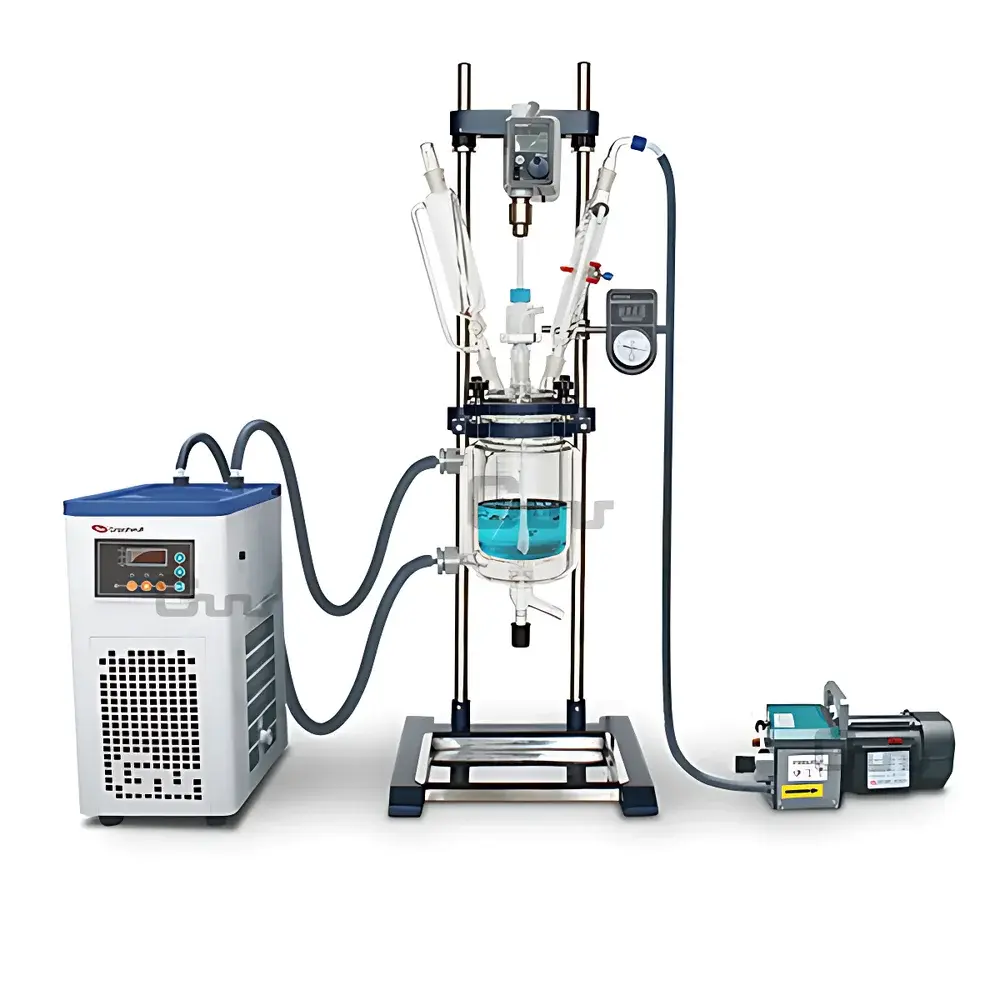
The Great Wall GR-3L is a compact, benchtop-scale jacketed glass reactor engineered for controlled synthesis, catalytic reactions, crystallization, and solvent recovery in academic research labs, pilot-scale process development, and quality control environments. It operates on the principle of external thermal regulation via a circulating fluid through the double-walled glass jacket, enabling precise temperature control across a wide range from –80 °C to +200 °C. The reactor core consists entirely of ASTM E438 Type I, Class A borosilicate glass 3.3 — certified for high thermal shock resistance (ΔT ≤ 80 °C), low coefficient of thermal expansion (3.3 × 10⁻⁶/K), and exceptional chemical inertness against organic solvents, acids, and bases. Its pressure-rated design supports operation under vacuum (down to ≤ –0.098 MPa absolute) and mild positive jacket pressure (≤ +0.03 MPa), making it suitable for distillation, reflux, and gas-phase reaction studies under inert or reduced-pressure conditions.
Key Features
- Borosilicate glass 3.3 construction throughout all wetted components — including vessel body, condenser, constant-pressure funnel, and distillation head — ensuring optical clarity, mechanical stability, and compliance with ISO 3585 standards for laboratory glassware.
- SUS304 stainless steel support frame with integrated PTFE-coated material catch tray, minimizing cross-contamination and facilitating spill containment during routine operation or maintenance.
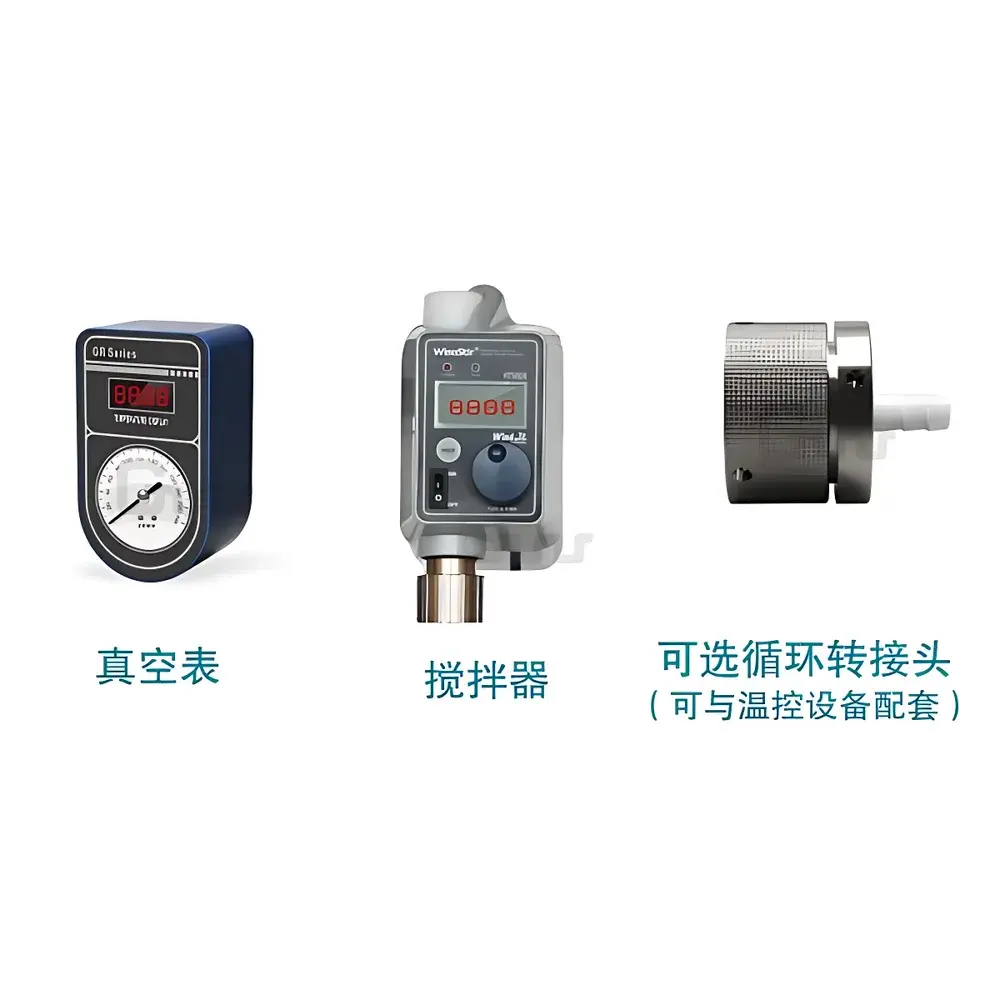
- High-torque, brushless DC motor drive (70 W, 50–500 rpm, 70 N·cm max torque) with LED digital speed display and stepless electronic speed control for reproducible agitation across viscous and heterogeneous reaction mixtures.
- PT100 platinum resistance thermometer embedded in a dual-layer protection sleeve (SUS304 outer sheath + PTFE insulation), delivering ±0.1 °C temperature measurement accuracy and long-term drift stability under cyclic thermal loading.
- PTFE-sealed, side-mounted bottom discharge valve with zero dead-volume geometry and adjustable installation height (100–210 mm), enabling complete, residue-free transfer of sensitive or high-value products without disassembly.
- Standardized 24/29 ground-glass joints (ISO 1770) across all ports — including stirring shaft, temperature probe, condenser, liquid feed, and constant-pressure addition — ensuring interchangeability with common lab accessories and modular system expansion.
Sample Compatibility & Compliance
The GR-3L accommodates a broad spectrum of sample types: aqueous and non-aqueous solutions, suspensions, slurries, and multi-phase systems involving gaseous reagents (e.g., H₂, O₂, CO). Its all-glass fluid path eliminates metal leaching risks, supporting applications in pharmaceutical intermediate synthesis, fine chemical R&D, and catalyst screening where trace metal contamination must be avoided. The reactor meets general safety requirements outlined in IEC 61010-1 for electrical equipment used in laboratory settings. While not certified to ASME BPVC Section VIII or PED 2014/68/EU, its pressure and vacuum ratings align with typical Class I laboratory reactor usage per ISO 15500-1 guidelines. All PTFE components comply with USP Class VI biocompatibility testing; glass components conform to DIN ISO 3585 and ASTM E438 specifications.
Software & Data Management
The GR-3L operates as a standalone analog-digital hybrid instrument with local real-time monitoring only — no onboard data logging or PC connectivity. However, its analog output signals (0–10 V or 4–20 mA optional upon request) are compatible with third-party data acquisition systems (e.g., LabVIEW, DeltaV, or Siemens Desigo CC) for time-stamped recording of temperature, stir speed, and auxiliary sensor inputs. When integrated into GLP/GMP-regulated workflows, users may implement manual logbook entries or connect external validated chart recorders meeting FDA 21 CFR Part 11 requirements for audit-trail-capable documentation. Temperature setpoint deviations and stir motor current draw can be monitored externally to infer reaction exotherms or viscosity changes.
Applications
- Controlled-temperature hydrogenation and oxidation reactions under inert atmosphere or vacuum.
- Solvent-free or low-solvent condensation polymerizations requiring precise thermal ramping and moisture exclusion.
- Cryogenic lithiation, Grignard formation, and organometallic synthesis at –40 °C to –80 °C using dry ice/acetone or cryocooler-coupled circulators.
- Batch crystallization studies with in-situ cooling profiles and seeding protocols.
- Distillation and fractional reflux experiments utilizing the integrated 0.025 m² condenser surface and 200 mL constant-pressure funnel for continuous feed control.
- Photocatalytic reaction screening when paired with external UV/visible light sources mounted through the top port or side viewport.
FAQ
What is the maximum allowable temperature differential between jacket and vessel contents?
The design limits the ΔT between jacket fluid and internal reaction mass to ≤ 80 °C to prevent thermal stress cracking in the borosilicate glass.
Can the GR-3L be operated under positive pressure inside the reactor vessel?
No — the vessel is rated only for vacuum (–0.1 MPa gauge) and atmospheric pressure; it is not designed for internal overpressure operation.
Is the stirring system compatible with highly viscous media (e.g., >10,000 mPa·s)?
Yes, the 70 N·cm torque rating supports moderate-viscosity systems; however, prolonged operation above 5,000 mPa·s may require reduced speed and intermittent duty cycles to avoid motor overheating.
Are spare glass components available as standard parts?
Yes — all major glass assemblies (vessel, condenser, funnel, distillation head) are cataloged with individual part numbers and stocked for global distribution.
Does the unit include a chiller or heating circulator?
No — external temperature control units (e.g., Huber, Julabo, or LAUDA models) must be connected via Rc 1/2 or Rc 3/4 inlet/outlet ports on the jacket manifold.



