
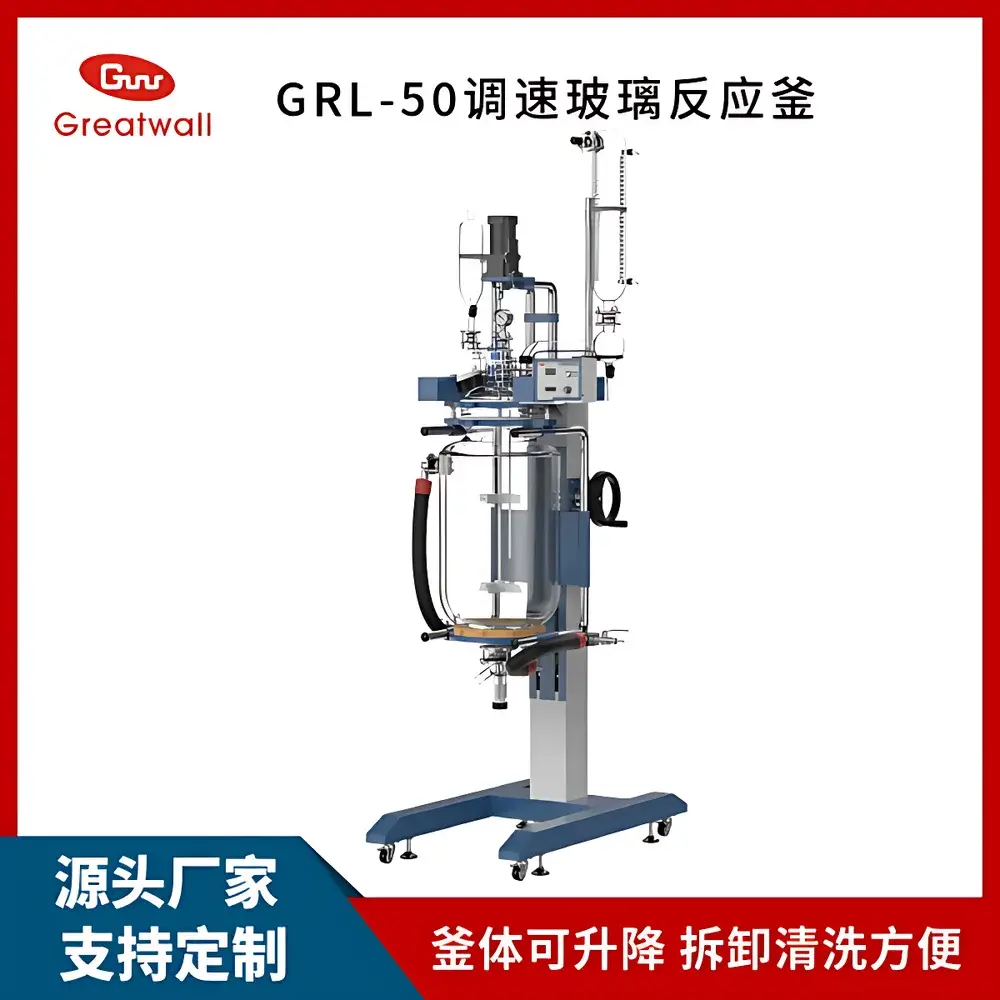
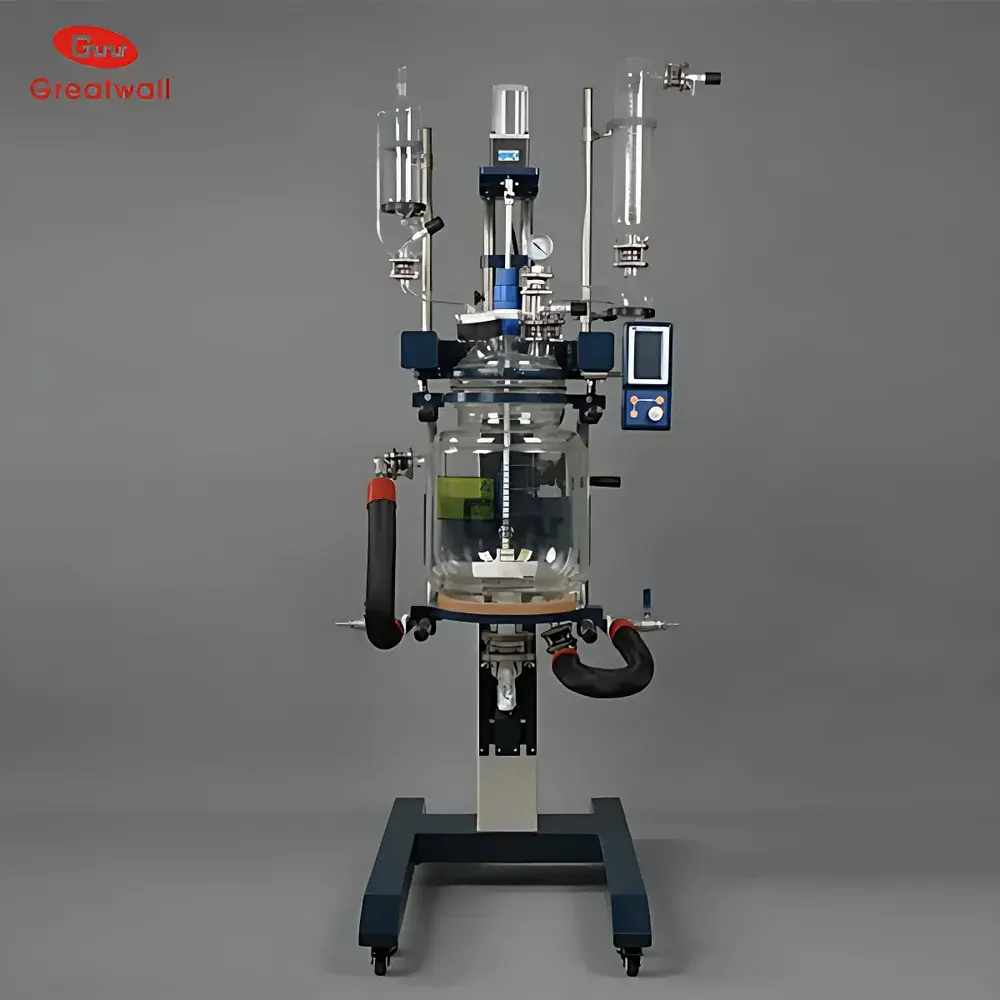
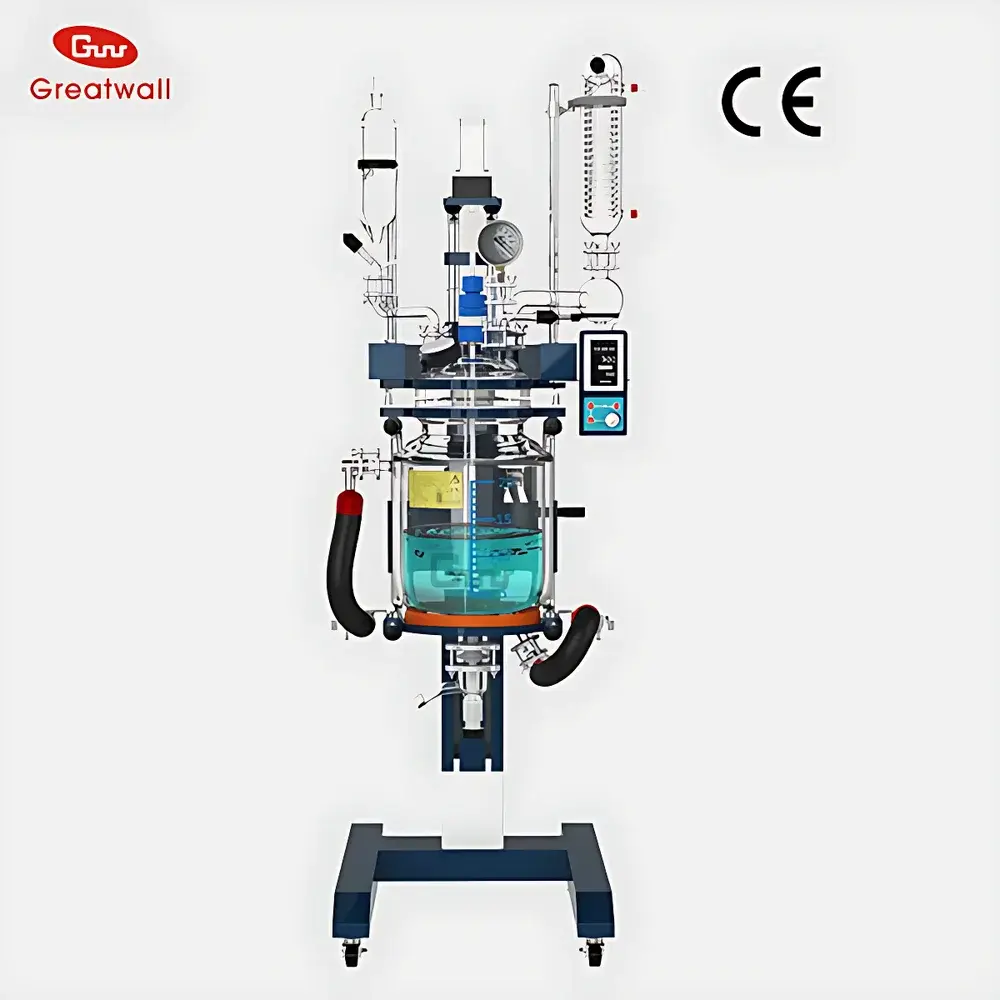
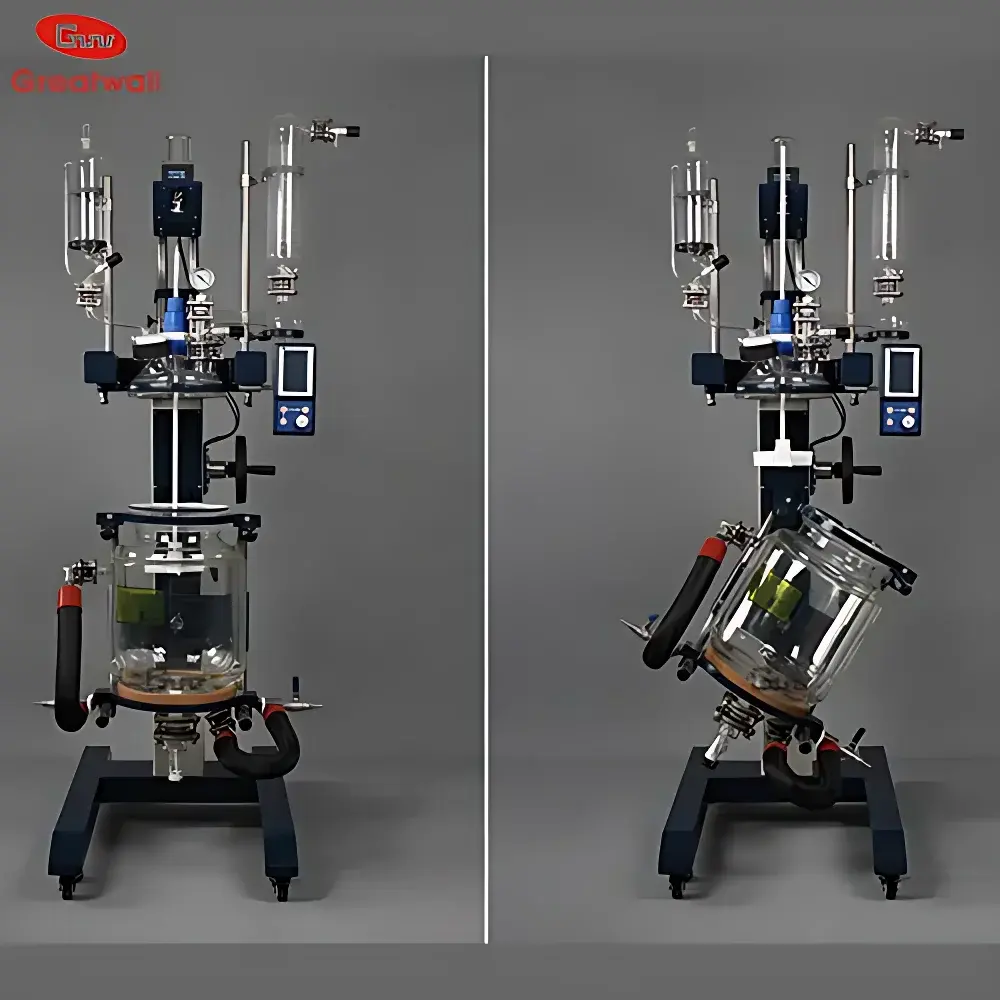
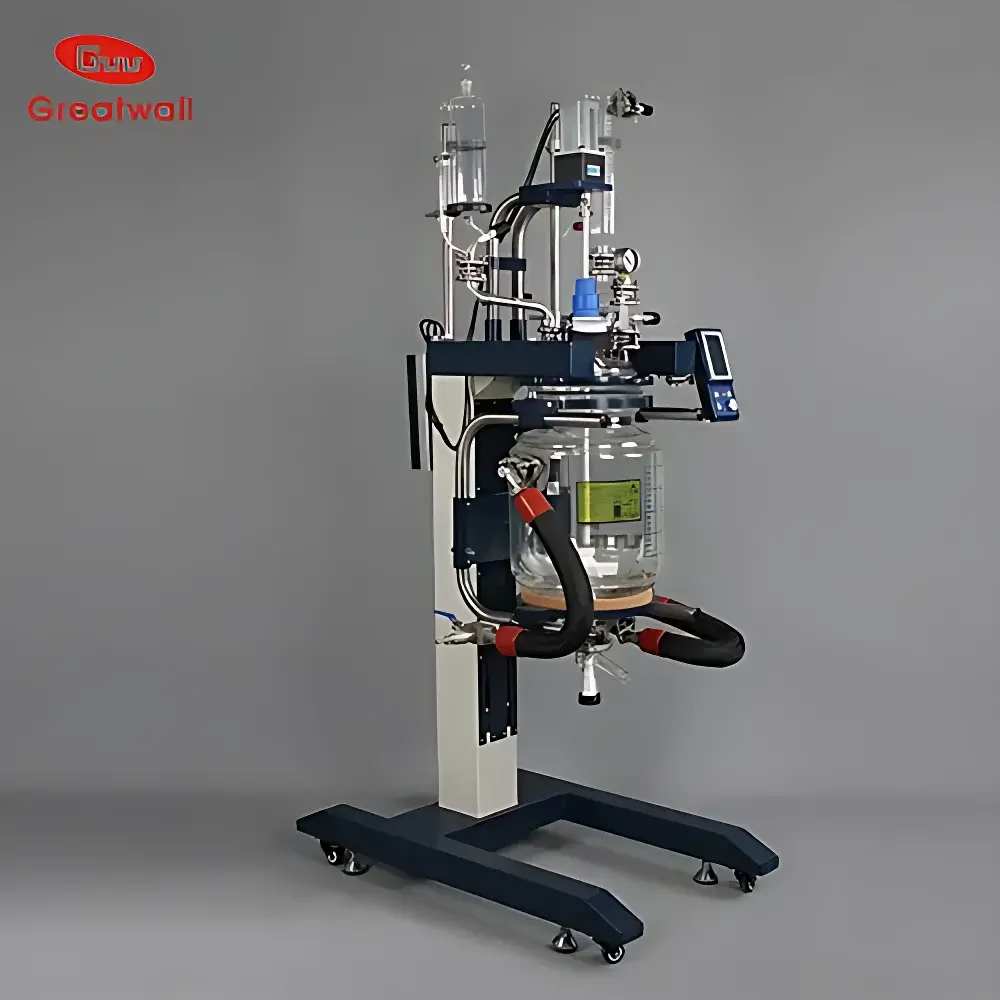
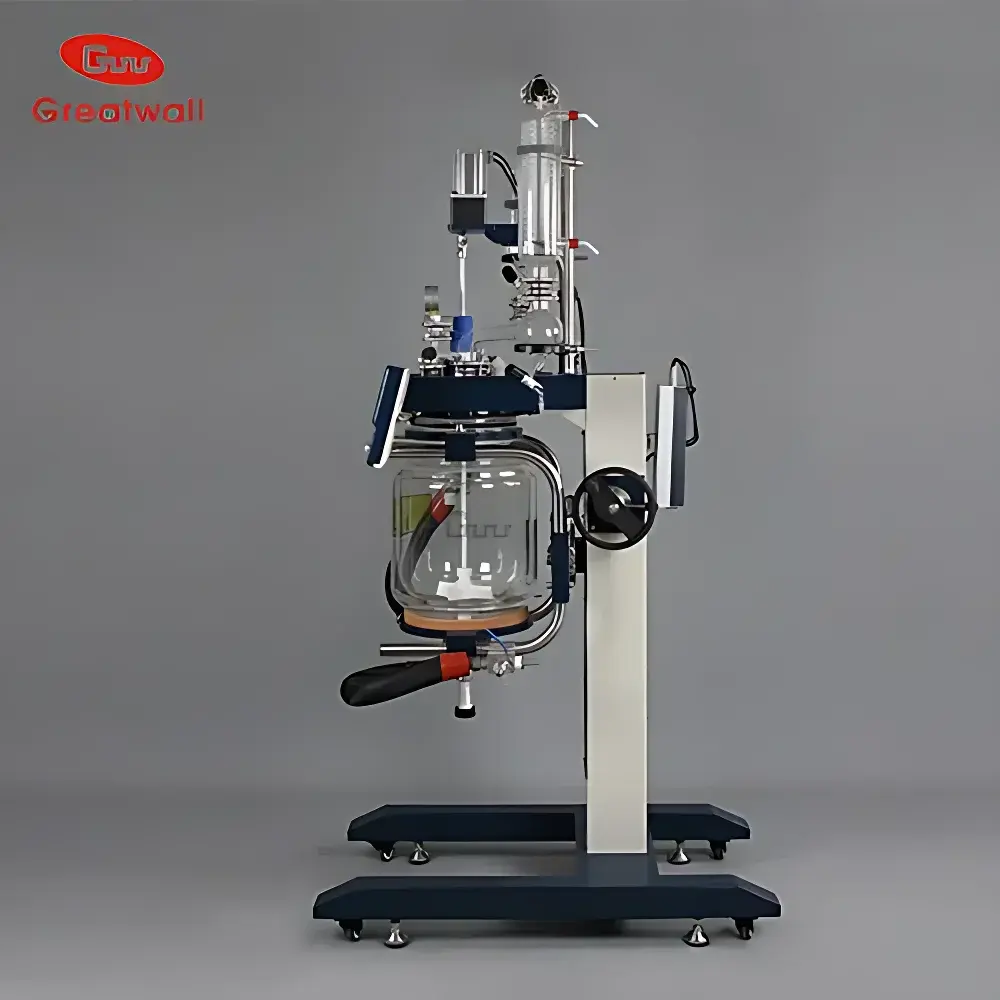
The Great Wall GRL-20 Elevating & Rotating Large-Capacity Glass Reactor
| Brand | The Great Wall |
|---|---|
| Origin | Henan, China |
| Manufacturer Type | Direct Manufacturer |
| Origin Category | Domestic |
| Model | GRL-20 |
| Capacity | 50 L |
| Vessel Material | Borosilicate Glass 3.3 |
| Working Pressure Range | −0.1 MPa to 0 MPa (Vacuum to Atmospheric) |
| Maximum Vacuum | 0.098 MPa |
| Temperature Range | −80 °C to +200 °C |
| Vessel Configuration | Double-Jacketed |
| Movement | Motorized Vertical Elevation + 120° Horizontal Rotation |
| Stirring Shaft Material | 06Cr19Ni10 (AISI 304 stainless steel) with PTFE cladding |
| Impeller Material | PTFE |
| Sealing System | Proprietary Mechanical Seal Assembly |
| Frame Construction | Hybrid structure of 06Cr19Ni10 stainless steel, carbon structural steel with epoxy powder coating, and anodized aluminum components |
| Mobility | Locking casters with brake mechanism |
| Jacket Inlet/Outlet | Stainless steel insulated flexible hoses |
| Drain Valve | Zero-holdup PTFE-lined discharge valve |
| Compliance | Designed per GB/T 25181–2010 (Glass Reactors for Laboratory Use), compatible with ISO 9001-certified manufacturing processes |
Overview
The Great Wall GRL-20 Elevating & Rotating Large-Capacity Glass Reactor is an engineered solution for controlled synthesis, solvent recovery, vacuum distillation, and low-temperature concentration in research and pilot-scale laboratories. Built around a double-jacketed borosilicate glass 3.3 vessel (50 L working volume), the system operates under adjustable vacuum conditions (down to 0.098 MPa absolute) and accommodates thermal cycling from −80 °C to +200 °C via external circulatory fluid delivery through jacket ports. Its defining mechanical architecture integrates motor-driven vertical elevation—enabling precise height adjustment for coupling with condensers, receivers, or heating mantles—and programmable 120° horizontal rotation, which simplifies catalyst recovery, solid residue removal, and thorough internal cleaning without disassembly. Unlike fixed-position reactors, this dual-mobility design reduces manual handling risk and improves experimental reproducibility across multi-step reaction sequences.
Key Features
- Borosilicate glass 3.3 construction throughout all wetted components ensures exceptional resistance to thermal shock, chemical corrosion, and UV transparency for real-time visual monitoring of reaction progress.
- Double-jacketed vessel supports simultaneous temperature control (e.g., cooling jacket + heating bath) and enables precise exotherm management during catalytic or polymerization reactions.
- Vertical lift mechanism features precision linear guides and overload protection; horizontal rotation is driven by a low-backlash gearmotor with position feedback for repeatable angular alignment.
- PTFE-clad 06Cr19Ni10 stirring shaft and fully PTFE impeller eliminate metallic contamination and withstand aggressive reagents including halogenated solvents, strong acids, and alkalis.
- Zero-holdup bottom discharge valve with integrated PTFE seat guarantees quantitative transfer and prevents cross-contamination between batches.
- Modular frame combines stainless steel load-bearing elements, powder-coated carbon steel structural members, and anodized aluminum panels—optimized for cleanroom compatibility and long-term corrosion resistance in humid or solvent-rich environments.
- Stainless steel insulated flexible hoses connect jacket ports, eliminating torque-induced stress on glass flanges and extending gasket service life.
Sample Compatibility & Compliance
The GRL-20 is validated for use with organic solvents (e.g., THF, DMF, DCM), aqueous electrolytes, viscous polymer precursors, and air-sensitive reagents under inert gas blanket or vacuum. Its pressure rating (−0.1 MPa to 0 MPa gauge) conforms to standard laboratory vacuum practice per ISO 2787 and ASTM D2879 for low-pressure distillation. All glass joints follow ISO 27770 (DIN/ISO 22094) taper standards for interchangeability with common condensers, adapters, and traps. The reactor’s mechanical design aligns with GB/T 25181–2010 for laboratory glass reactors, and its manufacturing process is conducted under ISO 9001:2015 quality management systems. While not intrinsically rated for Class I Div 1 hazardous locations, optional grounding kits and explosion-proof motor upgrades are available upon request for compliance with local electrical safety codes.
Software & Data Management
The GRL-20 operates as a standalone instrument with analog/digital controls for lift speed, rotation angle, and stirrer RPM (0–200 rpm, adjustable in 1-rpm increments). For integration into GLP/GMP workflows, optional RS485 Modbus RTU output enables connection to centralized lab data acquisition systems (e.g., LabArchives, DeltaV, or custom SCADA platforms). All operational parameters—including elapsed time, current elevation position, rotation angle, and stir speed—are logged locally with timestamping. Audit trail functionality meets FDA 21 CFR Part 11 requirements when paired with validated third-party software and user access controls. No proprietary cloud platform is embedded; data export is supported via USB or serial interface in CSV format.
Applications
- Catalytic hydrogenation and cross-coupling reactions requiring inert atmosphere and precise temperature ramping.
- Vacuum-assisted solvent removal from heat-labile biomolecules or nanoparticle dispersions.
- Multi-stage batch crystallization with in-situ slurry homogenization and controlled cooling profiles.
- Polymer synthesis (e.g., polyesters, polyacrylates) where viscosity monitoring and shear-sensitive monomer addition are critical.
- Extraction and fractionation of natural products using rotating reflux and fractional distillation configurations.
- Teaching laboratories demonstrating phase behavior, vapor–liquid equilibrium, and reaction kinetics under variable pressure and agitation conditions.
FAQ
What is the maximum allowable vacuum level for continuous operation?
The reactor is rated for sustained operation at ≤0.098 MPa absolute (i.e., −0.098 MPa gauge), corresponding to ~20 mbar residual pressure. Extended exposure below this threshold requires verification of seal integrity and thermal stability of connected accessories.
Can the GRL-20 be used with cryogenic coolants such as liquid nitrogen?
Direct immersion is prohibited. However, the double jacket supports circulation of chilled ethylene glycol/water mixtures down to −80 °C when paired with an external low-temperature chiller meeting DIN EN 61000-6-3 EMC standards.
Is the stirring system suitable for highly viscous media (e.g., >50,000 mPa·s)?
Yes—the high-torque motor and PTFE-coated shaft enable stable operation up to 100,000 mPa·s at reduced speeds (≤60 rpm); recommended impeller geometry includes anchor or helical ribbon types (available as accessories).
Does the reactor include documentation for IQ/OQ validation?
Factory-supplied documentation includes as-built drawings, material certifications (EN 10204 3.1), calibration certificates for pressure and temperature sensors, and a functional test report. Full IQ/OQ protocols can be provided upon request for GxP-regulated environments.
Are replacement glass components available with traceable lot numbers?
Yes—all borosilicate glass vessels, condensers, and adapters are supplied with individual lot traceability, hydrolytic class HGB 1 certification per ISO 719, and annealing records.



