
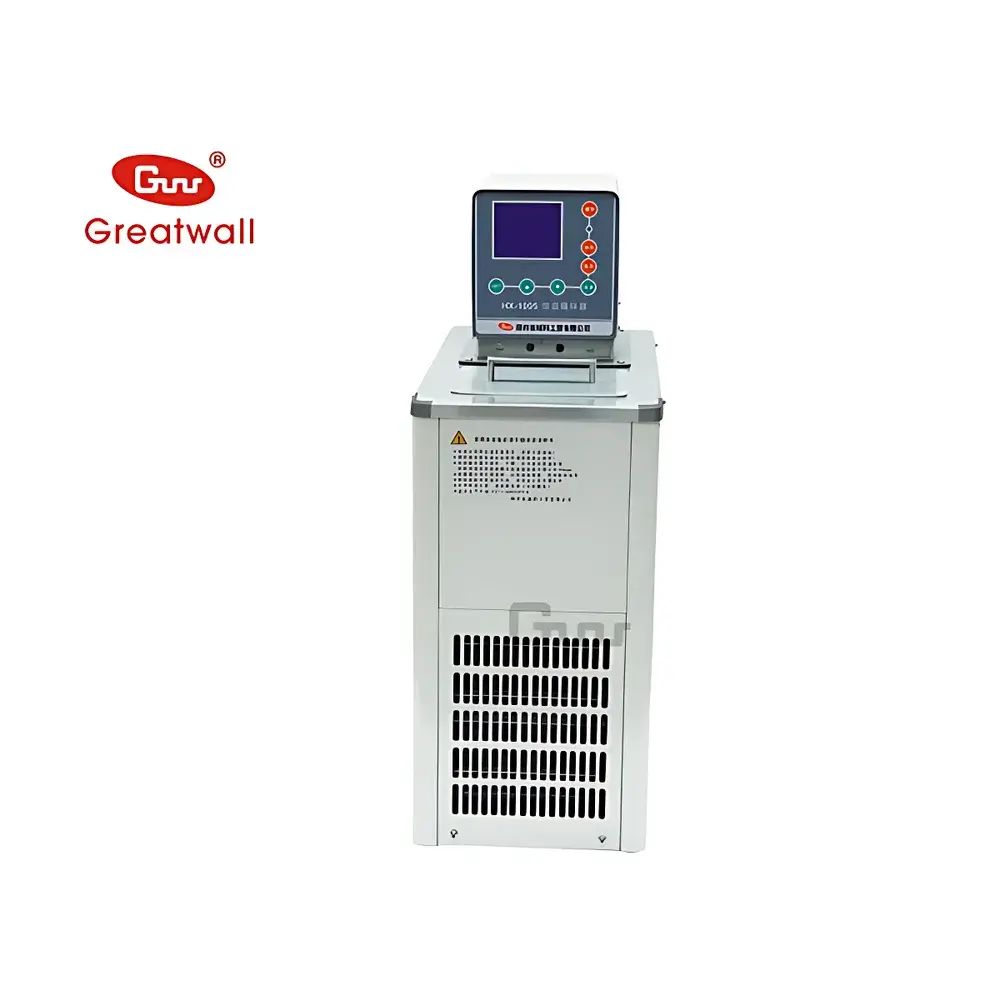
Great Wall HX-2015 Precision Circulating Chiller/Heater
| Brand | Great Wall |
|---|---|
| Origin | Henan, China |
| Manufacturer Type | Direct Manufacturer |
| Equipment Category | Domestic |
| Model | HX-2015 |
| Instrument Type | Constant-Temperature Bath Circulator |
| Circulation Mode | Internal & External |
| Temperature Control | Refrigeration & Heating |
| Bath Volume | 15 L |
| Temperature Range | −20 °C to +99 °C |
| Temperature Stability | ±0.05 °C |
| Refrigeration Capacity | 370–1200 W |
| Heating Power | 1750 W |
| Flow Rate | 10 L/min |
| Tank Dimensions (L×W×H) | 365 × 245 × 168 mm |
| Overall Dimensions (L×W×H) | 480 × 340 × 780 mm |
| Construction Material | 304 Stainless Steel |
| Control Method | PID Algorithm |
| Display | Digital LED |
| Compressor | Hermetic Air-Cooled Unit (Imported from USA/France) |
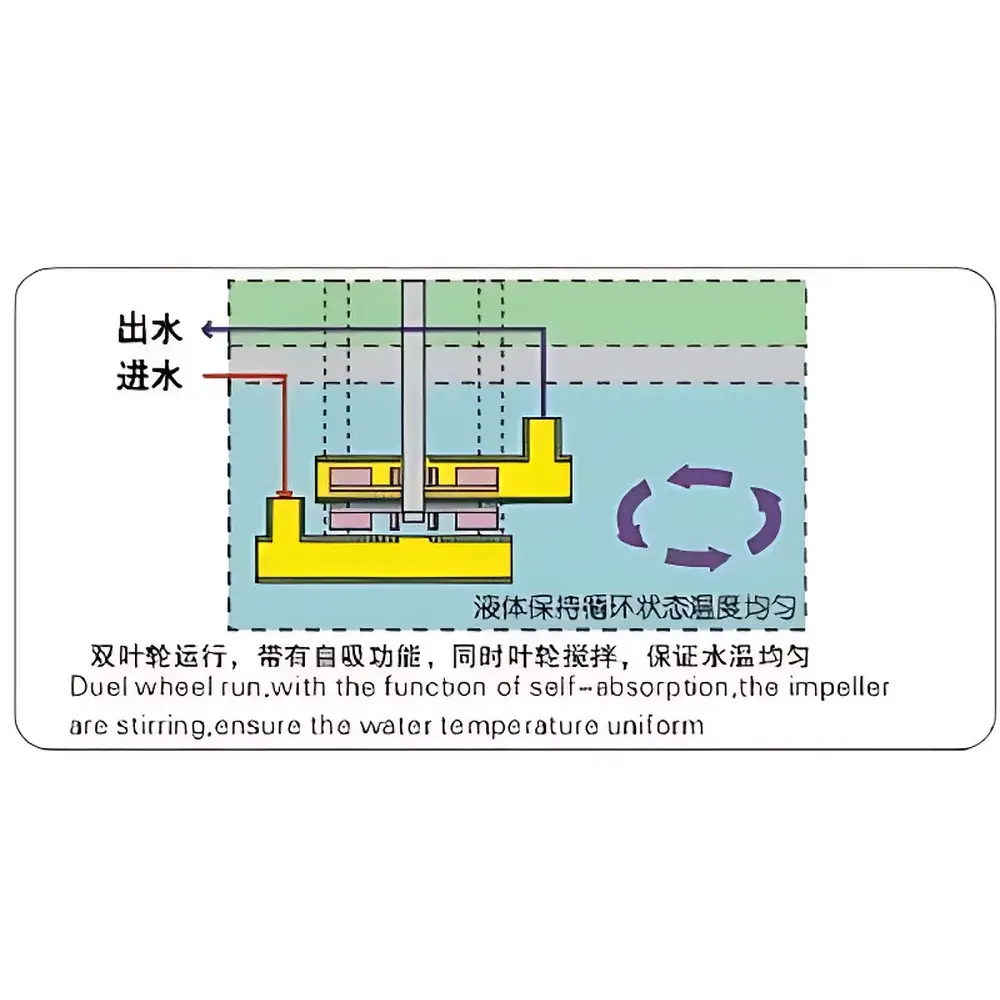
| Pump | Dual-Impeller Circulation Pump with Self-Priming Capability |
Overview
The Great Wall HX-2015 Precision Circulating Chiller/Heater is an engineered thermal management system designed for laboratory-scale temperature control of external devices and reaction vessels. It operates on a dual-mode thermodynamic principle—combining resistive heating and vapor-compression refrigeration—to maintain precise, stable bath temperatures across a wide operational range (−20 °C to +99 °C). Unlike passive water baths, the HX-2015 actively circulates temperature-controlled fluid through both internal recirculation (within its 15 L stainless steel reservoir) and external closed-loop circuits, enabling uniform heat exchange with connected instruments such as electrophoresis units, probe stations, viscometers, or analytical detectors. Its core architecture integrates a high-efficiency hermetic air-cooled compressor (sourced from established U.S. and French manufacturers), a dual-impeller circulation pump with self-priming capability, and a 304 stainless steel tank resistant to corrosion from aqueous, ethylene glycol, or silicone oil-based heat transfer fluids.
Key Features
- PID-based digital temperature control delivering ±0.05 °C stability under steady-state conditions—critical for kinetic studies, calibration protocols, and thermal validation procedures.
- Dual-mode operation supporting both refrigeration (370–1200 W capacity) and heating (1750 W) within a single compact footprint (480 × 340 × 780 mm).
- Robust 304 stainless steel bath tank ensuring long-term compatibility with common heat transfer media and resistance to chemical degradation in QC, R&D, and production support environments.
- High-flow dual-impeller pump providing 10 L/min flow rate at sufficient head pressure for reliable external loop delivery—even when routing through extended tubing or multiple instrument inlets.
- Intuitive LED digital display with real-time setpoint and actual bath temperature readouts, supporting rapid verification during GLP-compliant workflows.
- Integrated safety protections including over-temperature cutoff, low-level fluid alarm, and compressor thermal overload protection—aligned with IEC 61010-1 requirements for laboratory equipment.
Sample Compatibility & Compliance
The HX-2015 is compatible with standard heat transfer fluids—including deionized water, 30%–50% ethylene glycol/water mixtures, and silicone oils—enabling use across diverse thermal operating windows. Its design supports integration into regulated environments: the PID controller’s repeatability and digital logging capability (when paired with optional RS485 or analog output modules) facilitate audit-ready documentation per FDA 21 CFR Part 11 and ISO/IEC 17025 traceability requirements. While not certified to UL or CE as a standalone appliance, its electrical architecture complies with IEC 61010-1 Edition 3 for measurement, control, and laboratory use. The unit meets ASTM E2777–22 criteria for performance verification of temperature-controlled circulating systems used in analytical method development and validation.
Software & Data Management
The HX-2015 operates as a stand-alone hardware platform with embedded firmware; no proprietary software is required for basic operation. However, it supports analog (0–5 V / 4–20 mA) and digital (RS485 Modbus RTU) interfaces for integration into centralized lab monitoring systems (e.g., LabVantage, Thermo Fisher SampleManager, or custom SCADA architectures). When connected, users can log temperature profiles, trigger alarms based on deviation thresholds, and generate time-stamped CSV reports for compliance review. Audit trail functionality—including operator ID, parameter changes, and timestamped event logs—is achievable via external data acquisition systems compliant with ALCOA+ principles (Attributable, Legible, Contemporaneous, Original, Accurate, Complete, Consistent, Enduring, Available).
Applications
- Temperature stabilization of electrophoresis apparatus, UV-Vis spectrophotometer cuvette holders, and HPLC column ovens.
- Thermal conditioning of semiconductor probing stations and materials testing fixtures requiring sub-0.1 °C uniformity.
- Calibration of thermocouples, RTDs, and infrared thermometers against NIST-traceable references in metrology labs.
- Controlled-rate cooling/heating in polymer crystallization studies, enzyme activity assays, and pharmaceutical dissolution testing (USP ).
- Supporting ASTM D2570 (cold crack point), D97 (pour point), and ISO 3422 (viscosity index) test methods in petrochemical quality control laboratories.
FAQ
What types of heat transfer fluids are recommended for use with the HX-2015?
Deionized water is suitable for applications between 5 °C and 80 °C. For sub-zero operation, a 40% ethylene glycol/water mixture is recommended. Silicone oils may be used up to 99 °C but require verification of pump compatibility and viscosity limits.
Does the HX-2015 support external temperature feedback control?
Yes—via optional PT100 input interface, allowing the unit to regulate based on sensor readings from the external process rather than internal bath temperature.
Is the unit suitable for GMP-regulated environments?
It can be deployed in GMP settings when integrated with validated data acquisition and electronic record systems that enforce 21 CFR Part 11 compliance, including user authentication and change control.
What maintenance intervals are recommended for long-term reliability?
Compressor oil and refrigerant levels should be verified annually; pump impellers and seals inspected every 24 months; and stainless steel tank passivation assessed if exposed to aggressive solvents or high-chloride solutions.
Can the HX-2015 be operated in a fume hood or ventilated enclosure?
Yes—its air-cooled condenser requires ≥15 cm clearance on all sides for adequate airflow. Ambient temperature must remain between 10 °C and 35 °C for specified performance.



