
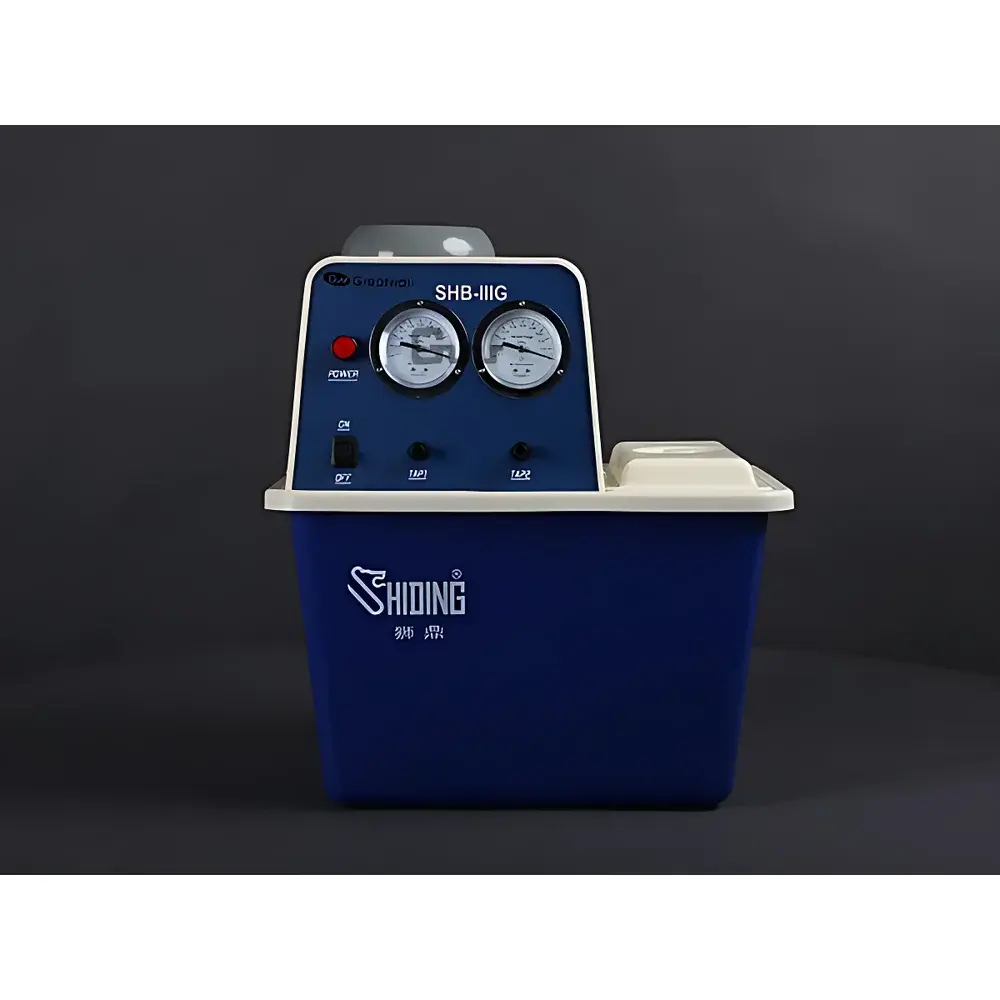
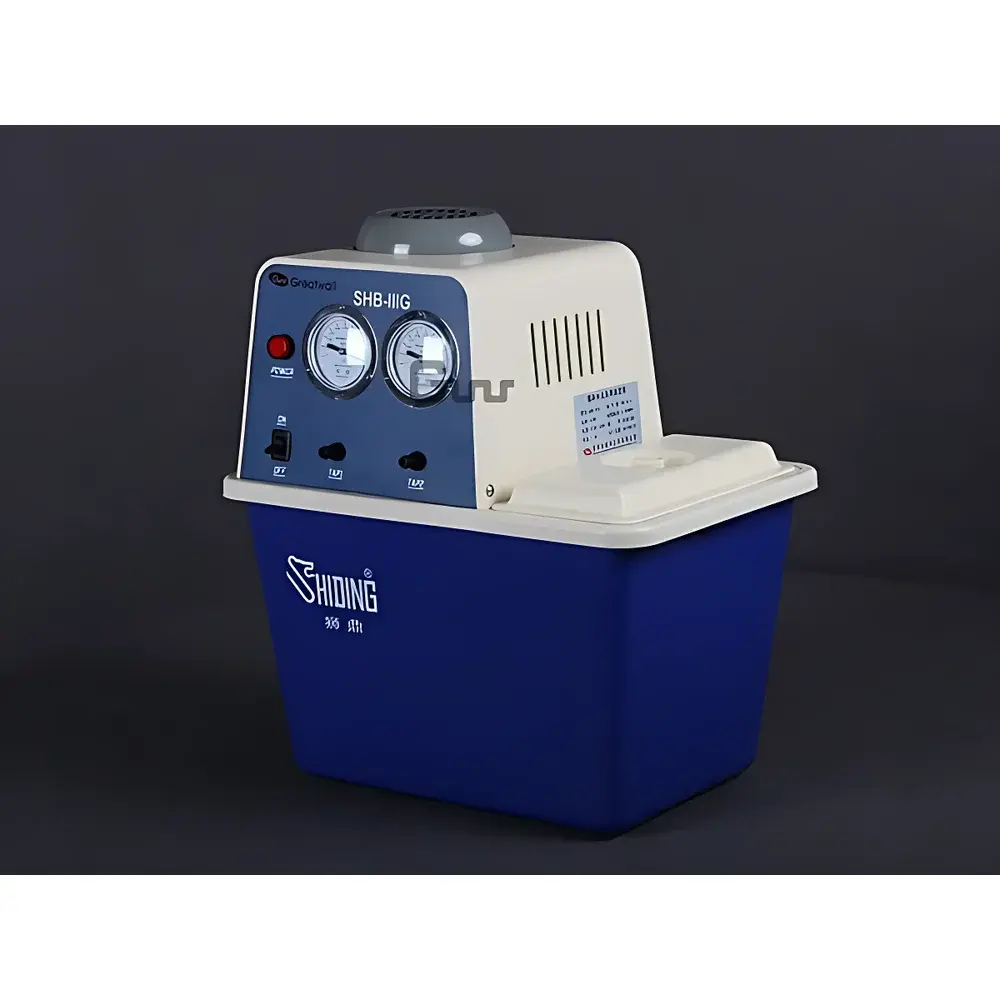
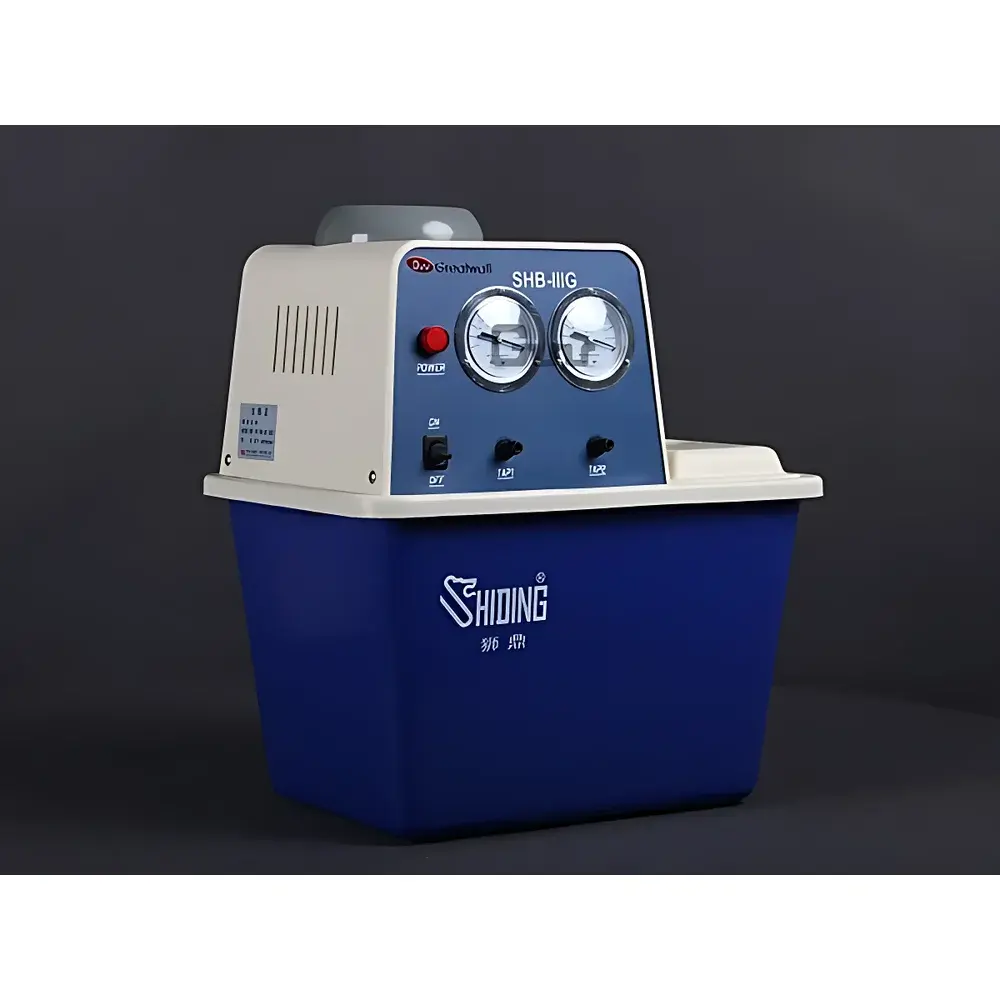
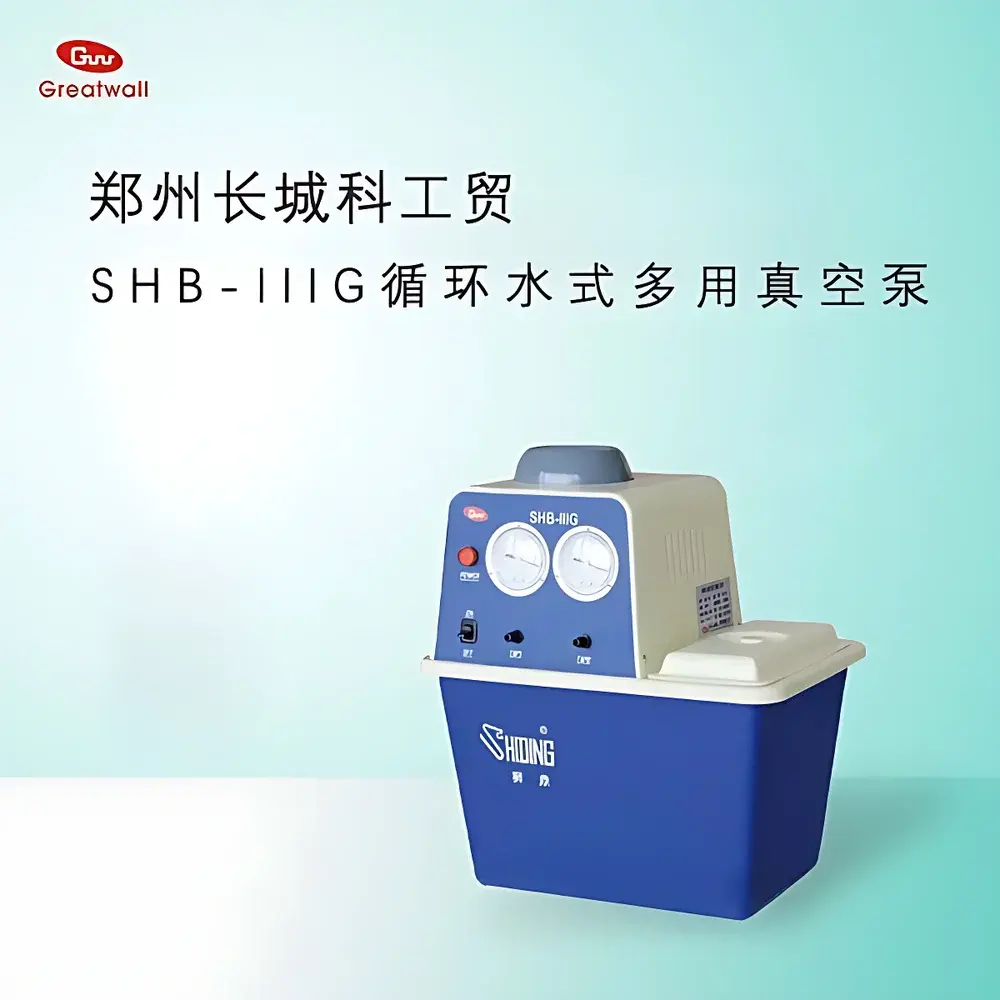
Great Wall SHB-IIIG Circulating Water Vacuum Pump
| Brand | The Great Wall |
|---|---|
| Origin | Henan, China |
| Manufacturer Type | Direct Manufacturer |
| Instrument Category | Circulating Water Vacuum Pump |
| Model | SHB-IIIG |
| Pump Type | Oil-Free |
| Single-Head Evacuation Rate | 10 L/min |
| Maximum Vacuum | 0.098 MPa (20 mbar) |
| Dimensions (W×D×H) | 385 × 280 × 420 mm |
| Weight | 9.5 kg |
| Motor Power | 180 W |
| Water Tank Capacity | 15 L |
| Circulating Flow Rate | 7 L/min |
| Pump Flow Rate | 80 L/min |
| Lift Head | 10 m |
| Operating Temperature Range | 5–35 °C |
| Relative Humidity Limit | ≤70% |
| IP Rating | IP20 |
| Pollution Degree | Class 2 |
Overview
The Great Wall SHB-IIIG Circulating Water Vacuum Pump is a robust, oil-free laboratory vacuum source engineered for precision and reliability in routine vacuum applications. It operates on the principle of water-ring vacuum generation: ambient water serves as both the sealing and cooling medium within the impeller chamber, enabling continuous evacuation without lubricants or hydrocarbon contamination. This design eliminates oil vapor backstreaming, making it suitable for solvent-sensitive processes including rotary evaporation, vacuum filtration, and vacuum drying. Its dual-head configuration supports independent or simultaneous operation of two vacuum lines, while the integrated water circulation system—featuring a 15 L reservoir—minimizes water consumption and thermal drift during extended use. The pump maintains stable vacuum performance up to 0.098 MPa (20 mbar), with operational constraints defined by ambient temperature (5–35 °C) and relative humidity (≤70%), ensuring consistent performance under standard laboratory environmental conditions.
Key Features
- Oil-free operation ensures contamination-free vacuum environments, critical for analytical sample preparation and organic synthesis workflows.
- Dual independent vacuum heads with individual pressure gauges enable parallel processing of two experiments—e.g., simultaneous rotary evaporation and vacuum filtration—without cross-pressure interference.
- Stainless steel 304 motor shaft and fluororubber shaft seal provide enhanced resistance to mild organic solvents and acidic vapors, preventing corrosive ingress into the motor housing.
- Integrated check valve in the gas path prevents backflow of water or condensate into connected apparatus, safeguarding glassware and vacuum manifolds.
- Acoustic-dampened water ejector design reduces turbulence-induced noise and suppresses dissolved gas release from circulating water, contributing to higher achievable vacuum levels and lower operational sound pressure.
- Thermally stabilized water circulation (7 L/min flow rate, 10 m lift head) sustains effective heat dissipation; users are advised to monitor and periodically refresh tank water to maintain optimal vacuum integrity and prevent scale buildup.
Sample Compatibility & Compliance
The SHB-IIIG is compatible with standard borosilicate glass vacuum systems (e.g., Büchner funnels, evaporating flasks, desiccators) and interfaces seamlessly with common lab vacuum accessories via standard 6–10 mm ID tubing. While not certified to ISO 8573 or EN 1012 for compressed air purity, its oil-free architecture inherently meets baseline requirements for non-GMP research-grade vacuum applications. The unit complies with IEC 61000-6-3 (EMC emission limits) and IEC 60950-1 (safety for information technology equipment), and its IP20 enclosure rating aligns with typical indoor laboratory placement per IEC 60529. For GLP-compliant environments, users must document water change frequency, operating temperature logs, and vacuum stability verification per internal SOPs—no embedded audit trail or 21 CFR Part 11 functionality is provided.
Software & Data Management
The SHB-IIIG is a standalone electromechanical device with no digital interface, firmware, or software integration. All operation is manual: power switching, water level observation, and vacuum monitoring via analog gauges. No data logging, remote control, or connectivity (USB, RS-232, Ethernet) is supported. Users are responsible for manual recording of operational parameters—including start/stop times, water replacement intervals, and observed vacuum levels—for traceability in regulated workflows. Calibration of the mechanical vacuum gauges is recommended annually using a NIST-traceable reference manometer.
Applications
- Routine rotary evaporation of heat-sensitive compounds under reduced pressure.
- Vacuum-assisted gravity filtration for particulate removal in aqueous or moderately polar solvent systems.
- Desiccation of hygroscopic solids in vacuum desiccators equipped with P2O5 or silica gel.
- Supporting vacuum distillation setups where low-to-moderate vacuum (20–100 mbar) suffices.
- Gas sampling manifolds requiring stable, pulsation-free suction for passive collection.
- Undergraduate teaching labs: ideal for demonstrating vacuum fundamentals, fluid dynamics, and phase behavior due to its transparent operational logic and mechanical simplicity.
FAQ
What is the recommended water replacement interval for optimal vacuum performance?
Water should be refreshed at least once per 8-hour shift when operating continuously; more frequently if solvent vapors condense into the reservoir or if ambient temperatures exceed 30 °C.
Can the SHB-IIIG be used with aggressive solvents such as chloroform or concentrated HCl vapors?
It is not recommended for sustained exposure to strong oxidizers, halogenated solvents, or highly acidic vapors; fluororubber seals offer limited resistance—consult chemical compatibility charts before deployment.
Does the pump include overload or dry-run protection?
No automatic thermal cutoff or water-level sensor is integrated; prolonged dry operation will damage the impeller and seal—always verify water level prior to startup.
Is the vacuum gauge calibrated at the factory?
Gauges are pre-adjusted for nominal accuracy but are not supplied with calibration certificates; field verification against a reference standard is required for quantitative work.
How does ambient temperature affect maximum attainable vacuum?
Water vapor pressure rises with temperature; above 25 °C, saturation effects reduce ultimate vacuum—cooling the reservoir or using chilled water improves performance.



