
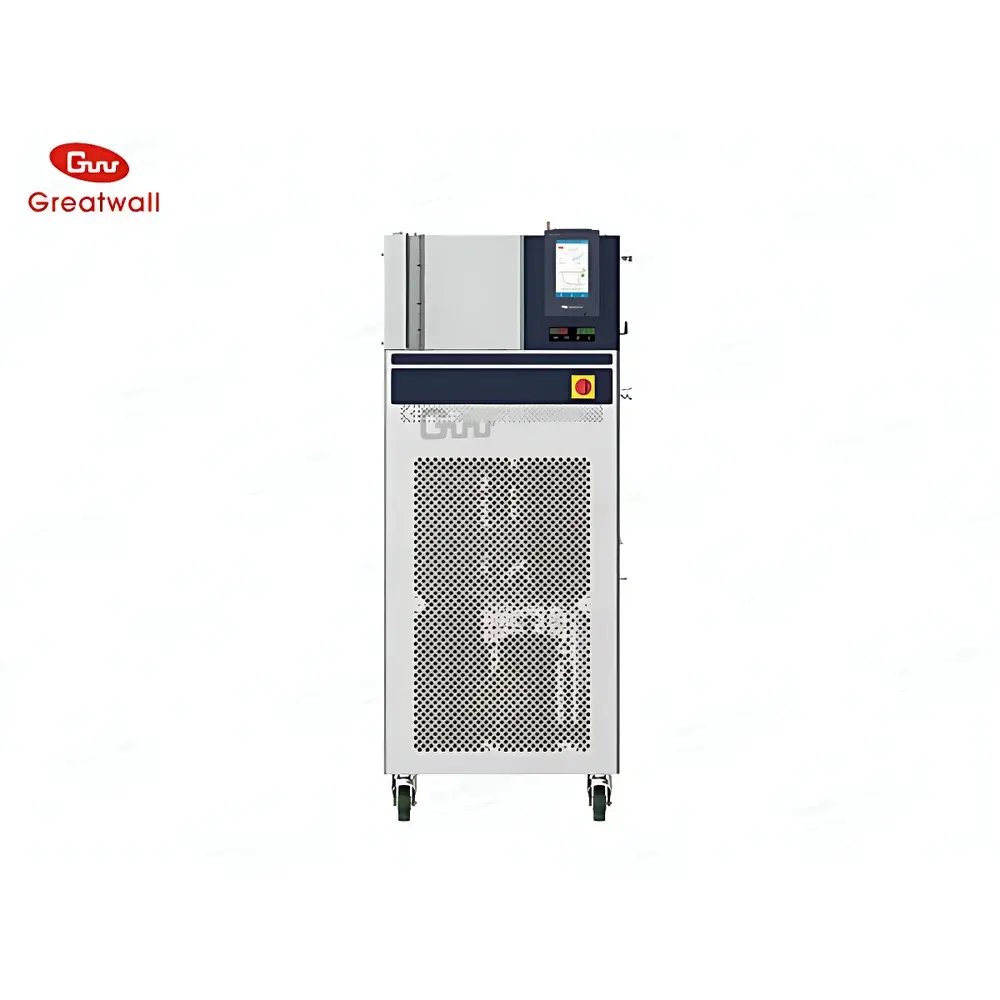
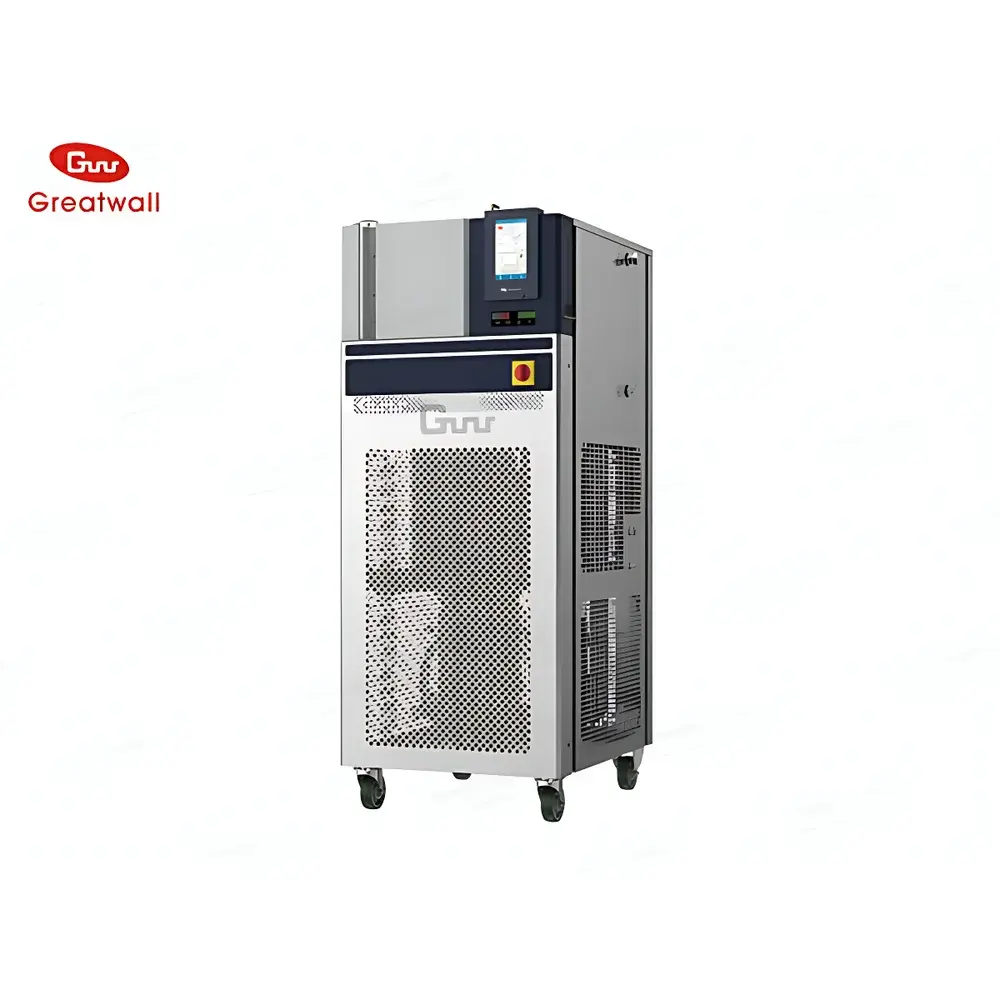
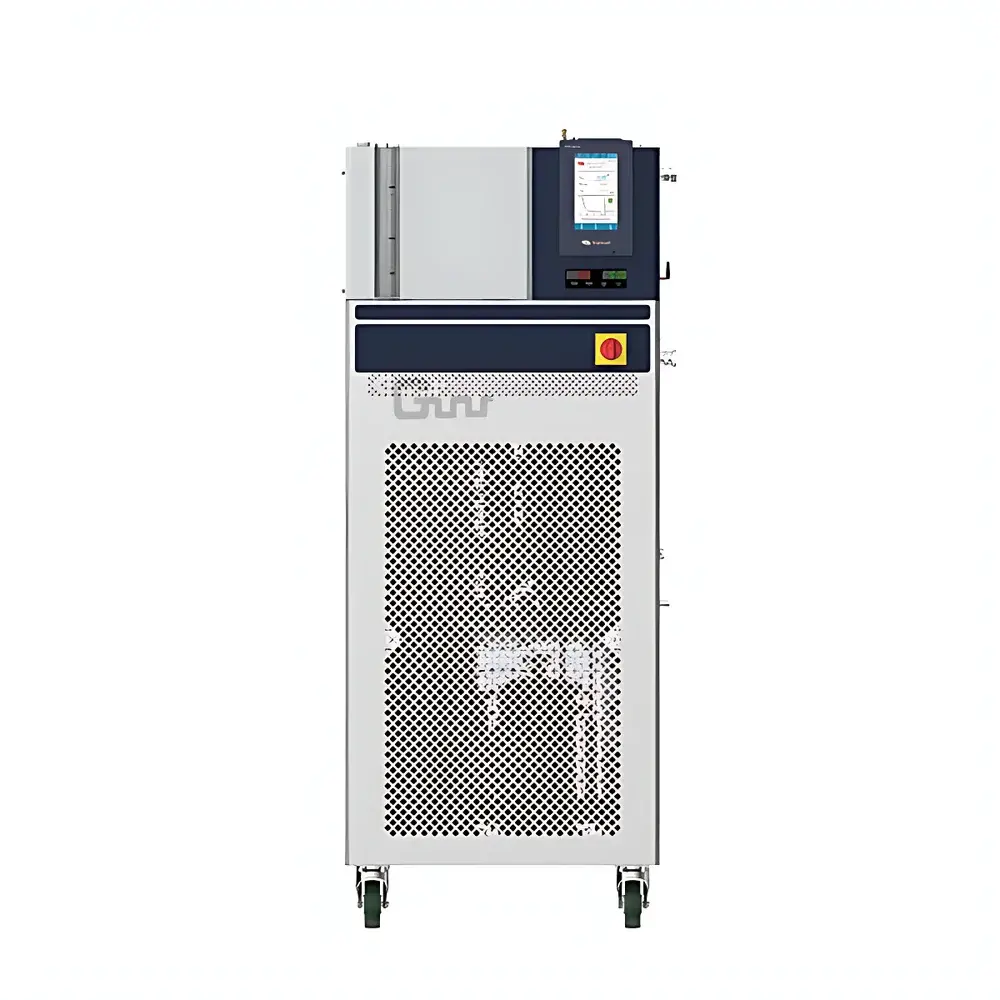
The Great Wall VRE Dynamic Fluid Temperature Control System
| Brand | The Great Wall |
|---|---|
| Origin | Henan, China |
| Manufacturer Type | OEM/ODM Producer |
| Country of Origin | China |
| Model | VRE |
| Pricing | Upon Request |
Overview
The Great Wall VRE Dynamic Fluid Temperature Control System is an engineered thermal management platform designed for high-precision, wide-range temperature regulation of circulating heat transfer fluids in laboratory, pilot-scale, and industrial process applications. It operates on a dual-mode thermodynamic principle—integrating vapor-compression refrigeration with resistive electric heating—to deliver continuous, bidirectional thermal control across an exceptionally broad operational envelope. Unlike conventional single-mode chillers or heaters, the VRE system maintains active cooling capability down to –80 °C while simultaneously enabling rapid, stable heating up to 200 °C—without thermal dead zones or mode-switching delays. Its core architecture features a high-pressure, variable-speed circulation pump coupled with real-time fluid temperature sensing at both inlet and outlet ports, enabling closed-loop feedback control based on either internal bath temperature or external process temperature (via user-installed PT100 or thermocouple inputs). This dual-sensing capability ensures traceable, reproducible thermal profiles under dynamic load conditions—critical for validating thermal performance of power electronics, battery modules, catalytic reactors, and bioreactor systems.
Key Features
- Temperature control range: –80 °C to +200 °C with ±0.2 °C stability (at setpoint, steady-state, ambient ≤25 °C)
- Three selectable refrigeration modes: Continuous, Auto-Adaptive, and Disabled—enabling precise energy management per test protocol
- Dual control strategies: Internal temperature regulation (bath-centric) and process temperature regulation (load-centric), switchable via HMI
- 7-inch capacitive touchscreen interface with intuitive graphical workflow navigation and multilingual support (English, German, Chinese)
- Three-tier electronic permission system (Operator / Supervisor / Administrator) compliant with ALCOA+ data integrity principles
- FDA 21 CFR Part 11–ready audit trail: timestamped event logging for all parameter changes, alarms, and user logins—including electronic signature capture for critical operations
- Comprehensive hardware safety layer: real-time fluid level monitoring with optical sensor, overtemperature cutoff (dual independent sensors), outlet pressure transducer with configurable alarm thresholds, and dry-run protection
- Flexible program-based control: up to 10 user-defined program groups; each group supports up to 100 sequential temperature segments with ramp rate, hold time, and soak logic
Sample Compatibility & Compliance
The VRE system is compatible with a broad spectrum of heat transfer media—including silicone oils (e.g., DC200 series), glycol/water mixtures, and specialized low-temperature synthetic fluids—provided viscosity remains within 1–50 cSt at operating temperature. Its sealed, corrosion-resistant fluid path (316L stainless steel tubing, EPDM/FKM seals) ensures compatibility with aggressive solvents used in pharmaceutical synthesis and fine chemical processing. From a regulatory standpoint, the system’s embedded firmware implements deterministic control algorithms validated per IEC 62304 Class B software safety requirements. Its electronic recordkeeping architecture satisfies FDA 21 CFR Part 11, EU Annex 11, and ISO 13485 documentation expectations for GxP environments. Optional IQ/OQ documentation packages are available to support qualification under ASTM E2500, USP , and GMP Annex 15 protocols.
Software & Data Management
Data acquisition and remote supervision are supported via Ethernet (TCP/IP) and RS485 interfaces, enabling integration into LabVantage, DeltaV, or custom SCADA platforms. The onboard controller logs all thermal events—including temperature deviations >±0.5 °C, compressor cycling frequency, pump duty cycle, and alarm acknowledgments—with microsecond-level timestamp resolution. Export formats include CSV (for Excel/Python analysis) and PDF (for audit-ready reports with embedded digital signatures). Optional PC-based software provides real-time trend visualization, multi-channel overlay, and automated report generation aligned with GLP/GMP template structures. All stored data reside in non-volatile memory with write-protection enabled by default—preventing accidental overwrites during extended unattended operation.
Applications
- Thermal validation of EV battery packs (charge/discharge cycling at –40 °C to +85 °C)
- Dynamic thermal stress testing of SiC MOSFETs, GaN HEMTs, and IGBT modules under pulsed load conditions
- Controlled cryogenic conditioning of airbag inflators and pyrotechnic actuators
- Temperature-programmed reaction studies in microchannel reactors and jacketed glass/metal vessels (e.g., Grignard, hydrogenation, polymerization)
- Stability testing of biologics in fermenters and single-use bioreactors (±0.1 °C uniformity across 50–300 L volumes)
- Calibration support for IR cameras, thermal imagers, and contact thermometers per ISO/IEC 17025 requirements
- Environmental simulation for automotive thermal management systems (e.g., e-cooling loop validation per SAE J2932)
FAQ
What is the minimum allowable fluid volume for stable operation?
The system requires ≥3.5 L of working fluid to ensure proper pump priming, sensor immersion, and thermal mass buffering—verified during FAT per ASME BPE guidelines.
Does the VRE support external PID cascade control?
Yes—via analog 4–20 mA or 0–10 V input, the unit accepts external process temperature feedback to override internal setpoint logic for master-slave configurations.
Can historical temperature logs be exported without administrator privileges?
No—data export functions require Level 2 (Supervisor) or Level 3 (Administrator) credentials, consistent with role-based access controls mandated in FDA-compliant workflows.
Is the circulation pump compatible with abrasive or particulate-laden fluids?
Not recommended—the pump is optimized for Newtonian, particle-free heat transfer fluids; suspension media require pre-filtration to <25 µm and consultation with technical support prior to deployment.
How often does the system require calibration verification?
Annual verification against NIST-traceable reference standards is advised; built-in self-diagnostics run automatically at startup and every 24 h during operation.



