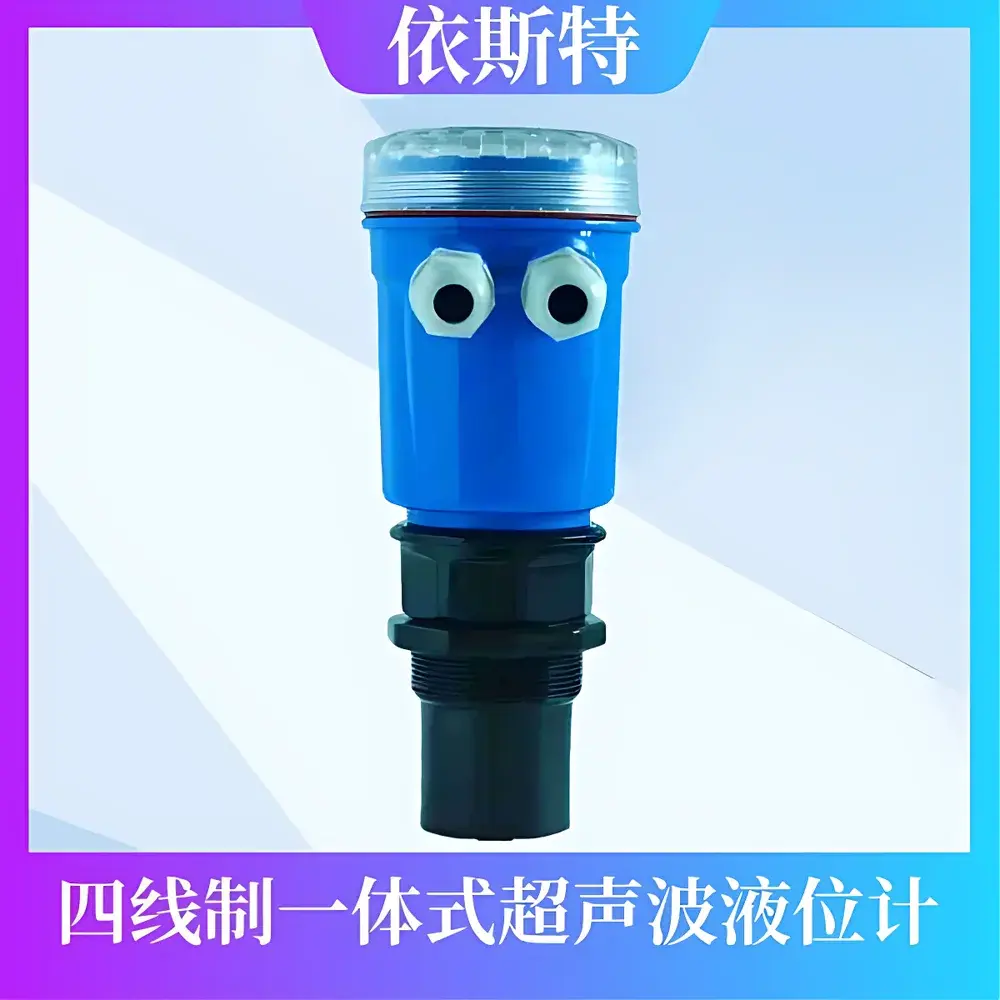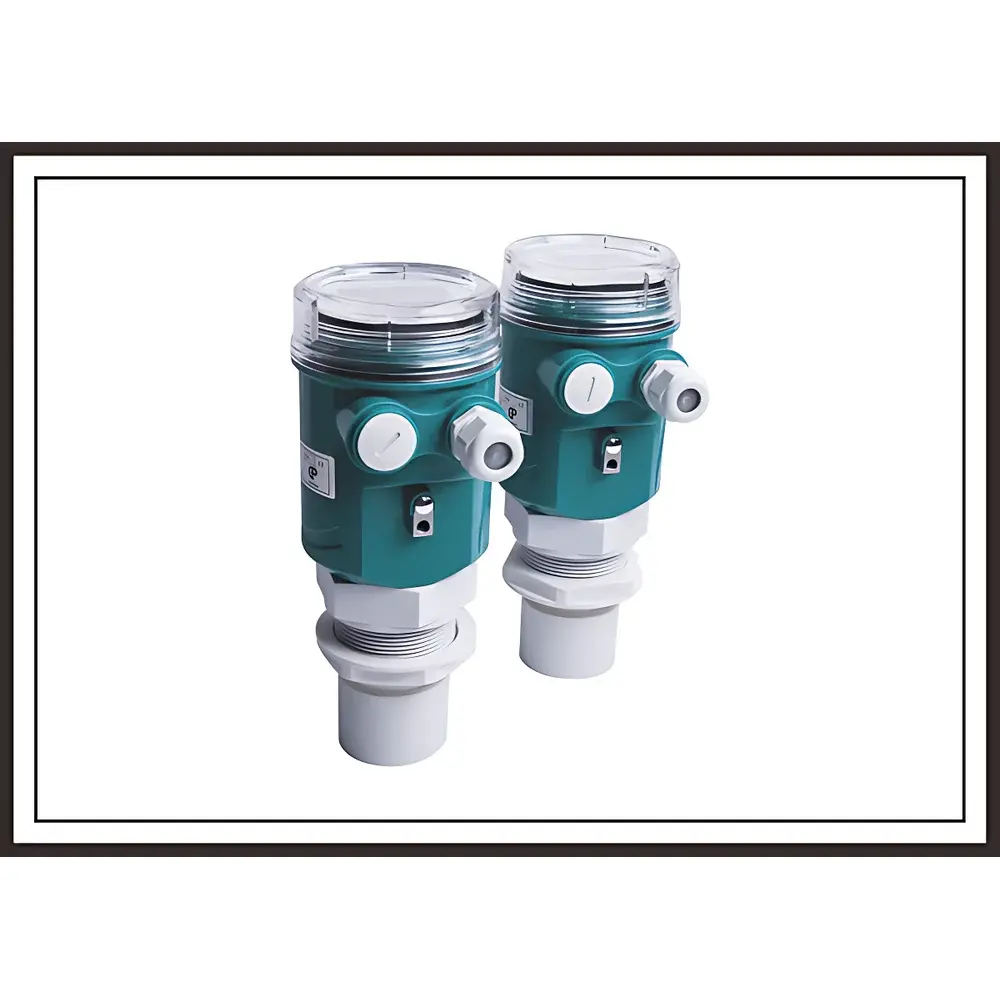
GreenPrima PRO LEV200 Integrated Ultrasonic Level Transmitter
| Brand | GreenPrima |
|---|---|
| Origin | Germany |
| Manufacturer Type | Manufacturer |
| Origin Category | Imported |
| Model | PRO LEV200 |
| Product Type | Ultrasonic Level Transmitter |
| Measuring Range | 6 m / 10 m |
| Blind Zone | 0.25 m / 0.5 m |
| Accuracy | ±0.2% F.S. |
| Display | LCD |
| Resolution | 1 mm |
| Max. Process Pressure | 1.5 bar |
| Operating Temperature | −30 to +70 °C |
| Housing Material | PC/PP |
| Output | 2-wire 4–20 mA (max. 750 Ω) |
| Power Supply | 24 VDC |
| Enclosure Rating | IP67 |
| Sensor Material | ETFE or PVDF |
| Communication | None (standard model) |
| Explosion Protection | Not applicable (non-ATEX version) |
Overview
The GreenPrima PRO LEV200 is an integrated ultrasonic level transmitter engineered for reliable, non-contact continuous level measurement of liquids and bulk solids in industrial process environments. Utilizing time-of-flight (ToF) ultrasonic pulse-echo principle, the device emits high-frequency acoustic waves (typically 50–200 kHz) toward the surface of the medium and precisely calculates distance based on the elapsed time between emission and echo return. Its embedded high-performance microprocessor performs real-time signal processing—including automatic gain control, temperature compensation, and advanced waveform analysis—to ensure stable performance across varying dielectric properties, surface turbulence, vapor layers, and ambient noise conditions. Designed for deployment in wastewater treatment plants, potable water facilities, chemical storage tanks, open-channel flow monitoring, and silo inventory management, the PRO LEV200 delivers consistent accuracy without mechanical wear or process contact—eliminating risks of fouling, corrosion, or calibration drift associated with float, radar, or guided-wave radar systems.
Key Features
- Integrated design with built-in transducer, electronics, and display—no external controller or separate sensor housing required
- Automatic power adjustment and adaptive gain control to maintain optimal signal-to-noise ratio under changing process conditions
- Digital temperature compensation using integrated Pt1000 sensor for accurate speed-of-sound correction across −30 °C to +70 °C operating range
- Advanced echo processing algorithm with configurable false-echo suppression to reject interference from tank walls, agitators, ladders, or foam layers
- ETFE or PVDF ultrasonic transducer diaphragm—chemically inert, UV-stable, and resistant to hydrolysis, strong acids, alkalis, and solvents
- Robust polycarbonate/polypropylene (PC/PP) housing rated IP67 for dust-tight and temporary immersion protection
- LCD local display with 1 mm resolution and intuitive menu navigation for commissioning, diagnostics, and live level readout
- 2-wire loop-powered architecture simplifying installation, wiring, and integration into existing 4–20 mA analog control systems
Sample Compatibility & Compliance
The PRO LEV200 is compatible with a broad spectrum of media including water, sewage, sludge, brine, crude oil, solvents, granular plastics, cement, fly ash, and agricultural grains. It is unsuitable for vacuum applications, highly attenuating media (e.g., heavy foam, thick emulsions, or aerated slurries), or surfaces with extreme acoustic absorption (e.g., fine powders with >90% void fraction). The instrument complies with IEC 61000-6-2 (EMC immunity) and IEC 61000-6-4 (EMC emissions) standards. While the base PRO LEV200 model carries no intrinsic explosion protection certification, it may be installed in non-hazardous zones per IEC 60079-0 general requirements. For hazardous area use, the PRO LEV300 series offers ATEX II 1/2G Ex ia IIC T6 certified variants. All units support configuration via HART-compatible handheld communicators when equipped with optional HART firmware (PRO LEV300-H variants).
Software & Data Management
Commissioning and parameterization are performed locally via the integrated keypad and LCD interface or remotely using standard HART protocol (with optional HART-enabled models). Configuration parameters include damping time, measurement range, empty/ full calibration points, output scaling, fail-safe behavior (up-scale/down-scale), and echo profile thresholding. The device logs up to 32 historical events—including power cycles, configuration changes, and major alarms—with timestamps traceable for GLP/GMP audit purposes. Though the PRO LEV200 does not feature embedded Modbus RTU or Ethernet connectivity, its 4–20 mA output is fully compatible with PLCs, DCS systems, SCADA historians, and cloud-based IIoT platforms via analog input modules with edge data acquisition capabilities.
Applications
- Continuous level monitoring in primary and secondary clarifiers, equalization basins, and sludge thickeners
- Inventory control of potable water reservoirs, firewater tanks, and chemical dosing vessels
- Open-channel flow calculation using weirs and flumes in conjunction with ultrasonic level data
- Level supervision in chemical intermediate storage tanks handling aggressive media such as sulfuric acid, sodium hydroxide, or chlorine solutions
- Fill-level verification in silos and hoppers for dry bulk materials including limestone, sand, and polymer pellets
- Redundant level sensing in safety-critical applications where SIL-2 compliance is supported by system-level architecture (e.g., voting logic with independent sensors)
FAQ
What is the minimum measurable distance (blind zone) for the PRO LEV200?
The blind zone is 0.25 m for the 6 m range variant and 0.5 m for the 10 m range variant—defined as the region immediately below the transducer where echoes cannot be reliably distinguished due to ring-down effects.
Can the PRO LEV200 measure through foam or vapor layers?
It can tolerate light to moderate foam and saturated vapor if echo strength remains sufficient; however, thick, acoustically absorbent foam or persistent condensation on the transducer face will degrade performance and require mechanical cleaning or purge air assistance.
Is field calibration required after installation?
Yes—two-point calibration (empty and full reference points) is mandatory to compensate for mounting geometry, tank geometry, and process-specific acoustic propagation characteristics.
Does the device support digital communication protocols out of the box?
The standard PRO LEV200 supports only analog 4–20 mA output; digital communication (HART, Modbus RTU) requires selection of the PRO LEV300 series or optional firmware/hardware upgrades.
How is temperature compensation implemented?
An integrated Pt1000 resistance thermometer measures ambient transducer temperature, and the microprocessor applies real-time correction to the speed-of-sound model used in time-of-flight calculations—ensuring ±0.2% F.S. accuracy across the full operating temperature range.
Related Products