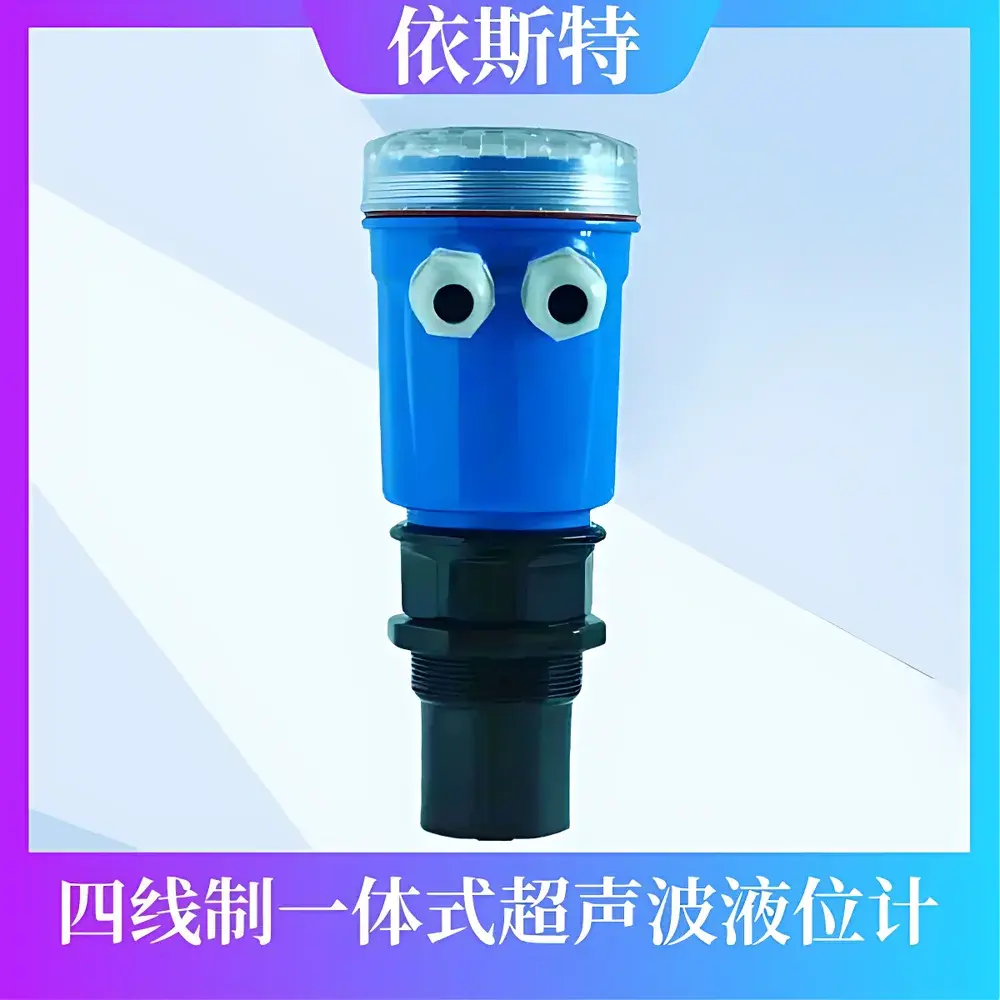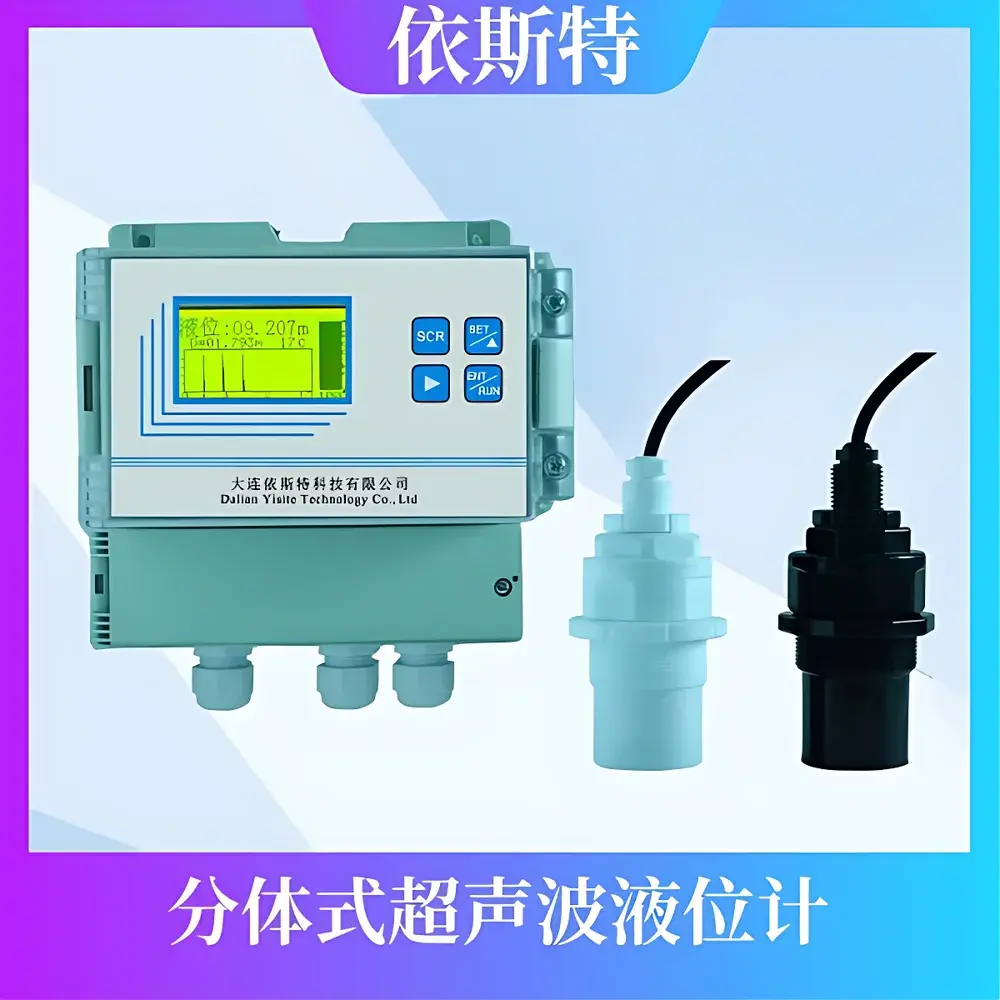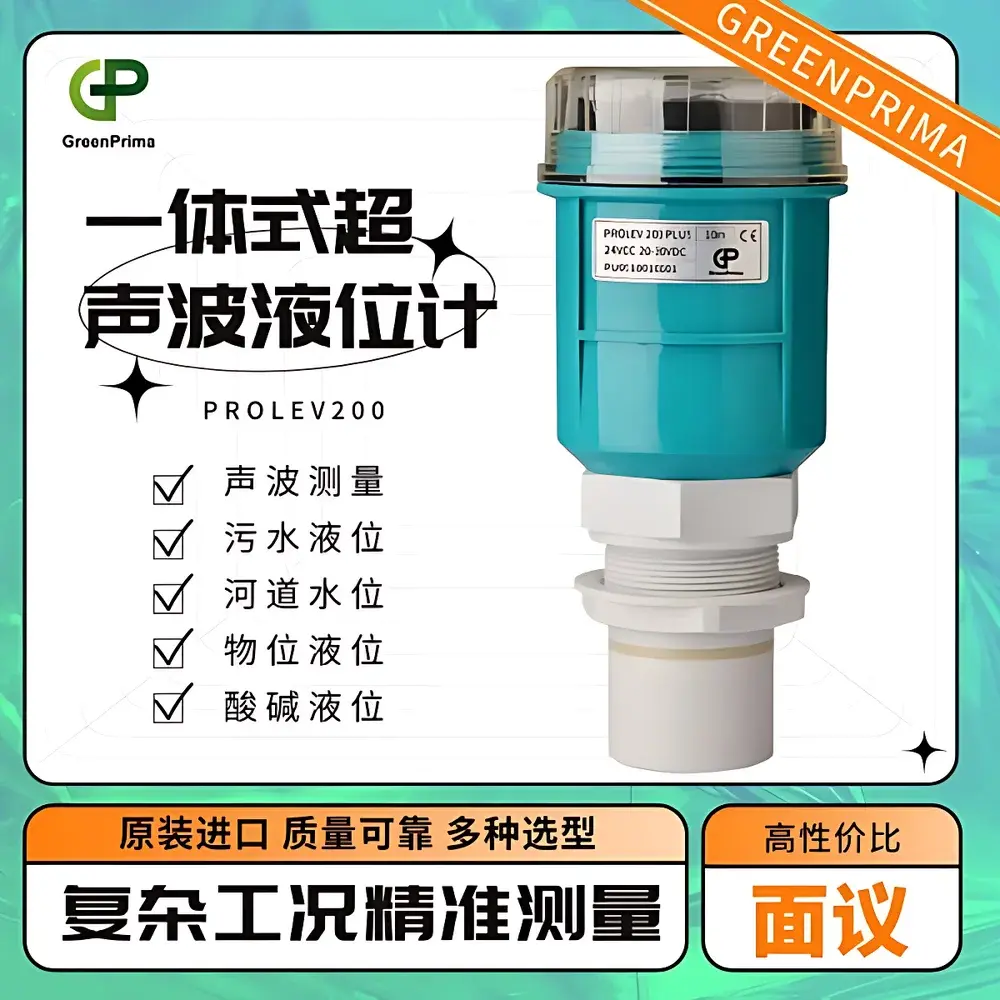
GreenPrima PRO LEV200 Plus Ultrasonic Level Meter for Food Industry
| Brand | GreenPrima |
|---|---|
| Origin | United Kingdom |
| Manufacturer Type | Manufacturer |
| Origin Category | Imported |
| Model | PRO LEV200 Plus |
| Product Type | Ultrasonic Level Meter |
| Measuring Range | 6 m / 10 m |
| Blind Zone | 0.25 m / 0.5 m |
| Accuracy | ±0.2% F.S. |
| Display | LCD |
| Resolution | 1 mm |
| Max. Process Pressure | 1.5 bar |
| Operating Temperature | −30 to +70.0 °C |
| Sensor Material | ETFE or PVDF |
| Housing Material | PC/PP |
| Output | 2-wire 4–20 mA (max. 750 Ω) |
| Power Supply | 24 VDC |
| Protection Rating | IP67 |
| Process Connection | G2" |
| Application | Solid & Liquid Level Measurement |
Overview
The GreenPrima PRO LEV200 Plus is a high-performance, microprocessor-based ultrasonic level meter engineered specifically for hygienic and demanding environments in the food industry. It operates on the principle of time-of-flight ultrasonic echo measurement: a transducer emits a short ultrasonic pulse toward the material surface; the elapsed time between transmission and echo return is precisely measured and converted into distance using the speed of sound in air—temperature-compensated in real time. This non-contact method eliminates process contamination risk, avoids mechanical wear, and ensures consistent performance across viscous liquids (e.g., syrups, dairy concentrates), granular solids (e.g., flour, sugar), and slurries common in food processing lines. Designed to meet stringent hygiene requirements, the instrument complies with general principles of equipment suitability for food contact zones per EC 1935/2004 and supports traceable operation under HACCP-aligned monitoring protocols.
Key Features
- Integrated temperature compensation algorithm continuously adjusts sound velocity calculations based on ambient sensor temperature (−30 to +70.0 °C), minimizing drift in variable-climate facilities such as cold storage rooms or steam-cleaned production halls.
- Adaptive gain control and automatic power adjustment dynamically optimize signal-to-noise ratio—critical when measuring low-reflectivity surfaces (e.g., foam-covered tanks, powdered starch) or in acoustically noisy environments (e.g., near mixers or conveyors).
- Digital echo processing employs advanced waveform analysis to distinguish true material echoes from false returns caused by tank obstructions, agitator blades, or condensation—reducing spurious triggers and improving data integrity.
- Chemically resistant sensor face constructed from ETFE or PVDF ensures long-term stability against cleaning agents (e.g., caustic soda, nitric acid), sanitizers (peracetic acid), and organic acids prevalent in food-grade CIP/SIP cycles.
- Rugged polycarbonate/polypropylene housing rated IP67 provides protection against high-pressure washdowns and incidental submersion, aligning with EHEDG Guideline Doc. 8 for equipment surface design.
- Fixed-range configuration (6 m or 10 m) with configurable blind zone (0.25 m / 0.5 m) allows precise adaptation to vessel geometry without field recalibration.
Sample Compatibility & Compliance
The PRO LEV200 Plus is validated for continuous level monitoring of non-vacuum, atmospheric to 1.5 bar pressurized vessels containing food-grade liquids (water, brine, juices, edible oils), semi-solids (mashed potatoes, chocolate mass), and free-flowing dry media (rice, cereal flakes, dried herbs). It does not require media-specific calibration and maintains repeatability within ±0.2% of full scale—verified per IEC 61298-2 for level measurement devices. While not intrinsically certified for explosive atmospheres (ATEX II 1/2G Ex ia II C T6 applies only to PRO LEV300 variants), its non-sparking construction and absence of internal ignition sources permit safe use in Zone 2 classified areas typical of ingredient storage silos and mixing hoppers. All materials comply with FDA 21 CFR §177.2420 (ETFE) and §177.2430 (PVDF) for repeated food contact.
Software & Data Management
Configuration and diagnostics are performed locally via intuitive LCD interface with multilingual menu support (English, German, Spanish, French). The device supports HART-compatible parameter readout through standard 4–20 mA loop communicators, enabling integration into DCS/SCADA systems without additional gateways. While the PRO LEV200 Plus does not include embedded Modbus or relay outputs (features reserved for the PRO LEV300 Plus variant), its 2-wire analog output meets ISA-50.00.01 signal integrity requirements and is compatible with PLC analog input cards compliant with IEC 61000-4-4 (electrical fast transient immunity) and IEC 61000-4-5 (surge immunity). Audit trails and calibration logs are maintained externally via host system logging—fully compatible with GLP/GMP electronic record retention practices when paired with validated data acquisition software.
Applications
- Continuous level monitoring of stainless-steel holding tanks for pasteurized milk, whey, or plant-based beverages.
- Batch-level verification in jacketed kettles during cooking, homogenization, or caramelization stages.
- Silo inventory management for dry ingredients including cocoa powder, cornstarch, and dehydrated vegetables.
- Overflow detection in CIP rinse tanks and effluent collection sumps within sanitary utility corridors.
- Interface level tracking in dual-phase separators handling oil-water emulsions during vegetable oil refining.
FAQ
Can the PRO LEV200 Plus be used in stainless-steel tanks with internal baffles or heating coils?
Yes—its echo discrimination algorithm filters out fixed-path reflections from internal structures, provided the first valid echo originates from the material surface and exceeds the configured minimum signal amplitude threshold.
Is it suitable for measuring level in fermenters producing CO₂-rich headspace?
CO₂ concentration up to 10% v/v has negligible effect on sound velocity at ambient temperatures; however, rapid gas composition shifts during active fermentation may introduce minor transient errors—mitigated by enabling the built-in damping filter (adjustable 1–60 s).
Does the instrument require periodic recalibration?
No routine recalibration is required. Factory calibration remains stable over the product’s service life; verification against a known reference (e.g., dip tape, sight glass) is recommended annually per ISO/IEC 17025-aligned QA procedures.
How is temperature compensation implemented?
An integrated Pt1000 RTD sensor measures transducer body temperature in real time; the microprocessor applies a polynomial correction factor to the speed-of-sound model, achieving <±0.15% error contribution across the full operating range.
What mounting orientation is recommended for optimal performance?
Vertical center-mounting on the tank roof is preferred. Off-center or angled installations (>5° from vertical) may reduce effective beam focus and increase susceptibility to multi-path reflections—consult GreenPrima’s Application Engineering Guide (Doc. APG-ULM-2023) for offset mounting protocols.
Related Products