
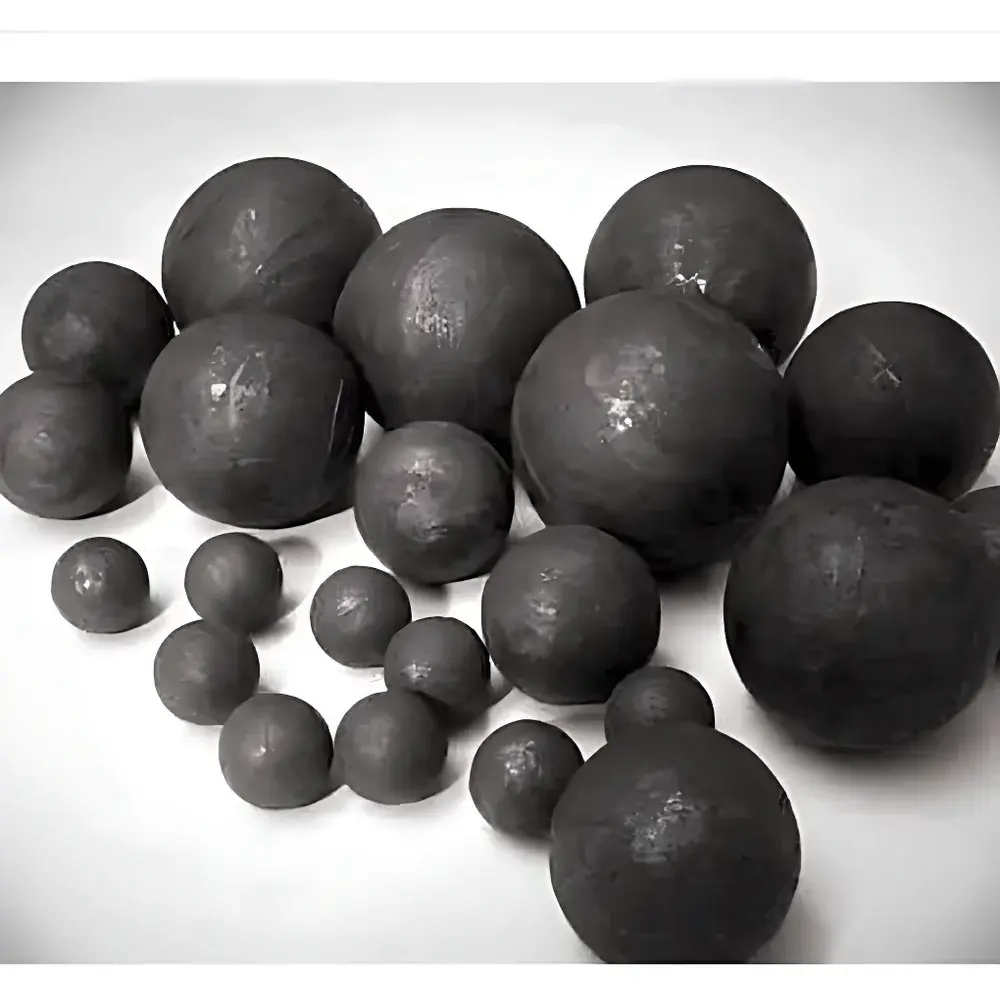
Grinding Balls for Laboratory and Industrial Ball Mills
| [Origin | USA |
|---|---|
| Manufacturer Type | Authorized Distributor |
| Origin Category | Imported |
| Model | Grinding Balls |
| Pricing | Available Upon Request] |
Overview
Grinding Balls are precision-engineered milling media designed for consistent, reproducible particle size reduction in laboratory-scale and industrial ball mills, rod mills, and attrition mills. These spherical grinding elements operate on the principle of impact and attrition—transferring kinetic energy from mill rotation to solid samples through repeated collisions and shearing forces. Selection of appropriate grinding ball material, density, size distribution, and fill volume is critical to achieving optimal comminution efficiency, minimizing contamination, and ensuring equipment longevity. This product line includes stainless steel, carbon steel (triple-forged hardened), chromium steel (AISI 52100), and high-purity alumina ceramic variants—each selected for specific compatibility with mill lining materials (e.g., rubber, porcelain, stainless steel, or epoxy-coated drums) and chemical resistance requirements.
Key Features
- Density-optimized formulations: Ceramic balls (SG ≈ 3.4) offer low silica leaching and high acid/alkali resistance; high-density alumina (SG = 3.2) provides enhanced wear resistance over standard porcelain (SG = 2.3); steel grades (SG = 7.7) deliver maximum impact energy for hard, brittle materials.
- Precision diameter tolerance: All balls manufactured to ±0.005″ (±0.13 mm) dimensional control, ensuring uniform mass distribution and predictable charge dynamics.
- Hardness-certified materials: Triple-forged carbon steel (HRC 58–62); AISI 52100 chrome steel (HRC 60–64); 99.5% Al₂O₃ ceramic (Vickers hardness ≥ 1500 HV).
- Controlled void fraction: Typical ball charge occupies 30–40% of mill volume by bulk, corresponding to 20–50% volumetric fill relative to total drum capacity—optimized empirically per application and validated per ASTM E1192 guidelines for grinding media performance testing.
- Traceable lot documentation: Each batch supplied with CoA including material certification, hardness verification, and dimensional sampling reports.
Sample Compatibility & Compliance
Grinding Balls are selected based on sample matrix and regulatory context. Stainless steel (304/316) and alumina ceramic variants are routinely employed in pharmaceutical pre-formulation (USP , ) and food-grade processing where metal ion leaching must be minimized. Chromium steel and hardened carbon steel are preferred for mineralogical pulverization (ASTM D297, ISO 6426) and cement fineness testing (ASTM C114). All ceramic products conform to ISO 13356 for biocompatible oxide ceramics. No RoHS-restricted substances are present; material safety data sheets (MSDS/SDS) available upon request. Compatible with GLP-compliant workflows when paired with audit-trail-enabled mill controllers and documented charge calibration procedures.
Software & Data Management
While Grinding Balls themselves are passive mechanical components, their specification and usage parameters integrate into digital lab management systems via standardized metadata fields—including material type, nominal diameter (in inches/mm), density (g/cm³), lot number, and recommended fill ratio. When used with modern programmable mills (e.g., Retsch PM 100, Fritsch Pulverisette 7), ball specifications can be embedded into method templates stored under 21 CFR Part 11-compliant electronic records. Batch-level traceability supports full audit readiness for FDA, EMA, or ISO/IEC 17025-accredited laboratories.
Applications
- Pharmaceutical: Dry/wet milling of APIs and excipients prior to dissolution testing or tablet formulation; compliant with ICH Q5C stability protocol grinding steps.
- Geochemistry & Mining: Pulverization of ore samples for XRF, ICP-MS, and AA analysis per ASTM D5630 and ISO 12743 protocols.
- Ceramics & Advanced Materials: Homogenization of nanoparticle slurries, battery cathode precursors, and piezoelectric composites.
- Environmental Testing: Preparation of soil/sediment composites for TCLP extraction (EPA Method 1311) and heavy metal leachability studies.
- Academic Research: Controlled mechanical alloying, mechanochemical synthesis, and crystal structure modification via high-energy ball milling.
FAQ
What is the recommended fill level for optimal grinding efficiency?
The empirically validated range is 20–50% of mill internal volume, with 30–40% being typical for most dry grinding applications. Fill level must be adjusted based on material density, desired particle size distribution, and mill rotational speed.
How do I select between ceramic and steel grinding media?
Use ceramic (alumina) for chemically sensitive or contamination-critical samples (e.g., trace metal analysis, pharmaceuticals); use hardened steel for high-toughness materials like quartz, feldspar, or ferroalloys where throughput and energy efficiency are prioritized.
Are these grinding balls certified for GMP environments?
Yes—stainless steel and alumina variants are supplied with full material traceability, CoA, and non-reactive surface characterization suitable for GMP manufacturing support activities, subject to end-user validation per Annex 15.
Do you provide custom sizing or blended diameter distributions?
Custom diameters and multi-size blends (e.g., binary or ternary distributions) are available under OEM agreement with minimum order quantities and extended lead times.
What standards govern grinding media performance testing?
Relevant references include ASTM E1192 (ball mill performance), ISO 5074 (coal grindability), and ISO 6426 (mineral comminution testing)—all of which specify media density, hardness, and geometric consistency as key input variables.





