
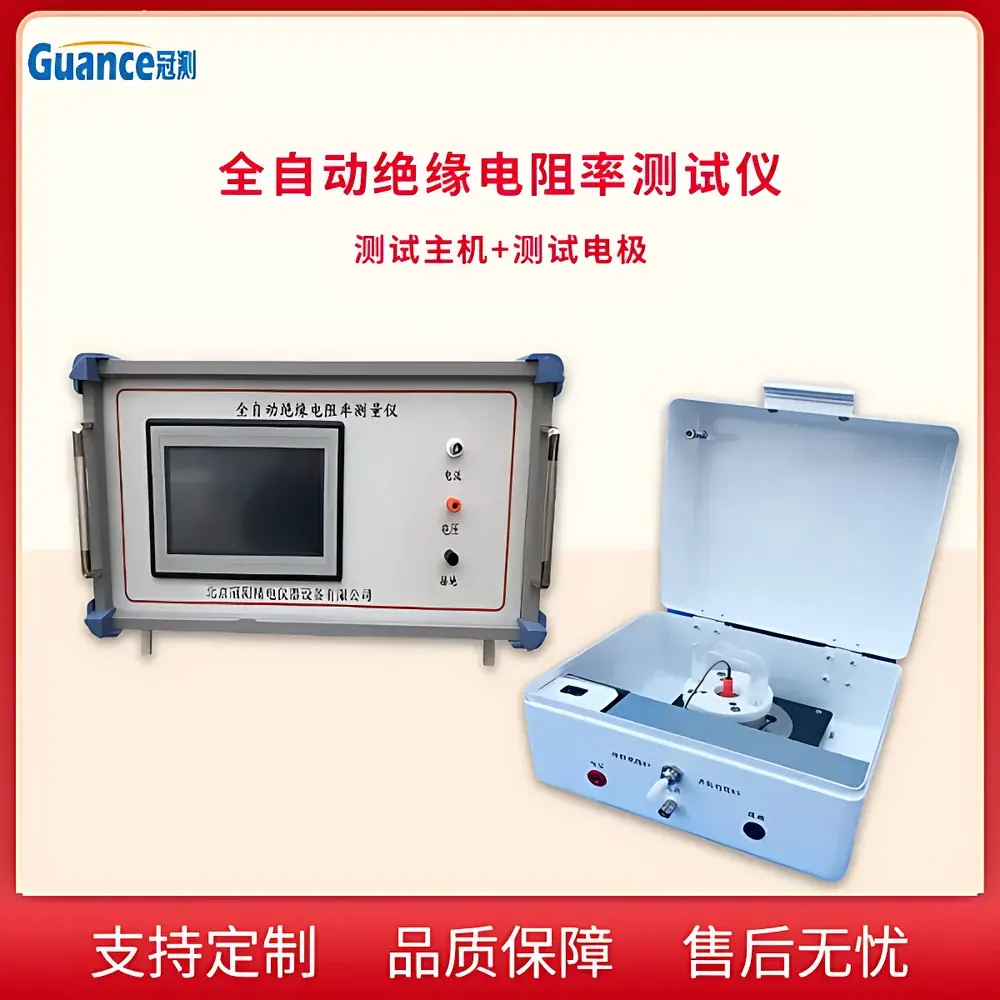
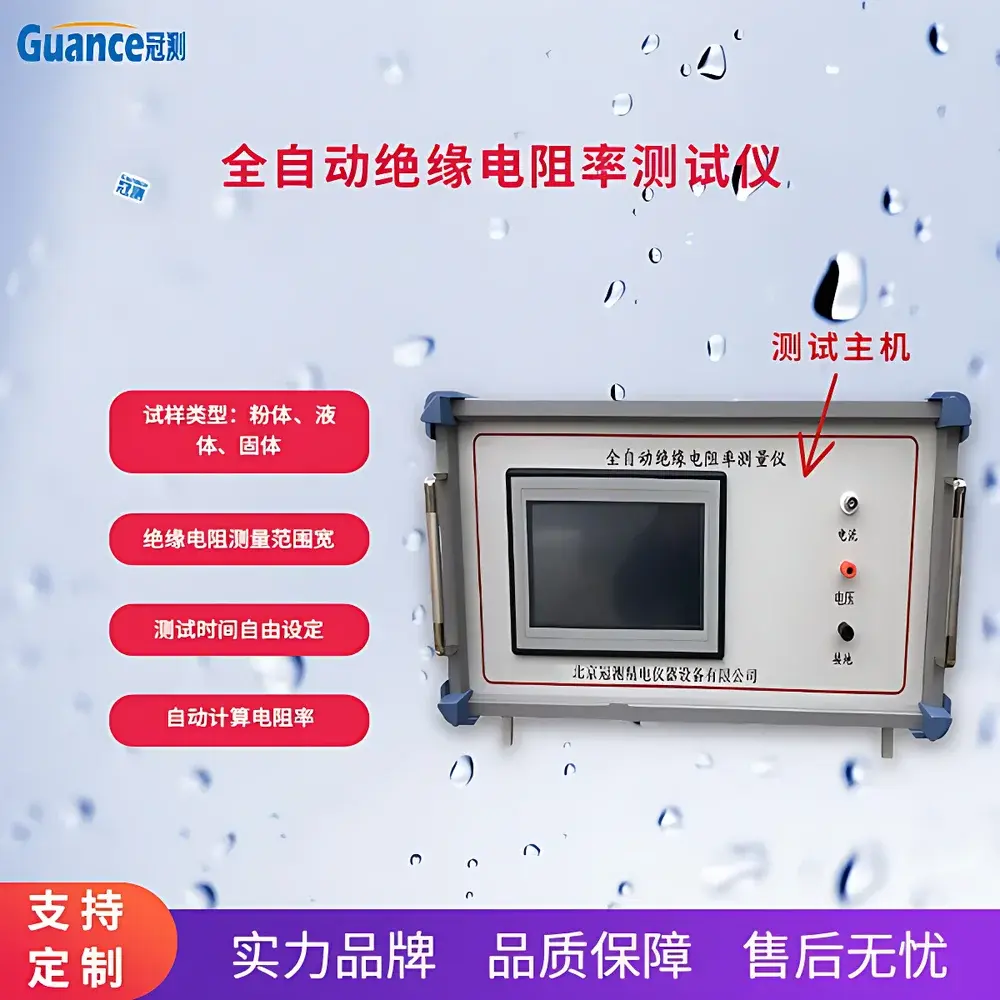
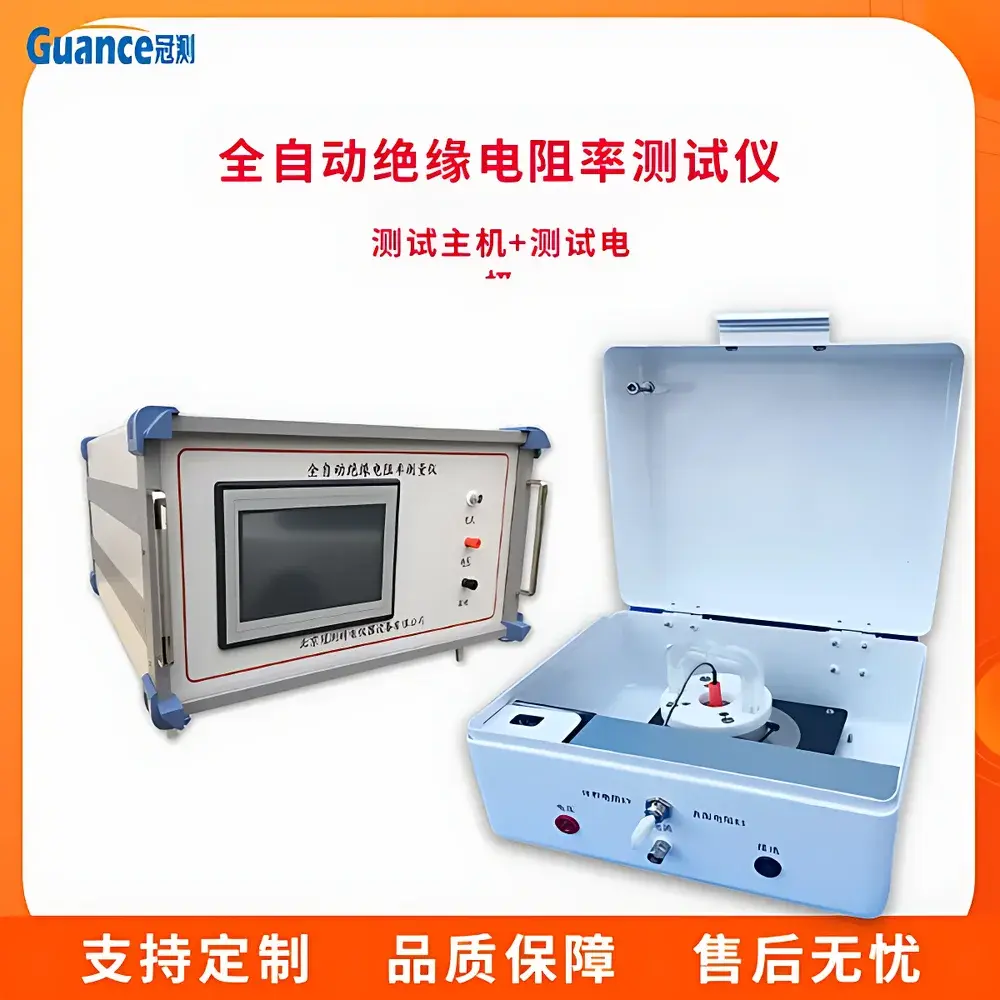
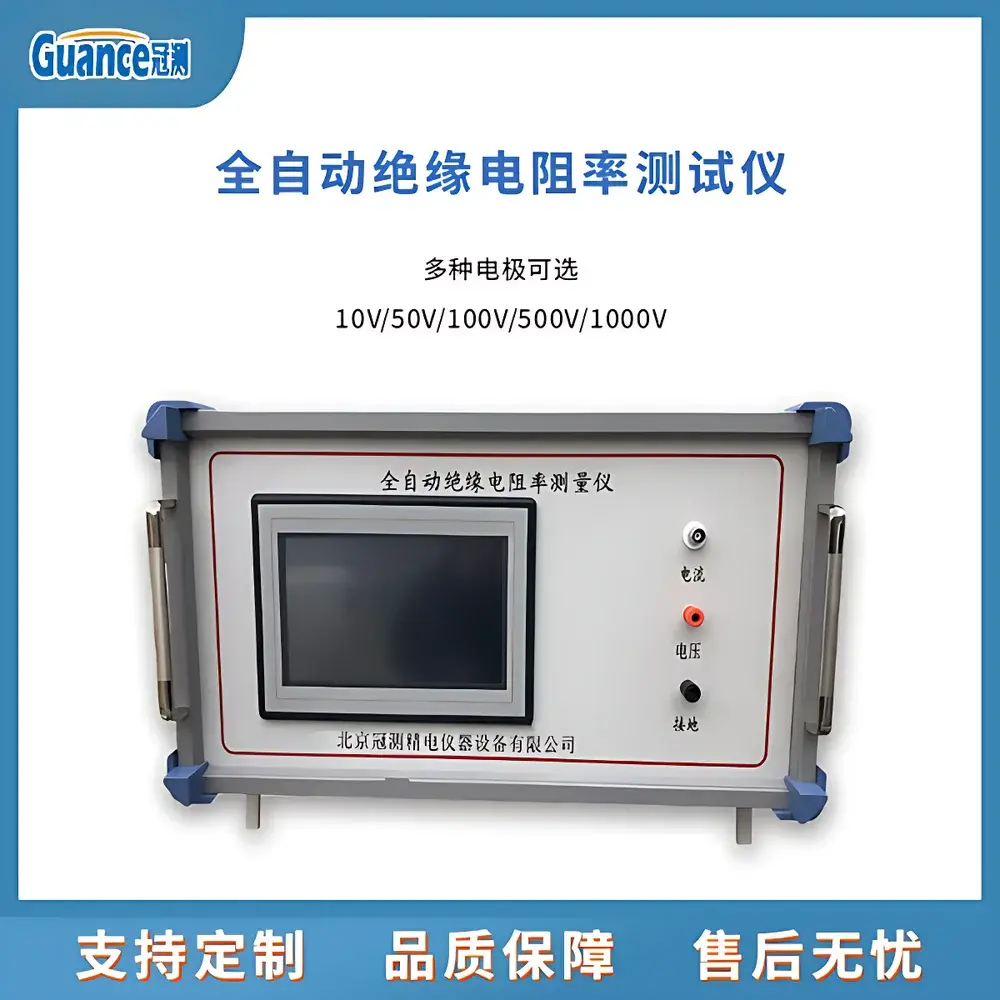
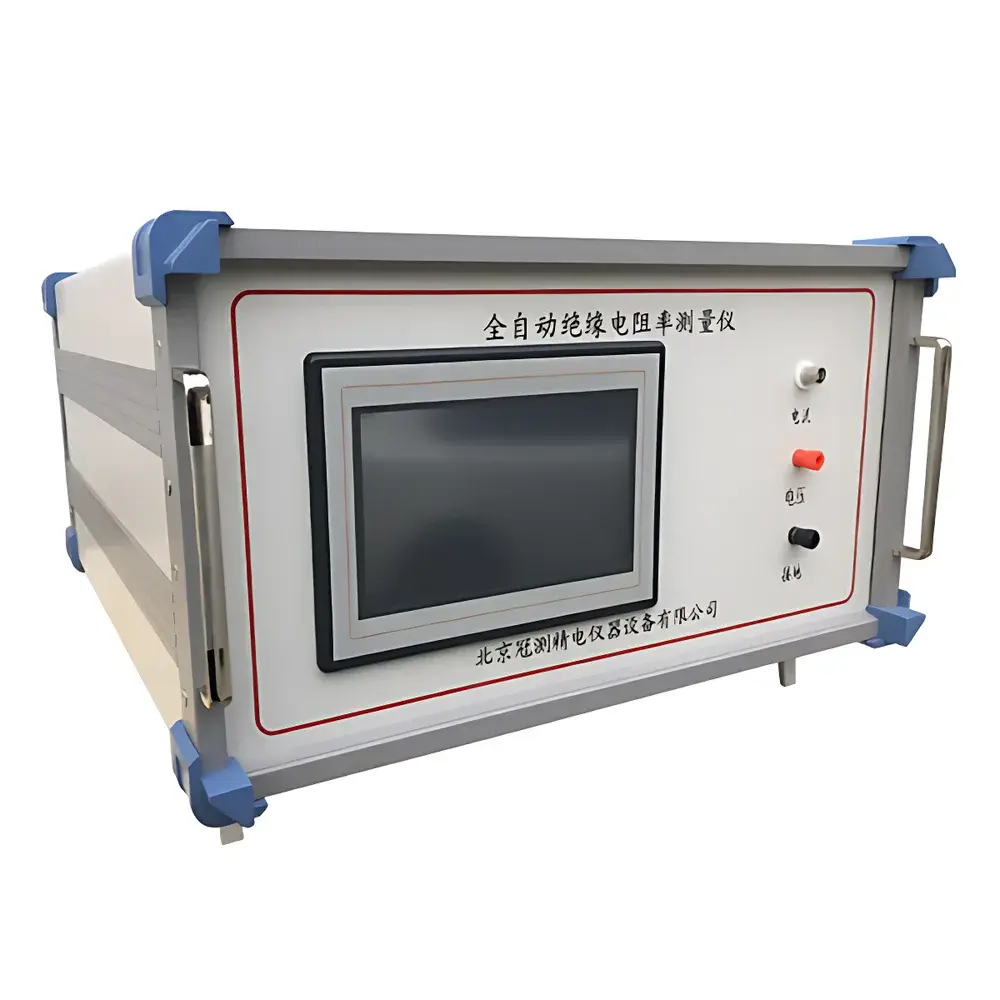
GuanCe Instruments GEST-121A2 Digital High-Resistance Meter for Volume & Surface Resistivity Testing
| Brand | GuanCe Instruments |
|---|---|
| Origin | Beijing, China |
| Manufacturer Type | Authorized Distributor |
| Country of Origin | China |
| Model | GEST-121A2 |
| Price | USD 265 (FOB Beijing) |
Overview
The GuanCe Instruments GEST-121A2 is a precision digital high-resistance meter engineered for the quantitative determination of volume resistivity (ρv) and surface resistivity (ρs) of insulating materials in accordance with standardized test methods including ASTM D257, IEC 60093, and GB/T 1410. It operates on the principle of constant-voltage DC measurement using guarded electrode configurations to isolate bulk conduction from surface leakage paths. The instrument applies selectable test voltages (10 V, 100 V, 250 V, 500 V, and 1000 V DC) and measures resulting current in the range of 1 × 10⁻¹⁶ A to 1.999 × 10⁻⁴ A, enabling resistivity calculations over an effective measurement span of 1 × 10⁴ Ω to 2 × 10¹⁸ Ω — sufficient for evaluating polymeric films, elastomers, ceramic substrates, powder compacts, and non-conductive liquids. Its compact architecture integrates an Intel-based large-scale integrated circuit (LSI) platform, ensuring thermal stability, low noise floor, and minimal drift during extended measurements.
Key Features
- Wide dynamic range: Measures resistance from 104 Ω to 2 × 10¹⁸ Ω with automatic range selection and real-time auto-zero compensation
- Programmable DC test voltages: 10 V, 100 V, 250 V, 500 V, and 1000 V — compliant with voltage requirements for Class I–III insulation testing per IEC 60601-1
- Dual-mode operation: Simultaneous display of resistance value (Ω) and calculated resistivity (Ω·cm or Ω/sq), with built-in geometric correction factors for standard electrode geometries
- Guarded three-terminal measurement topology: Eliminates surface leakage error via driven guard shielding, critical for accurate volume resistivity evaluation of hygroscopic or contaminated specimens
- Low-input-bias-current amplifier design: Input bias current < 1 fA, enabling stable microampere-to-femtoampere current resolution without external electrometers
- Integrated environmental compensation: Optional temperature/humidity input port supports correlation of resistivity data with ambient conditions per ASTM D257 Annex A4
Sample Compatibility & Compliance
The GEST-121A2 accommodates solid, semi-solid, and liquid samples through interchangeable electrode fixtures — including concentric ring electrodes (for surface resistivity), parallel plate electrodes (for volume resistivity of sheets and films), and cylindrical probe assemblies (for powders and pastes). Sample thickness tolerance spans 0.1 mm to 25 mm; minimum specimen area is 100 cm² for standard ASTM D257 compliance. All electrode sets are constructed from stainless steel 316L with gold-plated contact surfaces to minimize interfacial polarization and oxidation-induced drift. The system meets CE marking requirements for electromagnetic compatibility (EN 61326-1) and safety (EN 61010-1). Measurement protocols align with GLP documentation standards, supporting audit-ready test records when paired with optional RS-232/USB data logging.
Software & Data Management
The instrument supports bidirectional serial communication (RS-232 and USB Virtual COM) for integration into automated test environments. Optional GuanCe LabLink™ software (v3.2) provides real-time waveform capture, time-resolved resistivity trending, statistical analysis (mean, SD, CV%), and export to CSV, Excel, or PDF formats. All stored measurements include timestamp, operator ID, test voltage, electrode configuration, ambient T/RH (if sensor-connected), and pass/fail flags against user-defined specification limits. Audit trail functionality complies with FDA 21 CFR Part 11 requirements when deployed with role-based access control and electronic signature modules.
Applications
- Quality control of polymer dielectrics in cable jacketing, PCB substrates, and capacitor films
- R&D evaluation of anti-static additives in polyolefins and engineering thermoplastics
- Validation of cleaning efficacy on semiconductor wafer handling tools via surface resistivity mapping
- Characterization of insulating coatings on medical device housings per ISO 10993-1 biocompatibility guidance
- Resistivity profiling of battery separator membranes under variable humidity and temperature
- Testing of conformal coatings and potting compounds used in aerospace avionics enclosures
FAQ
What standards does the GEST-121A2 support for resistivity reporting?
ASTM D257, IEC 60093, GB/T 1410, and ISO 3915 — with configurable calculation templates for both volume and surface resistivity units.
Can it measure resistivity of conductive nanocomposites?
Yes, within its lower range limit (10⁴ Ω); for materials below 10⁶ Ω, use the 10 V test voltage setting to avoid Joule heating artifacts.
Is calibration traceable to national metrology institutes?
Factory calibration is performed using NIST-traceable high-value resistors (10⁹–10¹⁴ Ω) and certified voltage sources; full calibration certificate available upon request.
Does it require external guarding accessories for surface resistivity tests?
No — the built-in driven guard circuitry eliminates need for external guard rings when using standard ASTM D257 electrode sets.
How is electrode contact resistance compensated?
Through four-terminal (Kelvin) sensing on all electrode interfaces, decoupling lead resistance from measured sample impedance.



