
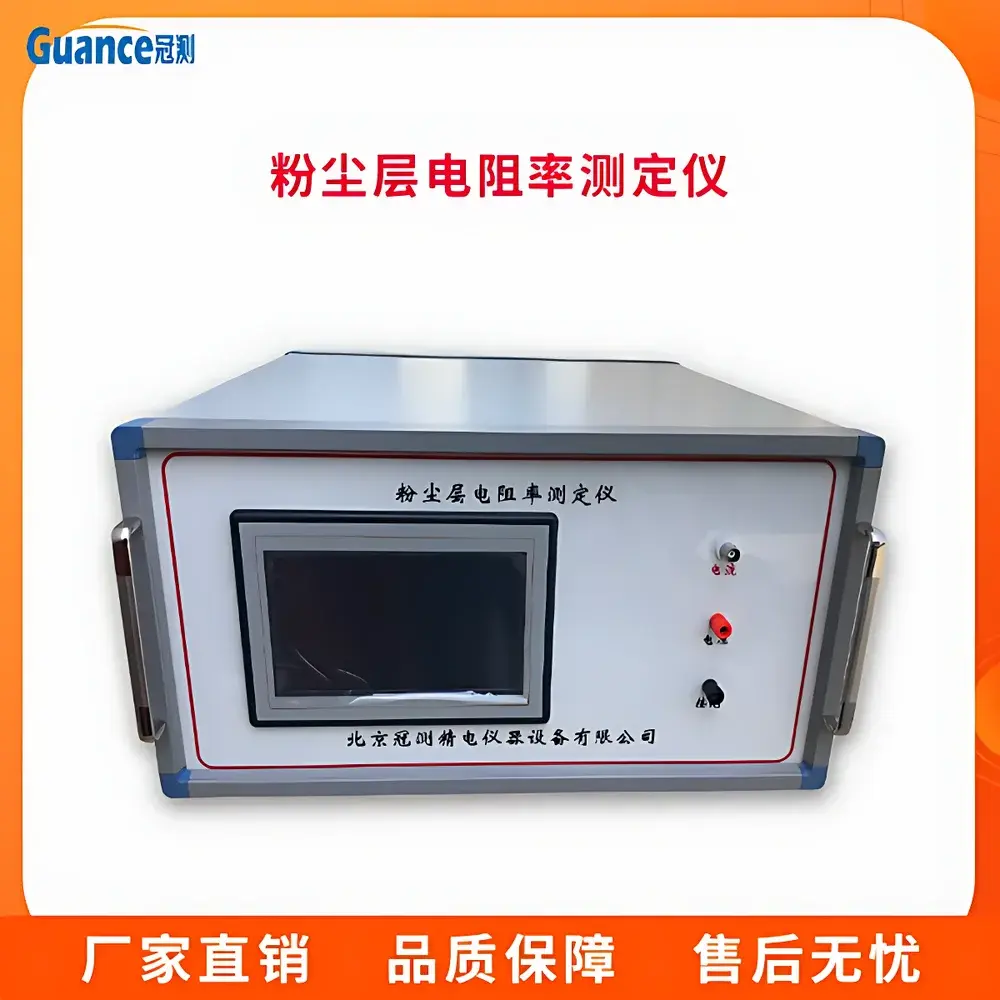
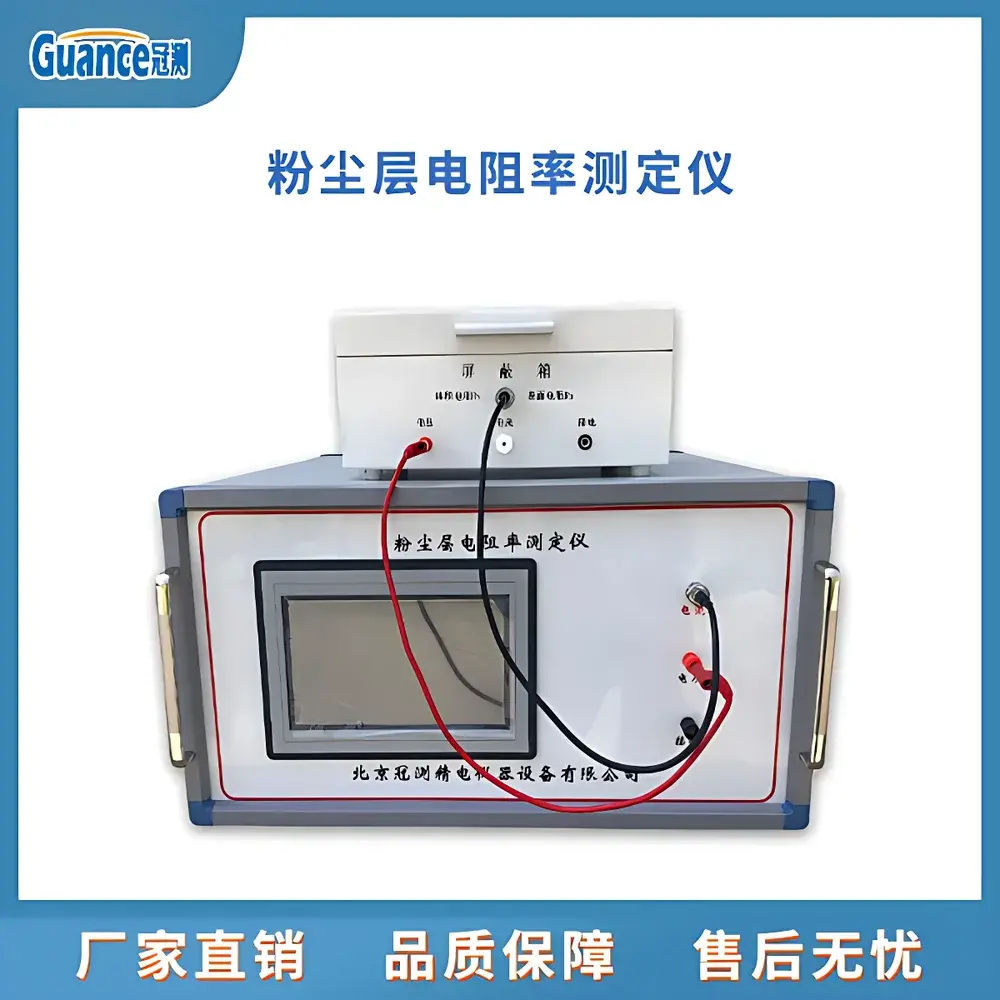
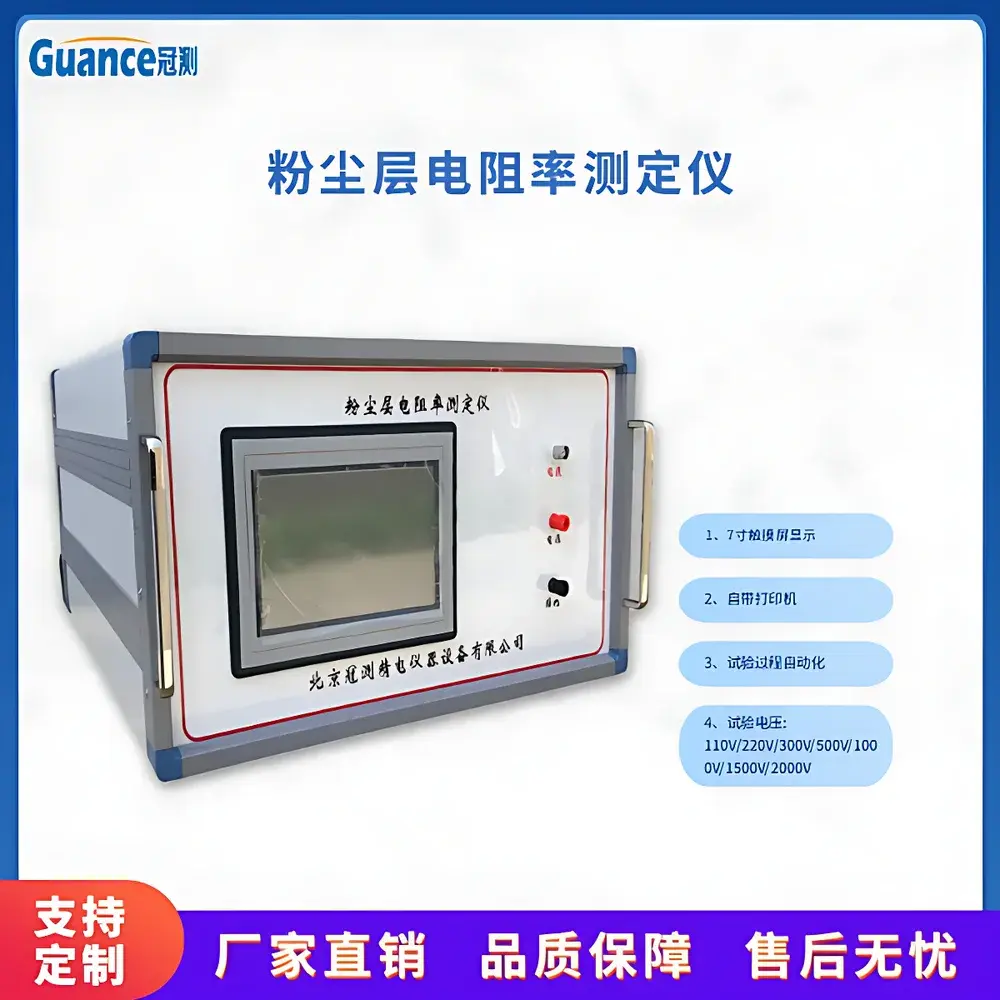
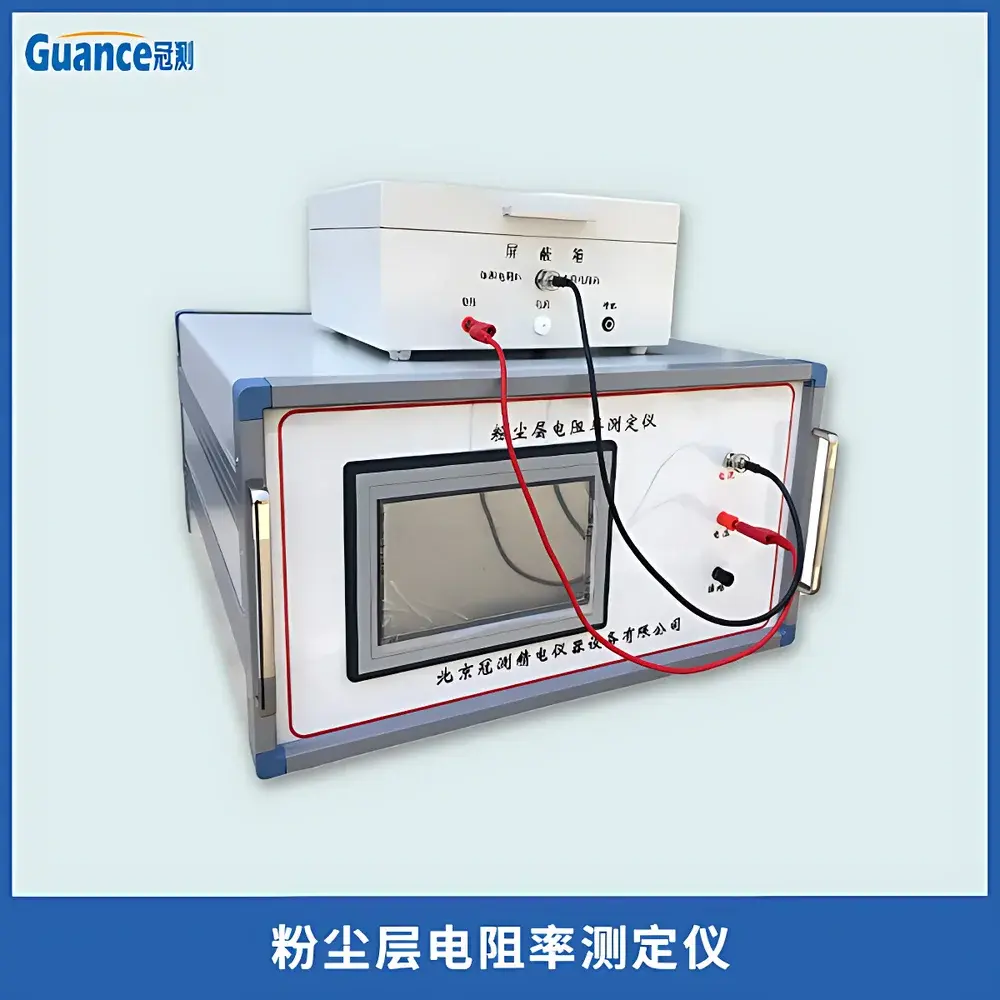
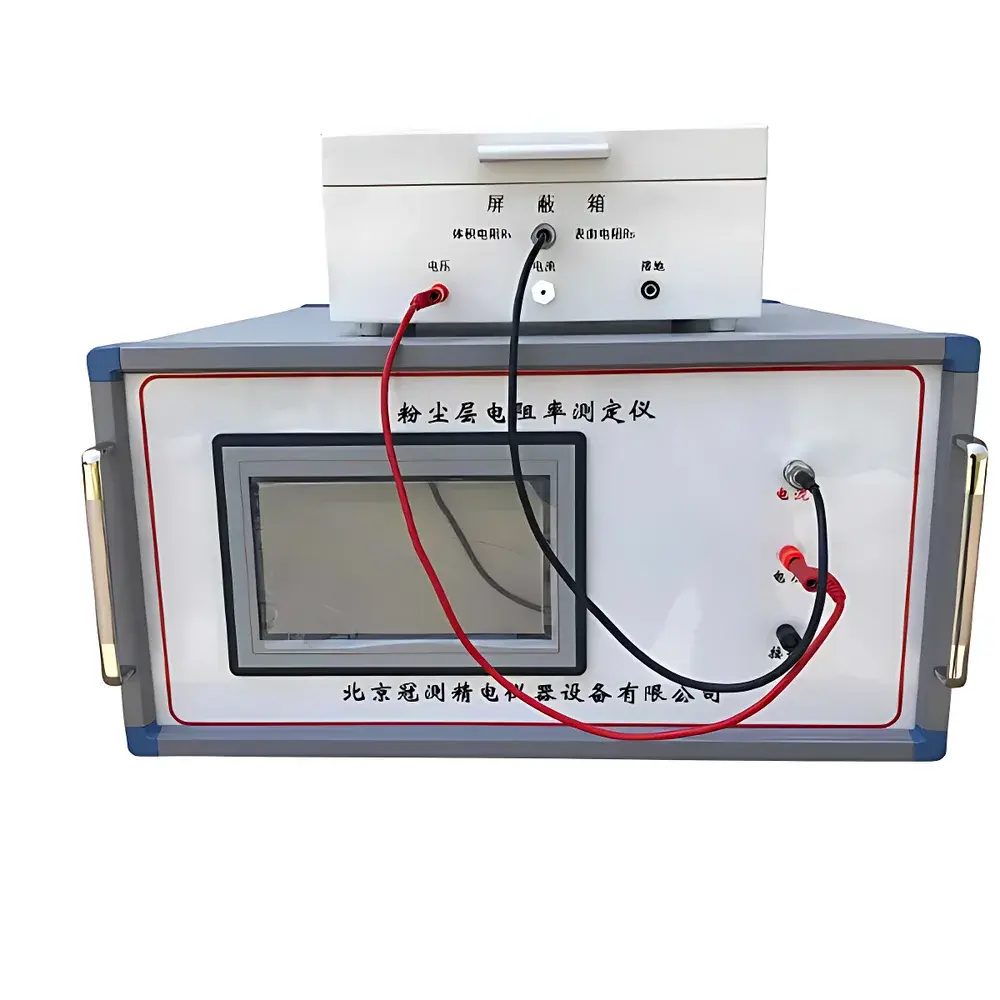
GuanCe Instruments GEST-126T Dust Layer Resistivity Tester
| Brand | GuanCe Instruments |
|---|---|
| Origin | Beijing, China |
| Manufacturer Type | Authorized Distributor |
| Country of Origin | China |
| Model | GEST-126T |
| Test Voltage Range | DC 110 V / 220 V / 300 V / 500 V / 1000 V / 1500 V / 2000 V |
| Series Resistor | 10 kΩ |
| Maximum Breakdown Current | 200 mA |
| Electrode Material | Stainless Steel (AISI 304) |
| Measurement Accuracy | ±1% of full scale |
| Compliance | GB/T 12476.9–2010, GB/T 16427–2018 |
Overview
The GuanCe Instruments GEST-126T Dust Layer Resistivity Tester is a precision laboratory instrument engineered for the quantitative determination of electrical resistivity in consolidated layers of combustible particulate materials. It operates on the principle of direct-current (DC) two-electrode resistivity measurement under controlled compression and environmental conditions, conforming to standardized test protocols for hazard classification in hazardous area classification (ATEX/IEC 60079-0) and industrial dust explosion safety assessment. The device measures the minimum resistance between two parallel stainless steel electrodes sandwiching a uniformly compacted dust layer of defined thickness and cross-sectional area—enabling calculation of volume resistivity (ρ, in Ω·m) via the standard relation ρ = R × (A / d), where R is measured resistance, A is electrode contact area, and d is inter-electrode spacing. This methodology is essential for distinguishing conductive dusts (ρ ≤ 10³ Ω·m) from non-conductive dusts (ρ > 10³ Ω·m), a critical parameter in grounding strategy design, electrostatic hazard analysis, and compliance with IEC 61241-2-1 and NFPA 77.
Key Features
- Seven-step programmable DC test voltage output (110 V to 2000 V), enabling graded evaluation of voltage-dependent conduction behavior and onset of leakage or breakdown phenomena.
- Integrated 10 kΩ series current-limiting resistor, ensuring operator safety and preventing uncontrolled arc formation during high-voltage testing of low-resistivity samples.
- Stainless steel (AISI 304) parallel-plate electrodes with precision-machined flat surfaces and calibrated spacing fixtures—designed for repeatable compaction pressure application and minimal edge-field distortion.
- ±1% full-scale measurement accuracy across the entire voltage range, traceable to national metrological standards and validated per GB/T 16427–2018 Annex B calibration procedures.
- Modular hardware architecture with isolated signal path and EMI-shielded enclosure, minimizing electromagnetic interference from adjacent lab equipment during sensitive high-resistance measurements.
- Manual compression protocol support using supplied glass rods—ensuring consistent bulk density (typically 0.2–0.5 g/cm³) as required by GB/T 12476.9–2010 Section 6.3.
Sample Compatibility & Compliance
The GEST-126T accommodates dry, free-flowing, non-agglomerated combustible powders including metal dusts (e.g., aluminum, magnesium), organic dusts (e.g., flour, sugar, wood), and polymer granules. Sample particle size distribution should fall within 45–150 µm to ensure reproducible packing density; oversized particles or fibrous materials require pre-sieving. The instrument meets the mechanical and electrical requirements specified in GB/T 12476.9–2010 Clauses 5.2–5.5 and GB/T 16427–2018 Sections 4–7. While not certified for use in Zone 20/21 classified areas, it is intended for laboratory-based type-testing under GLP-aligned quality systems. Data generated supports documentation for ATEX Category 2/3 equipment certification and fulfills evidentiary requirements for OSHA 1910.307(c)(2) and EU Directive 1999/92/EC (ATEX 137).
Software & Data Management
The GEST-126T is a standalone analog-digital hybrid instrument with no embedded microprocessor or proprietary software. All measurements are read directly from front-panel digital meters (voltage, current, resistance), recorded manually or via external data loggers. This architecture eliminates firmware validation overhead and ensures full auditability—critical for regulated environments requiring 21 CFR Part 11-compliant records. Users may integrate the unit into custom LabVIEW or Python-based acquisition systems via optional analog output (0–5 V proportional to resistance). Calibration certificates include uncertainty budgets per ISO/IEC 17025:2017, and all test reports must reference the applicable GB standard clause, electrode geometry, compaction force, ambient temperature/humidity, and sample moisture content (< 0.5% w/w recommended).
Applications
- Hazardous area classification studies for process facilities handling bulk powders.
- Design verification of static-dissipative flooring, grounding clamps, and bonding systems in pharmaceutical and food manufacturing.
- Material qualification for IEC 60079-32-1:2018 Annex C electrostatic ignition risk assessment.
- Research into humidity-dependent resistivity hysteresis and surface conduction mechanisms in hygroscopic dusts.
- Pre-compliance screening prior to full-scale explosion severity testing (e.g., ASTM E1226, EN 14034).
- Supporting root cause analysis in incidents involving electrostatic discharge ignition of dust clouds.
FAQ
What standards does the GEST-126T explicitly comply with?
It is designed and verified to meet the test method requirements of GB/T 12476.9–2010 and GB/T 16427–2018, both of which align technically with IEC 61241-2-1 Ed. 2.0 and ASTM D257–14 for solid insulating materials.
Is the instrument suitable for measuring wet or agglomerated dust samples?
No. Per GB/T 16427–2018 Section 5.1, samples must be dried to constant mass at 50 °C and sieved to remove lumps. Moisture content above 0.5% w/w invalidates resistivity classification thresholds.
Can the GEST-126T be used for dust cloud resistivity measurements?
No. It is strictly configured for dust *layer* (bulk/solid-phase) resistivity. Cloud resistivity requires specialized corona-charging and Faraday-cage instrumentation per ISO/IEC 80079-20-2.
Does the system include automated data export or USB connectivity?
No. It is an analog-operated benchtop tester. Digital recording requires external multimeters or DAQ systems with appropriate isolation and sampling rate (>10 Hz recommended for transient detection).
What maintenance is required to maintain measurement accuracy?
Electrode surfaces must be cleaned with isopropyl alcohol and lint-free wipes before each test series; periodic verification of inter-electrode spacing (using calibrated feeler gauges) and voltage meter calibration (annually or per ISO/IEC 17025 internal schedule) are mandatory.



