
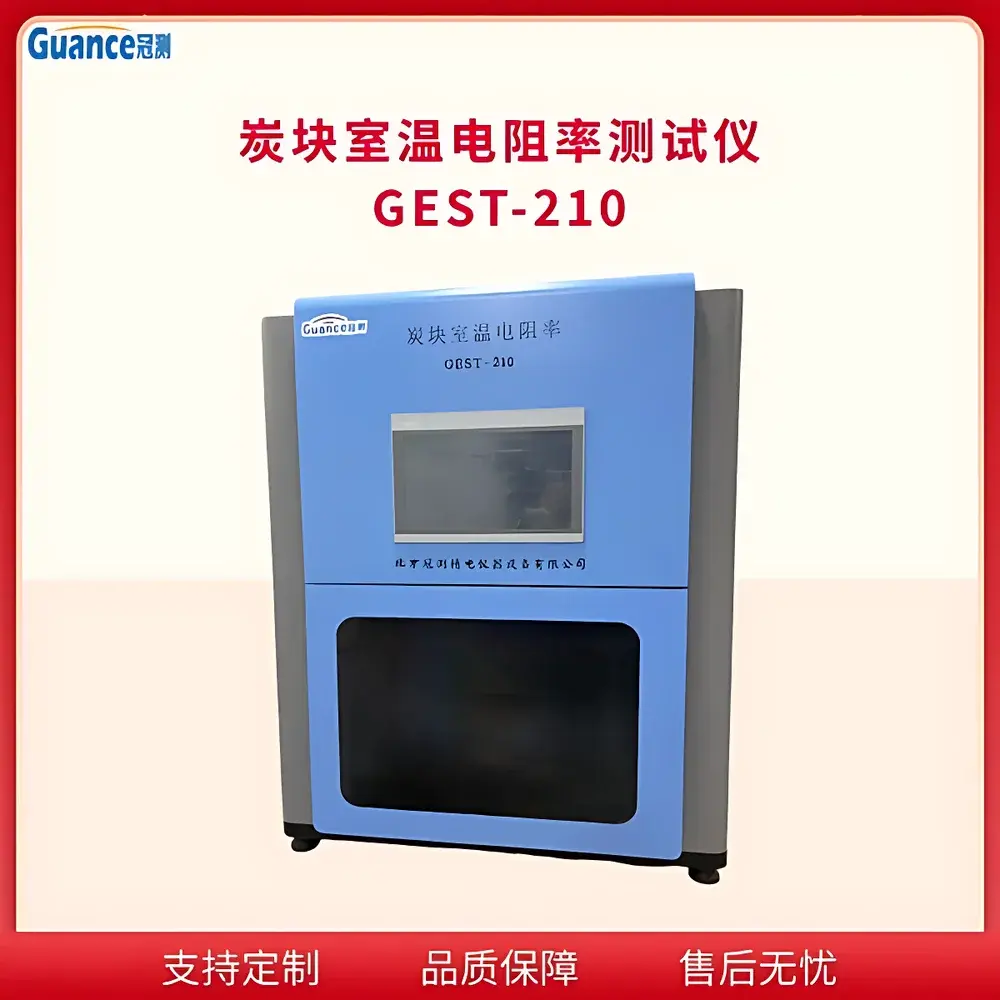
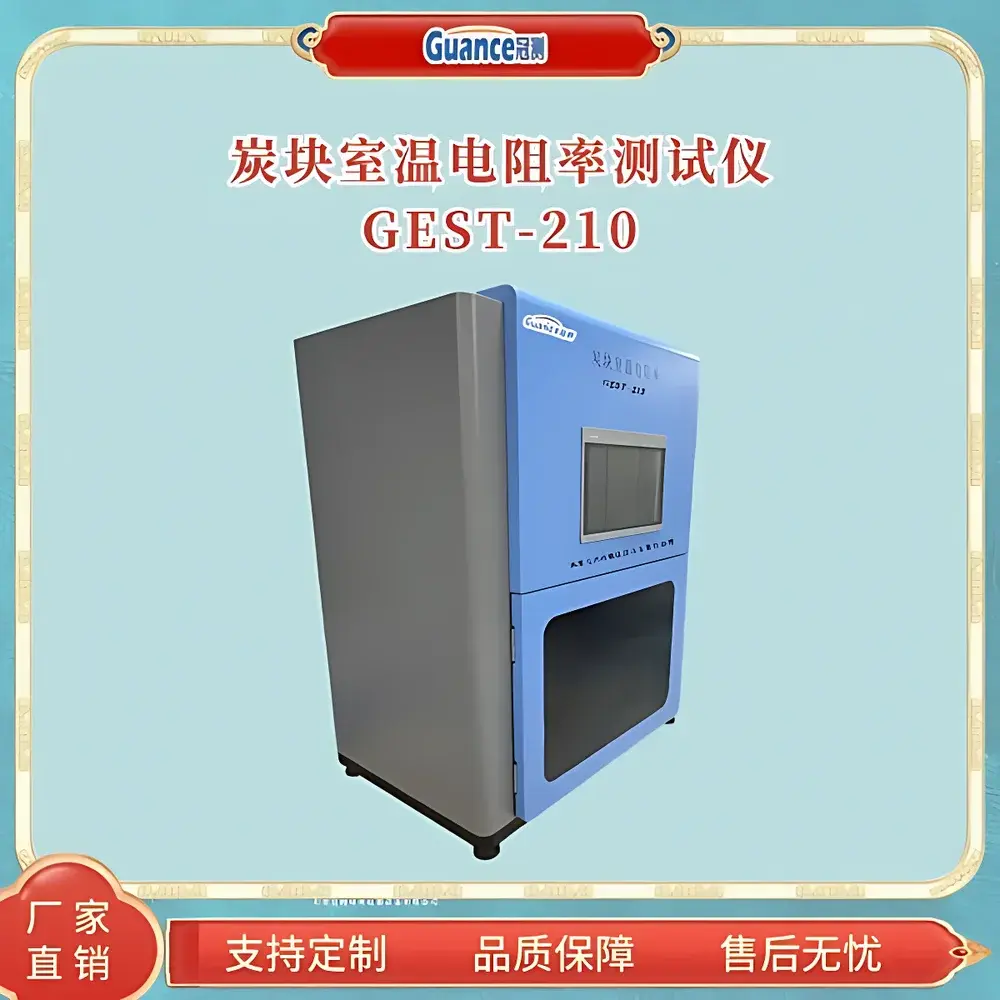
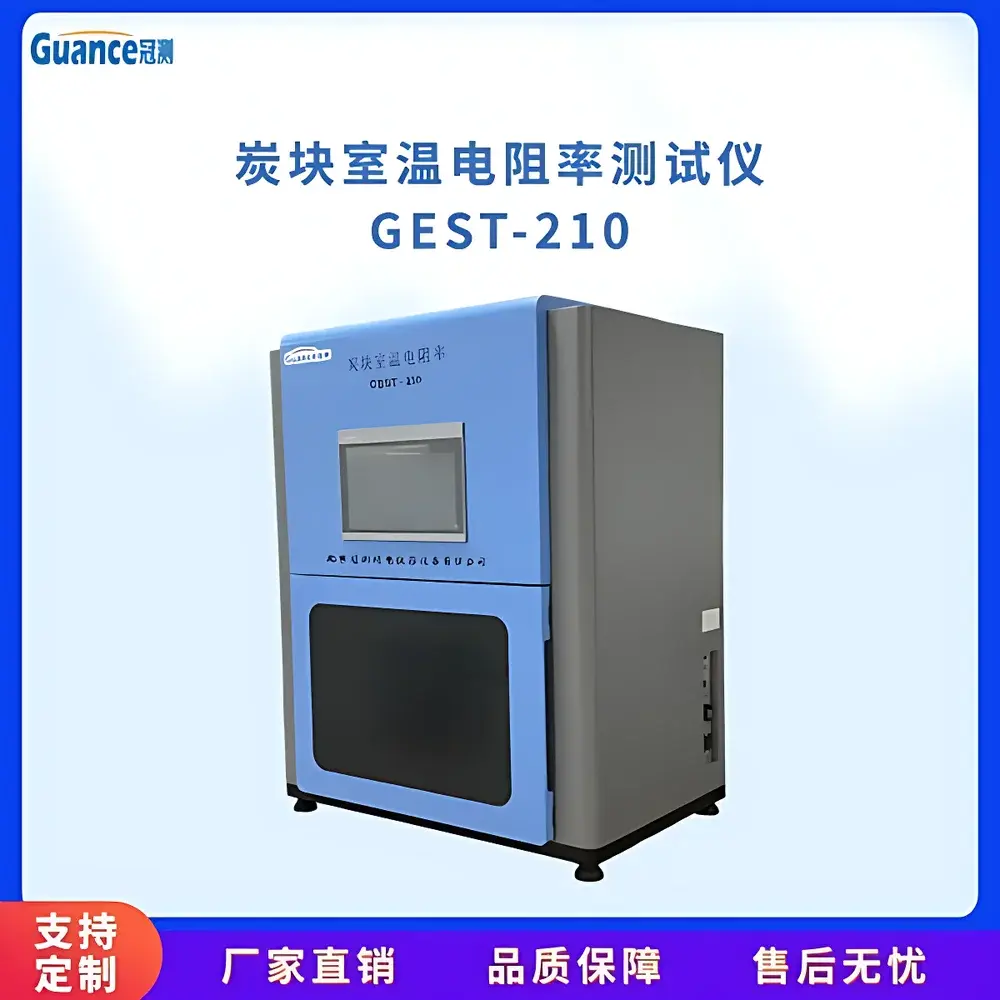
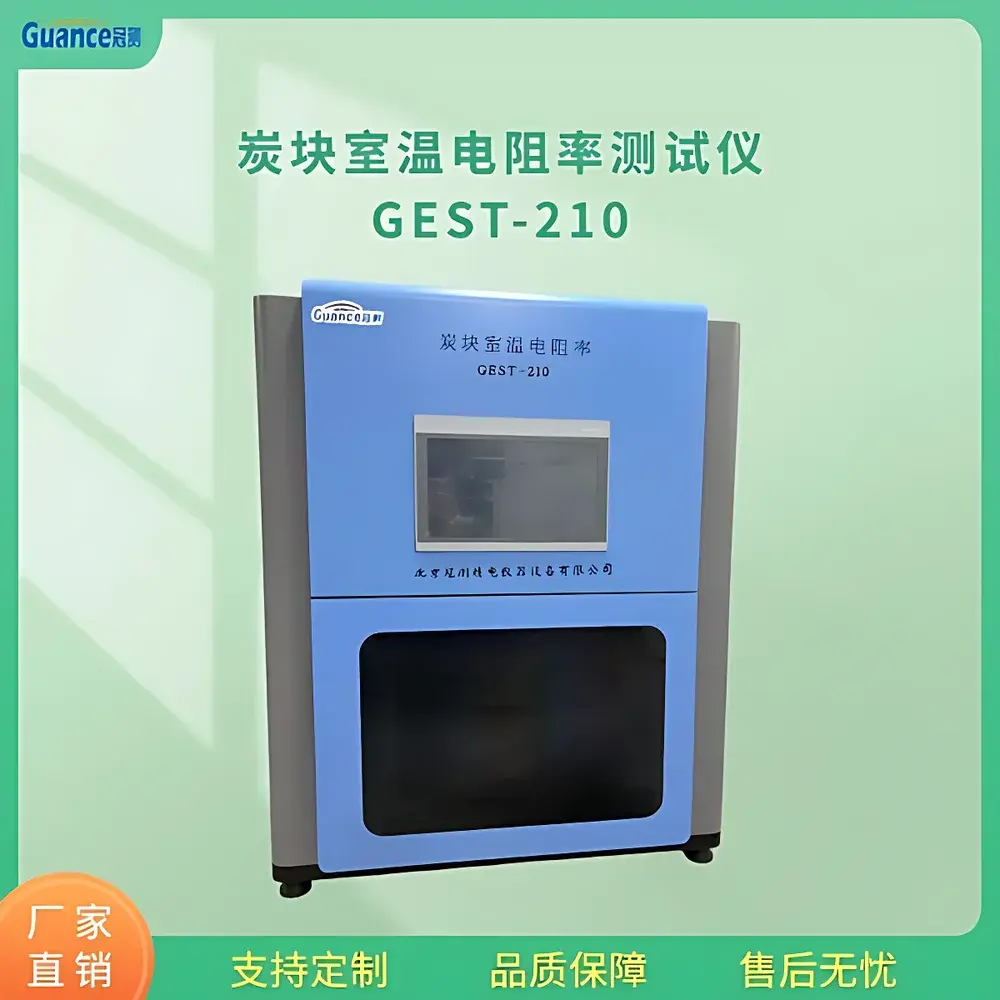
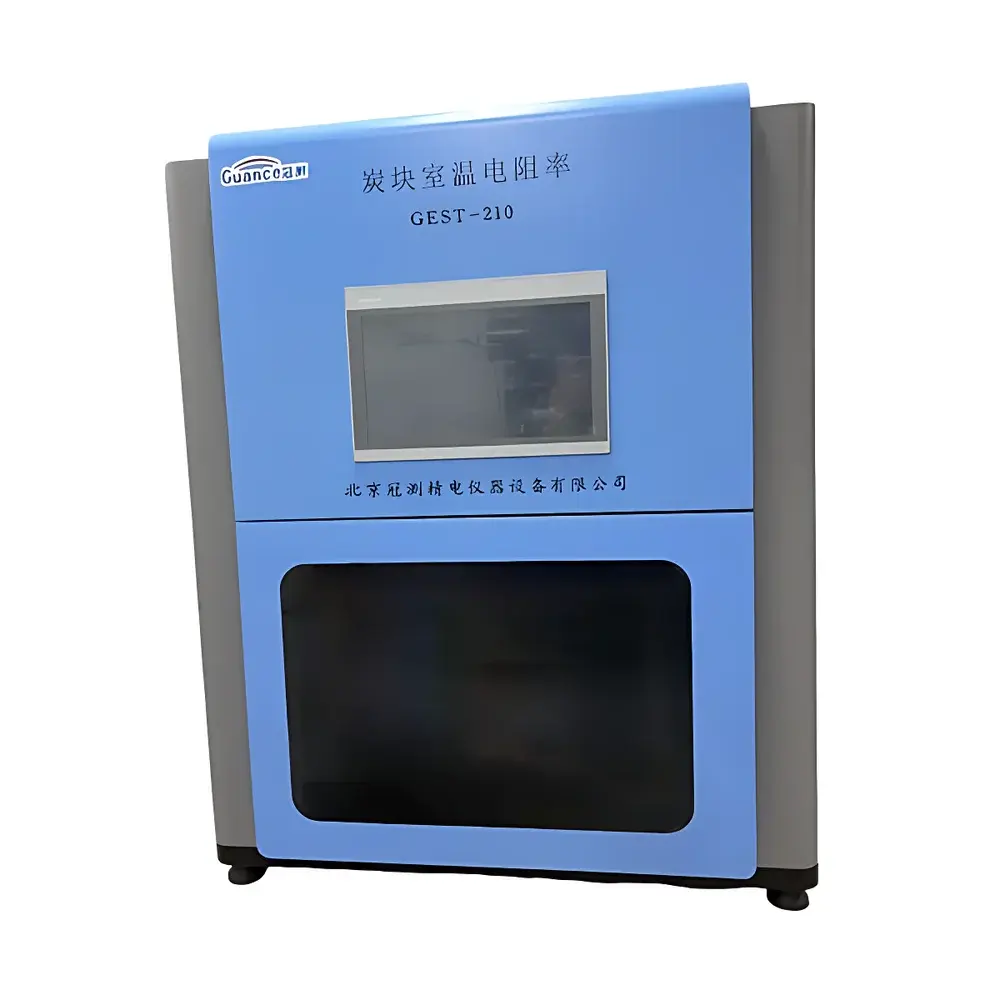
GuanCe Instruments GEST-210 Fully Automated Carbon Block Resistivity Tester
| Brand | GuanCe Instruments |
|---|---|
| Origin | Beijing, China |
| Manufacturer Type | Authorized Distributor |
| Country of Origin | China |
| Model | GEST-210 |
| Price | USD 1,450 (FOB Beijing) |
Overview
The GuanCe Instruments GEST-210 Fully Automated Carbon Block Resistivity Tester is an engineered solution for precise, standardized measurement of electrical resistivity in carbonaceous materials—including anode and cathode carbon blocks, graphite electrodes, calcined coke, and raw carbon feedstocks—at ambient temperature. It operates on the four-point probe (4PP) principle, a contact-based DC method compliant with ASTM D5275 (Standard Test Method for Electrical Resistivity of Carbon and Graphite Materials) and aligned with the metrological frameworks of GB/T 24525–2009, GB/T 24521–2018, and YS/T 63.2–2006. By separating current injection and voltage sensing functions across four collinear probes, the system inherently eliminates errors from contact resistance and lead impedance—critical for low-resistance carbon specimens where interfacial variability dominates measurement uncertainty. The instrument integrates mechanical actuation, real-time signal conditioning, and embedded thermal monitoring to deliver traceable, repeatable resistivity data under ISO/IEC 17025–compatible laboratory conditions.
Key Features
- Fully automated sample handling: motorized stage with programmable Z-axis pressure control (0.5–5.0 MPa adjustable), ensuring consistent electrode contact force across heterogeneous carbon block surfaces.
- Dual-probe configuration support: seamless switching between four-point probe (standard) and two-point probe modes via software-defined routing—enabling rapid validation or comparative analysis per internal QA protocols.
- Integrated temperature compensation: high-stability PT100 sensor embedded in the test head monitors sample surface temperature (range: 10–35 °C) and applies material-specific correction coefficients (configurable per ASTM D5275 Annex A2) to raw resistivity values.
- High-fidelity signal chain: 24-bit delta-sigma ADC with auto-ranging current sources (1 µA to 100 mA) and sub-microvolt voltage resolution, optimized for resistivity ranges spanning 10−6 Ω·m to 10−1 Ω·m.
- Self-diagnostic subsystem: continuous monitoring of probe continuity, open-circuit detection, thermal runaway thresholds, and mechanical end-stop verification—with audible alarm and on-screen fault codes (e.g., “E03: Probe Contact Failure” or “E11: Thermal Drift Exceeded”).
Sample Compatibility & Compliance
The GEST-210 accommodates rectangular carbon blocks up to 200 mm × 200 mm × 300 mm (L×W×H) and cylindrical specimens up to Ø150 mm × 250 mm. Its modular probe array supports standard probe spacings of 1.0 mm, 2.54 mm, and 5.0 mm—enabling compliance with GB/T 24525’s requirement for ≥2.5 mm spacing on anode blocks and YS/T 63.2’s specification for 1.0 mm spacing on fine-grained graphite. All hardware and firmware adhere to IEC 61000-4 electromagnetic compatibility standards. Measurement reports include metadata required for GLP audits: operator ID, timestamp, environmental temperature/humidity, calibration certificate ID, and probe spacing used—supporting traceability per ISO/IEC 17025 Clause 7.8.2.
Software & Data Management
The embedded Linux-based controller runs GuanCe’s ResistivitySuite™ v3.2 firmware, featuring a touchscreen HMI with multilingual UI (English, Spanish, Chinese). Data are stored locally on a 32 GB industrial-grade eMMC module with write-cycle protection and automatic daily backup to USB 3.0 devices. Export formats include CSV (for Excel/Python integration), PDF (with embedded calibration history), and XML (compatible with LIMS platforms such as LabWare LIMS and Thermo Fisher SampleManager). Audit trails record all parameter changes, user logins, and calibration events—meeting FDA 21 CFR Part 11 requirements for electronic records when paired with optional digital signature modules.
Applications
- Quality assurance of prebaked anodes in aluminum smelting facilities—verifying resistivity conformity to ISO 12987:2018 specifications prior to furnace insertion.
- R&D evaluation of novel carbon composites (e.g., SiC-reinforced graphite) where microstructural homogeneity affects bulk conductivity.
- In-process monitoring of carbon bake furnace output, correlating resistivity trends with soak time and final density.
- Third-party certification testing for ISO 9001:2015-compliant carbon suppliers serving aerospace and nuclear sectors.
- Educational use in materials science laboratories for teaching solid-state conduction theory in non-metallic conductors.
FAQ
Does the GEST-210 comply with international calibration standards?
Yes—the instrument ships with NIST-traceable calibration certificates for both current source and voltage measurement channels, verified annually against Fluke 5720A Multifunction Calibrators per ISO/IEC 17025 procedures.
Can it measure powdered or granular carbon samples?
No—the GEST-210 is designed exclusively for solid, machined carbon blocks and electrodes; powder resistivity requires separate die-based systems (e.g., ASTM D3417-compliant pellet presses).
Is remote operation supported?
Yes—Ethernet TCP/IP interface enables integration into factory SCADA networks; Modbus TCP register mapping is documented in the technical manual.
What maintenance is required?
Quarterly cleaning of probe tips with isopropyl alcohol and annual verification of Z-axis load cell accuracy using certified deadweight standards.
How does it handle surface oxidation on aged carbon specimens?
The four-point probe method inherently mitigates oxide-layer interference; however, users may enable optional “surface scan mode” to detect localized resistivity gradients indicative of oxidation depth.



