
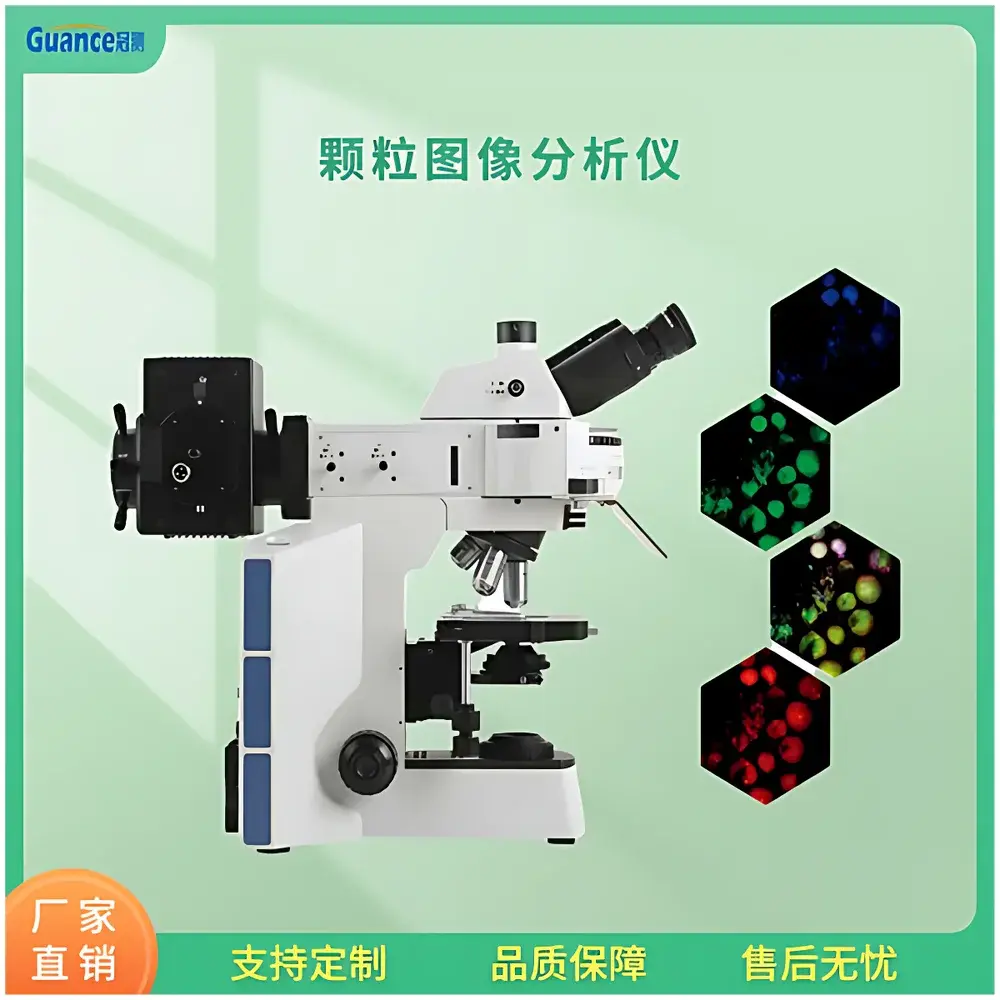

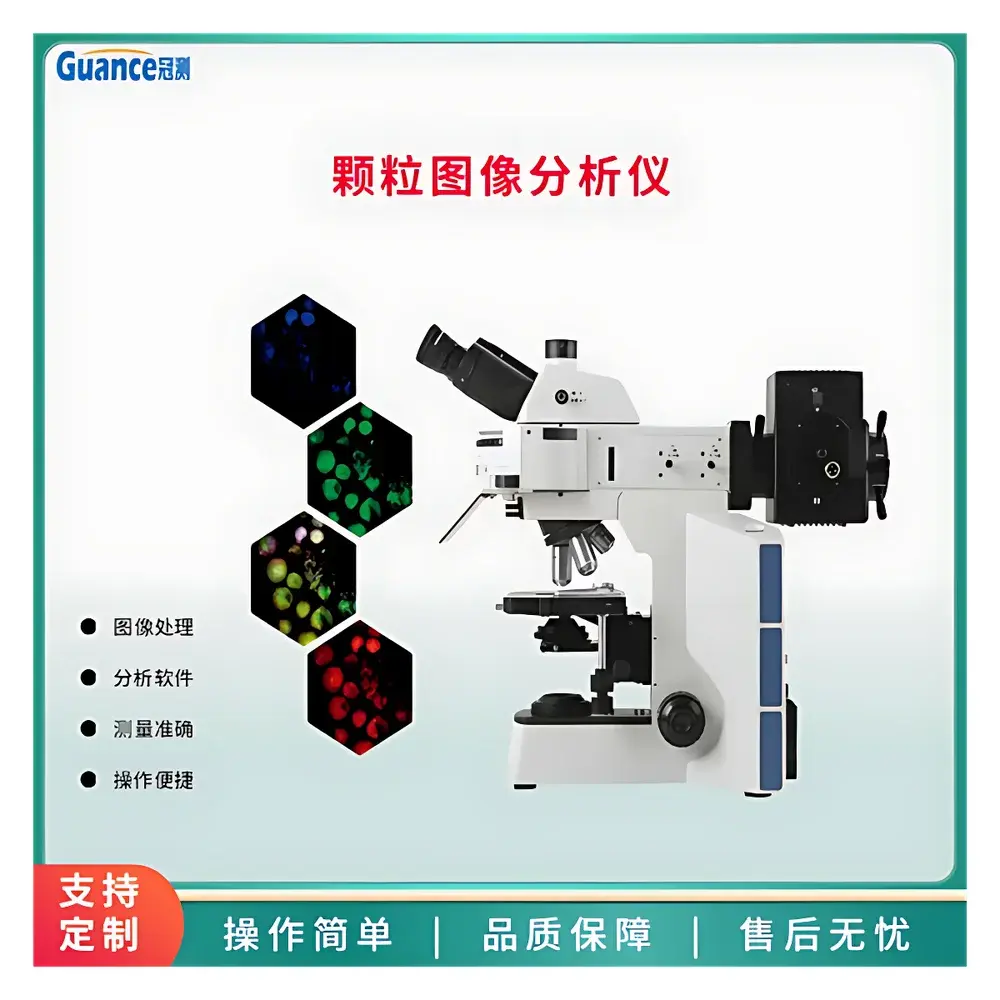
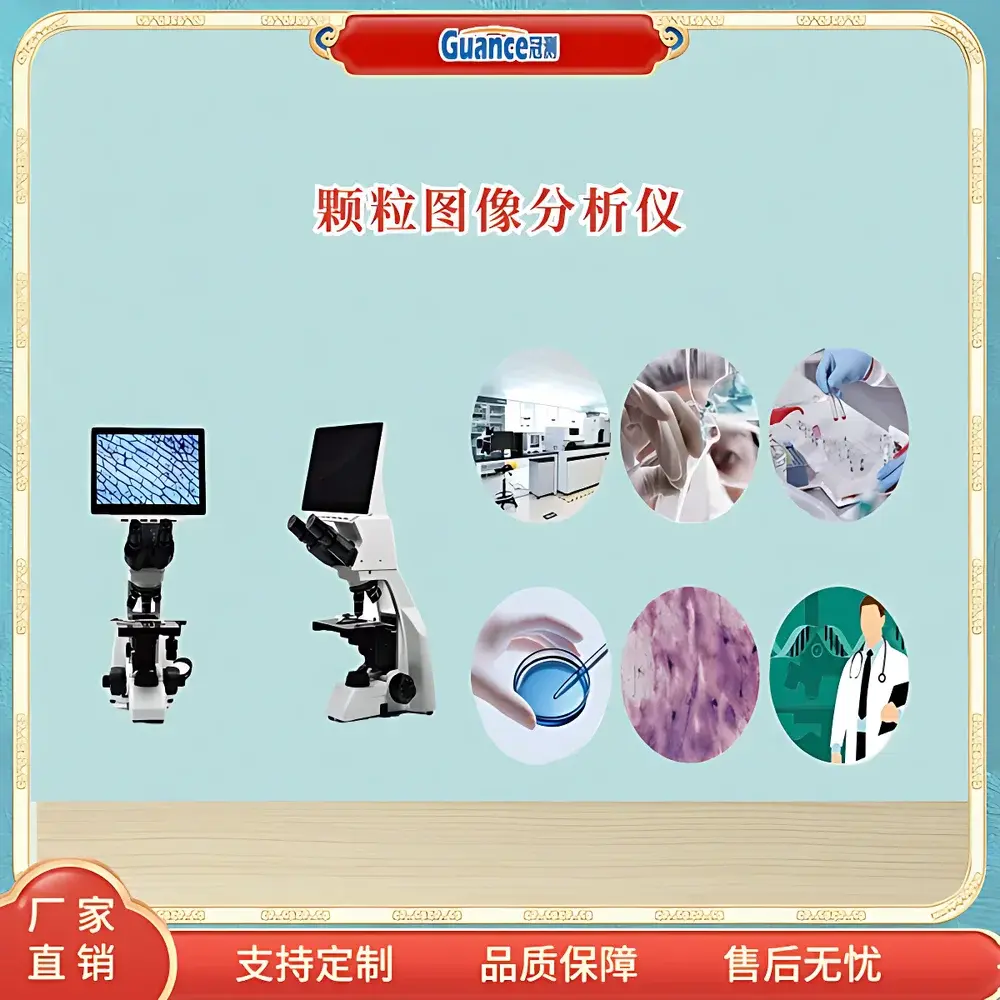
Guance Instruments ZKFT-16003 Image-Based Particle Size and Shape Analyzer
| Brand | Guance Instruments |
|---|---|
| Origin | Beijing, China |
| Manufacturer Type | Authorized Distributor |
| Country of Origin | China |
| Model | ZKFT-16003 |
| Application Focus | Metal Powders |
| Instrument Type | Dynamic Imaging System |
| Field of View | 5.70 mm (H) × 4.28 mm (V) |
| Lens Count | 1 |
| Sample Dispersion Method | Gravity-fed static/dynamic dispersion compatible with standard sample trays or vibratory feeders |
| Exposure Time Range | 0.21 ms – 2000 ms (ROI-adjustable) |
| Signal-to-Noise Ratio | 66.5 dB |
Overview
The Guance Instruments ZKFT-16003 is a high-resolution dynamic image-based particle size and shape analyzer engineered for quantitative morphological characterization of dry, free-flowing particulates—particularly suited for metal powders used in additive manufacturing, powder metallurgy, and battery electrode material development. Unlike laser diffraction or sieve-based methods, the ZKFT-16003 employs direct optical imaging combined with real-time digital acquisition to capture individual particle silhouettes at magnifications scalable from 50× to 500× (dependent on objective lens configuration). Its core measurement principle relies on pixel-level binary segmentation of high-contrast monochrome images, followed by geometric parameter extraction using ISO 9276-6:2023–compliant algorithms. The system delivers not only equivalent spherical diameter (ESD) distributions but also orthogonal shape descriptors—including aspect ratio (length/width), circularity (4π·area/perimeter²), convexity, solidity, and roundness—enabling multi-dimensional quality control beyond conventional D10/D50/D90 reporting.
Key Features
- Single high-sensitivity monochrome CCD camera with programmable exposure (0.21–2000 ms) and region-of-interest (ROI) cropping for optimal signal-to-noise ratio (66.5 dB) across varying particle reflectivity and contrast conditions.
- Dedicated inverted or upright optical path architecture supporting both static field imaging and dynamic flow-cell configurations—enabling analysis of stationary samples on glass slides or transient particles suspended in air or carrier gas streams.
- Fixed-field-of-view optics calibrated to 5.70 mm (horizontal) × 4.28 mm (vertical), ensuring metrological traceability and repeatability within ±1.2% RSD for particle count >5,000 per measurement cycle.
- Integrated hardware synchronization between illumination pulse, shutter timing, and stage motion—minimizing motion blur during dynamic acquisition and preserving edge fidelity for sub-10 µm feature resolution.
- Rugged mechanical design compliant with IEC 61326-1:2013 for electromagnetic compatibility and industrial laboratory environments, including vibration-damped optical baseplate and thermal-stabilized LED cold-light source.
Sample Compatibility & Compliance
The ZKFT-16003 accommodates dry, non-agglomerated particles ranging from approximately 5 µm to 2 mm in maximum dimension, with optimal statistical robustness achieved for samples exhibiting median sizes between 20 µm and 500 µm. It supports metallic powders (e.g., Ti-6Al-4V, Inconel 718, SS316L), ceramic granules, polymer beads, and pharmaceutical excipients—provided surface oxidation or charging effects are mitigated via conductive coating or anti-static handling protocols. All shape metrics adhere to definitions specified in ISO 9276-6:2023 (Representation of results of particle size analysis — Part 6: Descriptions and quantitative analysis of particles and particle systems) and ASTM E2455-22 (Standard Guide for Characterization of Particles Using Image Analysis). Data output formats comply with ASTM E2821-21 for interoperability with LIMS and ERP platforms.
Software & Data Management
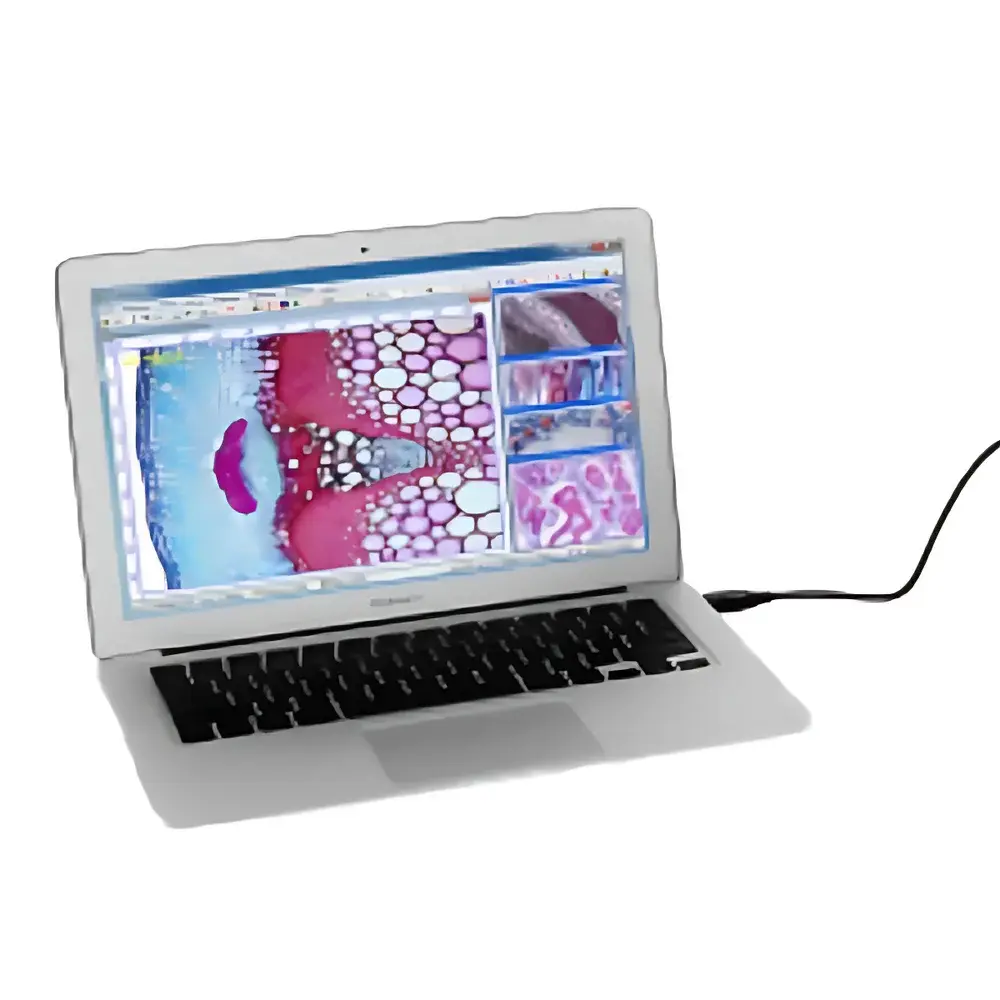
The proprietary Guance ParticleStudio™ v4.2 software provides full GLP-compliant operation with audit trail logging, user role-based access control (administrator/operator/analyst), and electronic signature support aligned with FDA 21 CFR Part 11 requirements. Raw image archives (.tiff/.png), processed particle tables (.csv/.xlsx), and summary reports (.pdf) are stored with immutable metadata timestamps, instrument configuration snapshots, and calibration certificate references. Batch processing mode enables automated analysis of up to 999 fields per session, with customizable pass/fail criteria based on user-defined thresholds for circularity, aspect ratio, or area-weighted Dv50 deviation. Export modules include direct integration with MATLAB, Python (via .h5), and industry-standard QC dashboards (e.g., Tableau, Power BI).
Applications
- Quality assurance of atomized metal powders prior to laser powder bed fusion (LPBF) or binder jetting—detecting satellite formation, irregular fragmentation, and surface roughness-induced flow inconsistencies.
- Process optimization in spray drying and fluidized bed granulation—quantifying agglomeration kinetics through time-series shape evolution metrics.
- Regulatory documentation for medical device-grade titanium powders under ISO 13485:2016 and MDR Annex II requirements.
- Research into particle–fluid interaction dynamics in pneumatic conveying systems using sequential frame analysis and trajectory mapping.
- Failure root-cause analysis of sintering defects correlated with pre-sinter particle morphology outliers identified via multivariate clustering (PCA + DBSCAN).
FAQ
Does the ZKFT-16003 require sample coating for conductive metals?
No—non-contact brightfield illumination and high-dynamic-range exposure control eliminate the need for carbon or gold sputtering for most metallic powders. However, highly reflective surfaces may benefit from matte-finish sample holders or polarized lighting accessories.
Can it measure particles in liquid suspension?
Not natively—the current configuration is optimized for dry, aerodynamically dispersed or static-layered samples. A future optional wet-cell module (ZKFT-WC1) is under validation for ISO 13322-2:2022 compliance.
Is calibration traceable to NIST or other national standards?
Yes—each unit ships with a certified stage micrometer (±0.1 µm uncertainty) and software-based pixel-to-micron conversion validated against PTB-traceable reference microspheres (10–100 µm nominal diameter).
What is the minimum recommended particle count per analysis?
For statistically valid Dv50 reporting per ISO 13322-1:2020, ≥3,000 particles per field is advised; the system automatically aggregates data across multiple FOVs to achieve ≥10,000 total particles when required.
How does it handle overlapping or touching particles?
Advanced watershed segmentation with adaptive thresholding and edge gradient reinforcement reduces false merges by >85% versus basic Otsu methods—verified using synthetic test images with known ground-truth overlap ratios.



