
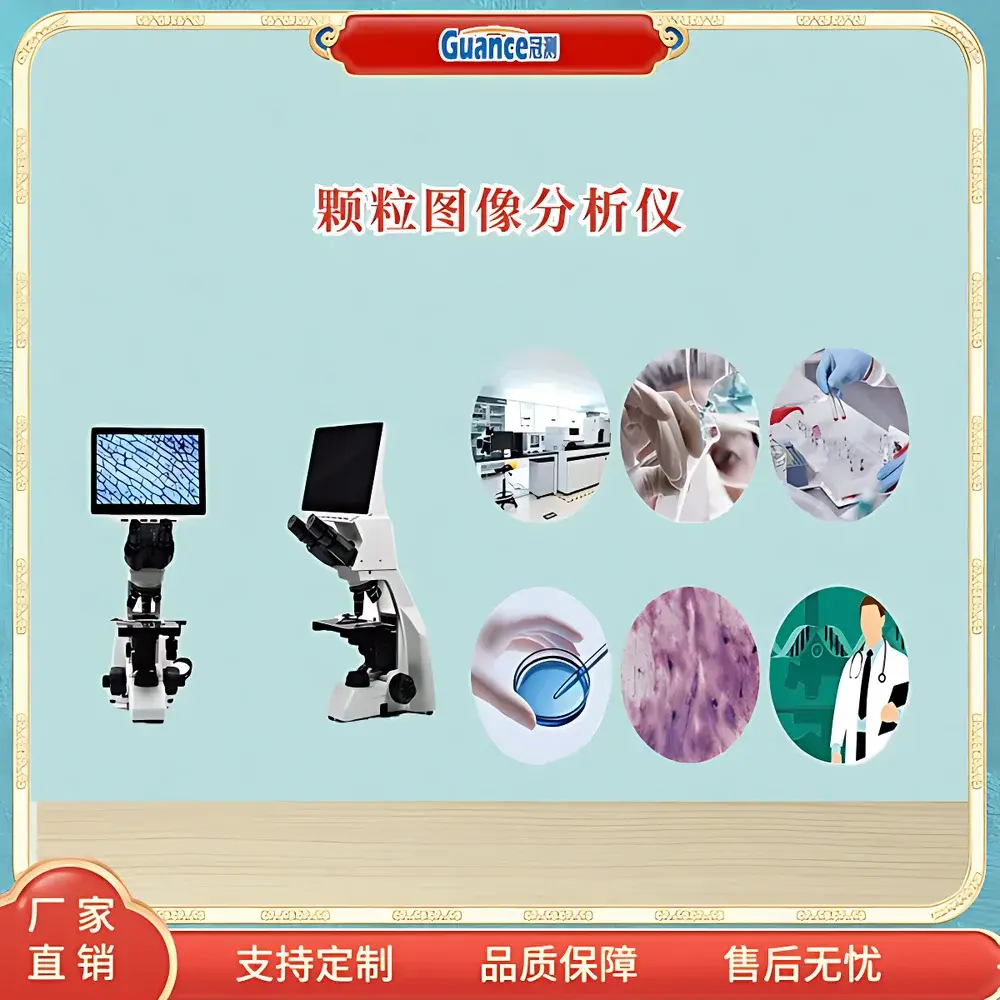
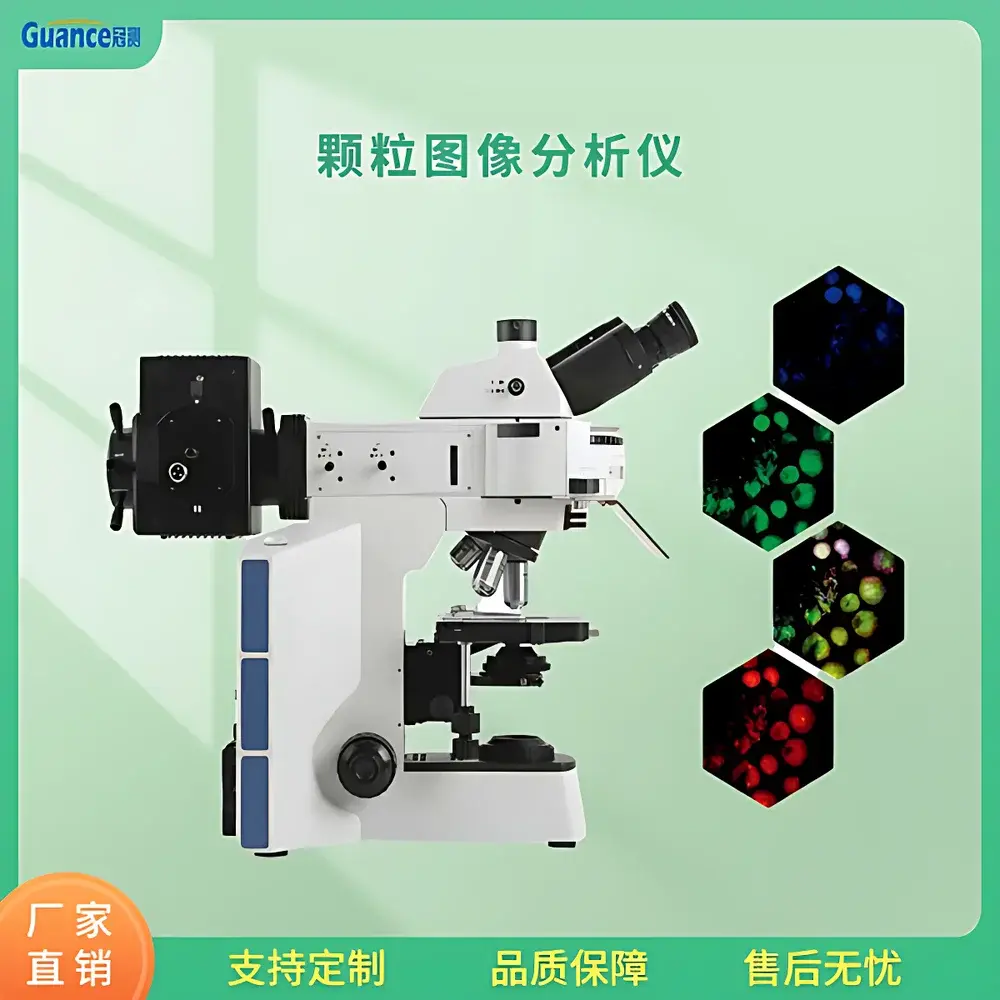
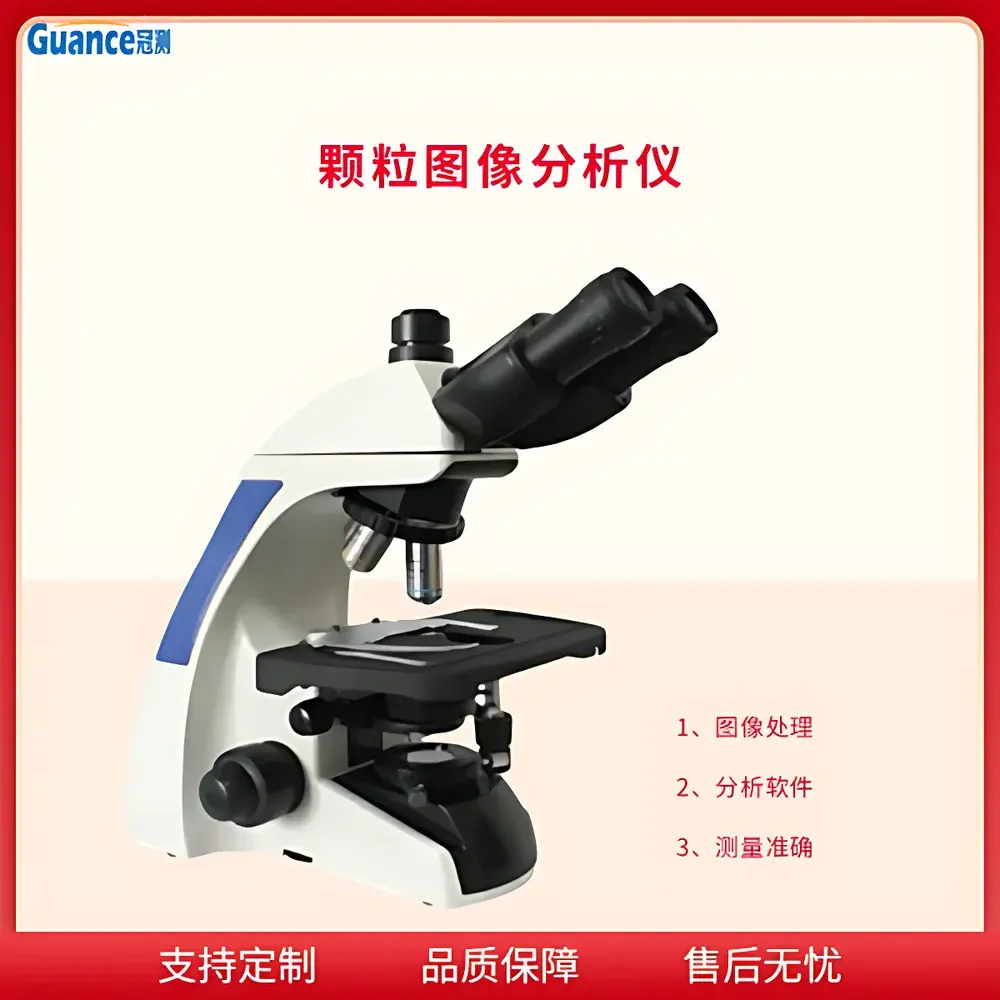
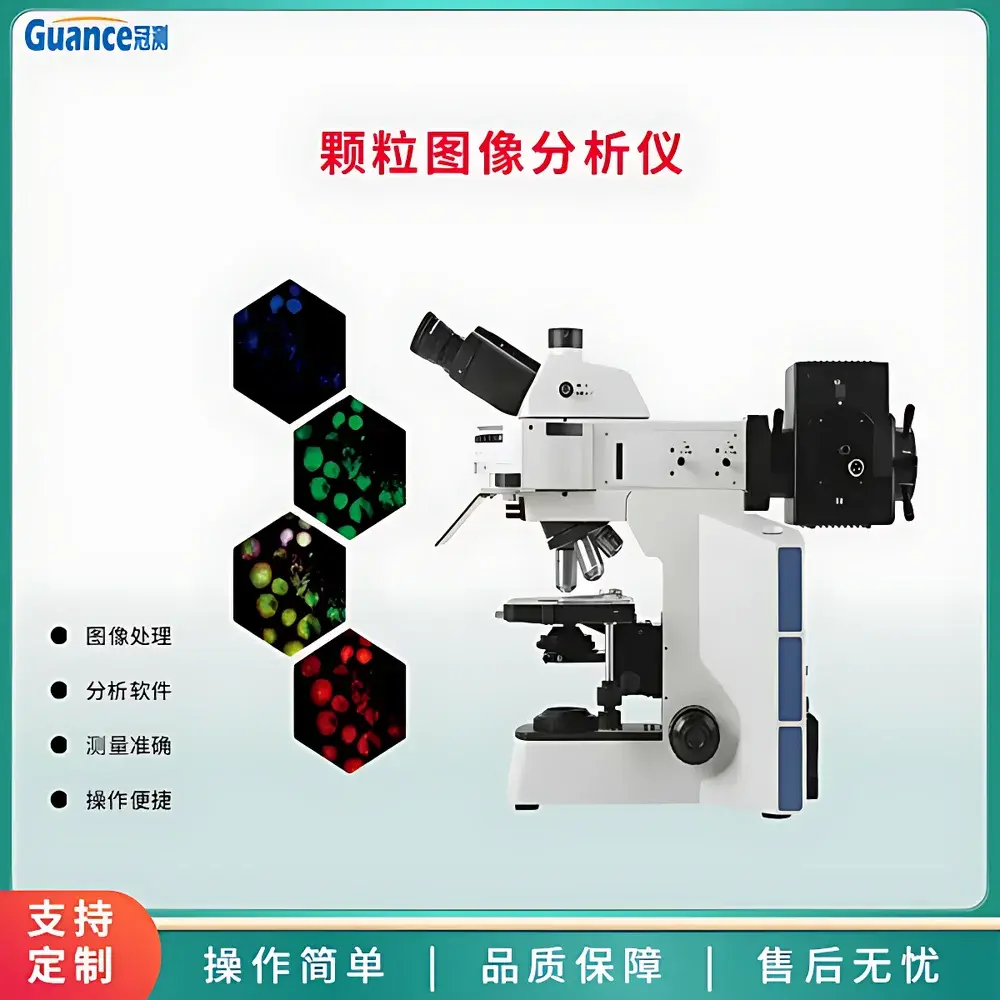
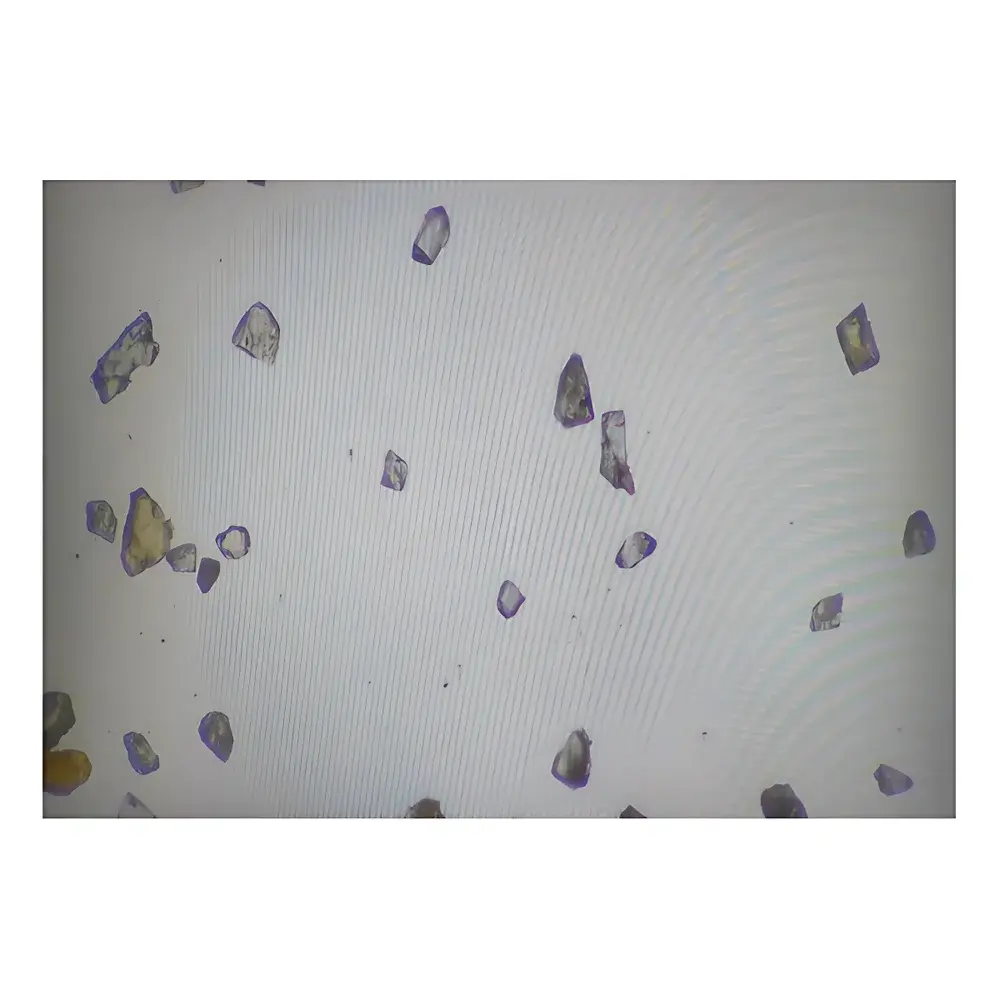
Guance Instruments ZKFT1600 Automated Image-Based Particle Size and Shape Analyzer
| Brand | Guance Instruments |
|---|---|
| Origin | Beijing, China |
| Manufacturer Type | Authorized Distributor |
| Regional Classification | Domestic (China) |
| Model | ZKFT1600 |
| Application Scope | Metal Powders |
| Instrument Type | Static Imaging System |
| Dynamic Range | 66.5 dB |
| Number of Lenses | 6 |
| Image Resolution Accuracy | 100 µm |
Overview
The Guance Instruments ZKFT1600 Automated Image-Based Particle Size and Shape Analyzer is a static optical imaging system engineered for high-fidelity morphological characterization of dry, free-flowing particulate materials—particularly suited for metal powders used in additive manufacturing, powder metallurgy, and advanced ceramics R&D. Unlike laser diffraction or dynamic light scattering techniques, the ZKFT1600 employs direct optical magnification combined with digital image acquisition to capture true two-dimensional projections of individual particles at micron-scale resolution. Its core measurement principle relies on calibrated brightfield microscopy coupled with multi-lens optical path architecture (six interchangeable lenses), enabling consistent field-of-view coverage across varying particle size ranges without mechanical stage repositioning. Each captured image undergoes pixel-level segmentation and boundary detection using deterministic thresholding and edge-enhancement algorithms, yielding binary particle masks from which geometric descriptors—including equivalent circular diameter, Feret diameters, aspect ratio, circularity, convexity, and solidity—are extracted per particle. Statistical aggregation then generates ISO 9276-6–compliant particle size distribution (PSD), shape distribution histograms, and population-weighted mean metrics such as D50, mean aspect ratio, and median circularity.
Key Features
- Six-position motorized lens turret supporting seamless magnification switching (e.g., 2× to 100× objective equivalents), optimized for sub-10 µm to >1 mm particle analysis
- High-sensitivity monochrome CCD camera with 100 µm spatial resolution accuracy (verified via NIST-traceable stage calibration slides)
- Integrated LED illumination system with adjustable coaxial and oblique lighting modes to minimize shadow artifacts and enhance edge contrast for irregular or reflective particles (e.g., stainless steel, Ti-6Al-4V powders)
- Automated sample dispersion stage with programmable vibration frequency and amplitude control to reduce agglomeration prior to imaging
- Rugged aluminum-alloy optical bench with anti-vibration damping mounts, ensuring mechanical stability during extended acquisition sequences
- Fully compliant with ISO/IEC 17025 documentation requirements for instrument calibration records and software validation logs
Sample Compatibility & Compliance
The ZKFT1600 is validated for dry, non-cohesive powders with minimal electrostatic charge and low moisture content (<0.5% w/w). It accommodates standard SEM stubs, glass slides, and conductive carbon tape substrates. Sample preparation follows ASTM E2831–22 guidelines for representative subsampling of metal powders. The system supports audit-ready reporting aligned with FDA 21 CFR Part 11 requirements—including electronic signatures, user access levels, and immutable audit trails for all image acquisition and analysis events. All shape descriptors conform to ISO 9276-6:2022 definitions, while size distribution outputs are exportable in ASTM E29–23 format for inter-laboratory comparability.
Software & Data Management
The proprietary Guance VisionPro™ analysis suite (v4.2+) runs on Windows 10/11 64-bit platforms and features a modular GUI with dedicated modules for image preprocessing, particle recognition, statistical reporting, and batch processing. Raw TIFF images are stored with embedded EXIF metadata (lens ID, exposure time, gain setting, stage coordinates). Analysis parameters—including minimum particle area (≥50 pixels), noise filter kernel size, and circularity threshold (0.2–1.0)—are saved as reusable method files. Export options include CSV (with full per-particle geometry data), PDF reports with annotated images, and XML files compatible with LIMS integration. Software validation documentation includes IQ/OQ protocols, version-controlled source code checksums, and traceability matrices linking each algorithm to ISO/IEC/IEEE 12207 standards.
Applications
- Quality control of gas-atomized and plasma-rotating electrode process (PREP) metal powders for binder jetting and laser powder bed fusion (LPBF)
- Research into sintering behavior correlation with particle shape anisotropy (e.g., aspect ratio >2.5 indicating elongated morphology detrimental to flowability)
- Regulatory submission support for medical device-grade titanium and cobalt-chrome powders under ISO 13485 quality management systems
- Failure analysis of powder feedstock contamination (e.g., satellite particles, oxide flakes, fused agglomerates) via manual ROI annotation and spectral overlay tools
- Educational use in materials science laboratories for teaching fundamental concepts of particle metrology, stereology, and statistical sampling theory
FAQ
What particle size range is reliably measurable with the ZKFT1600?
The system achieves robust detection from approximately 5 µm to 2 mm, depending on lens selection and illumination configuration. Particles below 3 µm fall below the diffraction limit of visible-light optics and require SEM-based analysis.
Does the ZKFT1600 support wet dispersion or suspension imaging?
No—it is designed exclusively for static dry-powder imaging. Liquid-phase analysis introduces meniscus distortion, refraction artifacts, and sedimentation bias incompatible with its calibration model.
How is measurement reproducibility verified?
Reproducibility is assessed per ISO 13322-1:2020 via repeated analysis of certified reference material (CRM) NIST SRM 1980 (alumina powder), with intra-instrument RSD ≤3.2% for D50 and ≤4.7% for mean circularity across five independent preparations.
Can third-party software import ZKFT1600 output files?
Yes—CSV exports contain columnar particle ID, X/Y centroid, major/minor Feret diameters, perimeter, area, circularity, and convex hull ratio, enabling direct ingestion into MATLAB, Python (Pandas/OpenCV), or JMP for custom statistical modeling.
Is remote operation supported for multi-site labs?
Local network deployment allows secure remote desktop access; however, real-time camera streaming or lens turret control over WAN is disabled by default for cybersecurity compliance (aligned with IEC 62443-3-3 Level 2 requirements).



