
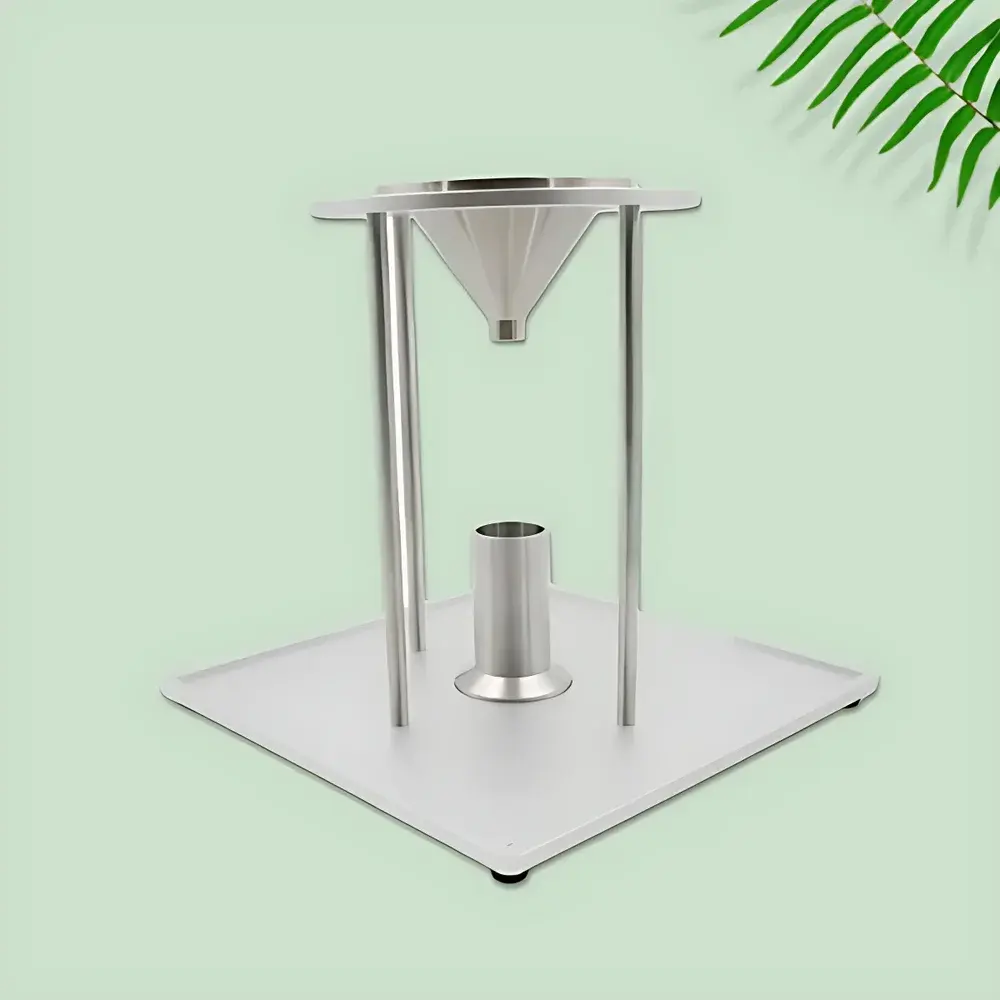
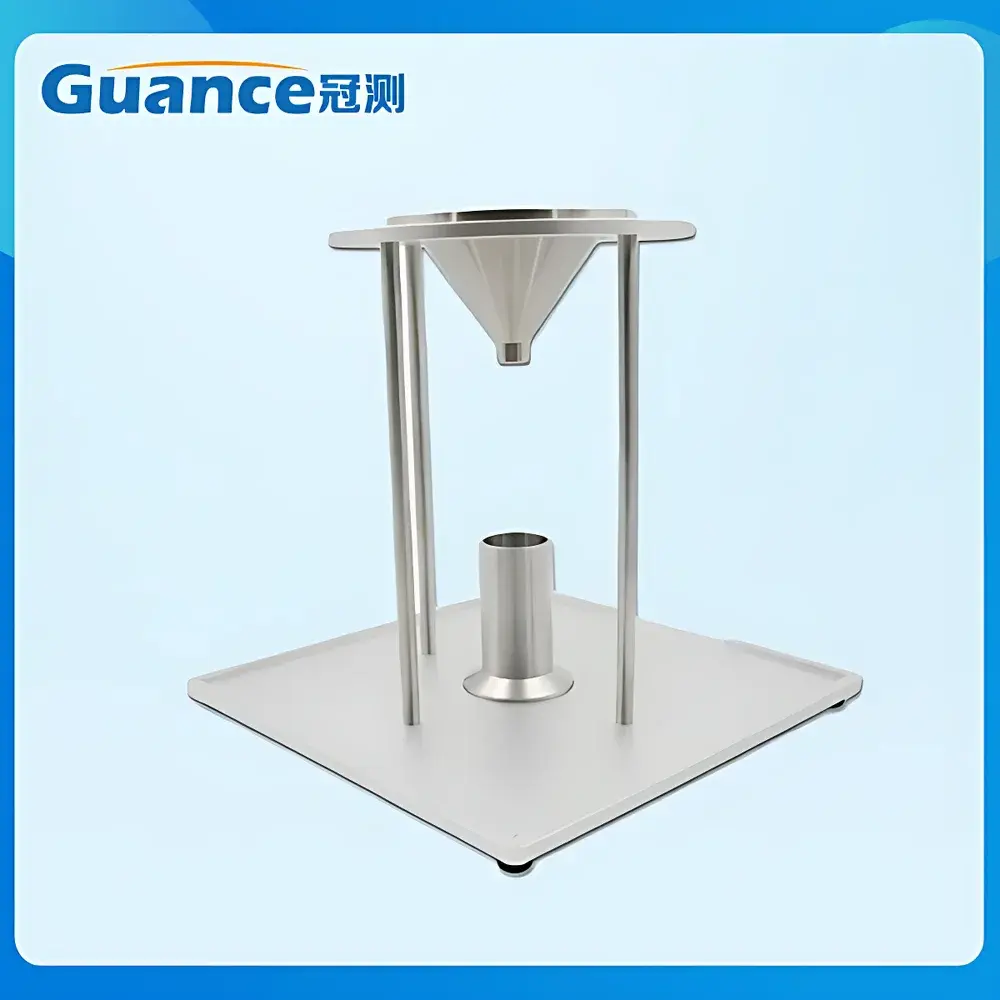
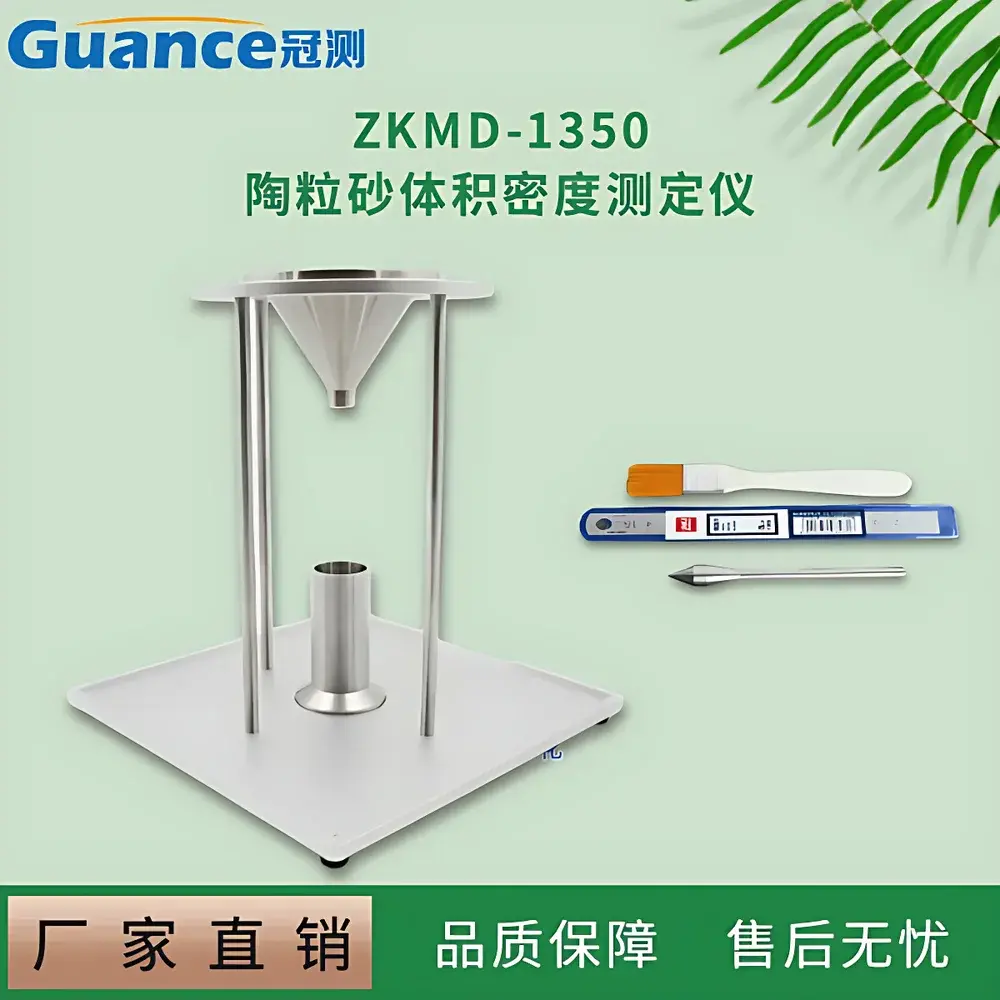
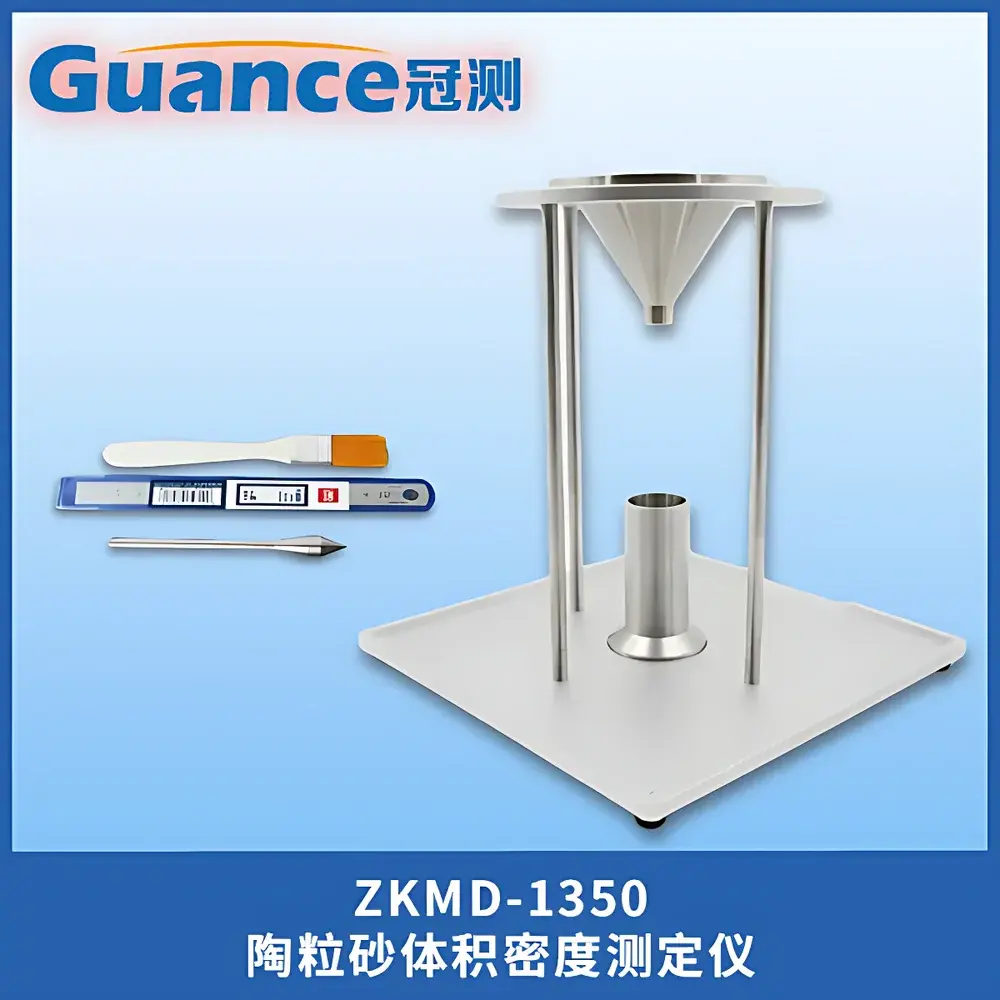
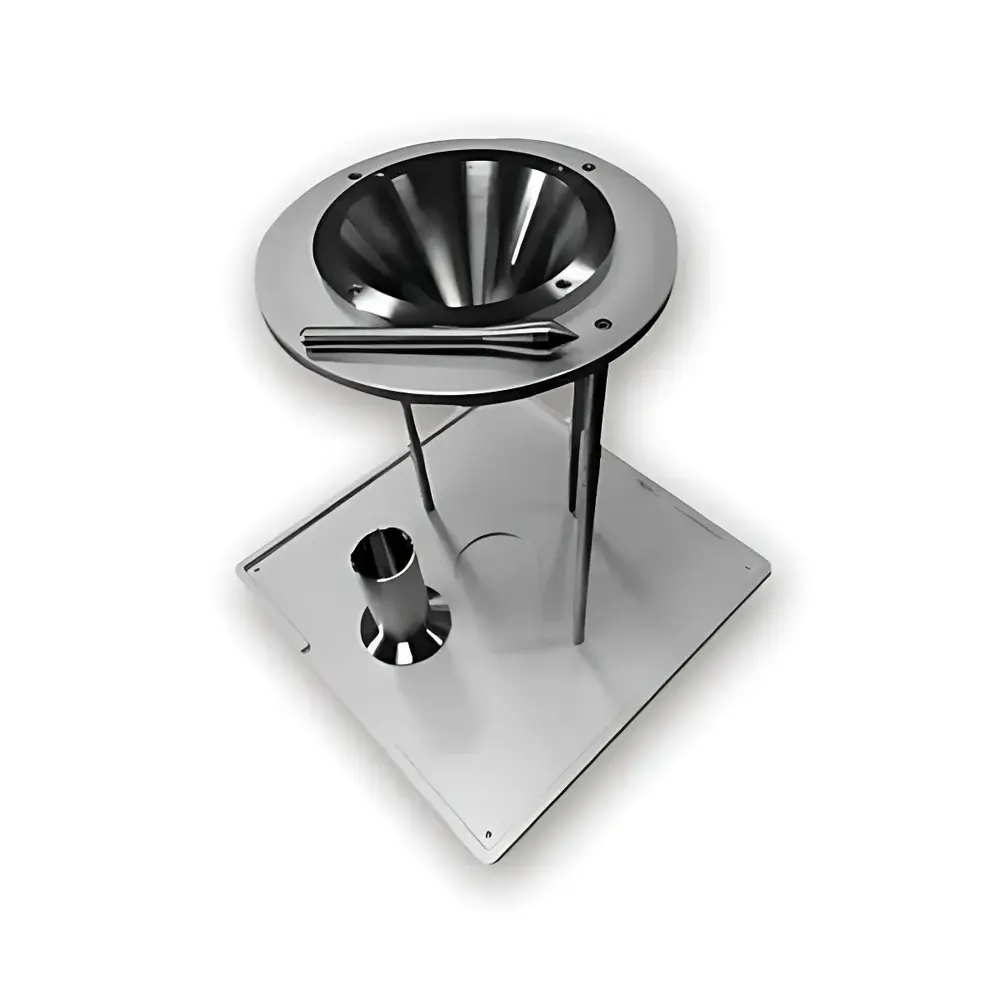
GuanCe Instruments ZKMD-1350d Bulk Density Analyzer for Proppants and Ceramic Beads
| Brand | GuanCe Instruments |
|---|---|
| Origin | Beijing, China |
| Manufacturer Type | Authorized Distributor |
| Product Category | Domestic |
| Model | ZKMD-1350d |
| Instrument Type | True Density Analyzer |
| Form Factor | Portable |
| Sample Type Compatibility | Solid & Liquid |
| Density Measurement Range | 0–2 g/cm³ |
| Maximum Weighing Capacity | 20 g |
| Density Resolution | 0.0001 g/cm³ |
| Repeatability | ±0.0001 g/cm³ |
| Minimum Sample Volume | 1 mL |
| Operating Temperature Range | 0–40 °C |
| Display | Digital LCD |
Overview
The GuanCe Instruments ZKMD-1350d Bulk Density Analyzer is a precision portable instrument engineered for the rapid, non-destructive determination of bulk density—specifically designed for proppants (e.g., ceramic beads, sintered bauxite, and resin-coated sands) used in hydraulic fracturing operations, as well as for granular industrial ceramics, catalysts, pharmaceutical excipients, and powdered metallurgical feedstocks. Unlike conventional pycnometers or gas displacement densitometers, the ZKMD-1350d employs a calibrated volumetric displacement method compliant with ASTM D7261–22 (Standard Test Method for Bulk Density of Proppants) and ISO 17892-6 (Geotechnical Investigation and Testing — Laboratory Testing of Soil — Part 6: Density Index Tests). It measures the mass of a known volume of loosely packed material—including intrinsic solid phase, open pores, and closed pores—yielding the true bulk density (g/cm³), a critical parameter for evaluating flowability, packing efficiency, and mechanical stability under downhole stress conditions.
Key Features
- Portable, benchtop-ready architecture with integrated high-precision analytical balance (20 g capacity, 0.1 mg readability) and calibrated volumetric cylinder assembly
- Digital LCD interface with real-time density calculation, automatic unit conversion (g/cm³, kg/m³, lb/ft³), and data hold function
- Thermally stabilized measurement chamber operating within 0–40 °C ambient range, minimizing thermal drift during sequential testing
- Repeatability of ±0.0001 g/cm³ under controlled humidity and vibration-isolated conditions, validated per ISO/IEC 17025 internal calibration protocols
- Minimal sample requirement (as low as 1 mL volume) enabling efficient use of high-value or limited-availability proppant batches
- Robust aluminum alloy housing with anti-static surface treatment, suitable for field deployment in wellsite labs or mobile QC units
Sample Compatibility & Compliance
The ZKMD-1350d supports both free-flowing and marginally cohesive powders, including ceramic proppants (Al₂O₃-based, SiC, zirconia), sand-based proppants, polymer-coated granules, and fine-grained mineral aggregates. It is not intended for fibrous, highly adhesive, or hygroscopic materials without prior conditioning. The instrument complies with regulatory frameworks applicable to upstream oilfield service laboratories, including API RP 19C (Recommended Practice for Proppant Characterization) and ASTM D4292 (Test Method for Determining the Apparent Density of Proppants). While not inherently 21 CFR Part 11–compliant, its firmware architecture allows integration into GLP/GMP environments via external audit-trail-enabled data loggers and secure USB export.
Software & Data Management
The ZKMD-1350d operates in standalone mode with on-device storage for up to 200 test records, each timestamped and tagged with operator ID, ambient temperature, and sample ID. Optional RS-232 or USB-C connectivity enables direct data transfer to LIMS or Excel-based QA databases. Firmware supports user-defined calibration routines traceable to NIST-certified reference standards (e.g., certified glass density spheres, SRM 1921b). All density calculations follow first-principles mass/volume ratio derivation without proprietary interpolation algorithms—ensuring full transparency and audit readiness.
Applications
- Quality control of ceramic proppants in manufacturing plants (batch release testing per API RP 19C Annex A)
- R&D evaluation of novel lightweight proppants with engineered porosity
- Comparative bulk density profiling across sintering temperatures and grain size distributions
- Field validation of proppant delivery consistency at frac sites
- Supporting ASTM D7261-compliant reporting for regulatory submissions to BOEM and state oil & gas commissions
- Academic research on particle packing behavior in granular media physics and geomechanics
FAQ
What distinguishes bulk density from true (solid) density in proppant characterization?
Bulk density includes interparticle voids and intraparticle porosity; true density excludes all void space and reflects only the solid-phase material. The ZKMD-1350d measures bulk density—not true density—as required for proppant performance modeling.
Can the ZKMD-1350d be used for liquid density measurement?
Yes, when configured with the optional liquid density kit (calibrated pycnometer vial and immersion stand), it supports liquid density measurements per ASTM D1298, though primary design intent remains solid granular materials.
Is calibration traceable to national standards?
Yes—factory calibration uses NIST-traceable weights and certified volumetric standards; users may perform field verification using supplied calibration check spheres.
Does the instrument meet ISO/IEC 17025 requirements for accredited testing labs?
The hardware and measurement principle comply with ISO/IEC 17025 clause 6.4 (Equipment); full accreditation requires lab-specific uncertainty budgets, environmental monitoring, and documented metrological traceability procedures.
What maintenance is required for long-term accuracy?
Annual verification of balance linearity and volumetric cylinder tolerance is recommended; no consumables or routine recalibration are required between verifications.



