
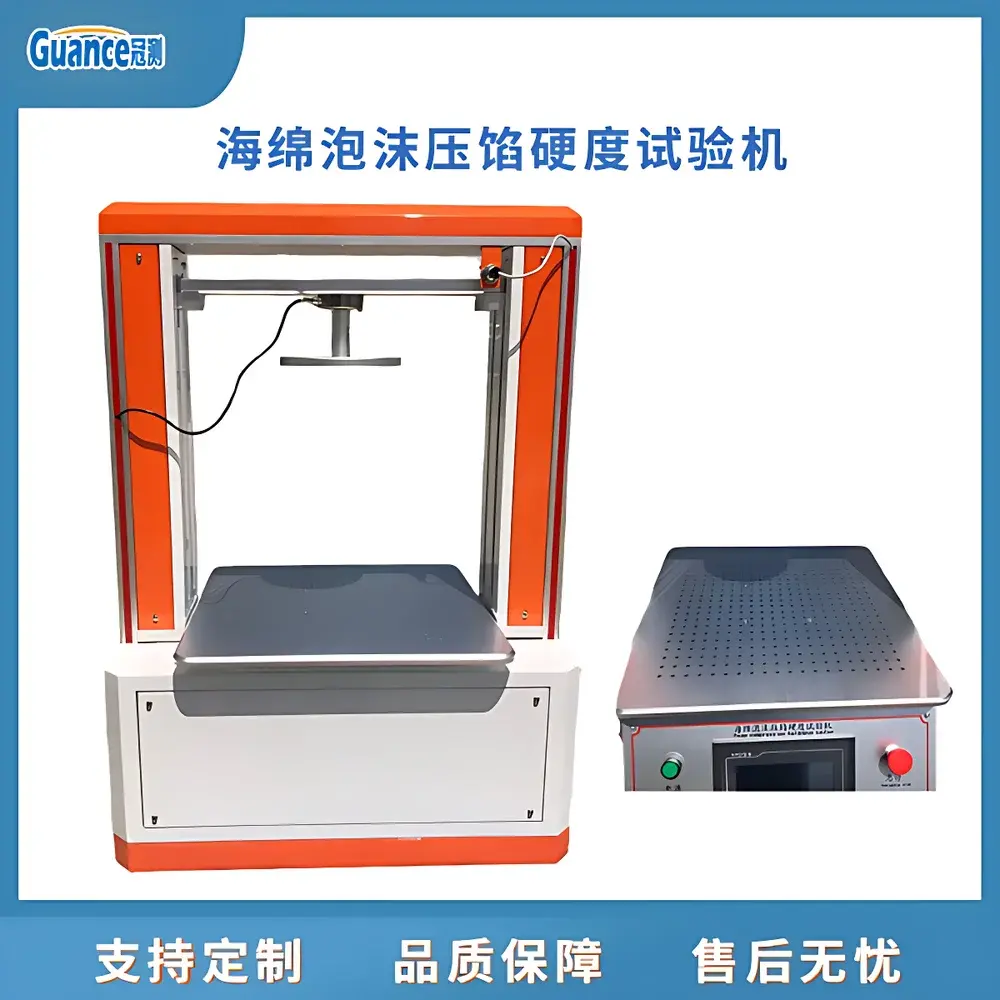
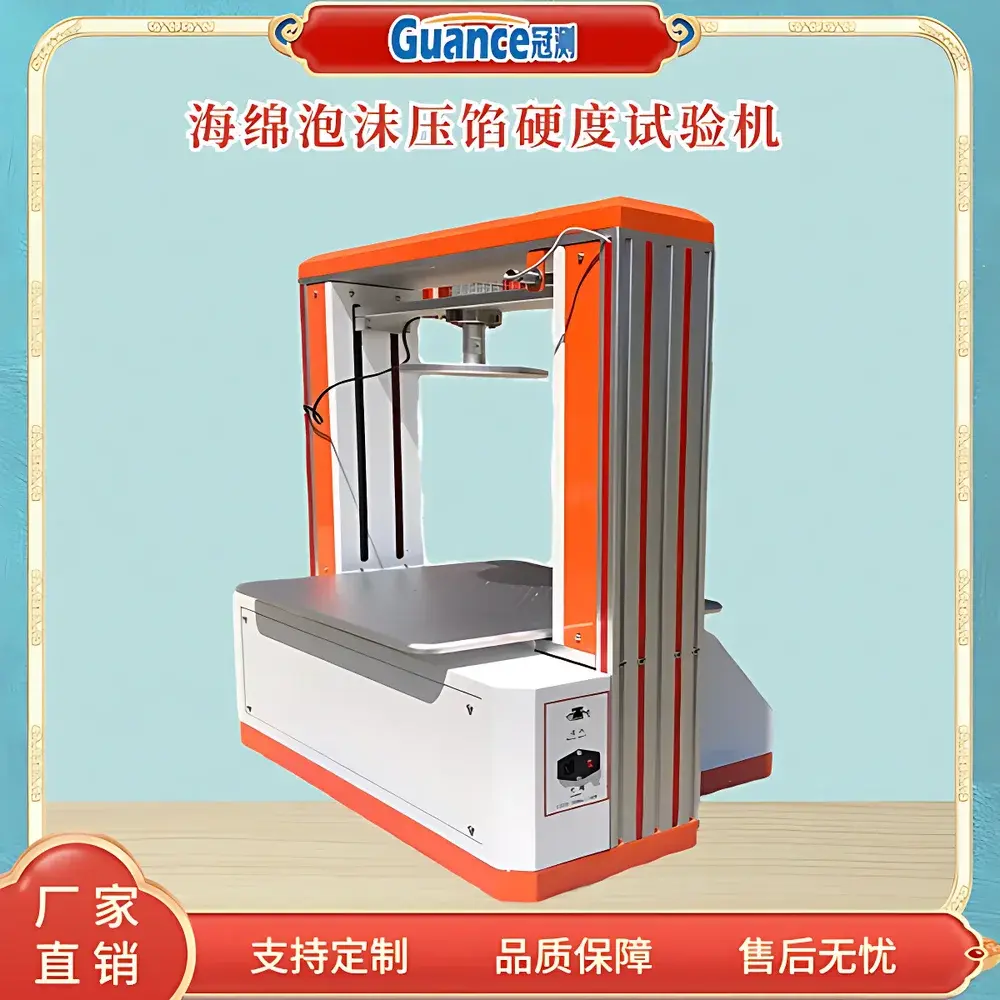
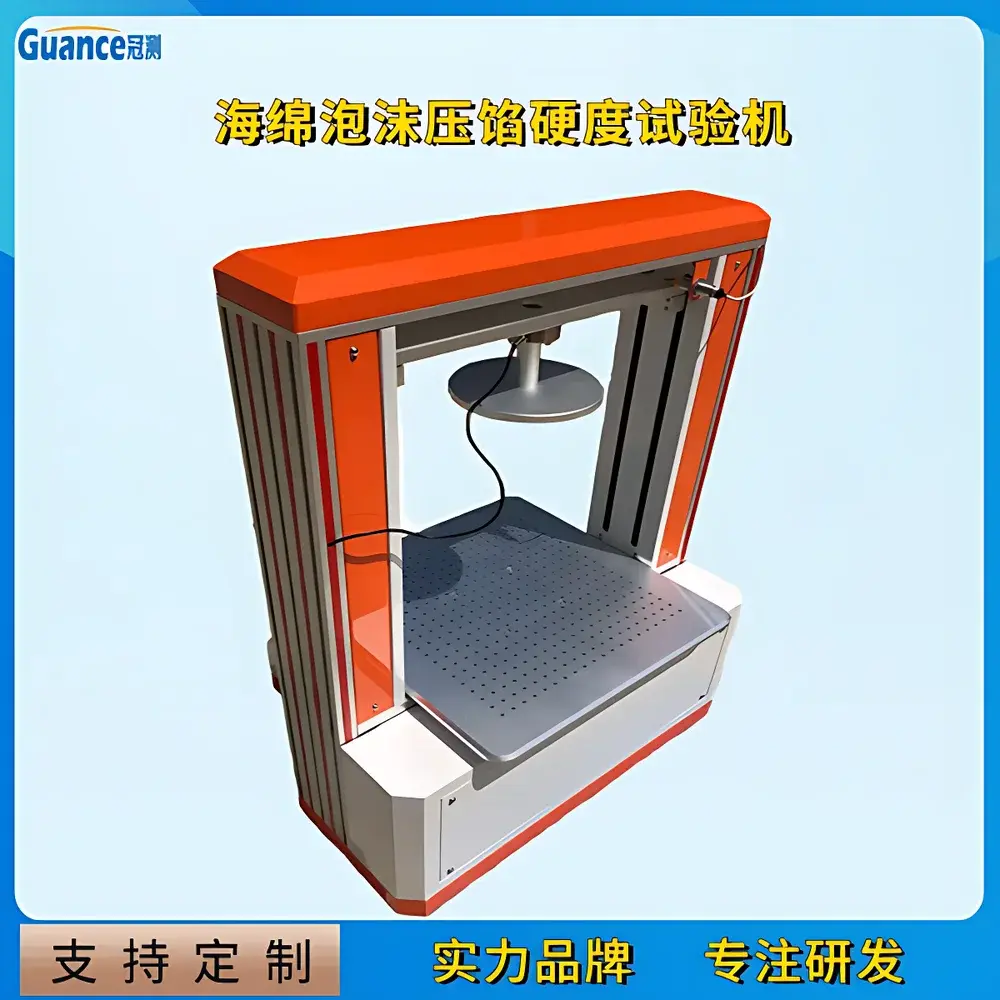
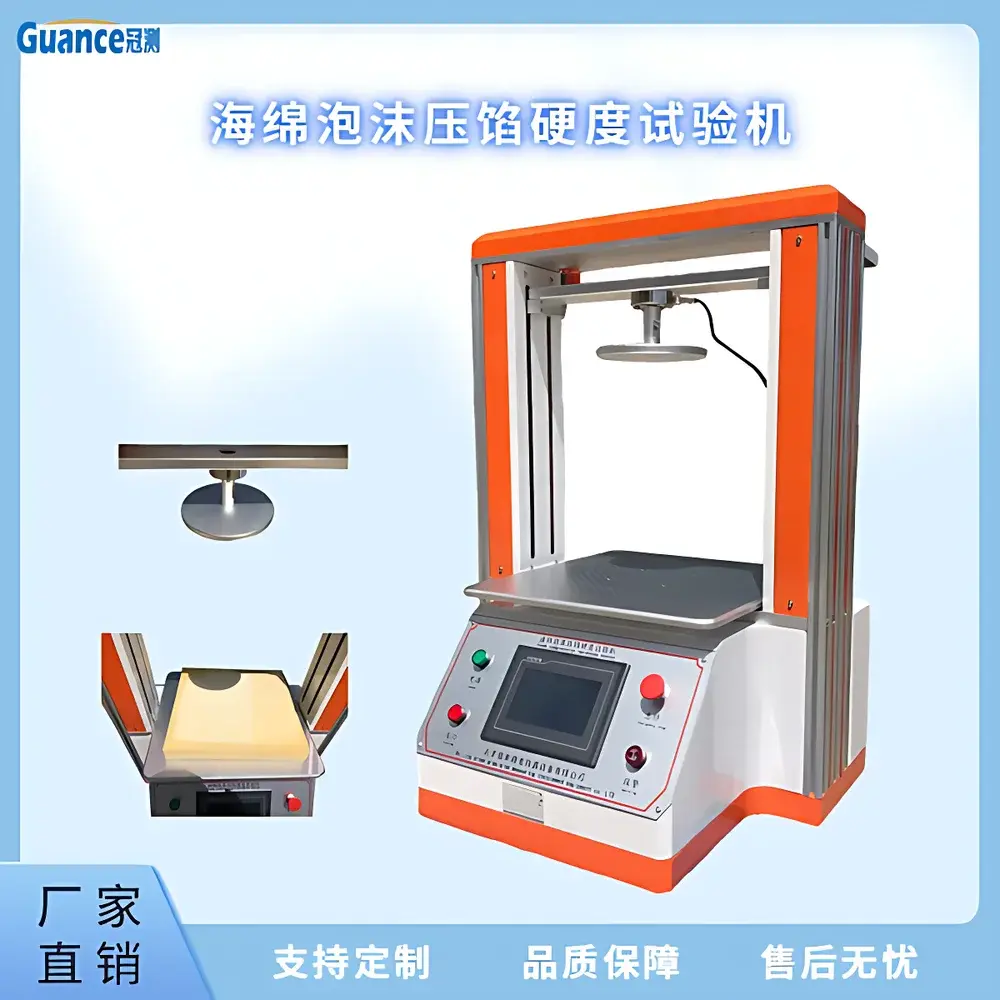
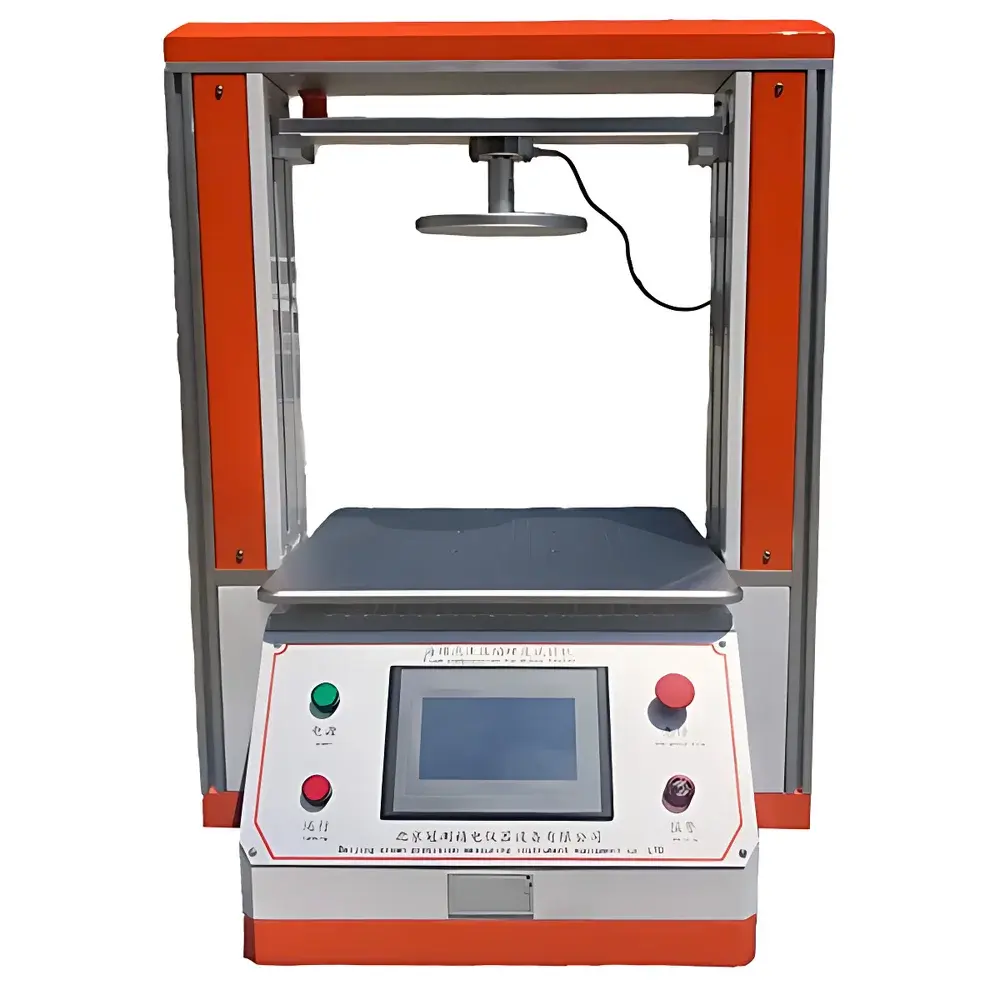
GuanCe PMYX-2000A2 Automated Foam Indentation Hardness Tester
| Brand | GuanCe Instruments |
|---|---|
| Origin | Beijing, China |
| Model | PMYX-2000A2 |
| Maximum Load Capacity | 2000 N |
| Force Resolution | 0.01 N |
| Force Accuracy | <1% FS |
| Indenter Diameter | 200 mm (customizable) |
| Effective Travel Stroke | 400 mm |
| Default Crosshead Speed | 100 mm/min (adjustable from 1–300 mm/min) |
| Touchscreen Interface | 7-inch HMI |
| Power Supply | 220 V / 50 Hz |
| Dimensions (L×W×H) | 550 × 400 × 1200 mm |
| Weight | 150 kg |
| Compliant Standards | GB/T 10807-2006, GB/T 12825-2003, GB/T 18942.1-2003, ASTM D3574, GB/T 26392-2011 |
Overview
The GuanCe PMYX-2000A2 Automated Foam Indentation Hardness Tester is an electromechanical compression testing system engineered for the precise and repeatable evaluation of indentation hardness in flexible polymeric foams—including polyurethane, slow-recovery memory foam, and other open- or closed-cell elastomeric materials. It operates on the principle of controlled quasi-static indentation using a standardized flat circular platen, applying defined displacement rates and dwell times to measure the force response at specified indentation depths (e.g., 25%, 40%, or 65% of original sample thickness). This methodology aligns with internationally recognized indentation-based hardness protocols—most notably the “indentation force deflection” (IFD) paradigm used across bedding, automotive seating, and cushioning industries. The instrument integrates a high-resolution load cell, precision ball-screw actuation, and real-time displacement feedback to ensure traceable mechanical performance under ISO/IEC 17025-aligned laboratory conditions.
Key Features
- Automated execution of standardized test methods: A (IFD40), B (IFD25/IFD40/IFD65 ratio analysis), C (instantaneous peak force at 40% indentation), and D (user-defined multi-cycle compression sequences)
- Programmable crosshead speed ranging from 1 to 300 mm/min, with default setting at 100 mm/min per GB/T 10807-2006 and ASTM D3574
- 200 mm diameter indenter plate (ISO-compliant geometry), optionally configurable for alternative diameters to accommodate specialized material forms
- Integrated 7-inch industrial touchscreen HMI with intuitive workflow navigation and real-time test progress visualization
- High-fidelity data acquisition: 0.01 N force resolution, <1% full-scale measurement error, synchronized time–force–displacement logging
- Real-time graphical display of test curves; cursor-based point interrogation showing exact timestamp, applied load (N), and penetration depth (mm)
- Onboard micro-printer for immediate hardcopy output of test reports including method ID, sample ID, environmental notes, and pass/fail flags
- Robust mechanical architecture: heavy-duty cast frame (150 kg mass), low-noise ball-screw transmission, and self-calibrating thickness pre-measurement routine
Sample Compatibility & Compliance
The PMYX-2000A2 is validated for use with standard test specimens conforming to ISO 1798 and ASTM D3574 dimensions—typically 380 mm × 380 mm × 50 mm (L × W × H) for slab stock, though smaller cut samples may be accommodated with appropriate support fixtures. It supports all major national and international standards governing soft foam mechanical characterization, including but not limited to: GB/T 10807-2006 (Chinese national standard for indentation hardness of flexible polymer foams), GB/T 12825-2003 (indentation method for highly porous elastic materials), GB/T 18942.1-2003 (compression stress–strain behavior of low-density foams), and ASTM D3574-22 (standard test methods for flexible cellular materials—slab, bonded, and molded urethane foams). For regulated environments, test logs include operator ID, timestamp, method version, and digital signature fields compatible with GLP/GMP documentation workflows.
Software & Data Management
The embedded control software enables full method configuration, storage, and recall—including pre-programmed A/B/C/C/D templates and fully customizable D-method sequences (e.g., five-step variable-rate compression with inter-step dwell intervals). Each test generates a structured .CSV file containing time-stamped force and displacement vectors, plus summary metrics (e.g., IFD25, IFD40, IFD65, recovery time per GB/T 26392-2011). Data files are exportable via USB interface and retain metadata required for audit trails per FDA 21 CFR Part 11 when deployed with external identity management systems. All calibration parameters—including load cell sensitivity, encoder scaling, and zero-offset compensation—are stored in non-volatile memory and subject to password-protected modification.
Applications
This tester serves quality assurance laboratories in foam manufacturing, furniture R&D, automotive interior component validation, and medical cushioning development. Typical use cases include incoming raw material verification against supplier specifications; batch-to-batch consistency monitoring during continuous production; comparative benchmarking of formulation variants (e.g., density modifiers, crosslinker ratios); and durability assessment via repeated indentation cycling. Its compliance with both Chinese and ASTM standards facilitates harmonized reporting across global supply chains—particularly where OEM specifications mandate dual-standard conformance (e.g., Tier-1 automotive suppliers requiring both GB/T and ASTM D3574 certification).
FAQ
What standards does the PMYX-2000A2 support out-of-the-box?
It natively implements GB/T 10807-2006, GB/T 12825-2003, GB/T 18942.1-2003, ASTM D3574, and GB/T 26392-2011, with method selection available via touchscreen menu.
Can the indenter diameter be modified for non-standard samples?
Yes—while the standard configuration uses a 200 mm diameter platen compliant with ISO/ASTM geometry requirements, custom indenter plates (e.g., 150 mm or 250 mm) can be supplied upon request.
Is the system compatible with LIMS or enterprise QA databases?
Raw .CSV outputs contain all necessary fields for automated ingestion into laboratory information management systems; optional RS-232 or Ethernet modules enable direct API integration.
How is force calibration maintained over time?
The system includes built-in zero-balance and span-check routines using certified reference weights; full calibration certificates traceable to NIM (National Institute of Metrology, China) are provided with initial commissioning.
Does the device meet electromagnetic compatibility (EMC) requirements for lab deployment?
Yes—it complies with GB/T 18268.1-2010 (IEC 61326-1:2012), ensuring stable operation in shared instrumentation environments without signal interference.





