
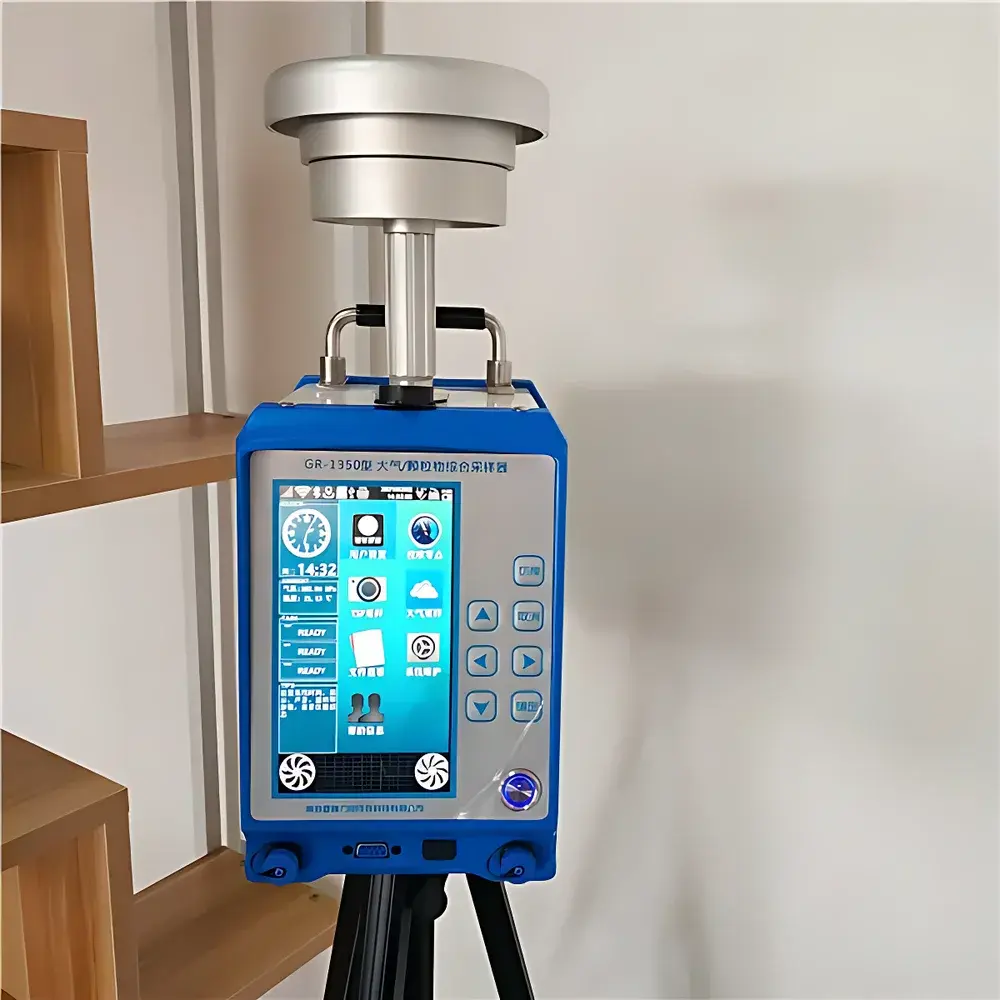
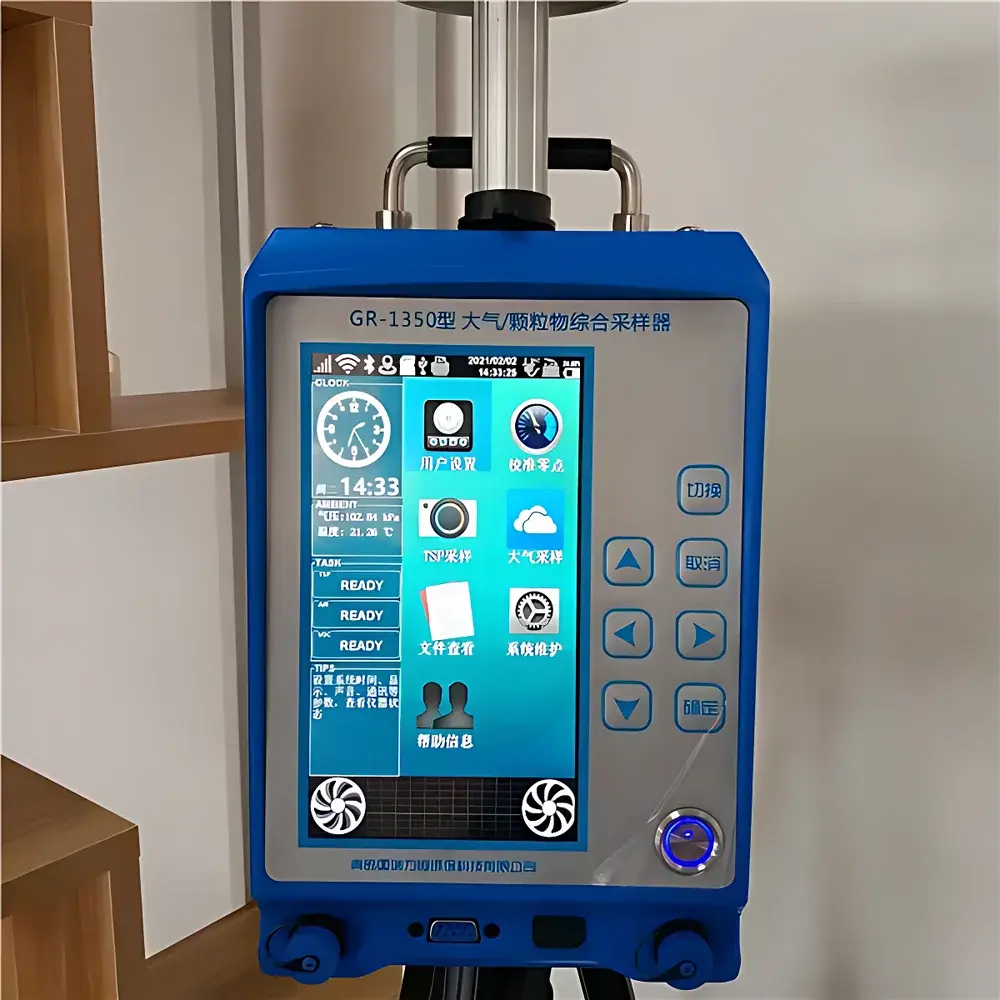
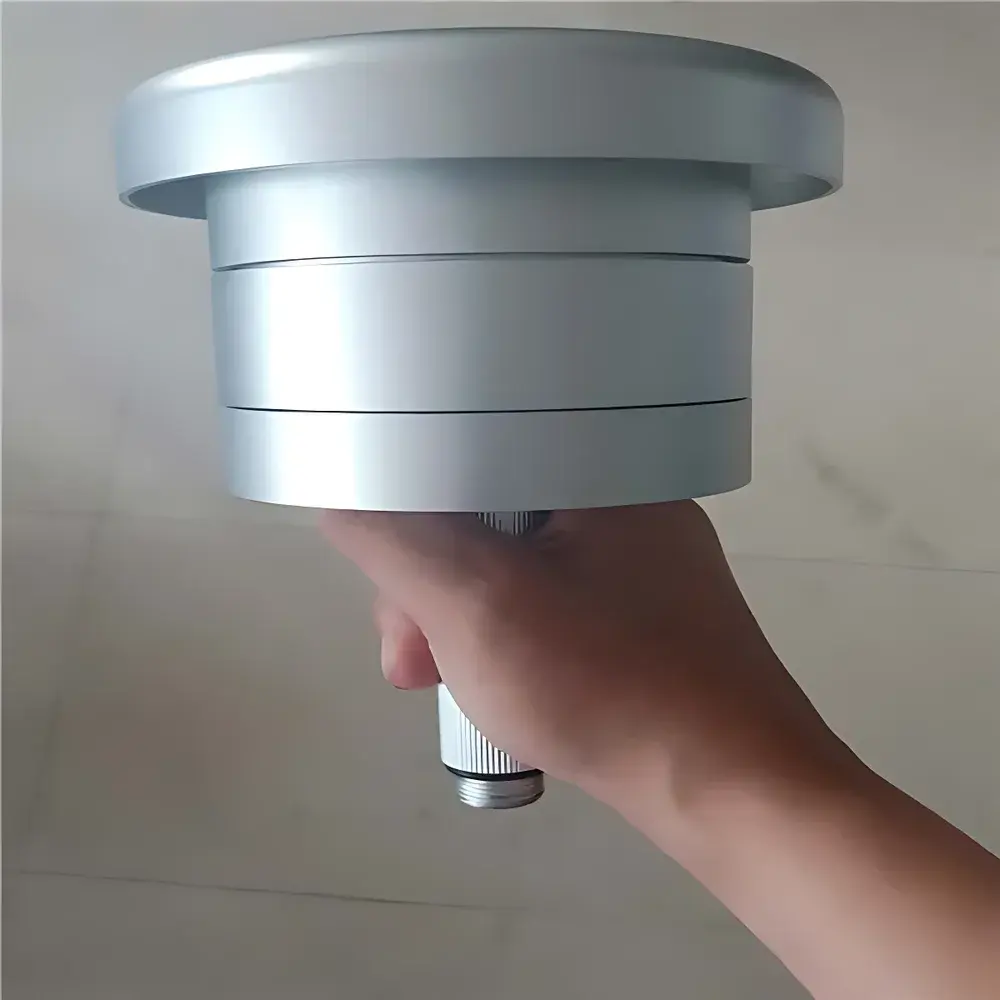
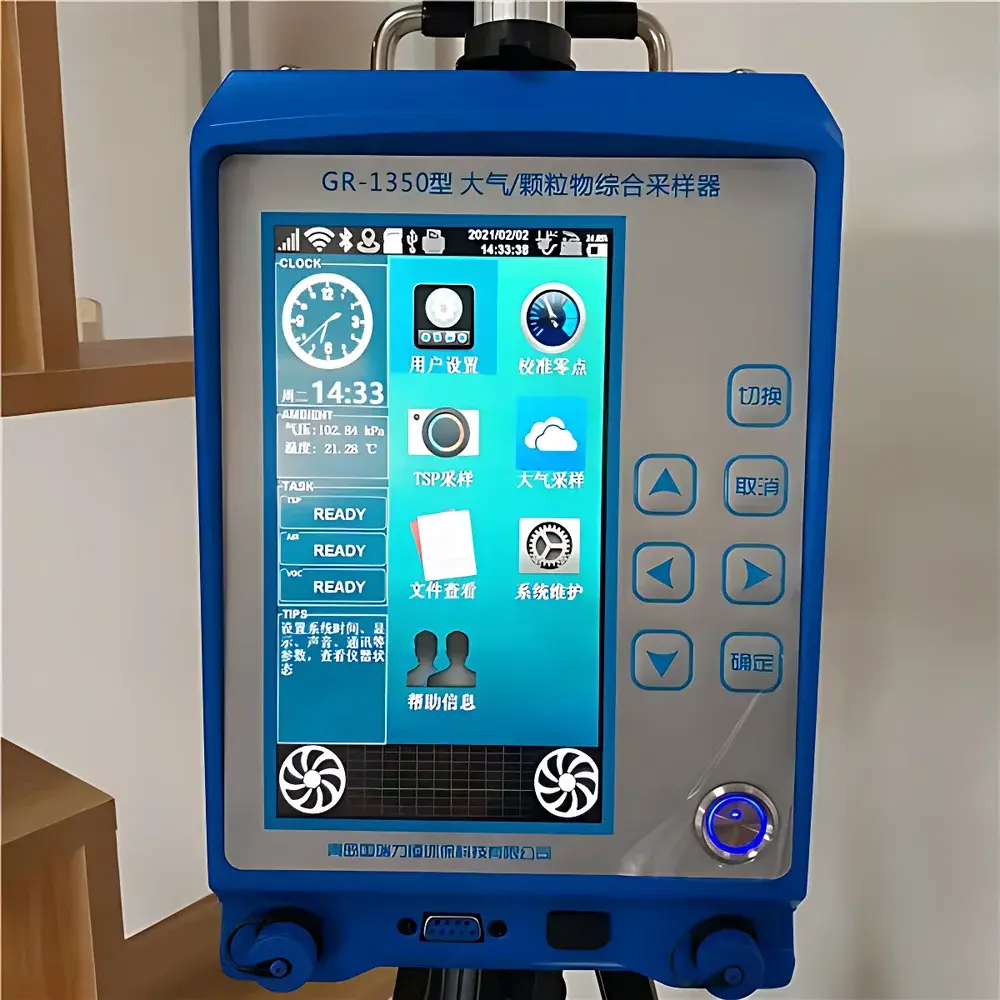
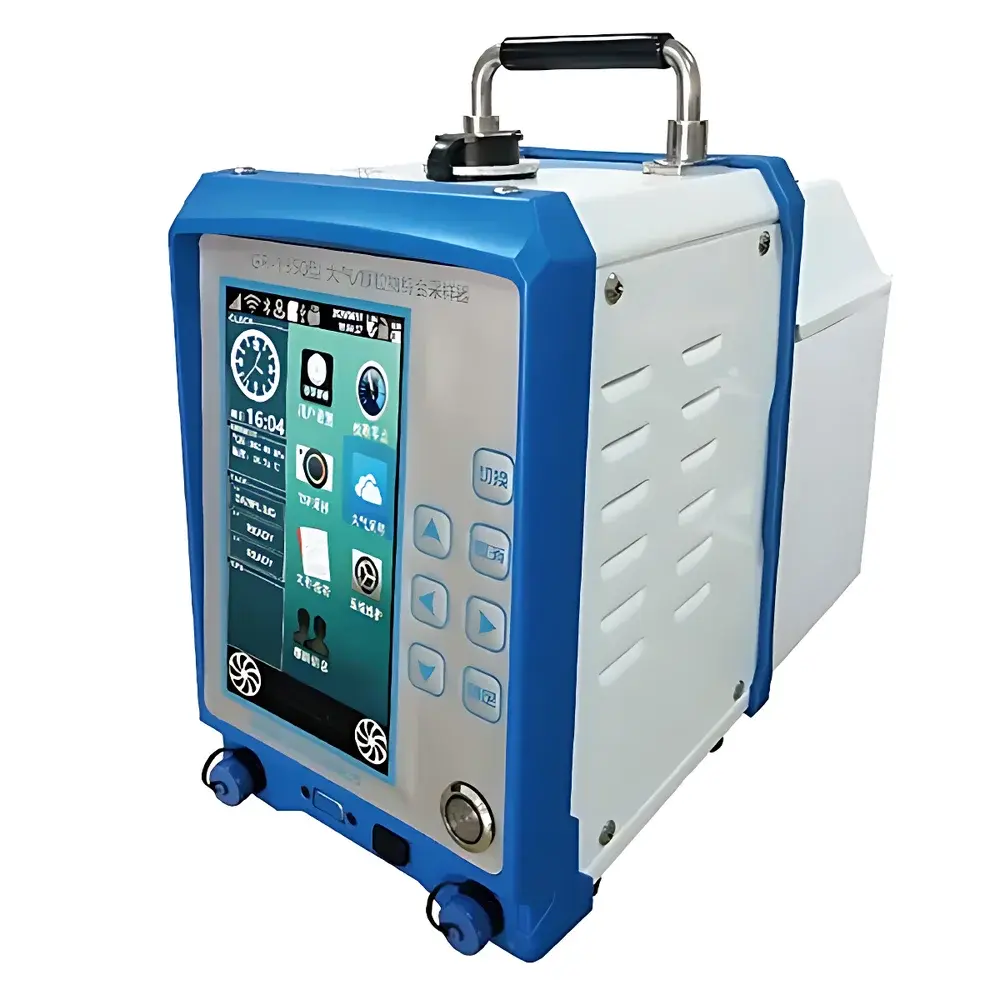
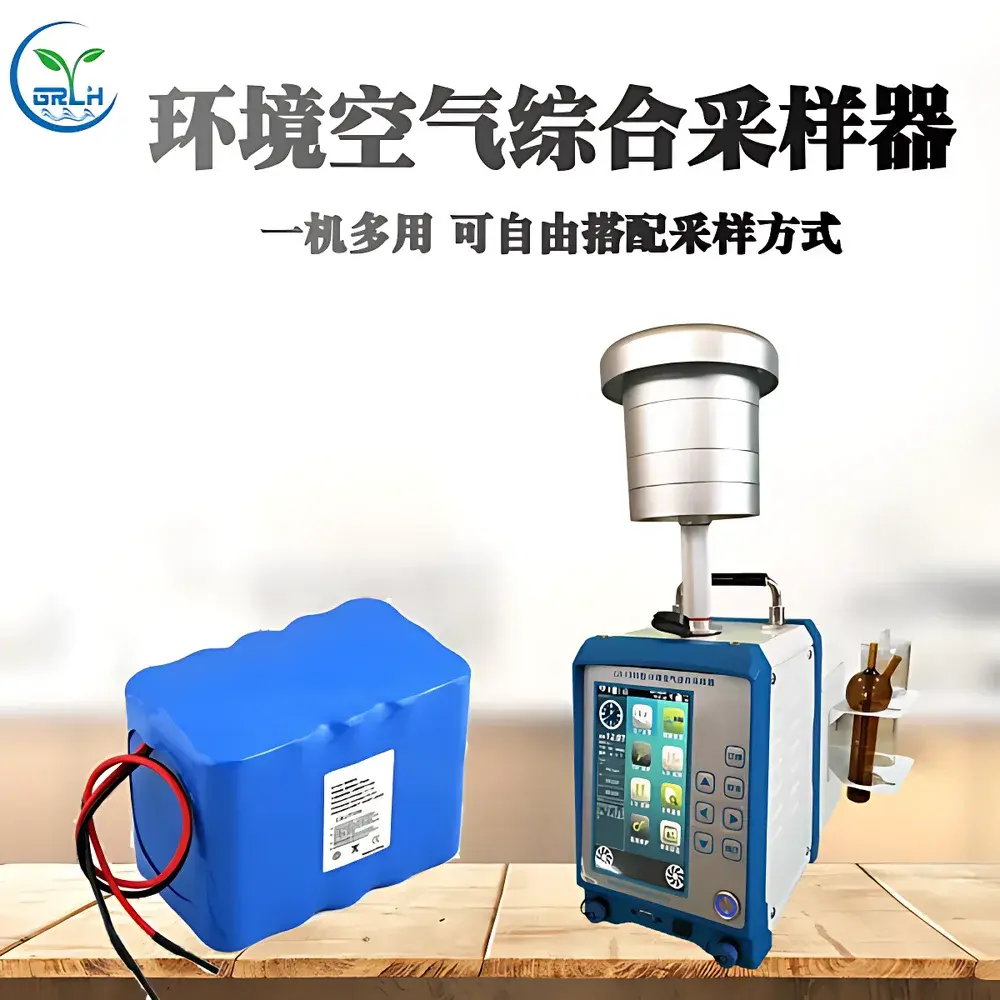
Guo Ruili Heng GR-1350B Constant-Temperature Constant-Flow & Particulate Matter Integrated Air Sampler
| Brand | Guo Ruili Heng |
|---|---|
| Origin | Shandong, China |
| Manufacturer Type | OEM Producer |
| Model | GR-1350B |
| Flow Range | 24-hr Gaseous Sampling: 0.20 L/min |
| Particulate Sampling | (60–130) L/min |
| Maximum Vacuum Pressure | >9 kPa |
| Flow Stability | ±2.5% (RSD) |
| Max Flow Error | ≤2.5% |
| Operational Duration at Max Flow & Load | 4–6 h |
| Rated Service Life at Max Flow & Load | >10,000 h |
| PM2.5 Cut-Point (Da₅₀) | (2.5 ± 0.2) µm, σg = (1.2 ± 0.1) |
| PM10 Cut-Point (Da₅₀) | (10 ± 0.5) µm, σg = (1.5 ± 0.1) |
| Inlet Velocity | 0.3 m/s |
| b/a Ratio | 0.625 |
| Nominal Particulate Flow | 100 L/min |
| Filter Diameter | Ø80 mm |
| Thread Connection | M20×1.5 |
| Temperature Control Range | 15–30 °C (PID-regulated, ±0.5 °C accuracy) |
| Ambient Pressure Measurement | (60–130) kPa, resolution 0.01 kPa, accuracy ±2.5% |
| Time Accuracy | ±0.2% over 1 min–99 h 59 min |
| Noise Level | <62 dB(A) |
| Dimensions (W×D×H) | 210 × 320 × 270 mm |
| Weight | ~7.0 kg |
| Power Supply | AC 220 V ±10%, 50 Hz |
| Power Consumption | <100 W |
Overview
The Guo Ruili Heng GR-1350B Constant-Temperature Constant-Flow & Particulate Matter Integrated Air Sampler is a field-deployable, multi-channel ambient air monitoring instrument engineered for simultaneous, independent collection of gaseous pollutants (e.g., SO₂, NOₓ) and airborne particulate matter (TSP, PM₁₀, PM₂.₅) under standardized environmental conditions. It operates on two complementary sampling principles: solution absorption for reactive gases and gravimetric filtration for aerosols—both compliant with internationally referenced methodologies including EPA Method IO-3.2, ISO 7708:1995 (particle size-selective sampling), and the full suite of Chinese national standards (HJ/T 374–2007, HJ/T 375–2007, HJ 618–2011, HJ 656–2013, HJ/T 376–2007). The system integrates three physically isolated sampling channels: dual independent 24-hour gaseous streams with active thermal regulation (15–30 °C, PID-controlled), and one high-flow particulate channel capable of sustaining ≥100 L/min against backpressures exceeding 9 kPa. Its architecture adheres to fundamental metrological requirements for volumetric flow integrity, environmental parameter compensation, and long-term operational stability in unattended field deployments.
Key Features
- Triple independent sampling paths: two programmable 24-hour gaseous channels + one dedicated particulate channel—each fully controllable (start/stop, timing, flow setpoint) without cross-interference.
- High-efficiency brushless vacuum pumps: particulate path employs a high-negative-pressure pump rated >9 kPa static pressure; gaseous paths utilize imported low-noise, high-stability brushless pumps ensuring >10,000 h MTBF under continuous load.
- Precision electronic mass flow meters: corrosion-resistant, humidity-tolerant sensors with 0.01 L/min resolution (gaseous) and 0.1 L/min resolution (particulate), calibrated to ±2.5% full-scale accuracy per HJ/T 376–2007.
- Active thermal management: integrated Peltier-based heating/cooling module with real-time PID feedback delivers ±0.5 °C temperature control across 15–30 °C range—critical for maintaining constant molar volume during extended 24-hr sampling.
- Weather-hardened enclosure: IP54-rated chassis with dust-sealed electronics, rain-splash protection, and wide-temperature LCD (–20 °C to +50 °C operational range) featuring auto-contrast compensation.
- Electromagnetic compatibility (EMC): designed to IEC 61326-1:2013 Class B emission and immunity limits—validated for operation near radio transmitters, power substations, and industrial facilities.
- Intelligent data continuity: automatic power-fail recovery preserves all sampling parameters, elapsed time, and flow logs; resumes operation upon grid restoration without manual intervention.
Sample Compatibility & Compliance
The GR-1350B supports standard regulatory sampling protocols for both gaseous and particulate phases. For gases, it accommodates impingers, bubblers, and sorbent tubes using the 0.20 L/min constant-flow mode—compatible with HJ 479–2009 (SO₂), HJ 482–2009 (NOₓ), and ASTM D3464–97 (formaldehyde). For particulates, it accepts standard Ø80 mm quartz or Teflon filters via M20×1.5 threaded inlet; its PM₂.₅ and PM₁₀ cyclone inlets meet Da₅₀ and σg tolerances specified in HJ 656–2013 and ISO/CEN 12341:2014. All flow, temperature, and pressure measurements are traceable to national metrology institutes per JJG 943–1998. The instrument’s firmware records audit-trail metadata (including calibration timestamps, sensor diagnostics, and environmental corrections) to support GLP-compliant reporting.
Software & Data Management
Onboard embedded firmware provides real-time display of flow rate, temperature, pressure, elapsed time, and accumulated volume (standardized to 273.15 K, 101.325 kPa). All parameters—including user-defined start/stop times, interval schedules (1–99 cycles), and thermal setpoints—are configurable via intuitive menu navigation. Dual data export options include direct thermal printing (via built-in printer port) and USB mass-storage mode for CSV-formatted logs containing per-minute flow/pressure/temperature snapshots. No proprietary software is required: exported files are natively readable in Excel, R, or Python pandas. Firmware supports firmware-over-USB updates and includes secure parameter locking to prevent unauthorized configuration changes—a requirement for ISO/IEC 17025-accredited laboratories.
Applications
The GR-1350B serves as a primary sampling platform in ambient air quality monitoring networks (AAQMN), occupational hygiene assessments (per GBZ 159–2004), emergency response deployments (e.g., post-industrial incident or wildfire plume tracking), and method validation studies. Its triple-channel flexibility enables co-location studies comparing gas–particle partitioning of semi-volatile organics (e.g., PAHs), source apportionment via concurrent PM₂.₅/PM₁₀/SO₂ time-series analysis, and long-term trend monitoring under varying meteorological loads. Educational institutions use it for hands-on training in EPA Compendium Method TO-17, ISO 8518, and gravimetric aerosol fundamentals. Military environmental health units deploy it for forward-area air surveillance where ruggedness, battery-backup readiness, and minimal maintenance intervals are critical.
FAQ
Does the GR-1350B comply with U.S. EPA reference or equivalent methods?
Yes—its flow control accuracy, temperature regulation, and particulate cut-point performance align with core requirements of EPA Reference Method PS-1 (for PM₂.₅), ISO 7708 for inhalable fraction definition, and ASTM D1078 for volumetric calibration traceability.
Can the instrument operate continuously for more than 24 hours?
While the 24-hour gaseous channel is optimized for standard regulatory cycles, the particulate channel supports uninterrupted operation up to 6 hours at 100 L/min against typical filter loading resistance; extended campaigns require scheduled filter changes per HJ 656–2013 Section 6.2.
Is remote monitoring or telemetry supported?
The base model does not include cellular or Ethernet interfaces; however, its USB data export and RS-232 serial port (optional) enable integration with SCADA systems or third-party IoT gateways using Modbus RTU or ASCII command sets.
What maintenance intervals are recommended for field use?
Pump brushes require inspection every 5,000 operating hours; flow sensors should be recalibrated annually or after exposure to condensate or corrosive vapors; particulate inlets must be cleaned weekly in high-dust environments per HJ/T 374–2007 Clause 7.3.
How is standard-volume correction implemented?
Real-time calculation applies the ideal gas law with simultaneous measurement of ambient temperature (±0.3 °C), absolute pressure (±2.5% kPa), and actual flow—outputting cumulative standard cubic meters (m³@STP) with timestamped audit logs.
Related Products







