
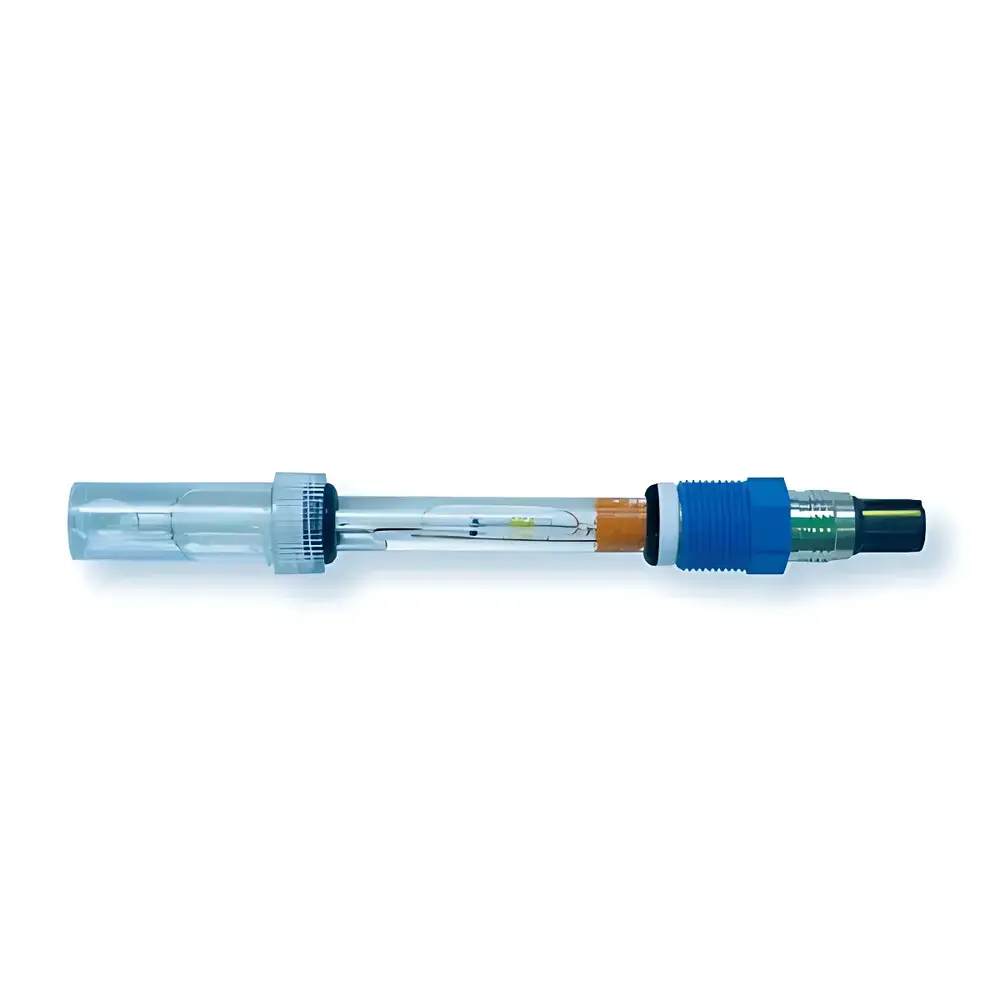
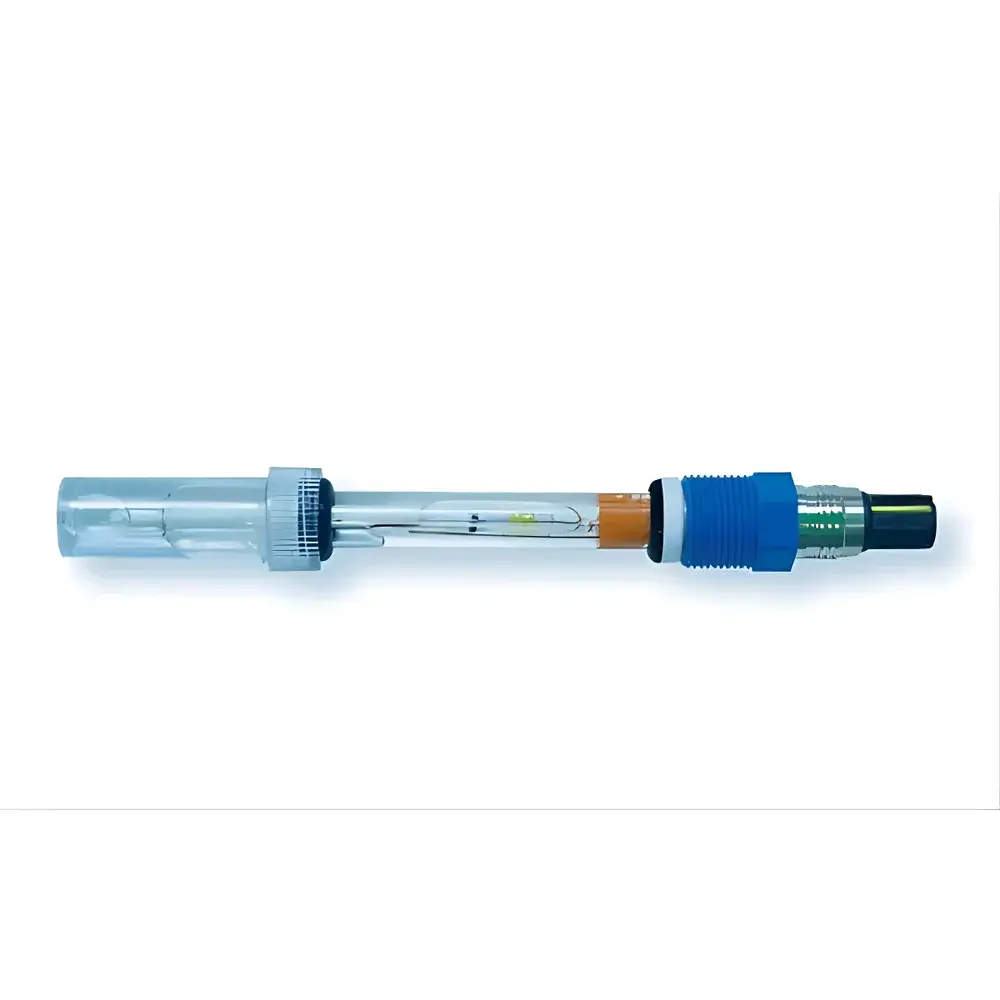
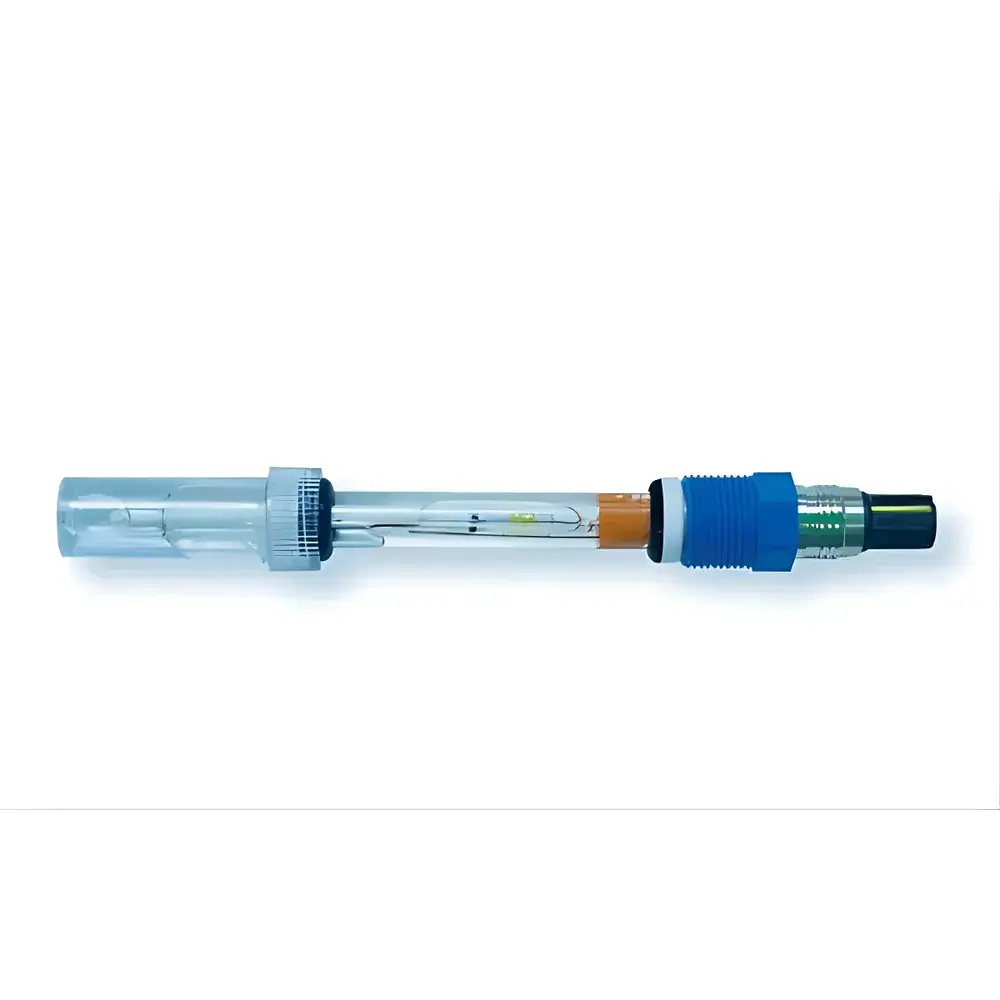
Hach HC9420 Fermentation-Grade pH Electrode
| Brand | Hach |
|---|---|
| Origin | Shanghai, China |
| Manufacturer Type | Authorized Distributor |
| Origin Category | Domestic (China-manufactured) |
| Model | HC9420 |
| Instrument Type | Single-Port |
| Application Scope | In-situ Process Monitoring (Bioreactors & Fermenters) |
| Electrode Configuration | Composite Glass + Reference Electrode |
| Electrode Count | 2 (Integrated pH-Sensing and Reference Elements) |
| Electrode Spacing | ~10 mm |
| Electrode Diameter | 12 mm |
| Available Lengths | 120 mm / 225 mm / 325 mm / 425 mm (Customizable Stem Length) |
| pH Range | 0–14 |
| Response Time (t₉₀) | <60 s |
| Operating Temperature | 0–130 °C |
| Max. Pressure Rating | 6 bar (gauge) |
| Junction Type | Dual-Liquid-Junction with Ceramic Frit |
| Temperature Sensor | Integrated PT1000 RTD |
| Membrane Material | High-Temperature Borosilicate Glass |
| Gel Electrolyte | Pre-pressurized Polymer Gel |
| Sterilization Compatibility | Validated for CIP (Clean-in-Place) and SIP (Steam-in-Place) per ISO 13485 & ASME BPE guidelines |
Overview
The Hach HC9420 Fermentation-Grade pH Electrode is an in-situ process measurement sensor engineered specifically for continuous, high-reliability pH monitoring in biopharmaceutical fermentation, cell culture, and food-grade bioprocessing applications. It operates on the principle of potentiometric hydrogen ion activity detection via a Nernstian glass membrane, generating a stable mV signal proportional to pH across the full aqueous range (0–14). Its robust construction integrates a high-temperature borosilicate glass pH-sensitive bulb with a pre-pressurized polymer gel electrolyte system and dual liquid junction architecture—designed to maintain electrochemical stability under dynamic thermal, mechanical, and osmotic stress conditions typical of stainless-steel bioreactors operating up to 130 °C and 6 bar. Unlike conventional laboratory electrodes, the HC9420 is qualified for repeated SIP cycles (121 °C saturated steam, ≥30 min), meeting key hygienic design requirements outlined in ASME BPE-2022 and ISO 13485 for single-use and reusable bioprocess equipment.
Key Features
- High-temperature glass membrane fabricated from chemically resistant borosilicate composition, enabling stable calibration and drift performance below 0.02 pH/h at 121 °C
- Dual liquid junction design with sintered ceramic frits minimizes clogging and electrolyte contamination in viscous or protein-rich media (e.g., yeast broths, mammalian cell harvest streams)
- Pre-pressurized polymer gel reference system eliminates liquid refill requirements and prevents back-diffusion under positive process pressure
- Integrated PT1000 platinum resistance thermometer provides real-time, traceable temperature compensation compliant with IEC 60751 Class A tolerance (±0.15 °C at 0 °C)
- Stem lengths configurable to 120 mm, 225 mm, 325 mm, or 425 mm to accommodate standard sanitary flange ports (e.g., DIN 11851, SMS 1144, Tri-Clamp® 1.5″)
- Electrode body constructed from autoclavable PEEK and FDA-compliant EPDM elastomers; fully compatible with hydrogen peroxide vapor (HPV) and peracetic acid (PAA) sanitization protocols
Sample Compatibility & Compliance
The HC9420 demonstrates broad compatibility with complex biological matrices including aerobic and anaerobic fermentation broths (E. coli, CHO, S. cerevisiae), monoclonal antibody production harvests, vaccine seed train cultures, and dairy fermentation slurries. Its composite electrode geometry—featuring a 12 mm diameter sensing surface and ~10 mm axial separation between glass and reference elements—ensures minimal flow-induced potential artifacts during turbulent agitation. The device conforms to relevant sections of USP , EU GMP Annex 1 (2022), and FDA 21 CFR Part 11 when paired with Hach’s certified data acquisition systems supporting audit trail, electronic signature, and user access control. Full material declarations (IMDS/REACH) and sterilization validation reports are available upon request for GxP-regulated installations.
Software & Data Management
When interfaced with Hach’s SC1000 or HQd series controllers—or third-party DCS/SCADA platforms via 4–20 mA analog output or Modbus RTU (RS-485)—the HC9420 delivers time-stamped, temperature-compensated pH values with 0.01 pH resolution. Firmware-supported linearization algorithms correct for non-Nernstian deviations at extreme pH or elevated temperatures. All calibration events (two-point buffer calibration using NIST-traceable buffers), maintenance logs, and alarm thresholds are stored with immutable timestamps, satisfying ALCOA+ data integrity principles. Optional Hach Insight™ software enables automated calibration verification, predictive failure alerts based on impedance trend analysis, and export to CSV or LIMS-compatible XML formats.
Applications
- Real-time pH control in stainless-steel and single-use bioreactors (5–20,000 L scale)
- In-line monitoring during upstream processing of therapeutic proteins, viral vectors, and plasmid DNA
- Batch and fed-batch fermentation optimization in industrial microbiology (e.g., amino acid, organic acid, enzyme production)
- Quality-by-Design (QbD) parameter tracking for regulatory submissions (IND, BLA, MAA)
- Environmental validation of CIP rinse conductivity and SIP lethality profiles
- Process analytical technology (PAT) implementation aligned with ICH Q8(R2) and Q9 guidance
FAQ
Is the HC9420 suitable for SIP sterilization at 130 °C?
Yes—the electrode is validated for repeated exposure to saturated steam at 130 °C for up to 45 minutes per cycle without performance degradation.
What is the recommended calibration frequency in continuous fermentation?
For GMP-compliant operations, calibration verification is required prior to each batch start-up and at 24-hour intervals during extended runs; automated verification can be scheduled via controller firmware.
Can the HC9420 be used in high-viscosity media such as mycelial fermentations?
Its dual-junction ceramic frit and pressurized gel system significantly reduce fouling risk; however, optional anti-fouling sleeves (e.g., PTFE-coated mesh) are recommended for filamentous organisms.
Does the electrode support digital communication protocols beyond analog output?
Yes—models with Hach Smart Sensor Interface (SSI) enable HART 7 and Foundation Fieldbus integration with full diagnostic telemetry.
How is traceability ensured for regulatory audits?
Each unit carries a unique serial number linked to factory calibration certificates (ISO/IEC 17025 accredited), material compliance documentation, and sterilization cycle validation summaries.




