
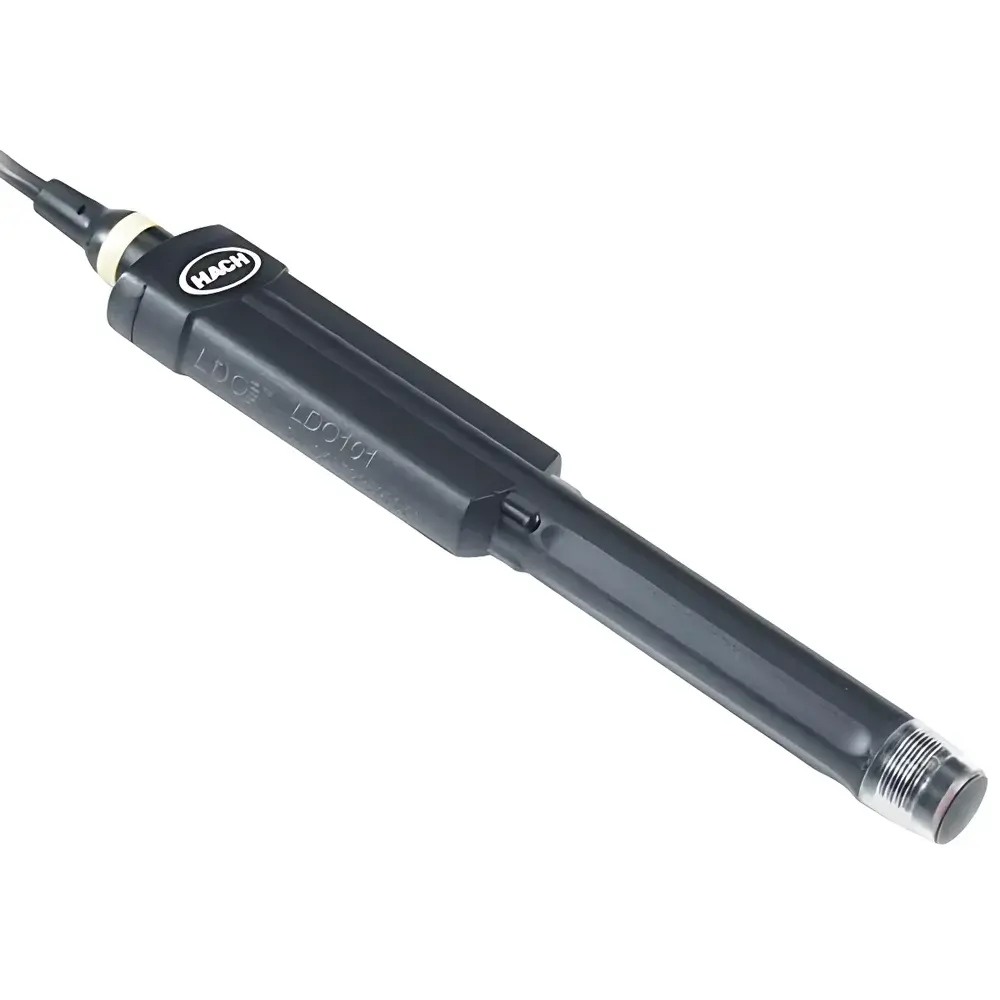
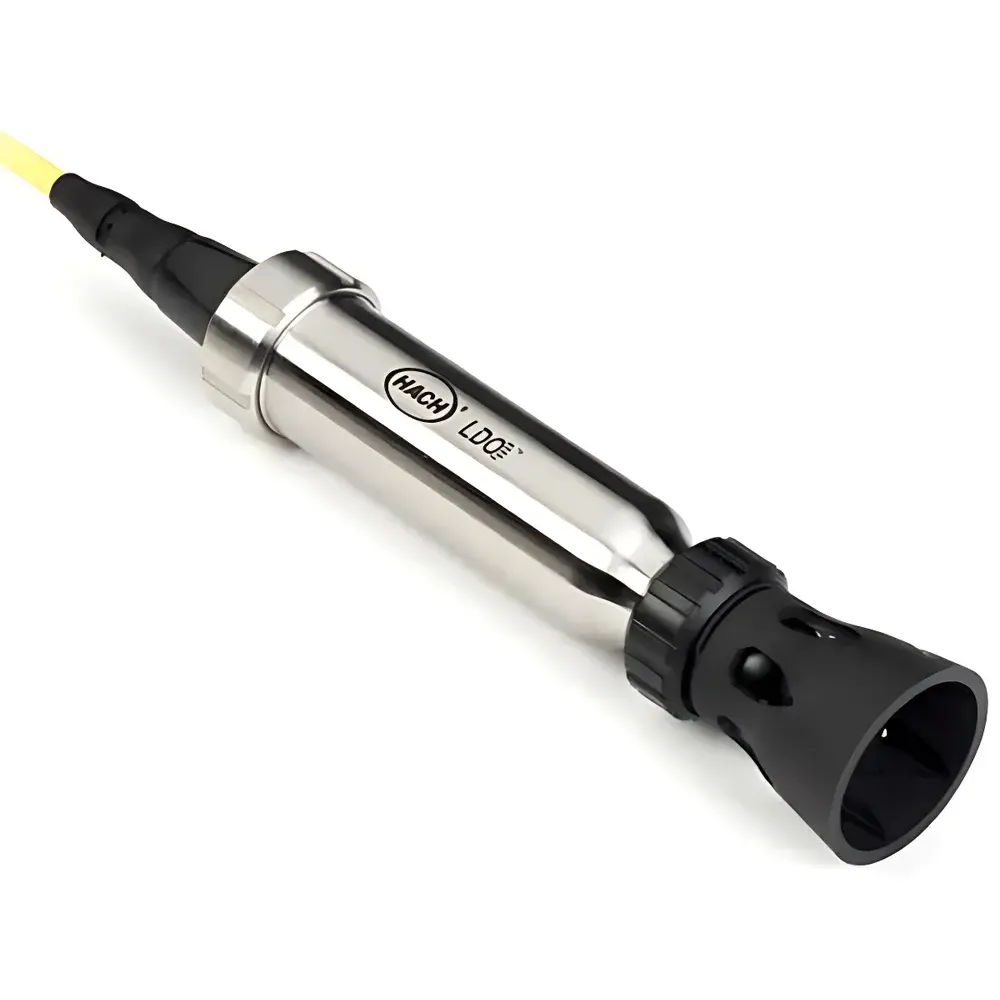
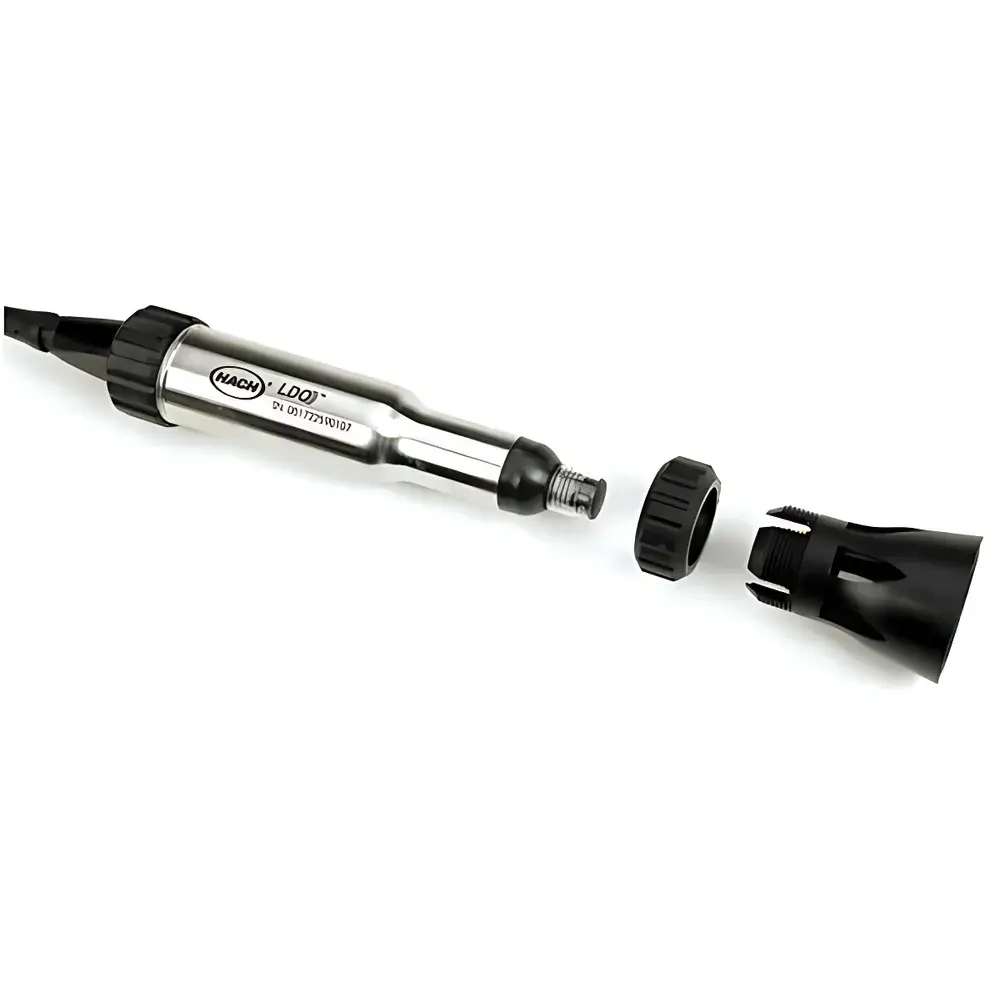
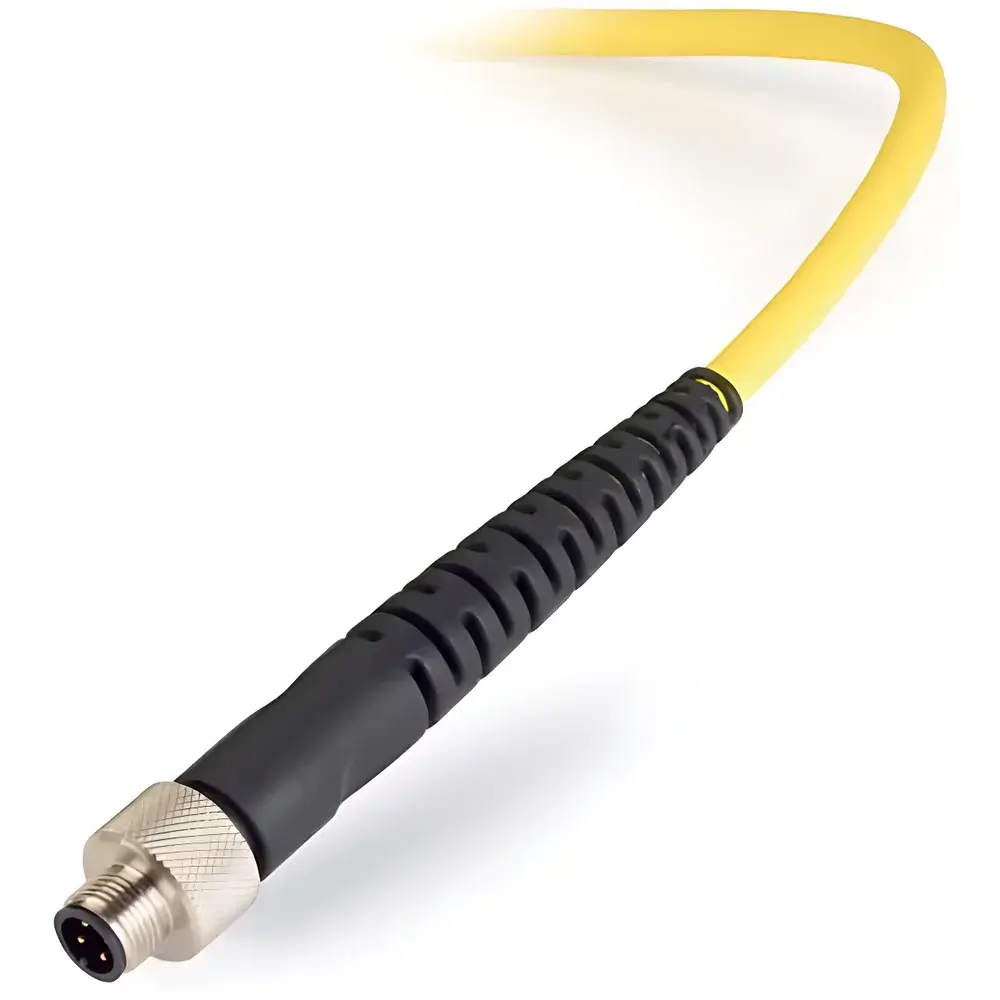
Hach LDO10103 Fluorescent Dissolved Oxygen Electrode
| Brand | Hach |
|---|---|
| Origin | USA |
| Manufacturer Type | Authorized Distributor |
| Origin Category | Imported |
| Model | LDO10103 |
| Instrument Type | Portable |
| Measurement Principle | Fluorescence Quenching |
| Range | 0.00–20.0 mg/L, 0–200% saturation |
| Accuracy | ±1% of full scale |
| Repeatability | ±1% |
| Detection Limit | 0.01 mg/L (or 0.1 mg/L depending on configuration) |
Overview
The Hach LDO10103 is a rugged, field-deployable fluorescent dissolved oxygen (DO) electrode engineered for high-reliability measurement in environmental monitoring, wastewater treatment, aquaculture, and drinking water applications. Unlike traditional electrochemical DO sensors based on Clark-type amperometry or galvanic cells, the LDO10103 employs optical fluorescence quenching technology—a physics-based method grounded in the Stern–Volmer relationship between molecular oxygen concentration and the lifetime of excited-state fluorophores. A blue LED excites a proprietary ruthenium-based luminophore immobilized on the sensor tip; the presence of dissolved O₂ shortens the decay time of the resulting red phosphorescence. This lifetime—measured in nanoseconds—is directly proportional to DO concentration and is unaffected by sample conductivity, flow rate, or hydrogen sulfide interference. The absence of oxygen-consuming cathodes, electrolyte gels, or gas-permeable membranes eliminates drift, polarization delays, and membrane fouling—making the LDO10103 especially suitable for long-term unattended deployment and challenging matrices such as activated sludge, industrial effluents, and turbid surface waters.
Key Features
- True zero-maintenance operation: No membrane replacement, no electrolyte refilling, no polarization time required prior to use.
- Factory-calibrated with embedded calibration memory chip: Each LDO10103 electrode ships with traceable calibration data stored in an integrated microchip—eliminating manual calibration steps under routine conditions.
- 3-meter integrated cable with IP68-rated connector: Designed for seamless integration with Hach HQ series multi-parameter meters (e.g., HQ11d, HQ411, HQ440d), supporting hot-swappable probe recognition and automatic parameter assignment.
- Robust optical sensing surface: The fluorophore-coated sensor cap maintains measurement integrity even after minor mechanical abrasion or organic fouling; simple cleaning with mild detergent or isopropyl alcohol restores performance.
- Stable lifetime-based measurement: Immune to pressure fluctuations, temperature gradients (compensated via built-in NTC thermistor), and electromagnetic noise—ensuring reproducibility across diverse sampling environments.
Sample Compatibility & Compliance
The LDO10103 demonstrates broad compatibility with natural waters (rivers, lakes, estuaries), treated and raw wastewater, groundwater, and process streams in municipal and industrial settings. Its membrane-free architecture avoids chloride poisoning, sulfide inhibition, and biofilm-induced signal attenuation common in polarographic systems. The electrode complies with ASTM D888-22 (Standard Test Methods for Dissolved Oxygen in Water) for fluorescence-based DO determination and supports GLP/GMP data integrity requirements when used with Hach’s FDA 21 CFR Part 11–compliant HQd software suite. All calibration and measurement metadata—including timestamp, temperature, pressure, and sensor serial number—are automatically logged and exportable in CSV or PDF formats for audit readiness.
Software & Data Management
When paired with Hach’s HQd platform, the LDO10103 enables real-time DO profiling, automated temperature/pressure compensation (using barometric or fixed-pressure input), and configurable alarm thresholds. The HQd software provides full audit trail functionality—including user login tracking, calibration history, and edit logs—meeting ISO/IEC 17025 and EPA Method 360.1 documentation standards. Data export supports direct integration into LIMS environments via USB mass storage mode or Bluetooth wireless transmission (with compatible HQd models). Firmware updates are delivered through Hach’s secure online portal, ensuring ongoing alignment with evolving regulatory guidance.
Applications
- Wastewater treatment plant process control: Monitoring aeration basin DO profiles to optimize energy consumption and nitrification efficiency.
- Environmental field surveys: Rapid assessment of hypoxic zones in coastal and inland water bodies per EPA Region 10 protocols.
- Aquaculture system management: Continuous DO surveillance in recirculating aquaculture systems (RAS) to prevent fish stress and mortality.
- Drinking water distribution network validation: Spot-checking residual DO at critical junctions to assess corrosion potential and disinfectant stability.
- Educational laboratory instruction: Teaching fundamental principles of optical sensing, oxygen transport kinetics, and environmental chemistry without consumables or hazardous reagents.
FAQ
Does the LDO10103 require recalibration in the field?
No—each electrode is factory-calibrated and stores its unique calibration coefficients in an onboard memory chip. Field verification using air-saturated water or Winkler titration is recommended only for QA/QC audits or after physical damage to the sensor cap.
Can the LDO10103 be used in seawater or high-salinity samples?
Yes—the fluorescence lifetime method is inherently insensitive to ionic strength. Salinity compensation is applied automatically by the HQd meter when salinity values are entered manually or measured via integrated conductivity sensor.
What is the expected service life of the LDO sensor cap?
Under normal field use, the fluorophore layer remains stable for ≥2 years. Replacement sensor caps (Order No. 5811200) include a new luminophore, O-ring seal, and calibrated memory chip—ensuring metrological continuity without instrument requalification.
Is the LDO10103 compatible with non-Hach meters?
No—it is designed exclusively for use with Hach HQ series meters that support digital Smart Sensor communication protocol (I²C interface) and firmware-level recognition of LDO-specific calibration parameters.
How does temperature affect measurement accuracy?
The integrated NTC thermistor provides continuous temperature feedback. The HQd meter applies dynamic thermal compensation algorithms per ISO 5814:2012, correcting for both solubility changes and fluorophore lifetime temperature dependence—achieving ±0.1 °C resolution and <0.2 mg/L uncertainty across 0–50 °C.







