
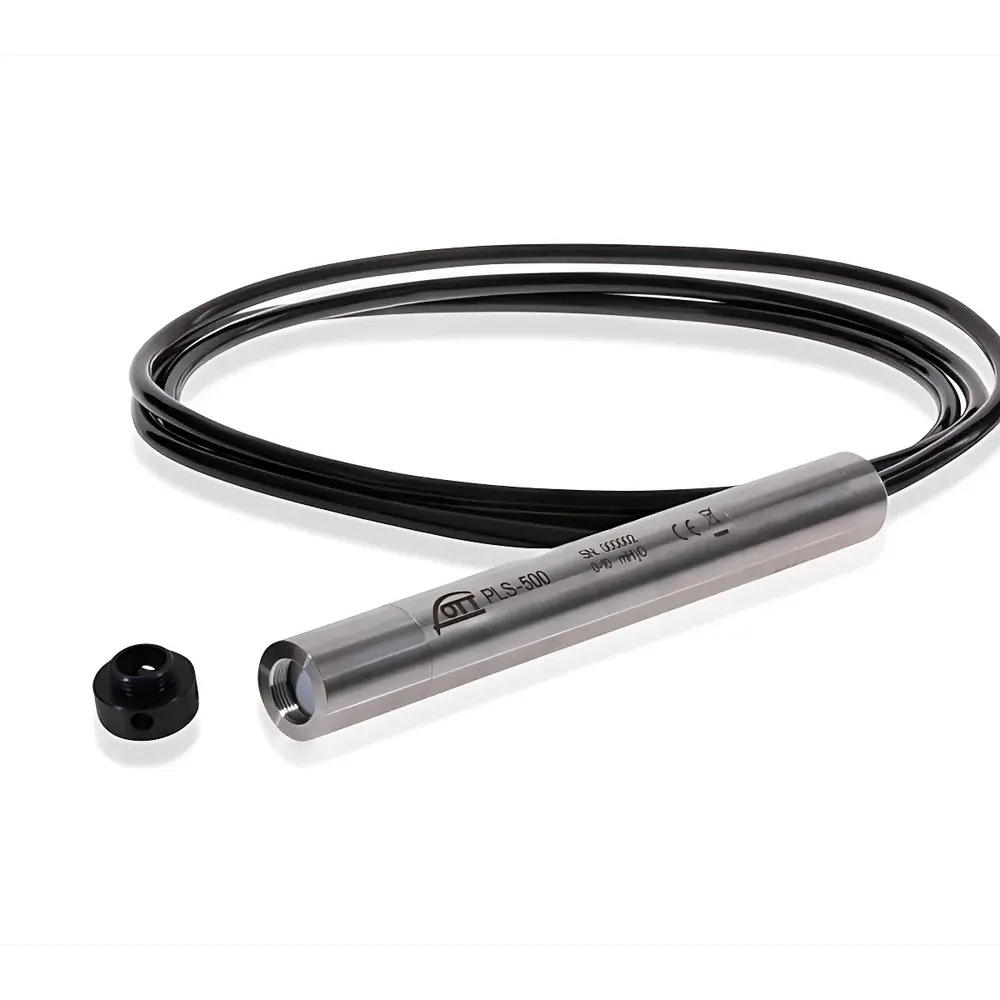
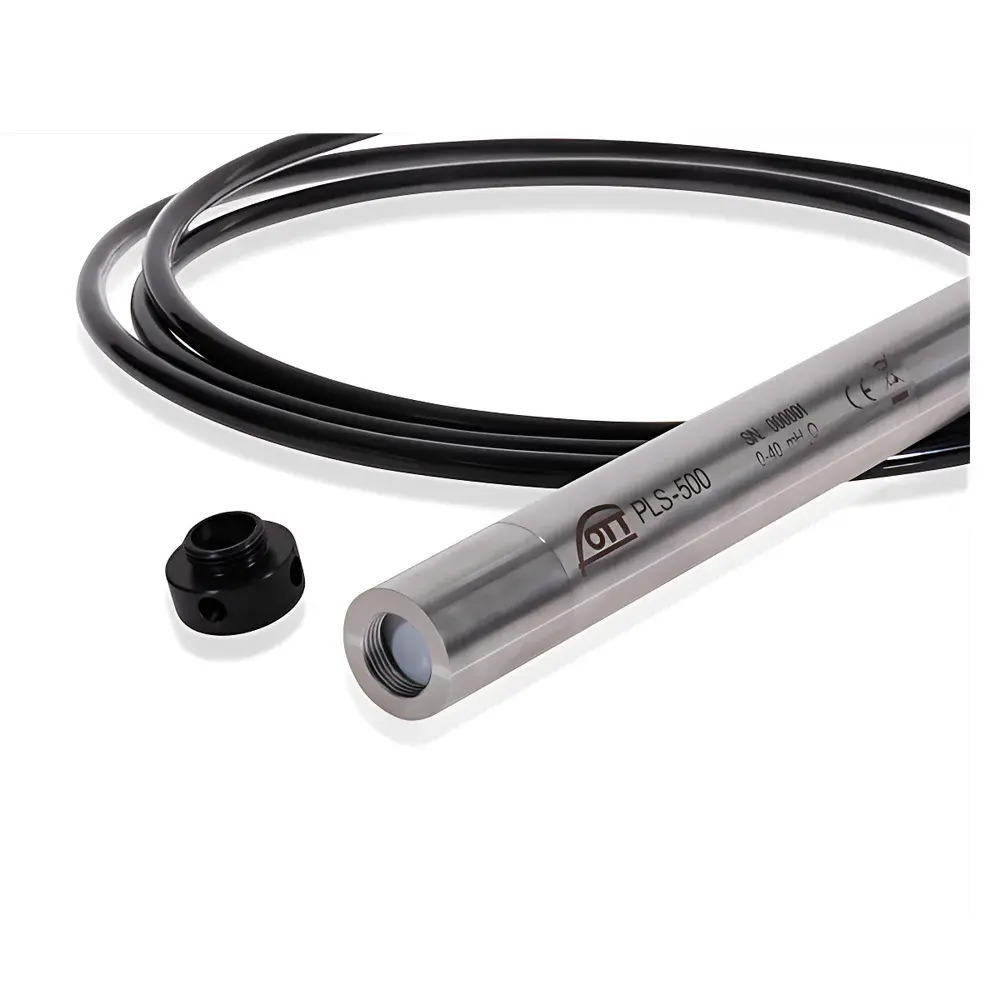
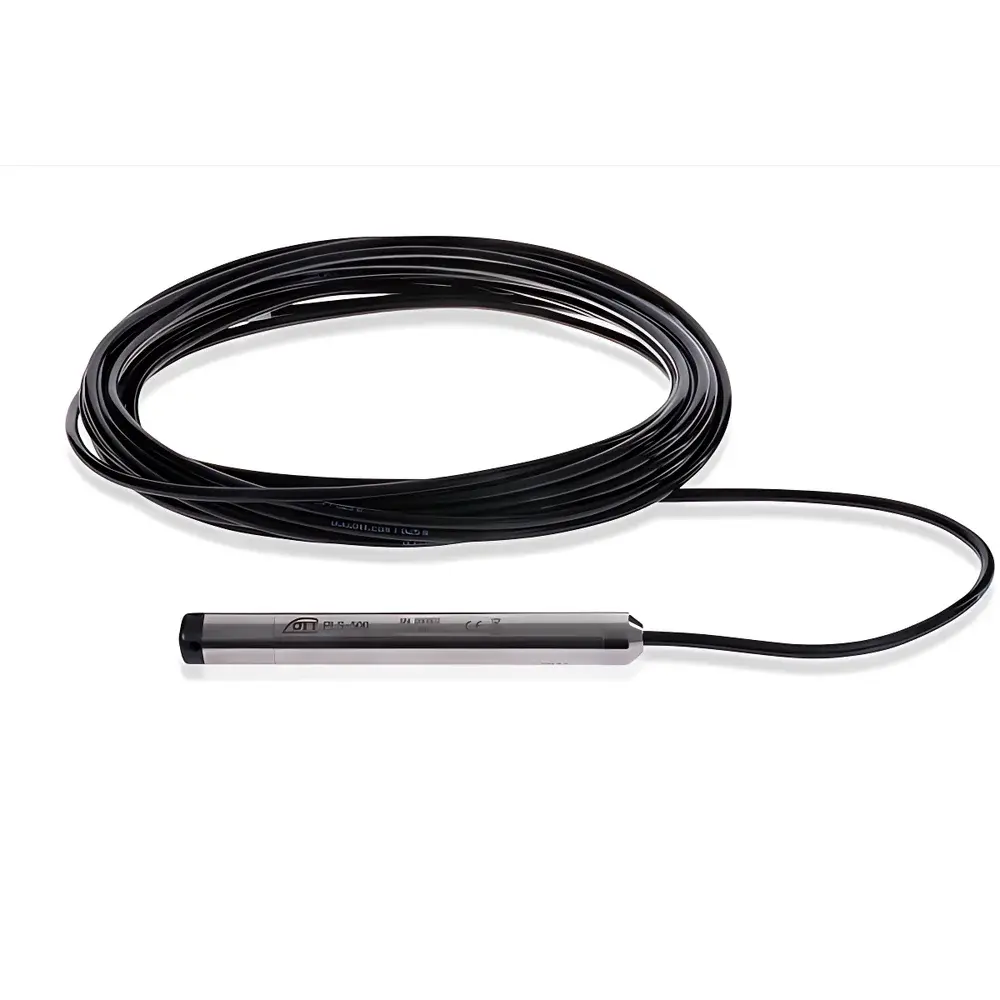
HACH OTT PLS 500 Pressure Transducer Level Sensor
| Brand | OTT Hydromet |
|---|---|
| Origin | Germany |
| Model | OTT PLS 500 |
| Interface Options | RS485 (SDI-12 protocol, Modbus RTU) or SDI-12 |
| Output Parameters | Water level, water temperature, internal sensor humidity, sensor orientation |
| Compensation | Automatic barometric pressure, temperature, water density, altitude, and gravitational acceleration (latitude-dependent g-correction) |
| Sensor Type | Dry ceramic capacitive pressure transducer with laser-welded hermetic housing |
| Enclosure Rating | IP68 submersible long-term |
| Cable | UV- and hydrolysis-resistant polyurethane jacketed cable with integrated moisture barrier |
Overview
The HACH OTT PLS 500 Pressure Transducer Level Sensor is an engineered solution for high-stability, long-term hydrostatic water level monitoring in both surface and groundwater applications. It operates on the differential pressure principle: a dry ceramic capacitive pressure sensor simultaneously measures absolute water pressure at the sensor depth and ambient atmospheric pressure via an integrated vented capillary tube. The microprocessor subtracts these two values to compute true gauge pressure—free from barometric drift—and converts it to water column height using real-time compensation algorithms. Unlike traditional vented sensors that rely solely on static atmospheric reference, the PLS 500 dynamically corrects for variations in water density (via measured temperature), local gravitational acceleration (using embedded latitude/altitude lookup and calculation), and thermal expansion effects within the sensing element. This ensures metrological traceability and measurement stability over multi-year deployments under fluctuating environmental conditions.
Key Features
- Dry ceramic capacitive pressure sensing element with laser-welded hermetic stainless steel housing, eliminating oil-filled cavities and associated long-term drift or thermal hysteresis.
- Integrated vented capillary tube with hydrophobic membrane filter, enabling continuous, maintenance-free atmospheric reference without condensation ingress or clogging.
- Onboard microprocessor executing real-time compensation for water temperature, density, local gravity (g-value correction per WGS84 ellipsoid model), and sensor orientation (3-axis tilt detection).
- IP68-rated submersible construction with UV- and hydrolysis-resistant polyurethane cable; certified for continuous immersion up to 100 m water column (optional extended ranges available).
- Dual digital interface support: configurable SDI-12 or RS485 output with selectable Modbus RTU or SDI-12 protocol—enabling interoperability with most industry-standard data loggers (e.g., Campbell Scientific CR series, Onset HOBO, Delta-T DL6).
- Simultaneous output of calibrated water level (m), water temperature (°C), internal sensor humidity (%RH), and 3-axis orientation (pitch/roll/yaw)—supporting diagnostic integrity checks and installation verification.
Sample Compatibility & Compliance
The OTT PLS 500 is designed for direct immersion in freshwater, brackish water, and low-conductivity groundwater environments. Its chemically inert ceramic diaphragm and passivated stainless steel body resist corrosion from sulfides, nitrates, and common aquifer minerals. It complies with ISO 4097:2021 (hydrological instrumentation — pressure transducers for water level measurement) and meets the functional requirements of ASTM D4043 (Standard Guide for Selection of Instruments for Measuring Ground-Water Levels). For regulatory reporting contexts, its output traceability supports GLP-compliant data acquisition when paired with Part 11–compliant logging systems. No calibration drift exceeding ±0.1% FS/year is observed under controlled field validation per USGS NWIS protocols.
Software & Data Management
Raw sensor outputs are transmitted as ASCII-encoded SDI-12 frames or Modbus RTU registers, allowing seamless integration into SCADA, telemetry, or cloud-based hydrometric platforms (e.g., HACH DataTrac, OTT ecoLog, or custom MQTT/IoT architectures). Firmware updates are performed in-field via serial command set; configuration parameters—including damping time constant, output resolution (0.1 mm or 1 mm), and tilt alarm thresholds—are stored in non-volatile memory. All measurements include embedded timestamps and CRC-16 error checking. Audit trails for configuration changes and self-diagnostic logs (e.g., humidity excursion alerts, orientation anomalies) are accessible via query commands—facilitating remote QA/QC and regulatory audit readiness.
Applications
- Long-term groundwater level monitoring in observation wells (including confined and unconfined aquifers) per USGS NWIS and EU WFD reporting standards.
- Surface water stage measurement in rivers, reservoirs, and tidal estuaries where barometric pressure fluctuations exceed ±5 hPa daily.
- Levee and dam seepage monitoring, where differential head gradients must be resolved to ≤1 mm accuracy across seasonal temperature swings.
- Climate research networks requiring multi-decadal consistency, such as NOAA’s COOP network or UNESCO IHP benchmark sites.
- Smart irrigation control systems integrating real-time aquifer response with weather station inputs for predictive pumping optimization.
FAQ
How does the PLS 500 compensate for changes in local gravity?
It applies latitude- and altitude-dependent gravitational acceleration correction using the WGS84 ellipsoidal model, derived from onboard GPS-derived coordinates or user-configured site parameters.
Can the sensor operate in seawater?
Yes, with optional titanium housing and enhanced cathodic protection; standard stainless steel models are rated for salinities up to 15 ppt without accelerated corrosion.
Is barometric compensation truly automatic?
Yes—the vented capillary provides continuous, passive atmospheric reference; no external barometer or manual offset entry is required.
What is the typical calibration interval?
Factory calibration is NIST-traceable; field recalibration is recommended every 24 months for critical applications or after mechanical shock events.
Does the SDI-12 interface support multi-drop configurations?
Yes—up to 62 sensors can share a single SDI-12 bus with individually addressable polling, reducing cabling complexity in dense monitoring arrays.







