
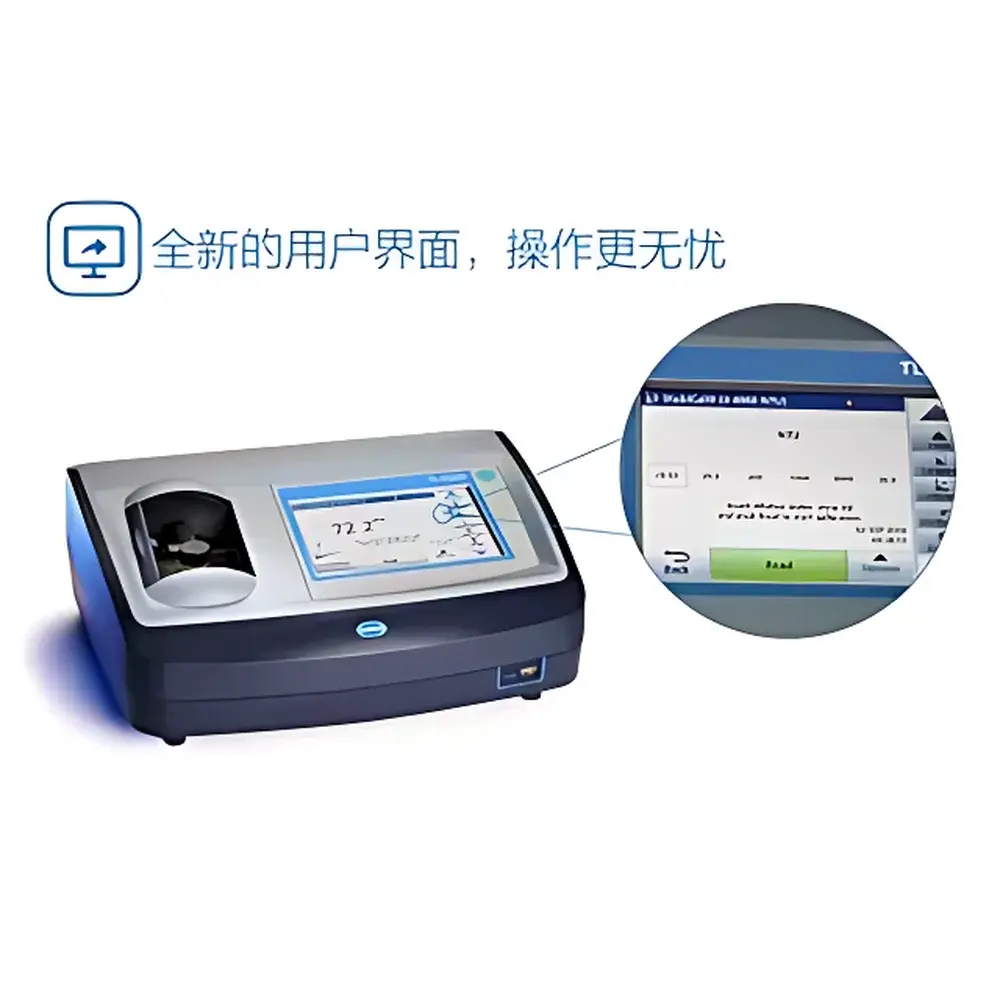
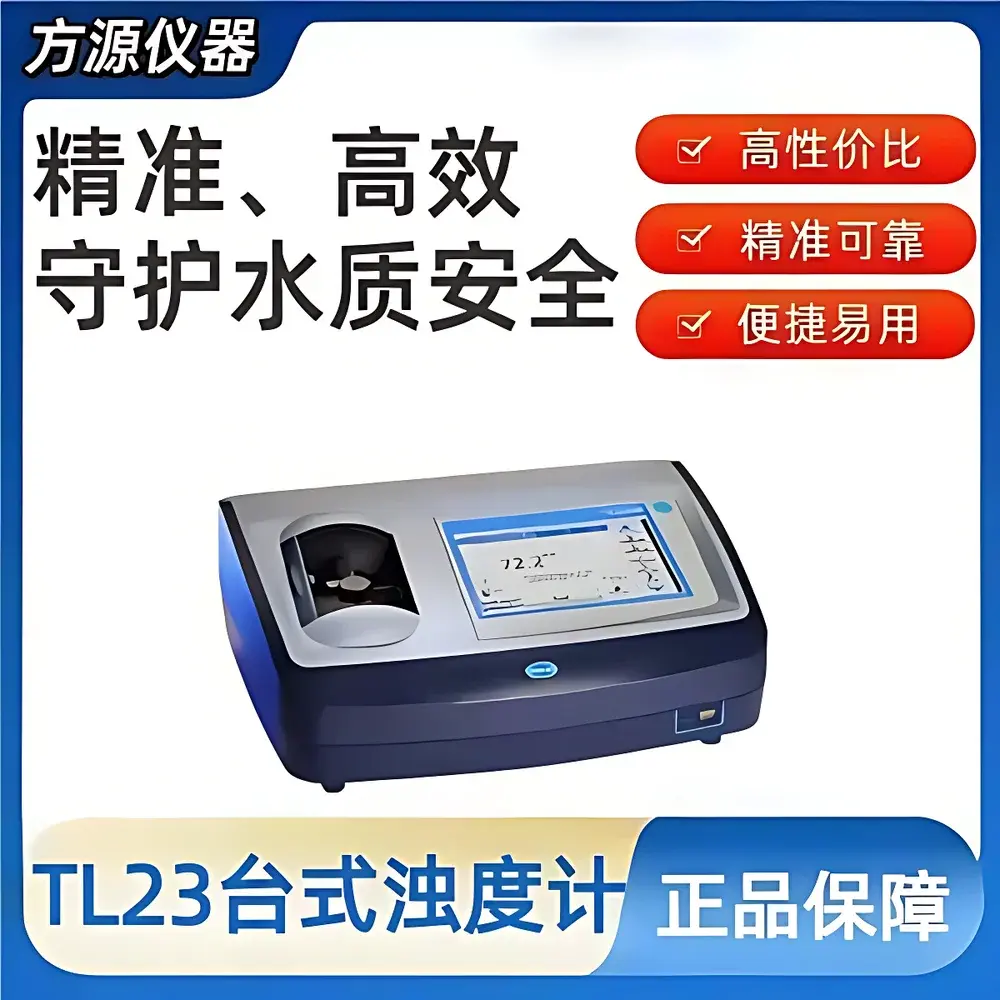
HACH TL23 Series Benchtop Turbidimeter
| Brand | HACH |
|---|---|
| Origin | USA |
| Model | TL23 Series |
| Measurement Principle | Nephelometric Turbidity (90° light scatter, compliant with ISO 7027 and EPA Method 180.1) |
| Light Source | Tungsten halogen lamp (stable output, 860 ± 30 nm) |
| Detection Range | 0.001–4000 NTU (auto-ranging) |
| Resolution | 0.001 NTU (at low range), 1 NTU (at high range) |
| Accuracy | ±2% of reading or ±0.01 NTU (whichever is greater) |
| Repeatability | <0.5% RSD |
| Sample Cell | Standard 25-mm round glass vials (also compatible with 50-mm square cells and flow-through cells) |
| Calibration | Up to 6-point user-defined calibration with traceable StablCal® standards |
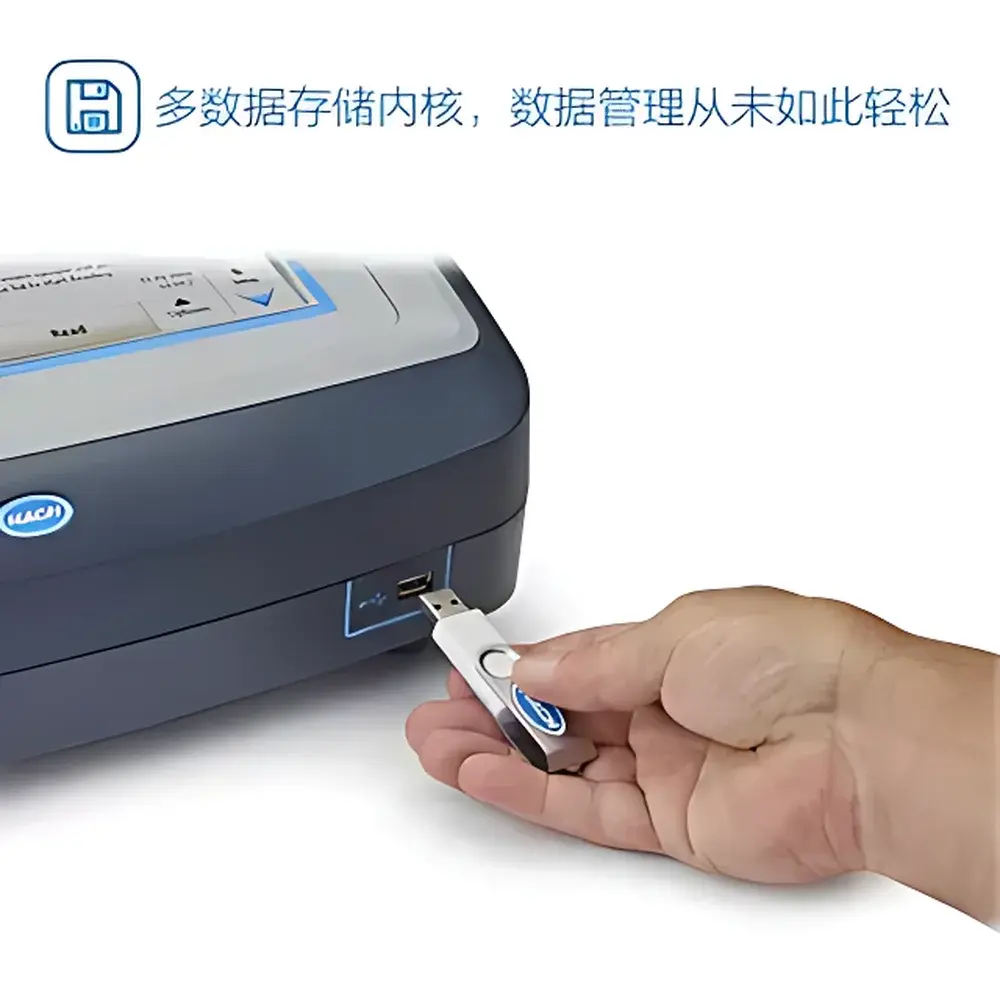
| Data Storage | 1000+ measurement records with timestamp, operator ID, and calibration history |
| Connectivity | USB and optional RS-232 |
| Compliance | Meets ISO 7027:2016, EPA 180.1, ASTM D6508, and GLP/GMP data integrity requirements |
Overview
The HACH TL23 Series Benchtop Turbidimeter is a precision-engineered nephelometric instrument designed for reliable, repeatable turbidity measurement in drinking water, wastewater, environmental monitoring, and industrial process control laboratories. Operating on the principle of 90° scattered light detection at 860 nm—per ISO 7027:2016 and EPA Method 180.1—the TL23 eliminates color interference and ensures robust performance across diverse sample matrices. Its tungsten halogen light source delivers stable spectral output over extended operational lifetimes, minimizing drift and reducing recalibration frequency. The instrument’s optical path is sealed and temperature-compensated, mitigating thermal artifacts during high-throughput analysis. Unlike portable or single-range alternatives, the TL23 features true auto-ranging capability from 0.001 to 4000 NTU, enabling seamless transition between ultra-low turbidity validation (e.g., filtered drinking water) and highly suspended industrial effluents—without manual range switching or sensor reconfiguration.
Key Features
- ISO 7027-compliant 90° nephelometric detection with 860 nm LED-equivalent tungsten halogen source for minimal chromatic interference
- Full auto-ranging optics (0.001–4000 NTU) with dynamic gain adjustment and real-time signal optimization
- Integrated temperature sensor and algorithmic compensation for refractive index variations across 5–40 °C
- Multi-point calibration support (up to six points) using NIST-traceable StablCal® standards; calibration verification log retained per measurement
- Rugged, chemically resistant sample chamber accommodating 25-mm round vials, 50-mm square cuvettes, and optional flow-through cells for continuous monitoring integration
- Onboard data management with timestamped storage (>1000 records), operator ID fields, and audit-ready calibration history
Sample Compatibility & Compliance
The TL23 accepts standard 25-mm round glass vials (10 mL capacity) as well as larger 50-mm square cells for high-turbidity or particulate-laden samples. Its optical design accommodates colored, aerated, or mildly viscous aqueous matrices without requiring dilution or filtration—provided particles remain in suspension and do not settle during the 10-second measurement cycle. All measurements adhere to ISO 7027:2016 (turbidimetric method for drinking water) and EPA Method 180.1 (for regulatory reporting in U.S. public water systems). Instrument firmware supports 21 CFR Part 11-compliant user access controls, electronic signatures, and immutable audit trails when paired with HACH’s LabStation software—meeting GLP and GMP documentation requirements for certified environmental labs.
Software & Data Management
The TL23 interfaces natively with HACH’s LabStation software via USB or RS-232, enabling automated data export, report generation (PDF/CSV), and centralized instrument fleet management. LabStation enforces role-based permissions, electronic signature workflows, and full audit trail capture—including all calibration events, method changes, and result modifications. Raw intensity values (in mV) are accessible for method development and uncertainty analysis. Data files include embedded metadata: instrument serial number, firmware version, calibration certificate IDs, ambient temperature, and operator credentials—ensuring full traceability for third-party audits or regulatory submissions under ISO/IEC 17025.
Applications
- Drinking water treatment: Verification of filtration efficiency, coagulation/flocculation optimization, and compliance with WHO/EPA turbidity limits (<0.3 NTU)
- Wastewater discharge monitoring: Final effluent verification per NPDES permits and ISO 10707 protocols
- Pharmaceutical water systems: PW, WFI, and purified water qualification per USP <<731> and EU Annex 1
- Industrial cooling water: Early detection of biofilm formation or corrosion particulates
- Environmental field lab support: Calibration transfer and reference verification for portable turbidimeters used in watershed studies
FAQ
Does the TL23 require annual factory recalibration?
No—routine calibration using StablCal® standards satisfies ISO/IEC 17025 requirements. Annual verification against primary reference standards is recommended but not mandatory unless specified by internal QA protocols.
Can the TL23 measure Formazin-based and AMCO-AE standards interchangeably?
Yes—the instrument applies standardized conversion algorithms per ISO 7027 and automatically reports results in NTU regardless of standard type, ensuring metrological equivalence.
Is the optical module serviceable in the field?
The sealed optical assembly is not user-serviceable; however, HACH-certified technicians can perform alignment verification and lamp replacement at authorized service centers with traceable calibration certificates.
How does the TL23 handle bubbles or surface foam?
The instrument includes a programmable delay function (0–60 s) to allow bubble dissipation prior to measurement initiation, and its 90° detector geometry inherently rejects surface reflections.
What data security features support FDA 21 CFR Part 11 compliance?
LabStation implements electronic signatures, user authentication (password + role assignment), audit trail encryption, and write-protected archival—fully satisfying Part 11 Subpart B requirements for electronic records and signatures.







