
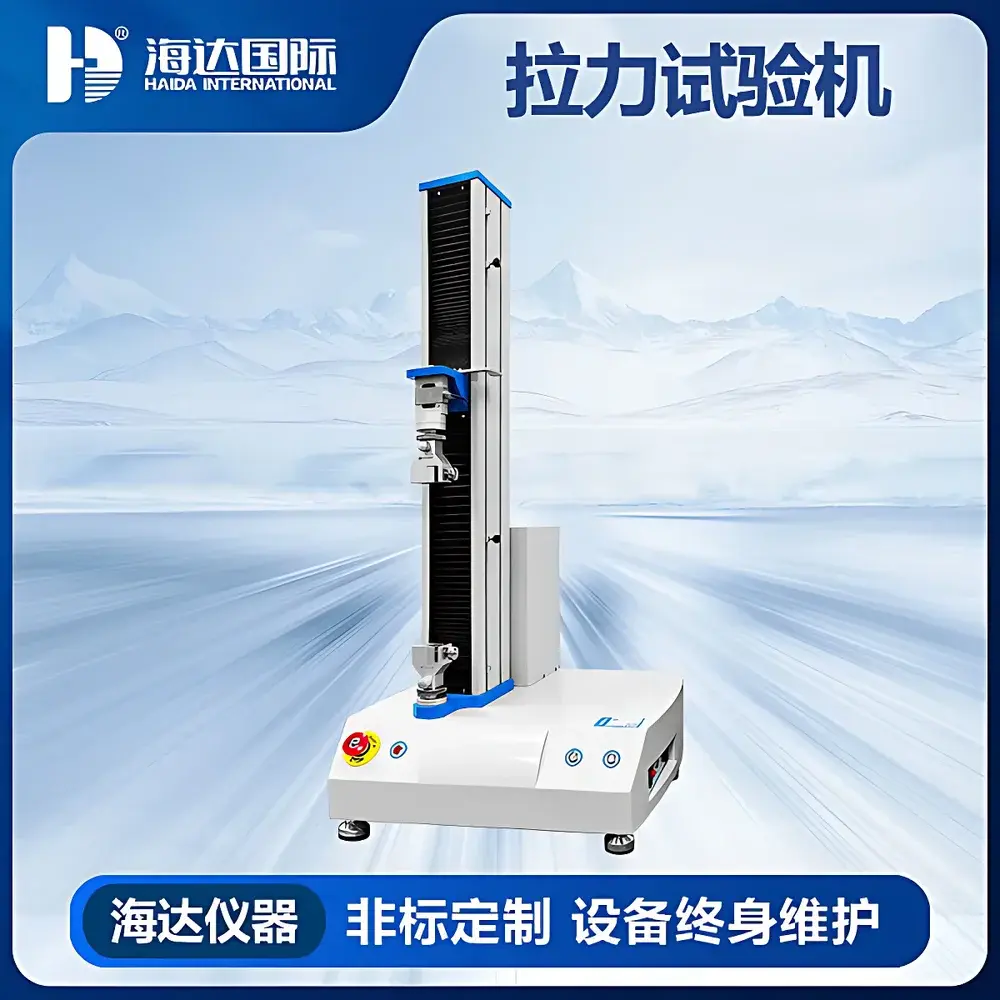
HAIDA HD-B609C-S Computer-Controlled Servo-Driven Tensile Testing Machine
| Brand | HAIDA INTERNATIONAL |
|---|---|
| Origin | Guangdong, China |
| Manufacturer Type | Direct Manufacturer |
| Product Category | Domestic (China-Made) |
| Model | HD-B609C-S |
| Instrument Type | Electronic Tensile Tester |
| Maximum Test Load | 5 kgf (49.05 N) Load Cell |
| Force Measurement Range | 1 g to 5 kgf (0.0098 N to 49.05 N) |
| Force Resolution | 1/250,000 FS |
| Load Accuracy | ≤ ±0.5% of reading |
| Crosshead Travel | 900 mm (excluding fixtures) |
| Speed Range | 0.1–500 mm/min (adjustable) |
| Drive System | Panasonic AC servo motor (400 W) + servo driver + Mutoh planetary gear reducer |
| Transmission | Precision ground ball screw |
| Control Interface | PC-based Windows software (no touchscreen) |
| Compliance Standards | GB/T 16491, GB/T 4851, GB/T 2792, GB/T 8808, GB/T 13022, JIS K 6854, DIN 53357, ISO 8510, ISO 29862 |
| Dimensions (L×W×H) | 515 × 520 × 1250 mm |
| Weight | ~68 kg |
| Power Supply | 1Ø, AC 220 V / 50 Hz, 500 W |
Overview
The HAIDA HD-B609C-S is a precision-engineered, computer-controlled servo-driven tensile testing machine designed for high-reproducibility mechanical characterization of low-force, low-adhesion materials. It operates on the fundamental principle of uniaxial force-displacement measurement: a calibrated load cell transduces tensile or peel forces applied via a vertically actuated crosshead, while an encoder-resolved ball screw system ensures traceable displacement control. Unlike hydraulic or pneumatic testers, this electromechanical platform delivers superior linearity, minimal hysteresis, and dynamic response stability across its full speed range (0.1–500 mm/min), making it especially suited for delicate interfacial tests—such as 180° and 90° peel, tack, and shear adhesion—where sub-gram force resolution and consistent velocity profiles are critical to data integrity.
Key Features
- Panasonic 400 W AC servo motor paired with a Mutoh low-noise planetary gearbox ensures smooth, vibration-damped motion control—essential for minimizing signal noise during low-force (<100 mN) measurements.
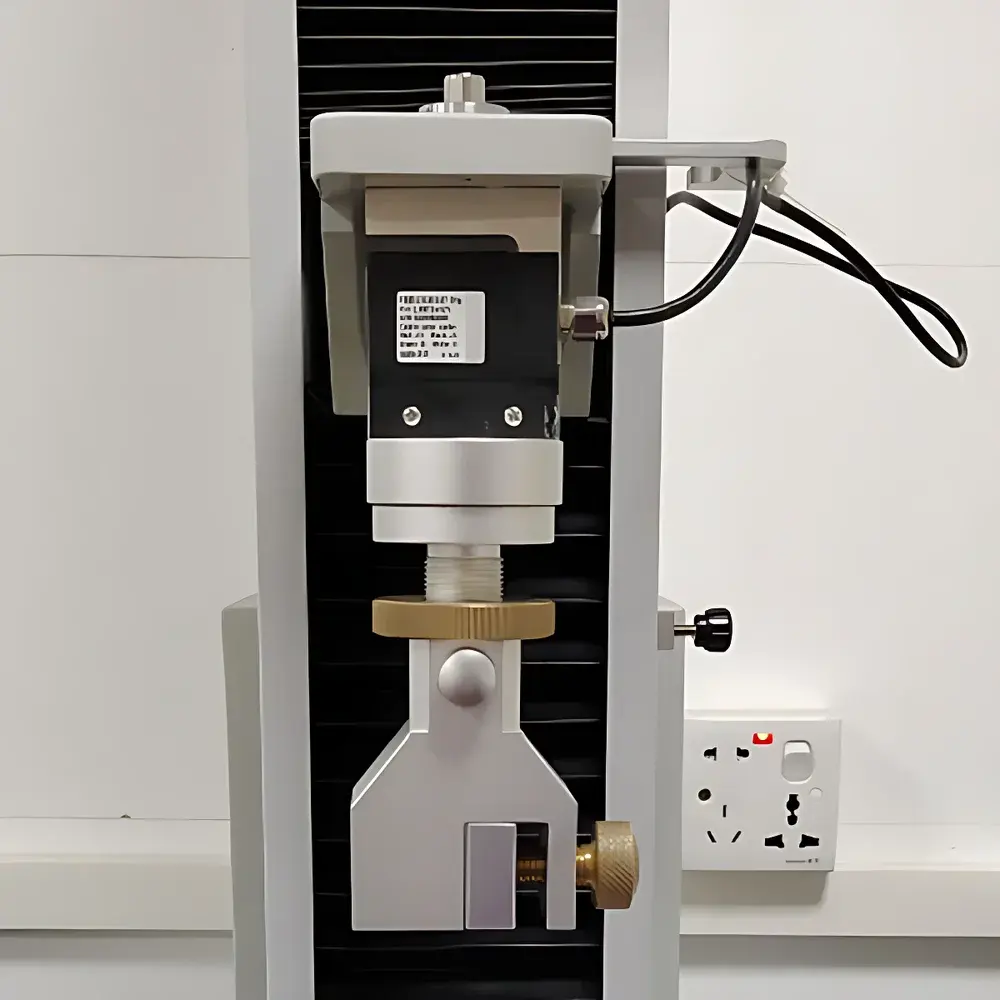
- High-resolution 5 kgf (49.05 N) load cell with 1/250,000 full-scale resolution and ≤±0.5% accuracy enables reliable quantification of adhesive strength in thin films, release liners, protective membranes, and battery separator materials.
- Dedicated low-force architecture: elimination of integrated touchscreens reduces electromagnetic interference and thermal drift; all operation and data acquisition occur via dedicated Windows-based software running on an external host PC.
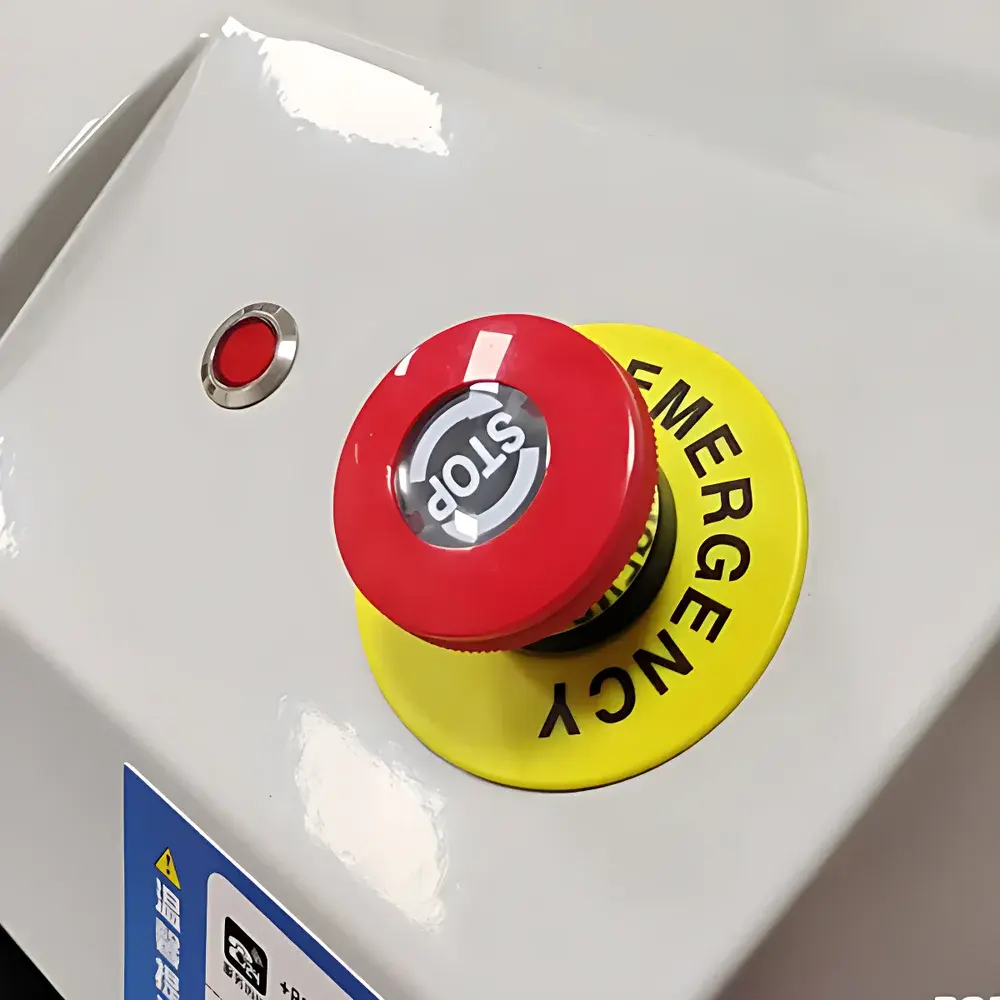
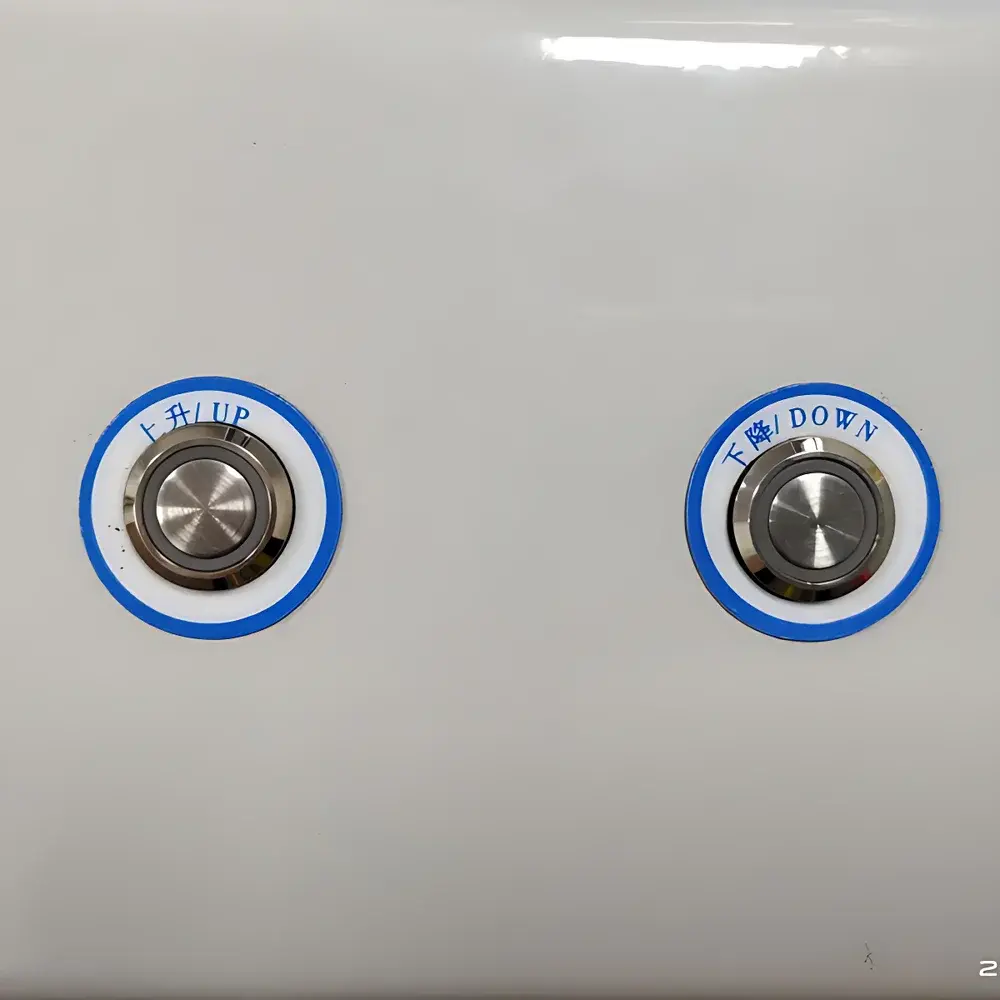
- Manual crosshead jog controls with tactile indicators allow rapid, safe positioning without software dependency—critical during fixture alignment or sample preloading.
- Modular mechanical design accommodates rapid fixture swaps, including standard 180° aluminum flat grips, 90° peel fixtures, ring-tack clamps, and custom-machined steel test plates (1.5 mm thickness) compliant with ISO 29862 and ASTM D3330.
Sample Compatibility & Compliance
The HD-B609C-S is validated for testing flexible, thin-gauge substrates where conventional high-capacity testers introduce excessive compliance or inertia artifacts. It supports standardized evaluation of pressure-sensitive adhesives (PSAs), release coatings, lithium-ion battery separators, medical transdermal patches, and optical films per globally recognized protocols—including GB/T 4851 (peel adhesion), GB/T 2792 (bond strength), ISO 8510-2 (peel resistance), and JIS K 6854 (adhesive tape testing). Its mechanical design and firmware meet essential requirements for GLP-aligned laboratories: audit-trail-enabled software logging, user-access-level permissions, and raw-data export in CSV and XML formats compatible with LIMS integration. While not inherently 21 CFR Part 11 compliant out-of-the-box, the system supports validation documentation packages for regulated environments upon request.
Software & Data Management
Control and analysis are performed using HAIDA’s proprietary Windows-native application, distributed on a preloaded 1 GB USB drive. The interface provides real-time force–displacement curve visualization, automatic peak detection, modulus calculation (secant/tangent), and multi-curve overlay for comparative analysis. All test parameters—including speed ramping profiles, dwell times, and trigger thresholds—are programmable and stored with timestamped metadata. Raw data files include full sensor sampling history at ≥100 Hz, enabling post-hoc reanalysis. Export options support SI-unit consistency (N, mN, mm, mm/min) and include PDF reports with configurable headers, calibration certificates, and signature fields for QA sign-off.
Applications
This instrument serves QC/QA labs in adhesive manufacturing, flexible packaging R&D, electronics materials development, and medical device production. Typical use cases include: quantifying peel initiation force of silicone-coated release liners; measuring residual tack after aging of acrylic PSAs; evaluating delamination resistance of multilayer barrier films; validating bond integrity of electrode laminates in pouch-cell battery assembly; and assessing shear holding time of transdermal drug delivery patches under controlled temperature/humidity conditions. Optional accessories—such as manual roller applicators (25 mm width), custom steel test plates, and environmental chamber adapters—extend method flexibility without compromising metrological traceability.
FAQ
What is the minimum measurable force with the 5 kgf load cell?
The system resolves down to 1 g (9.8 mN) with full-scale resolution of 1/250,000—equivalent to ~0.2 mN minimum discernible change.
Can the HD-B609C-S be used for compression or flexural testing?
No—it is mechanically optimized for uniaxial tension and peel modes only; bending or compression requires alternative fixtures and structural reinforcement not provided in standard configuration.
Is the software compatible with Windows 11 and 64-bit systems?
Yes—the current software version supports Windows 10 and 11 (64-bit); driver signing and .NET Framework 4.8 dependencies are included in the installation package.
Does HAIDA provide calibration certification with traceability to NIM or other national standards?
Each unit ships with a factory calibration certificate traceable to China’s National Institute of Metrology (NIM); ISO/IEC 17025-accredited third-party calibration services are available upon request.
How is mechanical maintenance handled for the ball screw and gearbox?
The ground ball screw and Mutoh planetary reducer are sealed and lubricated for life under normal lab conditions; routine inspection intervals are specified in the maintenance manual (Section 4.2), with grease replacement recommended every 10,000 hours of operation.
Related Products



