
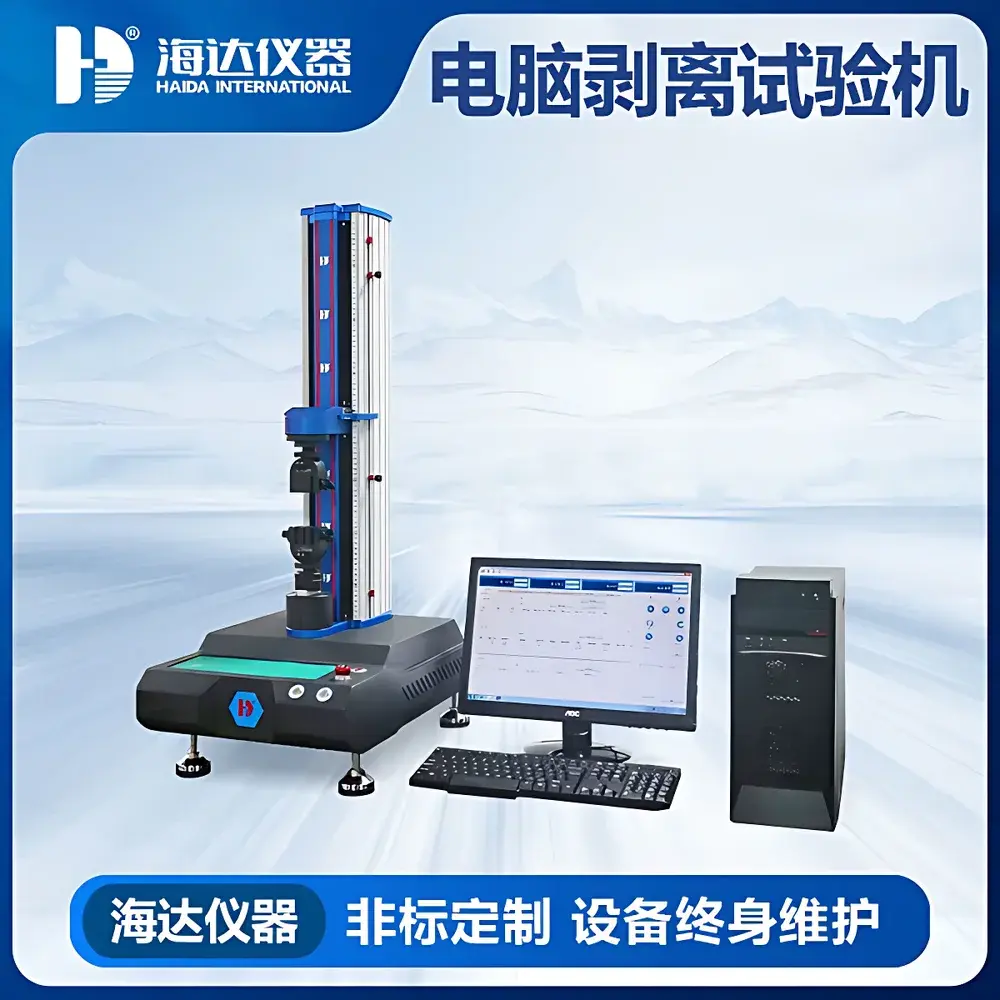
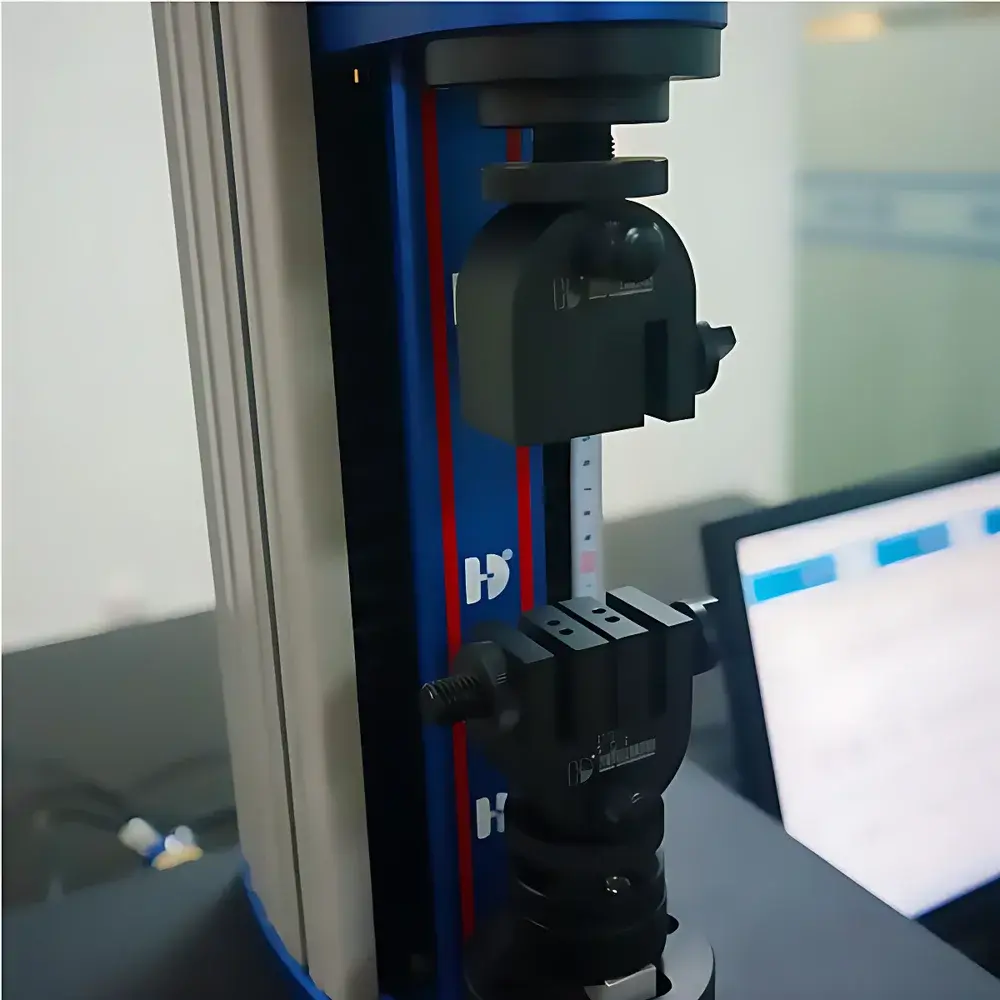
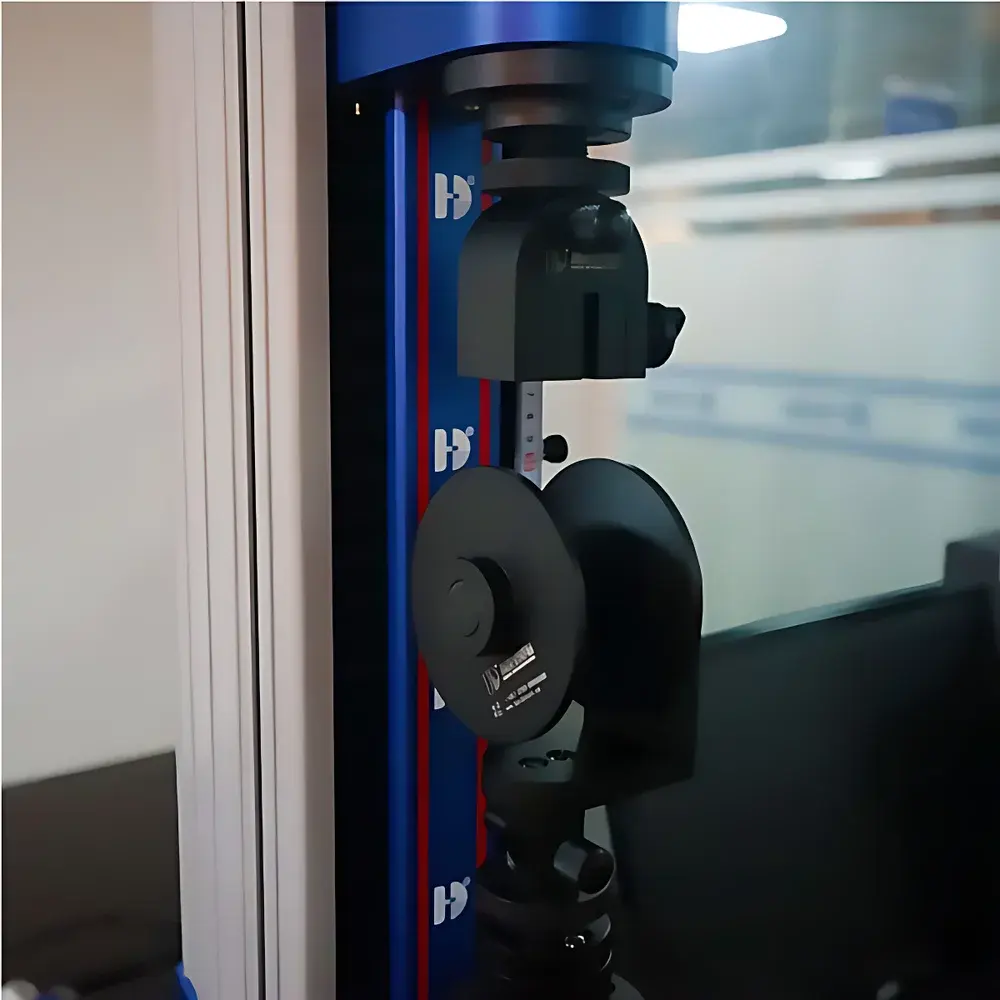
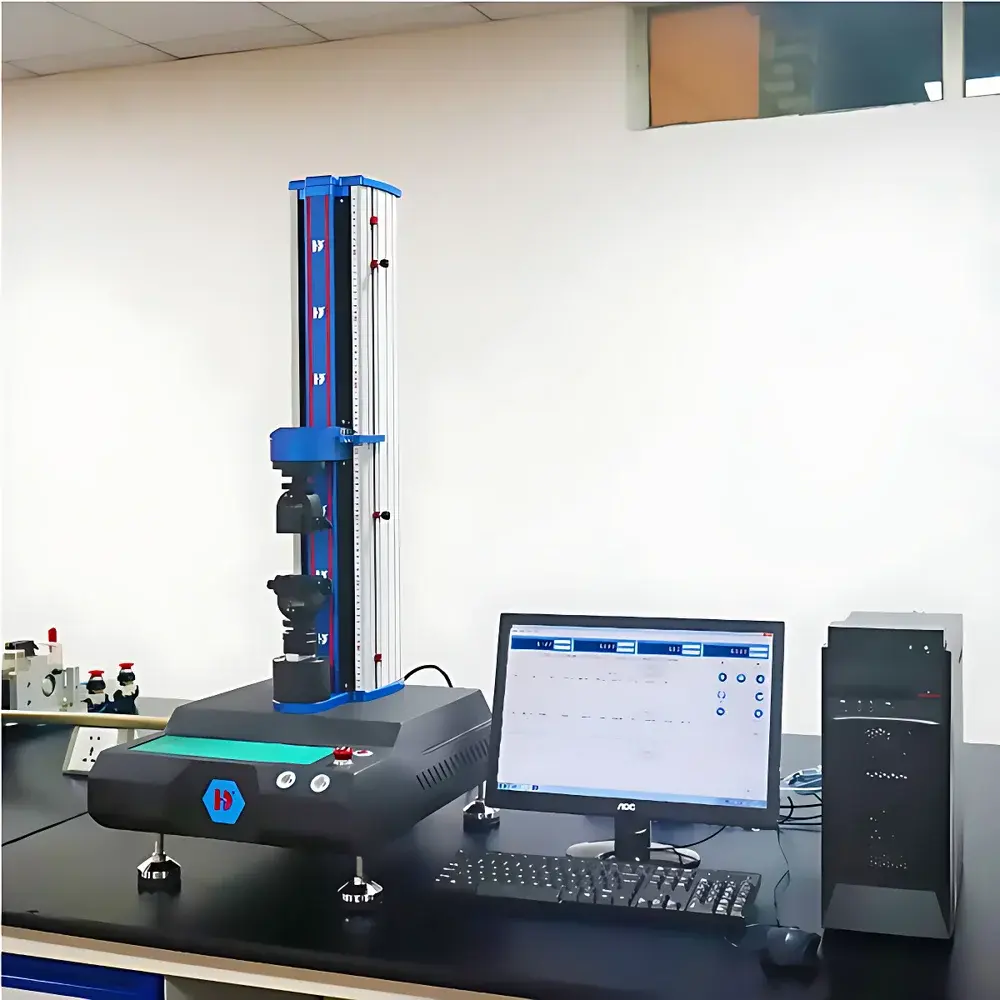
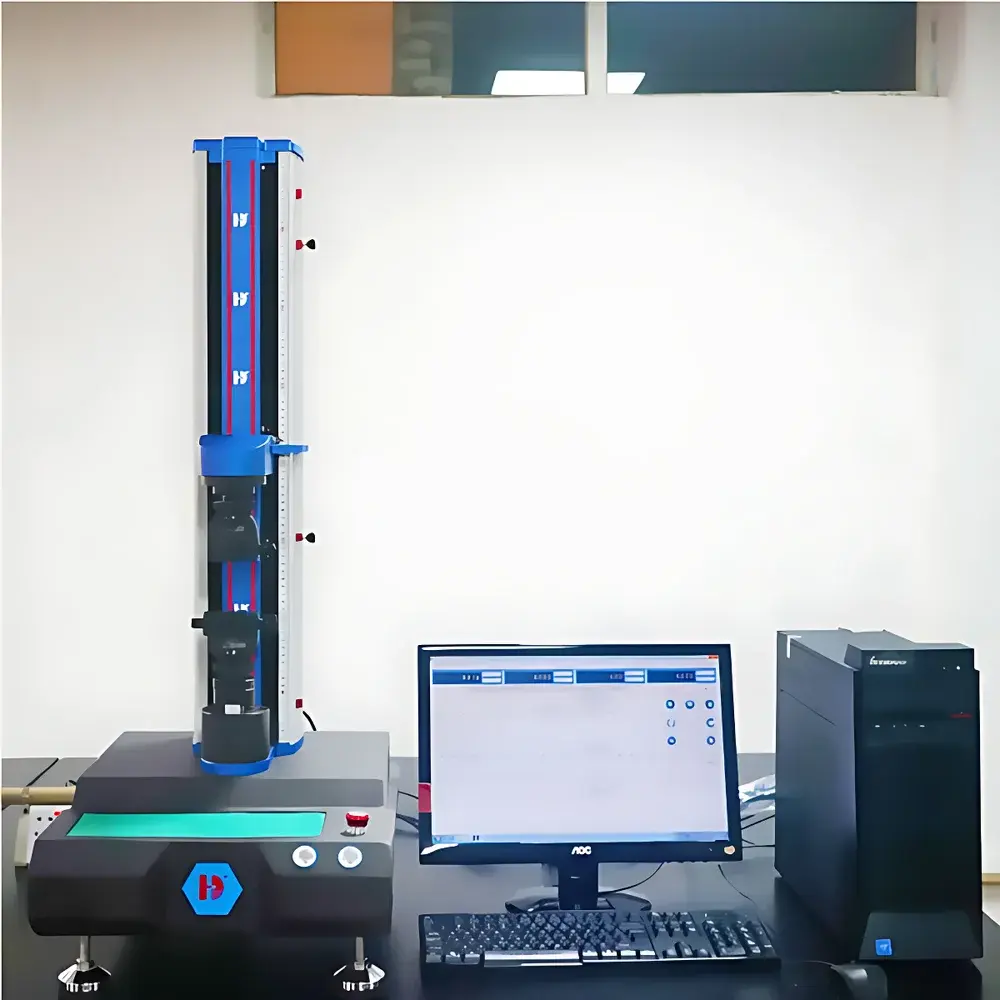
HAIDA HD-C522 Computer-Controlled Release Force Tester for Pressure-Sensitive Adhesives
| Brand | HAIDA INTERNATIONAL |
|---|---|
| Origin | Guangdong, China |
| Manufacturer Type | OEM/ODM Manufacturer |
| Country of Origin | China |
| Model | HAIDA HD-C522 Computer-Controlled Release Force Tester for Pressure-Sensitive Adhesives |
| Sensor Capacity | 10 N / 20 N / 50 N |
| Motor | 400 W Servo Motor |
| Driver | 400 W Servo Drive |
| Lead Screw | Precision Ball Screw |
| Control Mode | PC-Based Windows OS Interface |
| Adjustable Speed Range | 0.1–1000 mm/min |
| Maximum Travel | 500 mm (without fixtures) |
| Load Resolution | 1/250,000 FS |
| Load Accuracy | ≤ ±0.5% of reading |
| Force Measurement Range | 0.01–50 N |
| Unit Options | gf, kgf, N, kN, lbf, tonf |
| Dimensions (L×W×H) | 400 × 600 × 1000 mm |
| Weight | ~68 kg |
| Power Supply | 1∮ AC 220 V |
| Total Power Consumption | ~500 W |
| Standard Test | 180° Peel Release Force |
| Compliance | GB/T 2792–2014, ASTM D3330–22, GB/T 25256–2010, ISO 8510-2:2019 |
Overview
The HAIDA HD-C522 Computer-Controlled Release Force Tester is a precision electromechanical system engineered for quantitative measurement of release force—also known as peel adhesion or debonding force—of pressure-sensitive adhesive (PSA) materials including silicone-coated release liners, label backing papers, and protective films. It operates on the principle of controlled 180° peel separation between a standardized stainless steel test substrate and the adhesive-coated sample under defined tension, displacement, and environmental conditions. The instrument complies with internationally recognized test methodologies for release performance evaluation in packaging, labeling, medical device manufacturing, and electronics assembly industries. Its modular architecture supports traceable, repeatable, and auditable testing workflows aligned with GLP and GMP laboratory practices.
Key Features
- High-resolution load sensing with selectable transducers (10 N, 20 N, or 50 N full-scale), enabling optimal signal-to-noise ratio across low-force (<1 N) and mid-range peel applications.
- Precision motion control via Panasonic servo motor and integrated servo drive, delivering stable velocity profiles from 0.1 mm/min to 1000 mm/min with closed-loop feedback and <±0.2 mm/min speed tolerance at nominal setpoints.
- Ball-screw-driven crosshead with 0.5-class positional accuracy and backlash-free transmission, minimizing mechanical hysteresis during dynamic peel initiation and steady-state force acquisition.
- PC-based control architecture using HAIDA’s proprietary “OriginPower” software—certified for multi-language operation (English, Simplified Chinese, Traditional Chinese) and compliant with FDA 21 CFR Part 11 requirements for electronic records and signatures when configured with audit trail and user access controls.
- Integrated safety subsystems including dual mechanical limit switches, programmable overload cutoff, automatic return-to-home function, and emergency stop circuitry meeting IEC 61800-5-2 functional safety guidelines.
- Ergonomic design elements: powder-coated steel enclosure for corrosion resistance; accordion-style acoustic shielding to dampen motor and gear noise; manual jog buttons for rapid vertical positioning without PC interaction.
Sample Compatibility & Compliance
The HD-C522 accommodates standard test specimens per ISO 8510-2 and ASTM D3330, including 25 mm wide strips adhered to mirror-finish stainless steel substrates (150 mm × 50 mm × 1.5 mm, Ra ≈ 50 ± 25 nm). Optional fixtures support alternative peel geometries (e.g., 90°, T-peel) and specialized substrates such as PET, PP, or aluminum foil. All hardware—including the calibrated 2000 g rubber-coated roller (Shore A 80 ± 5, Ø85 ± 2.5 mm, width 45 ± 1.5 mm) and 180° peel jig—meets dimensional tolerances specified in GB/T 2792–2014 and ISO 27587:2017. Environmental conditioning requirements (23 ± 1 °C, 50 ± 5 % RH) are consistent with ISO 291 and ASTM E171, ensuring thermohygrometric stability prior to test execution.
Software & Data Management
OriginPower software provides real-time force-displacement curve visualization, automatic peak detection, statistical summary (mean, SD, CV%), and export to CSV, PDF, or XML formats. Raw data files include embedded metadata: operator ID, timestamp, environmental log (if external sensors are connected), fixture ID, sensor calibration certificate number, and test parameter configuration. Audit trail functionality records all user actions—including method edits, result overrides, and report generation—with immutable timestamps and digital signature verification. Data integrity safeguards include write-once storage mode, encrypted database backups, and optional integration with LIMS platforms via ODBC or RESTful API.
Applications
- Release liner qualification for self-adhesive labels used in pharmaceutical blister packaging and medical device pouches.
- Quality control of silicone release coatings applied to paper, film, or foil substrates in flexible packaging supply chains.
- Development and validation of low-tack PSA formulations for wearable electronics, transdermal patches, and removable signage.
- Comparative analysis of aging effects (thermal, UV, humidity) on release performance per ASTM D1876 and ISO 11339.
- Supporting regulatory submissions requiring documented adherence to USP <1207>, ISO 15378, and Annex 11-compliant testing procedures.
FAQ
What standards does the HD-C522 comply with for release force testing?
It supports GB/T 2792–2014, ASTM D3330–22, GB/T 25256–2010, ISO 8510-2:2019, and can be configured to meet additional regional or industry-specific protocols upon request.
Can the system perform tests other than 180° peel?
Yes—optional fixtures enable 90° peel, loop tack, and probe tack configurations; custom夹具 development is available for non-standard geometries.
Is the software validated for regulated environments?
OriginPower supports 21 CFR Part 11 compliance when deployed with role-based authentication, electronic signatures, and audit trail activation—documentation packages available upon order.
What environmental conditions must be maintained during testing?
Per ISO 291 and ASTM E171, conditioning and testing should occur at 23 ± 1 °C and 50 ± 5 % RH; samples and equipment must equilibrate for ≥2 hours prior to test initiation.
How is traceability ensured for sensor calibration?
Each transducer ships with an ISO/IEC 17025-accredited calibration certificate; recalibration intervals are configurable within the software and trigger automated reminders based on usage logs.




