
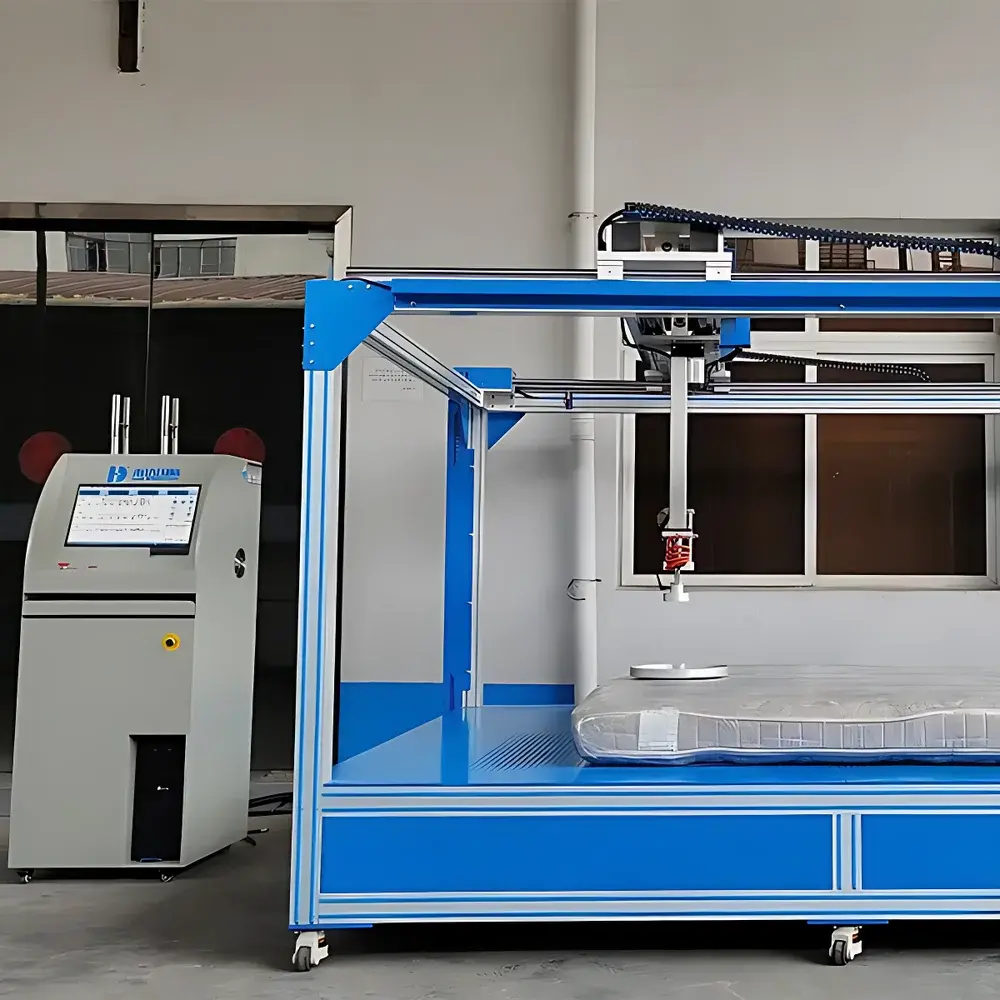
HAIDA HD-F701 Mattress Conformity & Hardness Comprehensive Analyzer
| Brand | HAIDA INTERNATIONAL |
|---|---|
| Origin | Guangdong, China |
| Manufacturer Type | OEM/ODM Manufacturer |
| Country of Origin | China |
| Model | HAIDA HD-F701 Mattress Conformity & Hardness Comprehensive Analyzer |
| Load Capacity | 2 kN |
| Load Cell Accuracy | ≤ ±0.5% FS |
| Actuator Stroke | 500 mm |
| Servo Motor Power | 400 W (Panasonic) |
| Servo Driver | 400 W (Panasonic) |
| Lead Screw | Precision Ball Screw |
| Control System | Windows-based PC with Proprietary Closed-Loop Control Software |
| Speed Range | 0.1–250 mm/s (adjustable) |
| Displacement Measurement | Three Panasonic Laser Displacement Sensors |
| Displacement Accuracy | ±1 mm |
| Test Count Setting | 1–999,999 cycles (programmable) |
| Stop Conditions | Predefined cycle count, stroke limit, or test completion |
| Dimensions (L×W×H) | Approx. 2200 × 2800 × 2300 mm |
| Max Sample Size (L×W×H) | 2000 × 1800 × 400 mm |
| Weight | Approx. 1000 kg |
| Power Consumption | 2 kW |
| Power Supply | 1-phase AC 220 V |
| Primary Test Functions | Mattress Conformity Assessment, Mattress Hardness Profiling (Surface/Core/Base/Total), Hysteresis Loss Rate Calculation |
Overview
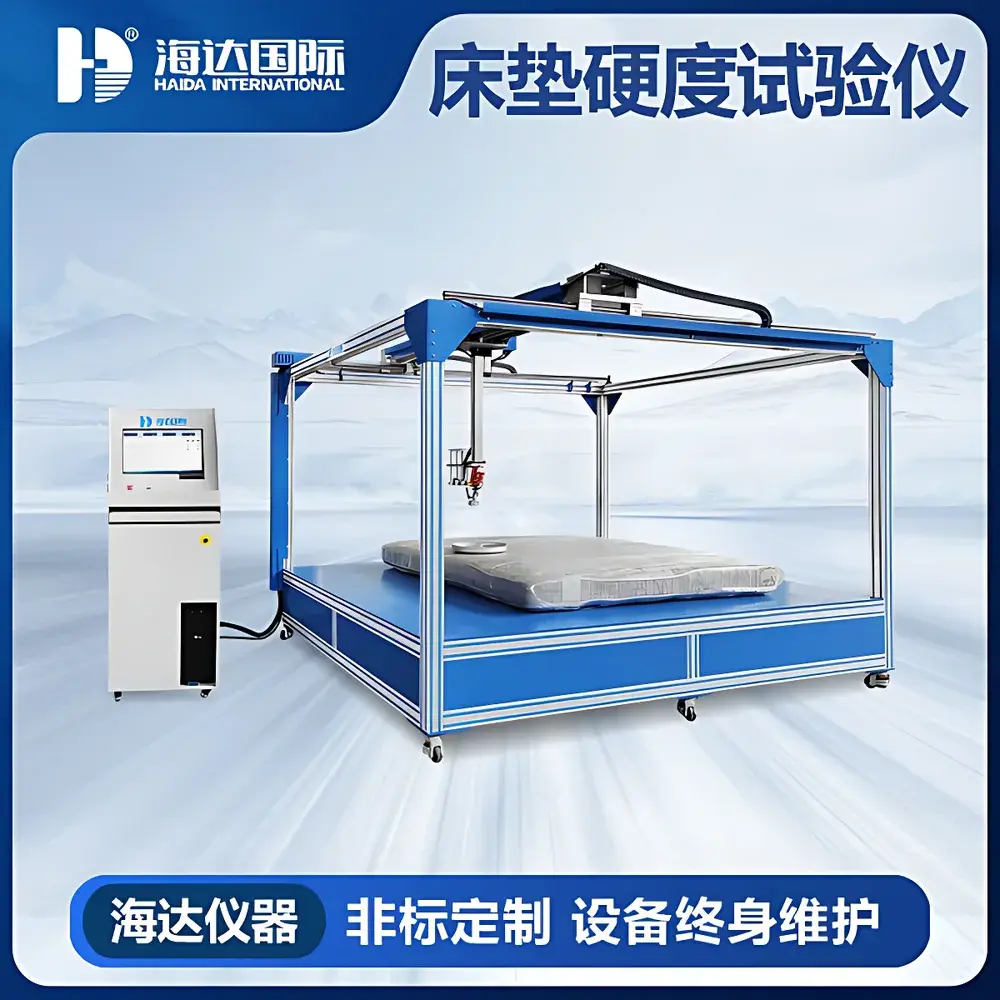
The HAIDA HD-F701 Mattress Conformity & Hardness Comprehensive Analyzer is an engineered mechanical testing platform designed for standardized biomechanical evaluation of domestic and commercial mattresses—specifically innerspring and foam-core constructions. It operates on a precision electromechanical actuation principle: a servo-controlled vertical loading system applies controlled quasi-static or dynamic force profiles to defined anatomical zones of the mattress surface, while synchronized laser displacement sensors capture real-time deformation responses across three spatially distributed measurement points. The system computes hardness distribution (surface, core, base, and total), hysteresis loss rate (energy dissipation during compression-recovery cycles), and conformability index—quantitative metrics directly aligned with human ergonomic perception and pressure redistribution physiology. Unlike generic universal testers, the HD-F701 integrates domain-specific test logic, positional automation, and multi-zone load mapping to replicate standardized indentation protocols defined in T-SZFA 2003.1–2019 and T-SZFA 2003.2–2019.
Key Features
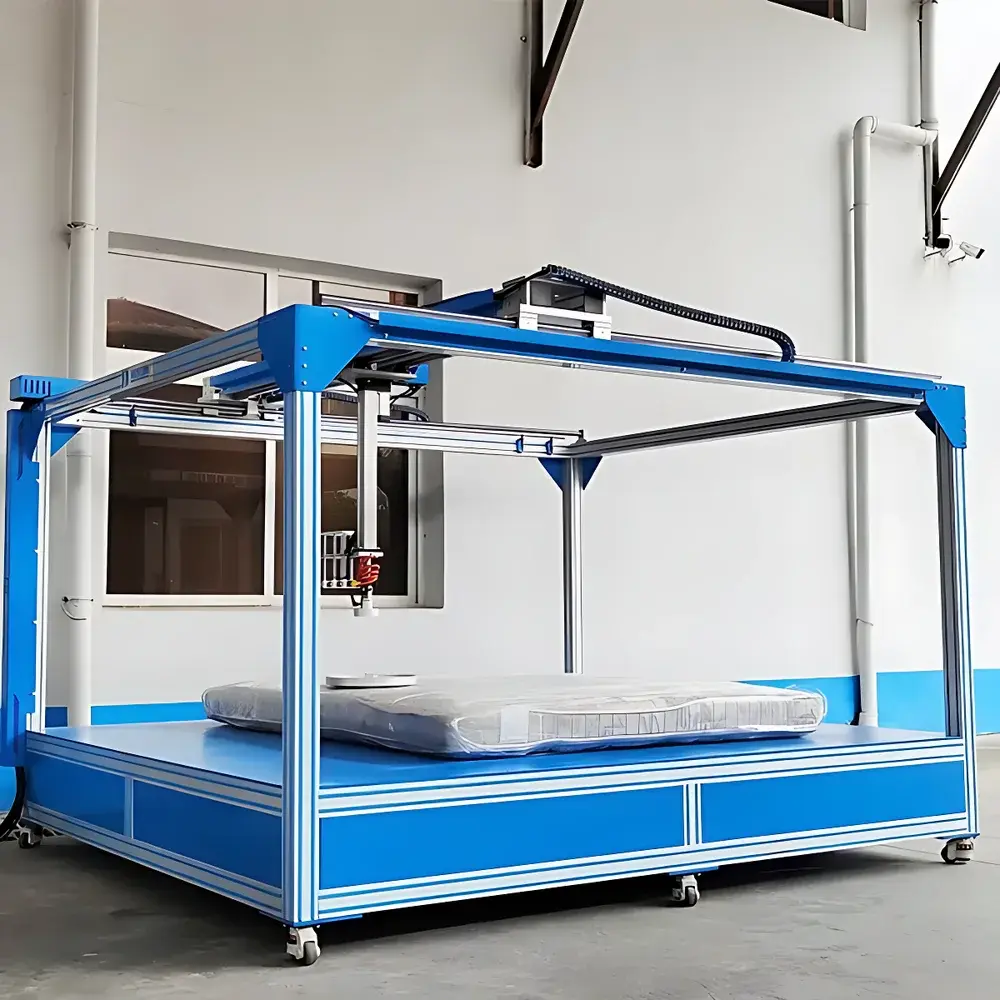
- High-stiffness dual-axis linear motion system using square-section hardened precision rails for repeatable XY positioning of the loading head—ensuring consistent probe placement across single-bed (900 mm width) and double-bed (1800 mm width) configurations.
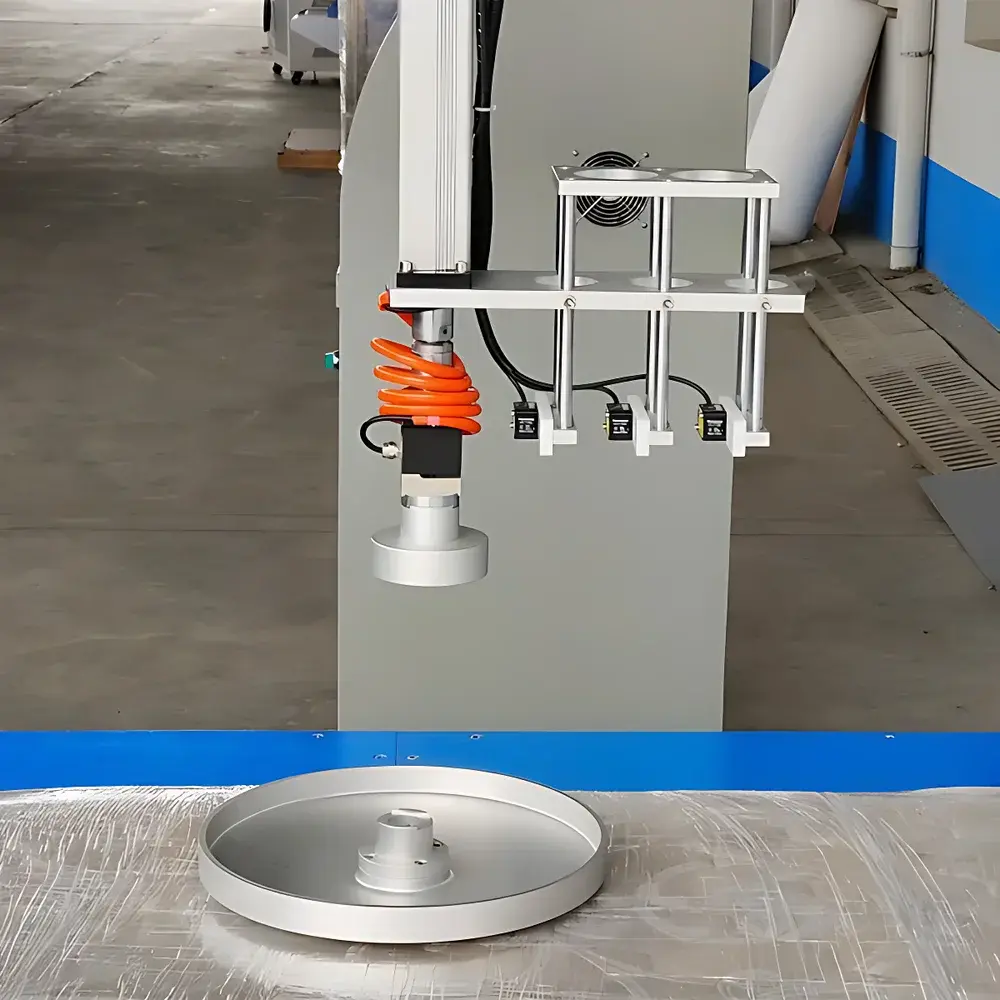
- Vertical loading module driven by a 400 W Panasonic servo motor and matched servo driver, coupled with a ground-ball-screw transmission assembly—delivering high-resolution force control and minimal thermal drift over extended test sequences.
- Triple-channel non-contact displacement acquisition via Panasonic laser triangulation sensors (±1 mm accuracy), enabling simultaneous monitoring of localized deflection at lumbar, thoracic, and pelvic reference zones.
- Dual interchangeable indenters: cylindrical platen (for uniform-area hardness profiling per T-SZFA 2003.1) and spherical-cap indenter (for curvature-matched conformability assessment per T-SZFA 2003.2).
- Full-rail guided loading carriage with zero-backlash guidance—guaranteeing orthogonal alignment and eliminating lateral parasitic forces during indentation.
- Integrated safety architecture: hardware stroke limits, programmable force ceiling (with audible/visual alarm and immediate stop), power-fail data retention (non-volatile memory buffer), and time-out protection for abnormal test duration.
- Modular structural frame fabricated from aerospace-grade aluminum extrusions and reinforced carbon steel base plate—achieving operational stability without floor anchoring; supported by heavy-duty leveling casters with integrated shock absorption and 360° swivel capability.
Sample Compatibility & Compliance
The HD-F701 accommodates standard mattress formats up to 2000 mm (L) × 1800 mm (W) × 400 mm (H), covering twin, full, queen, and king sizes. Its automated positioning logic distinguishes between single- and double-bed geometries and assigns ASTM-aligned anatomical test points (e.g., T1–T3 zones per T-SZFA 2003.2). All test execution, data acquisition, and report generation comply with the procedural requirements of:
- T-SZFA 2003.1–2019 — “Ergonomic Evaluation of Mattresses: Methods for Hardness Classification and Distribution Testing” (Sections 6.1 Method A, 6.2 Method B, Annex B)
- T-SZFA 2003.2–2019 — “Ergonomic Evaluation of Mattresses: Quantitative Conformity Assessment and Grading” (Section 6: Test Procedure and Grade Assignment)
- QB/T 1952.2–2011 — “Soft Furnishings – Spring Mattresses”
- QB/T 4839–2015 — “Soft Furnishings – Foam Mattresses”
Test reports include traceable metadata (operator ID, timestamp, environmental conditions), raw sensor logs, interpolated hardness gradients, hysteresis loop integrals, and final conformity grade (T, T1, T2, or T3) per normative thresholds.
Software & Data Management
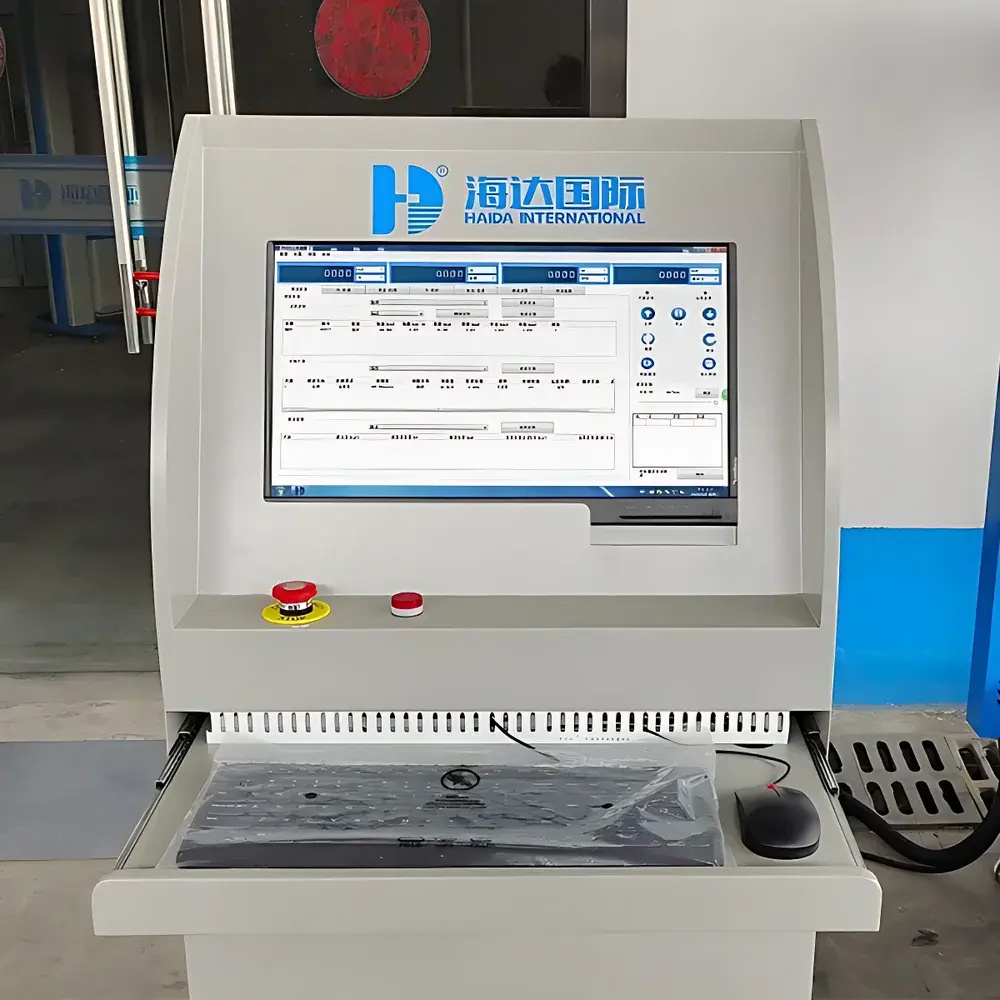
The proprietary Windows-based control software implements a deterministic closed-loop control architecture with real-time PID tuning. It supports configurable test templates—including multi-point sequential indentation, cyclic loading with dwell periods, and ramp-hold-relax profiles. All acquired force-displacement data are logged at ≥100 Hz sampling rate and stored in open CSV/Excel-compatible formats. Curve visualization includes overlay comparison of multiple samples, deviation mapping against reference standards, and automatic pass/fail flagging based on user-defined tolerance bands. Audit trails record all parameter changes, operator actions, and system events—supporting GLP/GMP-aligned quality documentation practices. While not natively 21 CFR Part 11 compliant, the software architecture permits integration with third-party electronic signature and access-control modules for regulated environments.
Applications
- Quality assurance laboratories performing incoming inspection and final release testing of mattress batches prior to distribution.
- R&D departments evaluating material substitutions (e.g., viscoelastic foam variants, hybrid coil-foam architectures) for optimized support-conformity balance.
- Certification bodies conducting third-party conformance verification against national and industry-specific ergonomic standards.
- Manufacturers validating design iterations against anthropometric models and clinical sleep posture studies.
- Academic research in biomechanics, materials science, and sleep ergonomics requiring reproducible, instrumented mattress characterization.
FAQ
What mattress types does the HD-F701 support?
It is validated for both innerspring (QB/T 1952.2–2011) and foam-core (QB/T 4839–2015) mattresses, including hybrid and multi-layered constructions.
Does the system require floor anchoring?
No—its reinforced base and low-center-of-gravity frame provide static stability without permanent installation; optional anti-slip pads are available for high-vibration lab environments.
Can test parameters be exported for statistical process control (SPC)?
Yes—raw data and summary metrics export to CSV, Excel, and XML formats compatible with Minitab, JMP, and enterprise MES/QMS platforms.
Is calibration traceable to national metrology institutes?
Load cells are factory-calibrated per ISO 376; users receive NIST-traceable calibration certificates. Annual recalibration services are available through HAIDA’s certified service centers.
How is operator error minimized during setup?
The software enforces geometric constraints (e.g., minimum edge distance, inter-point spacing) and validates sample dimensions before test initiation—preventing out-of-spec positioning that could invalidate compliance reporting.
Related Products



