
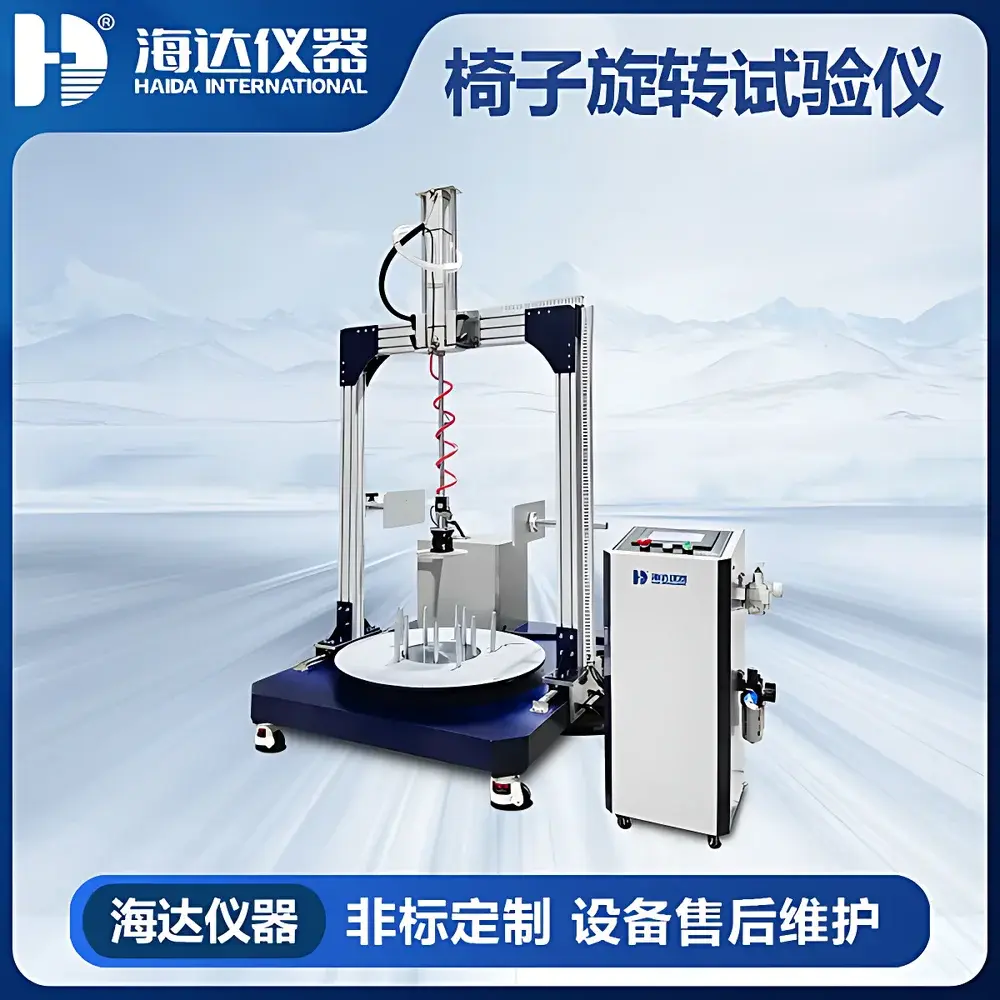
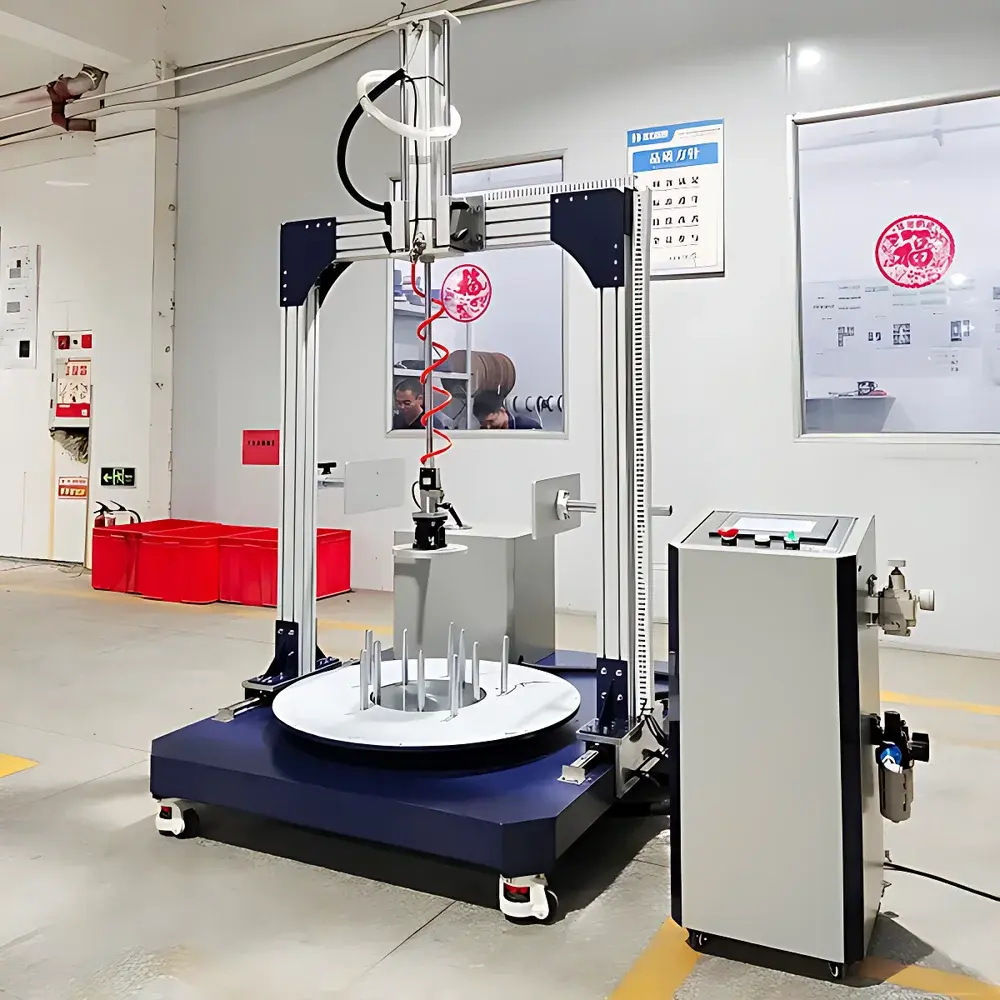
HAIDA HD-F731 Chair Rotational Durability Tester
| Brand | HAIDA INTERNATIONAL |
|---|---|
| Origin | Guangdong, China |
| Manufacturer Type | OEM/ODM Manufacturer |
| Country of Origin | China |
| Model | HAIDA HD-F731 Chair Rotational Durability Tester |
| Quotation | Upon Request |
| Load Capacity | 2 kN |
| Force Sensor Range | 0.2–1.8 kN (±5% accuracy) |
| Standard Load Values | 1.24 kN (BIFMA 5.1-2017), 1.02 kN (QB/T 2280-2016), 1.13 kN (BIFMA 5.1-2017 alternate), 950 N (EN 1335-2:2018) |
| Test Speed | 10 ± 5 rpm (compliant with BIFMA 5.1 & QB/T 2280: 5–15 rpm) |
| Cycle Count | 60,000 unidirectional cycles or 120,000 total reversals (60,000 forward + 60,000 reverse) |
| Rotation Angle Adjustment | 0–360° continuous |
| Effective Test Height | 300–850 mm |
| Max Base Diameter | ≤750 mm |
| Dimensions (L×W×H) | 1400 × 1100 × 2150 mm |
| Weight | ≈320 kg |
| Power Supply | 1∮ AC 220 V |
| Power Consumption | ≈850 W |
| Data Output | USB interface |
| Compliance Standards | BIFMA 5.1-2017 (Sections 8.1–8.5), BIFMA 5.4-2020 (Section 19), QB/T 2280-2016 (Section 6.6.11), BS EN 1335-2:2018 (Annex A3) |
Overview
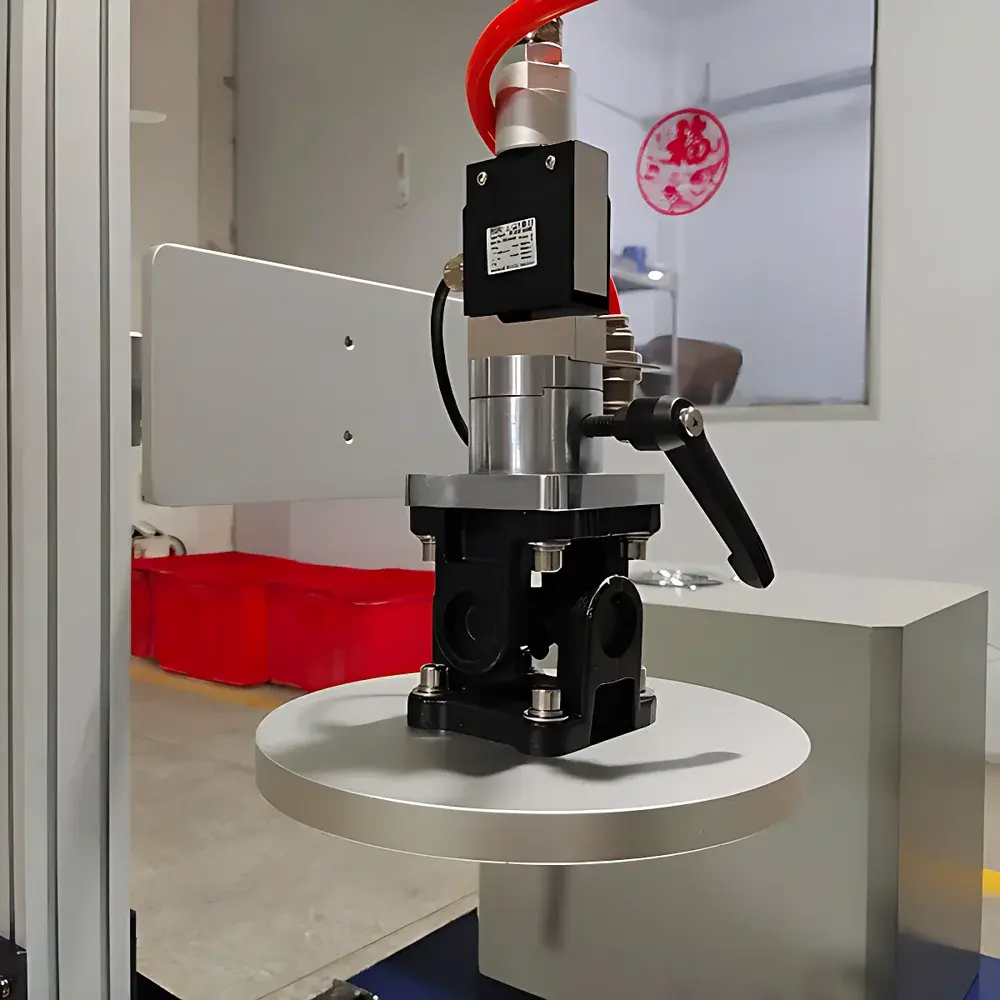
The HAIDA HD-F731 Chair Rotational Durability Tester is an electromechanical test system engineered for standardized evaluation of swivel mechanism endurance in office chairs and ergonomic seating systems. It operates on the principle of controlled angular displacement under static axial load, replicating real-world usage conditions where seat rotation induces cyclic mechanical stress at the base–column interface. The instrument applies a calibrated vertical force—traceable to international standards such as BIFMA 5.1-2017 and QB/T 2280-2016—while driving rotational motion via a servo-pneumatic actuation system synchronized with programmable logic control (PLC). Unlike inertial or impact-based testers, the HD-F731 employs constant-torque, low-inertia rotation to isolate wear mechanisms specific to ball-bearing assemblies, gas-lift column couplings, and polymeric bushings. Its architecture supports both unidirectional and bidirectional test protocols, enabling assessment of asymmetric wear patterns and hysteresis behavior in multi-material pivot systems.
Key Features
- Modular aluminum extrusion frame with anodized surface finish, ensuring dimensional stability and corrosion resistance over extended operational life.
- Pneumatically actuated seat loading system with dual 2 kN precision load cells (imported strain-gauge type), delivering repeatable force application within ±5% full-scale error per ASTM E4 and ISO 7500-1 calibration traceability.
- Touchscreen HMI integrated with industrial-grade PLC controller, supporting user-defined cycle counts, dwell time at reversal points, and programmable angular limits between 0° and 360°.
- Automatic power-loss recovery function retains test progress and parameter settings during unexpected shutdowns, minimizing data interruption in long-duration durability runs.
- Dual-mode operation: fixed-direction rotation (60,000 cycles) or alternating-direction cycling (60,000 forward + 60,000 reverse), with configurable pause duration at each directional transition.
- Integrated USB data export port compliant with FAT32 file system, enabling direct transfer of timestamped force-angle-time datasets for post-processing in MATLAB, Excel, or statistical analysis platforms.
Sample Compatibility & Compliance
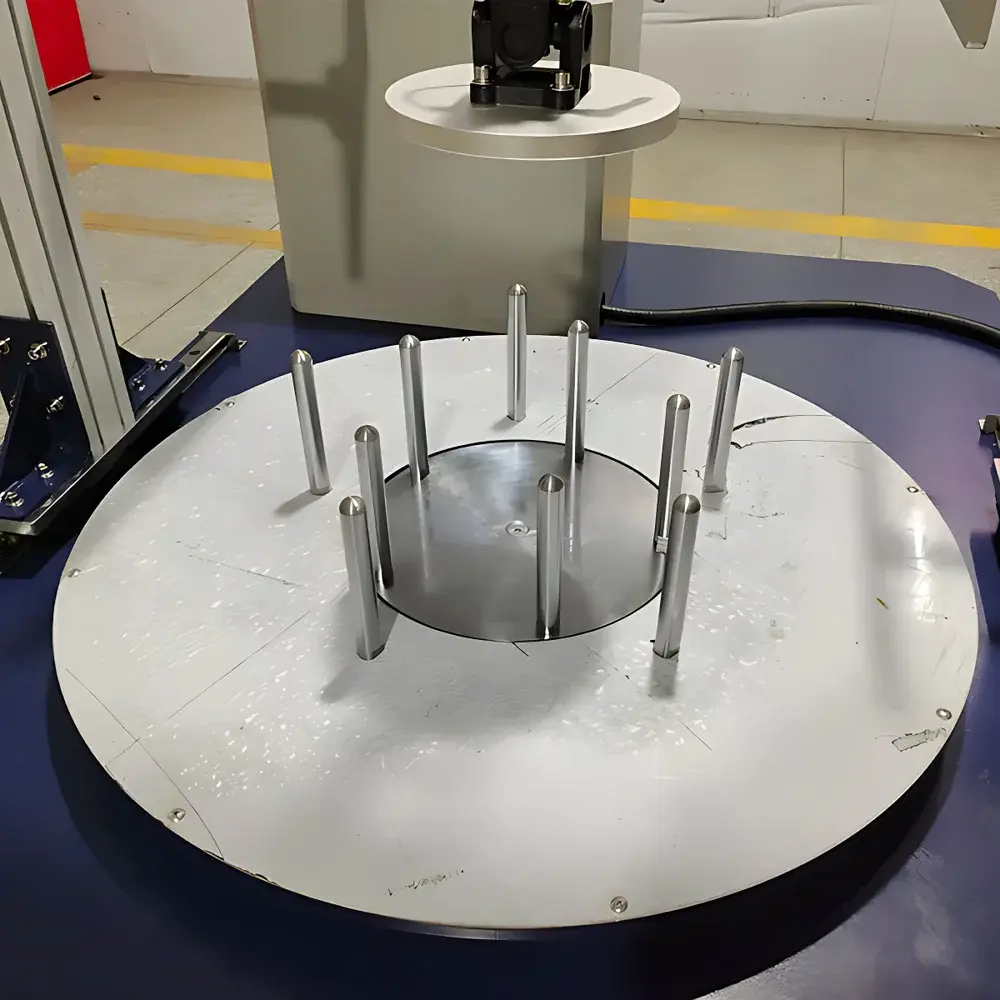
The HD-F731 accommodates chairs with circular or polygonal bases up to 750 mm in diameter and adjustable seat heights from 300 mm to 850 mm. It is validated for testing according to BIFMA 5.1-2017 (Sections 8.1–8.5: Swivel Mechanism Durability), BIFMA 5.4-2020 (Section 19: Dynamic Swivel Endurance), QB/T 2280-2016 (Section 6.6.11: Office Chair Rotation Fatigue), and BS EN 1335-2:2018 (Annex A3: Seat Rotation Resistance). While the system meets all mechanical and procedural requirements of these standards, it is not configured for EN-specific load application geometry (e.g., offset moment arm compliance per EN 1335-2 Annex A3 Figure A.3); users requiring full EN conformance should verify fixture alignment against Clause 4.3.2 of the standard. All test reports generated may be archived with audit trails suitable for GLP-compliant quality assurance workflows.
Software & Data Management
The embedded control software—developed in-house by HAIDA’s engineering team—supports ISO/IEC 17025-aligned data integrity practices. Each test session logs force magnitude, angular position, cycle count, elapsed time, and system status flags (e.g., overload, timeout, sensor drift alert) into a structured CSV file. The interface allows real-time graphical overlay of torque vs. angle loops and cumulative cycle counters. Optional firmware upgrades include password-protected user roles (Operator, Supervisor, Administrator), electronic signature fields for test initiation, and configurable data retention policies aligned with FDA 21 CFR Part 11 requirements for electronic records. Raw data files carry embedded metadata including instrument ID, calibration expiry date, operator ID, and environmental temperature/humidity readings if connected to optional external sensors.
Applications
This tester serves quality assurance laboratories, furniture OEM R&D departments, and third-party certification bodies conducting mechanical durability validation for Class 3 and Class 4 seating per ANSI/BIFMA X5.1. Typical use cases include qualification of gas-spring-assisted swivel mechanisms, evaluation of polymer composite bearing degradation under repeated torsion, comparative benchmarking of competitive chair base designs, and root-cause analysis of premature failure modes observed in field returns. It is also deployed in supplier qualification programs where Tier-1 manufacturers require documented evidence of ≥60,000-cycle performance prior to component release.
FAQ
Does the HD-F731 support fully automated pass/fail judgment based on force decay thresholds?
No—the system records raw force-angle-time data but does not perform algorithmic pass/fail classification. Threshold evaluation must be conducted externally using statistical process control (SPC) tools.
Can the unit be retrofitted with a climate-controlled test chamber?
Yes—mechanical mounting interfaces and cable routing pathways are预留 (pre-designed) for integration with ISO 18434-1-compliant environmental enclosures; HAIDA provides dimensional drawings and I/O pinout specifications upon request.
Is the force sensor calibrated before shipment, and is a certificate included?
Yes—each unit ships with a factory calibration certificate traceable to NIM (China National Institute of Metrology), valid for 12 months under normal operating conditions.
What maintenance intervals are recommended for pneumatic components?
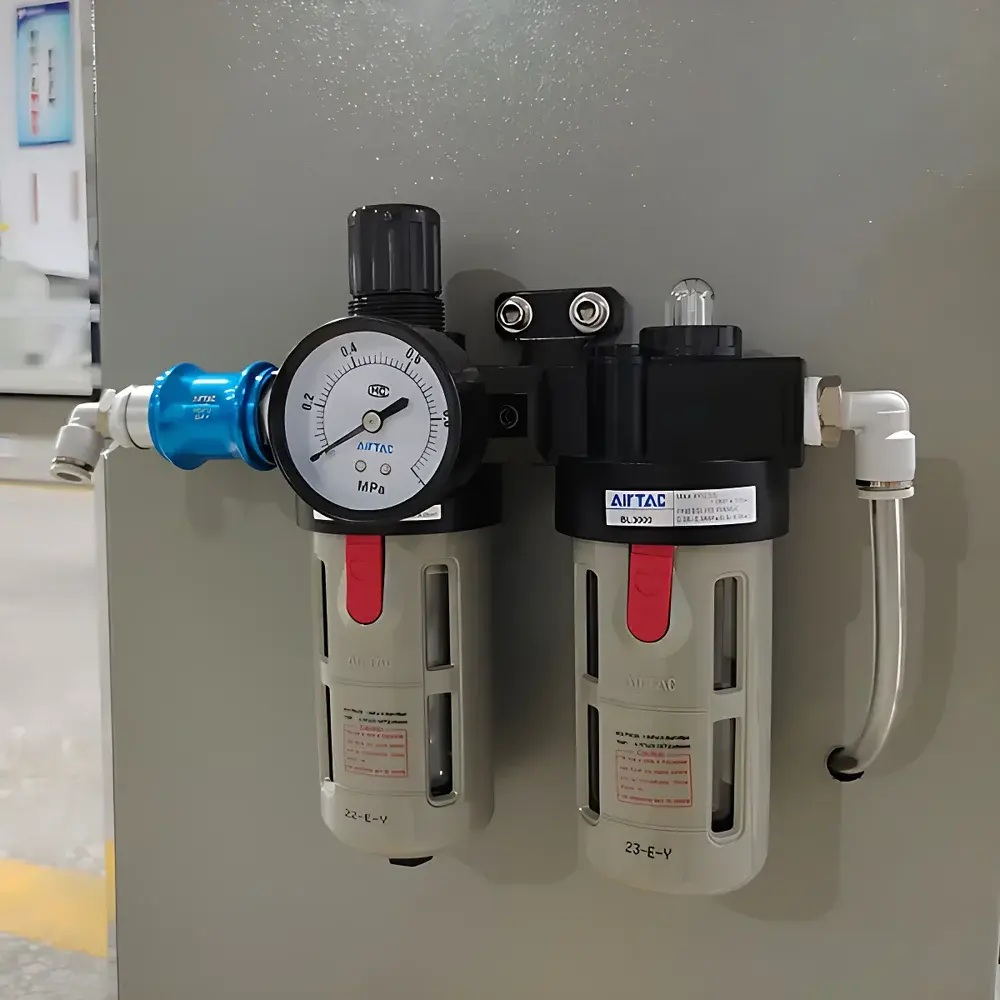
Air filter elements should be inspected every 200 operational hours; lubrication of rotary actuators is required every 1,000 cycles or quarterly, whichever occurs first.
Are test fixtures available for non-circular chair bases?
Custom fixture plates with modular clamping slots can be fabricated per customer-provided CAD models; lead time is typically 4–6 weeks after design approval.



