
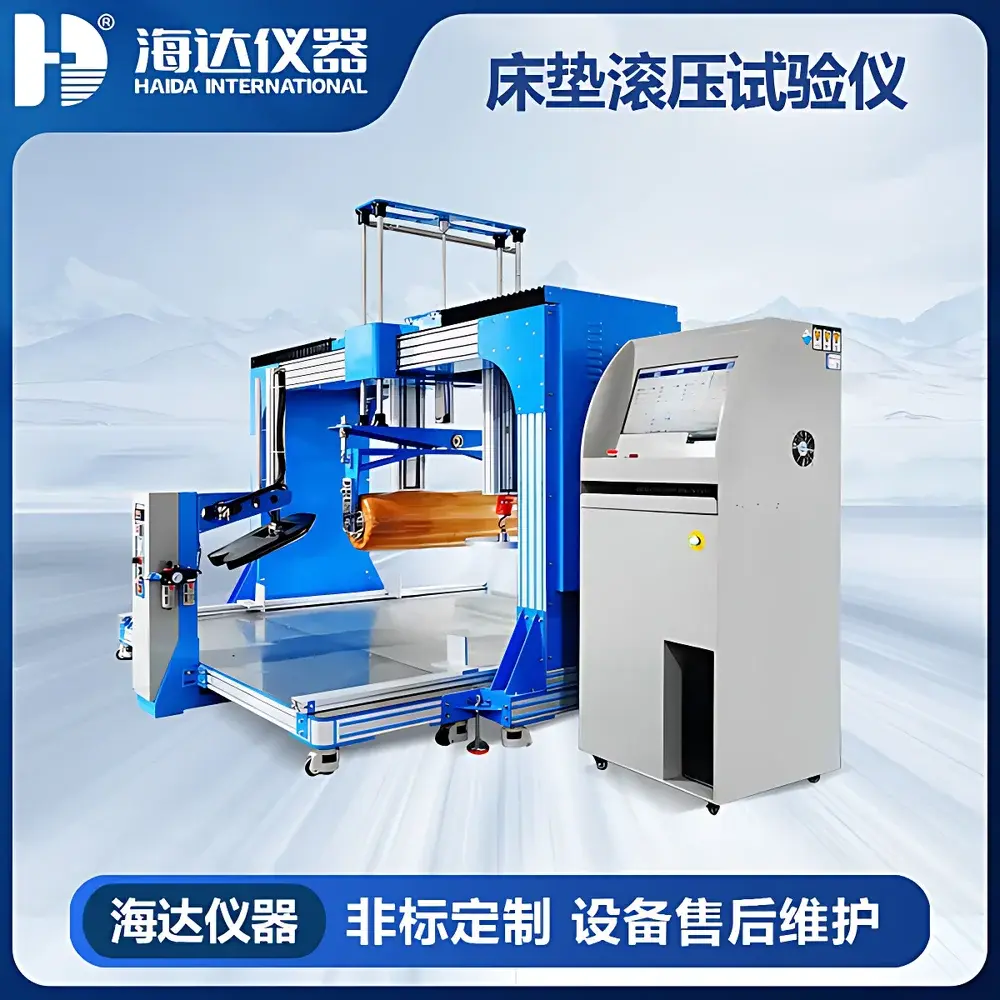
HAIDA HD-F764 Mattress Rolling Endurance Tester
| Brand | HAIDA INTERNATIONAL |
|---|---|
| Origin | Guangdong, China |
| Manufacturer Type | OEM/ODM Manufacturer |
| Country of Origin | China |
| Model | HAIDA HD-F764 Mattress Rolling Endurance Tester |
| Capacity | 2 kN |
| Force Sensor | 1× high-precision load cell |
| Motor | 1.5 kW three-phase AC motor |
| Electric Cylinder Stroke | 350 mm (max thrust: 1 kN) |
| Control System | PLC-based industrial controller |
| Display | 10.1″ capacitive touch HMI |
| Test Frequency | 1–20 cycles/min (GB/EN: 16 ± 2 cpm |
| ASTM F1566 | 20 cpm max) |
| Rolling Amplitude | GB/EN: ±250 mm from centerline |
| ASTM | total lateral travel = 70% of mattress width (≤965 mm) |
| Rolling Drive | Three-phase motor + precision roller chain transmission |
| Thickness & Compression Loss Measurement | displacement resolution ±0.1 mm |
| Firmness Testing Accuracy | displacement resolution ±0.1 mm |
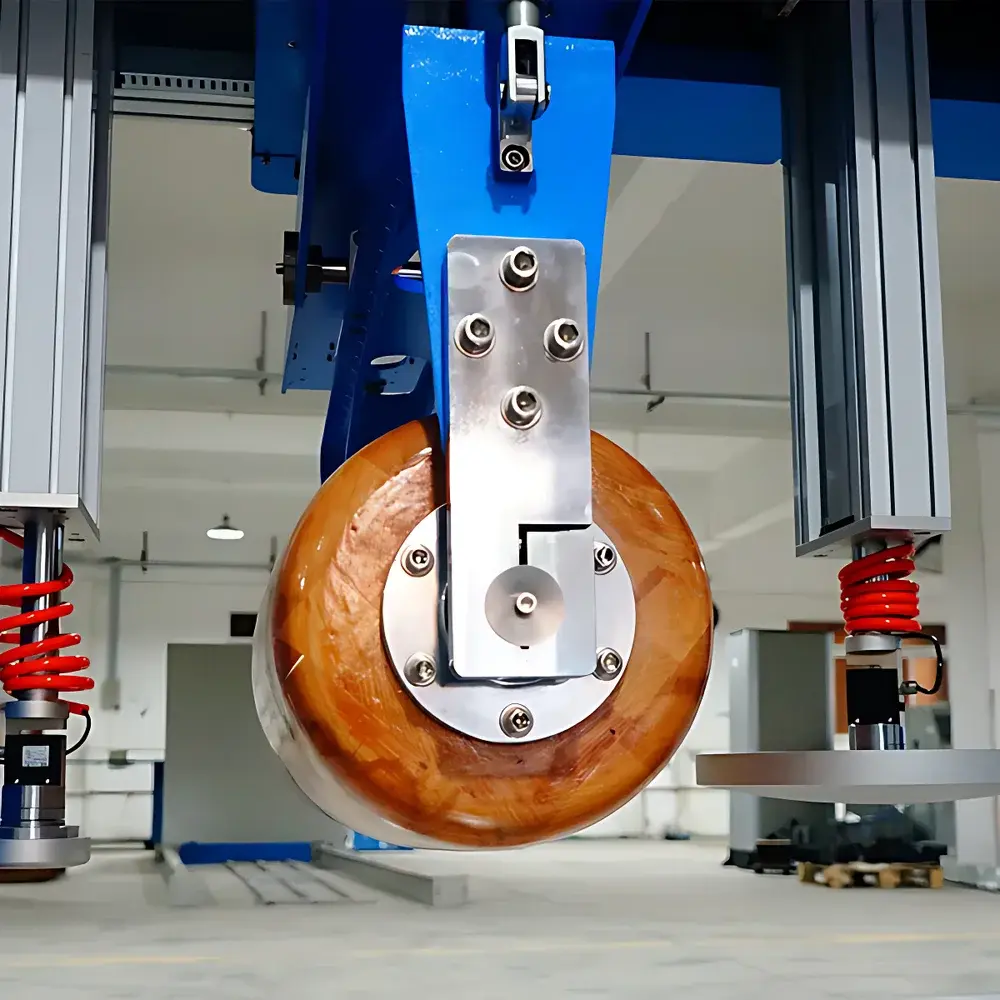
| Roller Assembly | electric hoist-lifted cylindrical roller (static load: 1400 ± 7 N) or hexagonal roller (static load: 109 ± 4 kg) |
| Fatigue Cycles | cylindrical roller — up to 30,000 cycles |
| Data Export | USB 2.0 interface |
| Max Test Specimen Size | 2200 × 2000 × 400 mm (L×W×H) |
| Power Supply | 3-phase AC 380 V / 50 Hz |
| Total Power Consumption | ~1.8 kW |
| Dimensions (L×W×H) | 2800 × 2500 × 2500 mm |
| Weight | ~1500 kg |
| Compliance Standards | QB/T 1952.2–2011, GB/T 26706–2011, EN 1957:2012, ASTM F1566–2014 |
Overview
The HAIDA HD-F764 Mattress Rolling Endurance Tester is an industrial-grade mechanical fatigue testing system engineered for standardized evaluation of long-term structural integrity and functional performance of domestic and commercial mattresses. It operates on the principle of controlled cyclic mechanical loading—specifically, horizontal rolling motion applied via calibrated cylindrical or hexagonal rollers—to replicate dynamic physiological forces experienced during human sleep, including lateral repositioning and sustained compression. Unlike static indentation testers, the HD-F764 subjects specimens to kinematic stress profiles defined by international regulatory frameworks, enabling quantification of progressive deformation, resilience decay, and dimensional stability under repeated loading. Its dual-axis electro-mechanical architecture supports concurrent execution of rolling endurance, firmness profiling, thickness loss measurement, and edge durability assessment—all within a single test sequence. Designed for laboratories operating under ISO/IEC 17025-accredited quality systems, the instrument delivers traceable, repeatable results aligned with metrological best practices in textile and furniture materials testing.
Key Features
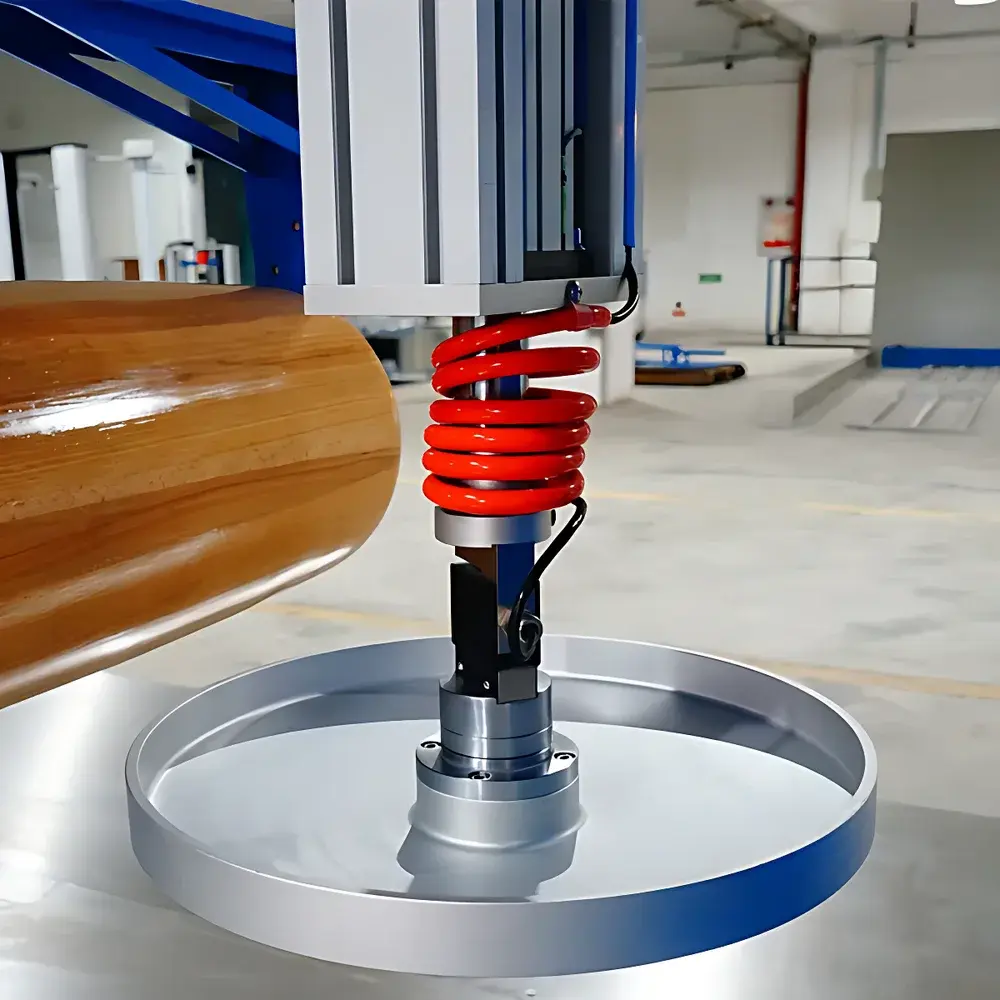
- Modular dual-test station design: independent vertical loading modules for simultaneous softness/firmness and thickness loss evaluation, each driven by SMC-certified electric cylinders with closed-loop position and force feedback.
- Programmable roller deployment system: electric hoist-assisted height adjustment ensures precise alignment of roller centerline relative to mattress surface geometry per standard-defined reference planes (e.g., EN 1957 Clause 6.2).
- Multi-profile roller compatibility: interchangeable cylindrical roller (1400 ± 7 N static load) and ASTM-specified hexagonal roller (109 ± 4 kg), both validated for load distribution uniformity across foam, innerspring, latex, and coir-based constructions.
- Tri-modal loading head set: includes Φ355 mm spherical-cap platen (R20 curvature, 800 mm radius), Φ100 mm hemispherical platen (R10, H25), and flat-faced platen—each CNC-machined from 6061-T6 aluminum and calibrated per ISO 7500-1 Class 1 requirements.
- Full-rail guided actuation: linear motion systems with preloaded V-groove bearings ensure sub-0.05 mm positional deviation over full stroke, minimizing parasitic torque and ensuring consistent contact pressure distribution.
- Industrial PLC control core: Schneider Electric Modicon M241 controller with deterministic scan cycle (<10 ms), integrated safety logic (Category 3 PL e per ISO 13849-1), and real-time diagnostics accessible via HMI or remote SCADA integration.
Sample Compatibility & Compliance
The HD-F764 accommodates all major mattress categories—including pocket-sprung, continuous-coil, memory foam, HR polyurethane, natural latex, and hybrid multi-layer assemblies—within its 2200 × 2000 × 400 mm test envelope. Specimen fixation utilizes dual-point clamping with adjustable pneumatic locking, preventing lateral slippage during high-frequency rolling (up to 20 cpm). The system conforms to mechanical and procedural requirements of QB/T 1952.2–2011 (Chinese light industry standard), GB/T 26706–2011 (national standard for spring mattresses), EN 1957:2012 (European specification for domestic mattresses), and ASTM F1566–2014 (standard test method for evaluating mattress rolling endurance). All force, displacement, and timing parameters are traceably calibrated against NIST-traceable reference standards, and test reports include full audit trails compliant with GLP documentation protocols.
Software & Data Management
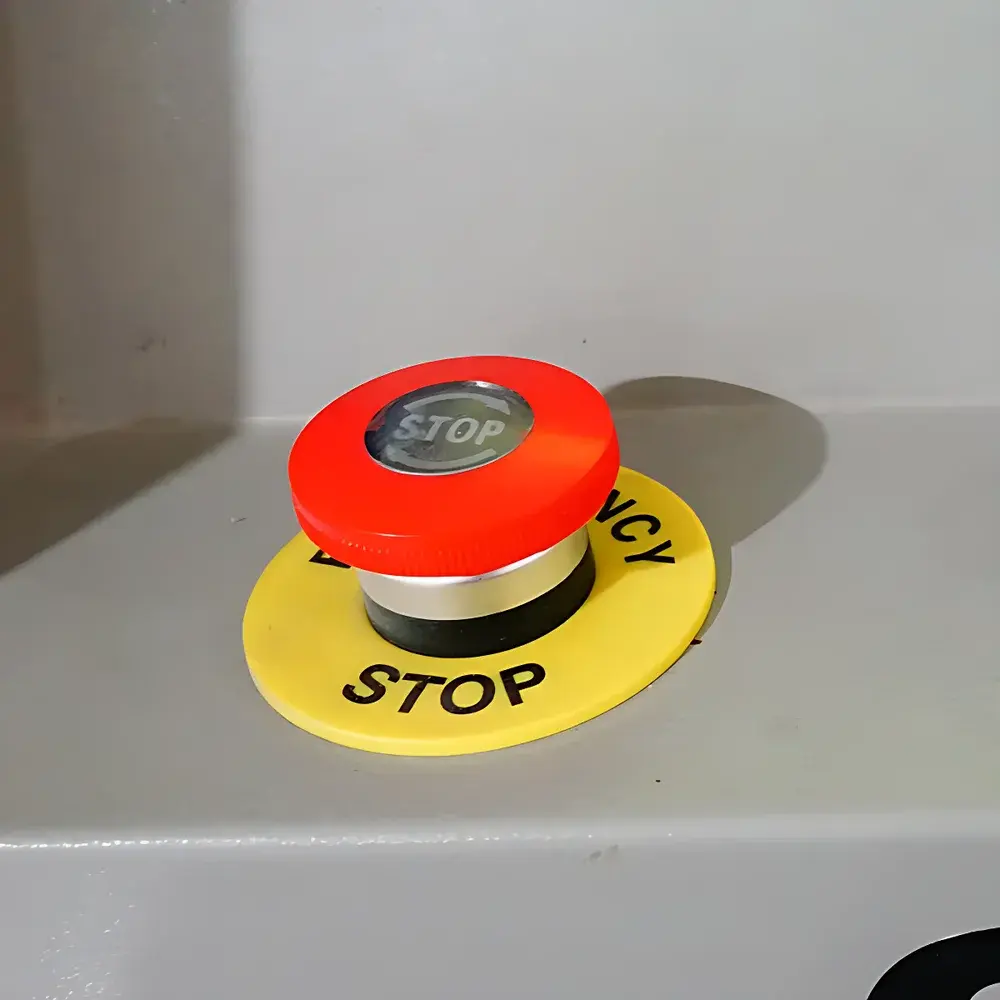
The embedded control software provides role-based access (operator, supervisor, administrator) and supports 21 CFR Part 11-compliant electronic signatures when deployed in regulated environments. Test sequences are configured via intuitive drag-and-drop workflow builder, supporting conditional branching (e.g., automatic transition from rolling fatigue to post-cycle thickness measurement). Real-time data acquisition records force (N), displacement (mm), cycle count, and elapsed time at ≥100 Hz sampling rate. Raw datasets export in CSV and XML formats via USB 2.0 port; optional Ethernet module enables direct integration with LIMS platforms using MODBUS TCP or OPC UA protocols. Built-in safeguards include hardware-enforced upper/lower limit switches, dynamic overload cutoff (±5% threshold), power-fail resume functionality, and thermal shutdown monitoring for motor windings and drive electronics.
Applications
- Rolling endurance validation for OEM mattress manufacturers seeking certification to EN 1957 or ASTM F1566 prior to market entry in EU or North America.
- Comparative lifecycle analysis of competing foam formulations (e.g., viscoelastic vs. polyether vs. plant-based PU) under identical kinematic boundary conditions.
- Quality assurance screening of in-line production batches—particularly for high-resilience foams where >5% permanent set after 10,000 cycles indicates formulation drift.
- R&D evaluation of novel support layer architectures (e.g., zoned pocket springs, air chambers, phase-change material inserts) under combined static-dynamic loading regimes.
- Third-party laboratory accreditation testing for CNAS, UKAS, or A2LA assessments requiring documented uncertainty budgets and inter-laboratory reproducibility verification.
FAQ
What mattress types can be tested on the HD-F764?
The system supports all commercially available mattress constructions—spring-core, foam-only, latex, hybrid, and fiber-based—provided dimensions fall within the 2200 × 2000 × 400 mm maximum envelope.
Does the HD-F764 support automated reporting per EN 1957 Annex B?
Yes. Preconfigured report templates generate EN-compliant output including cycle count, residual thickness deviation, surface irregularity index, and pass/fail determination based on Clause 7.3 acceptance criteria.
Can test parameters be modified beyond standard frequencies?
Operator-level access permits custom frequency definition between 1–20 cpm; however, deviations from GB/EN 16 ± 2 cpm or ASTM 20 cpm require explicit annotation in test records per ISO/IEC 17025 Clause 7.2.2.
Is calibration certification included with delivery?
Each unit ships with factory calibration certificate (traceable to CNAS-accredited reference standards) covering force, displacement, and timing subsystems; annual recalibration is recommended per ISO 9001 clause 7.1.5.2.
What safety certifications does the HD-F764 carry?
The instrument complies with CE marking requirements (2006/42/EC Machinery Directive, 2014/30/EU EMC Directive), carries UL 61010-1 listing for North American markets, and meets IP54 ingress protection rating for operational environments.



