
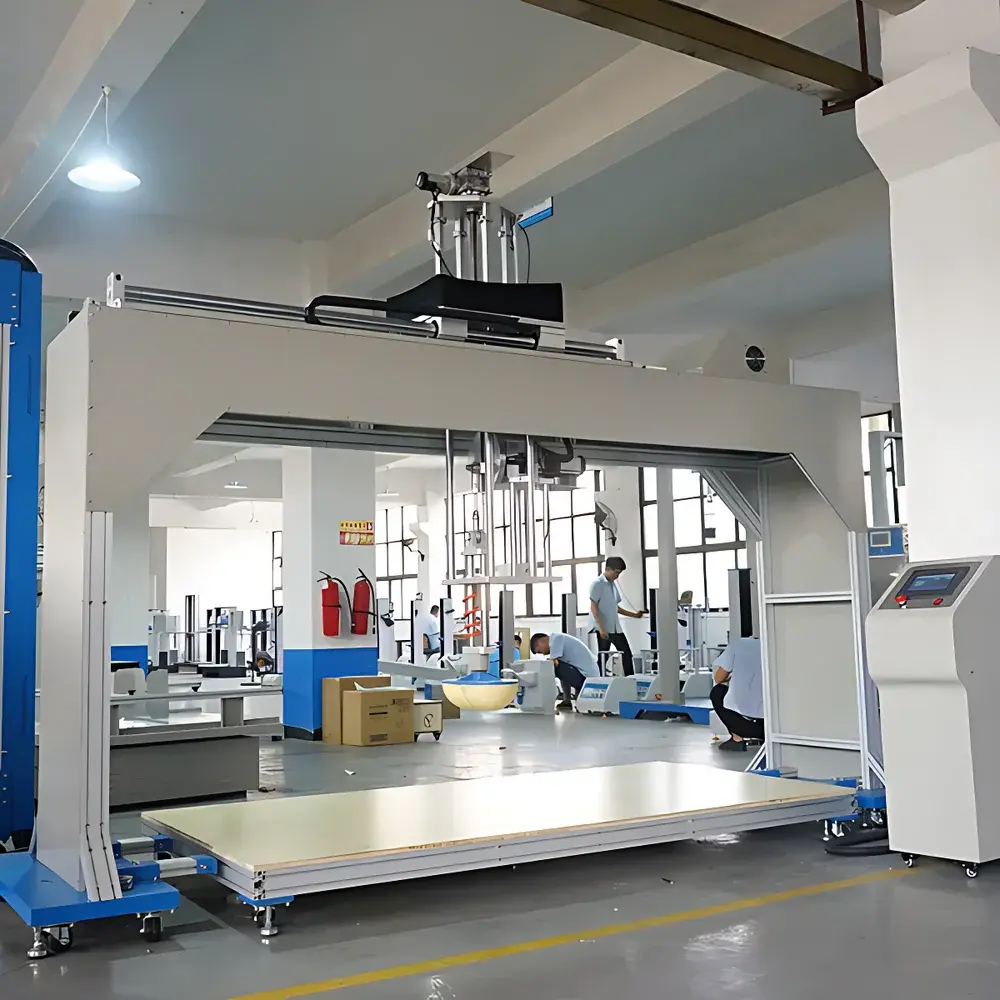
HAIDA HD-F766 Cornell Mattress Durability Tester
| Brand | HAIDA INTERNATIONAL |
|---|---|
| Origin | Guangdong, China |
| Manufacturer Type | Direct Manufacturer |
| Product Origin | Domestic (China) |
| Model | HAIDA HD-F766 Cornell Mattress Durability Tester |
| Quotation | Upon Request |
| Load Capacity | 2 kN |
| Sensor Vertical Speed | 20–300 mm/min |
| Test Speed | 1–165 rpm |
| Force Range | 1 N–2 kN |
| Display | Touchscreen Interface |
| Control System | PLC-based Embedded Controller |
| Data Output | USB 2.0 Port |
| Cycle Count Range | 1–999,999 Cycles (User-Programmable) |
| Eccentric Cam Stroke Adjustment | 0–200 mm |
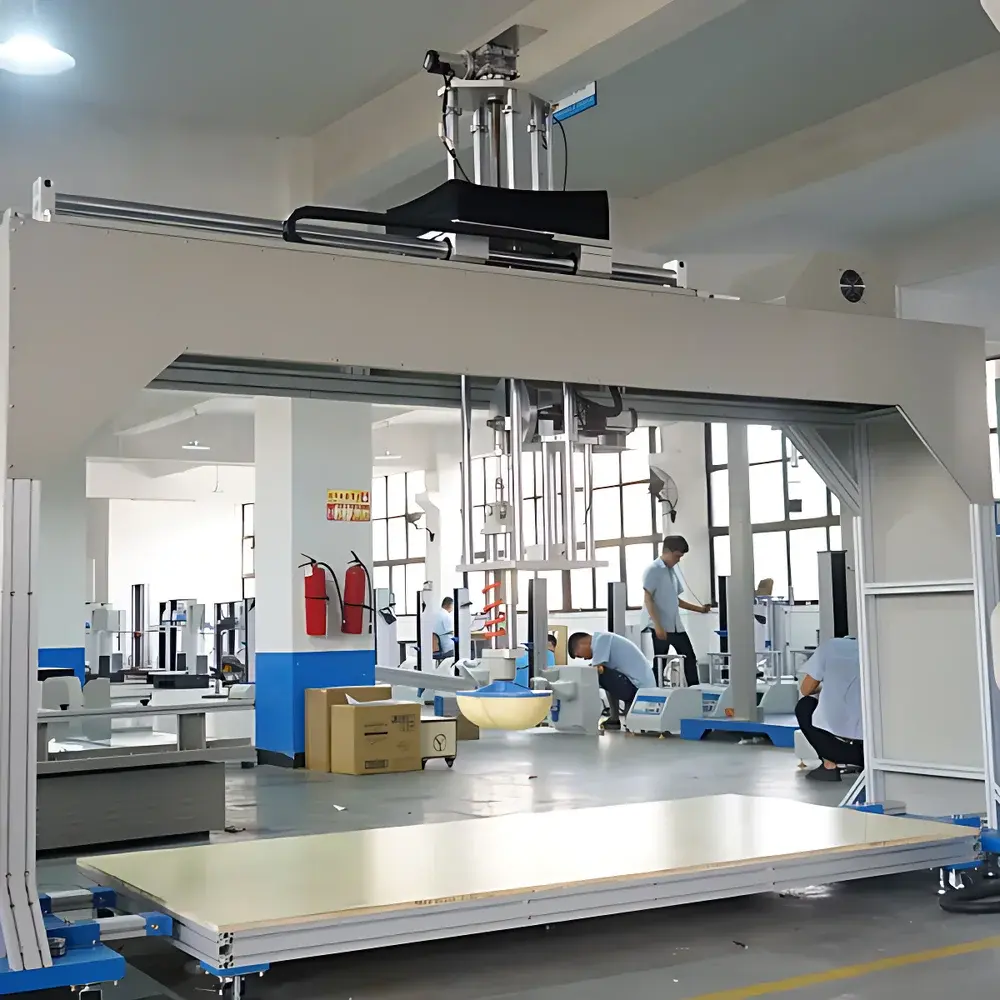
| Test Chamber Dimensions | 2200 mm × 2200 mm × 400 mm (L×W×H) |
| Overall Dimensions | Approx. 3620 mm × 2440 mm × 2700 mm (L×W×H) |
| Power Supply | Single-phase AC 220 V |
| Weight | Approx. 900 kg |
| Rated Power Consumption | ~1.3 kW |
Overview
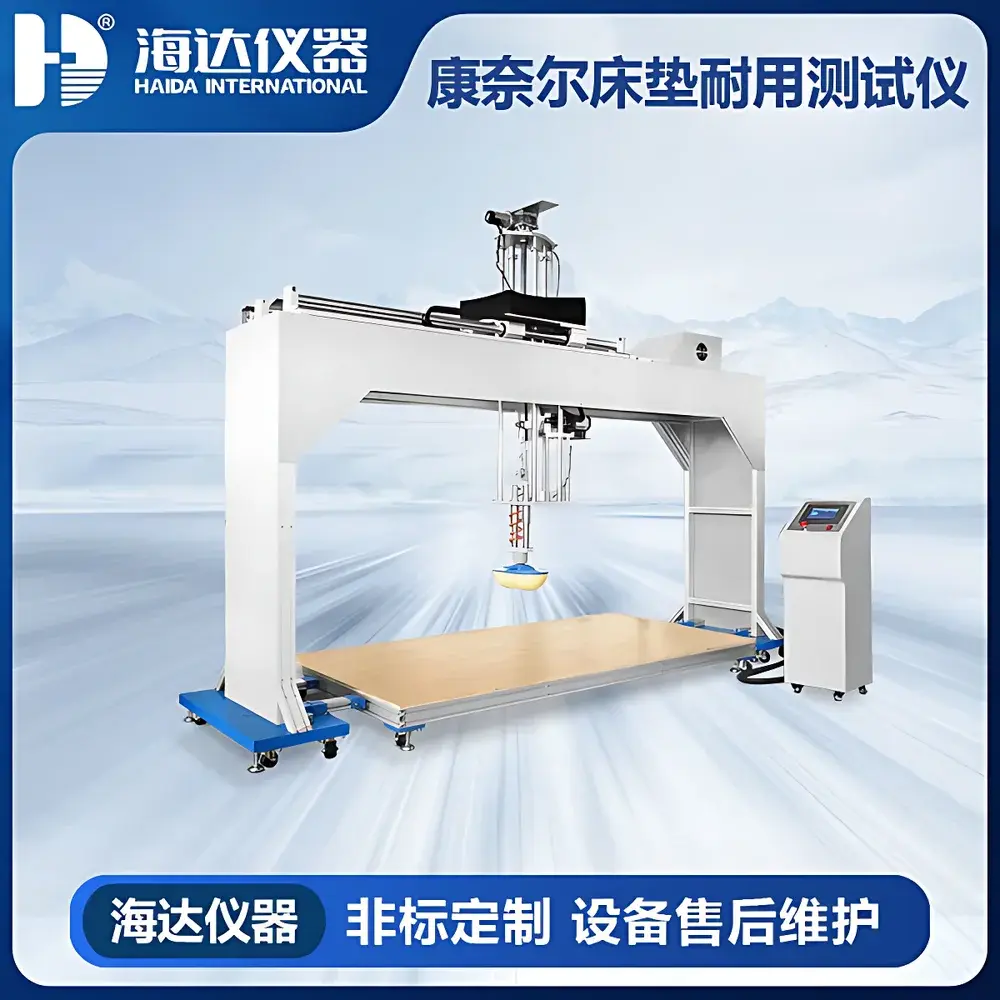
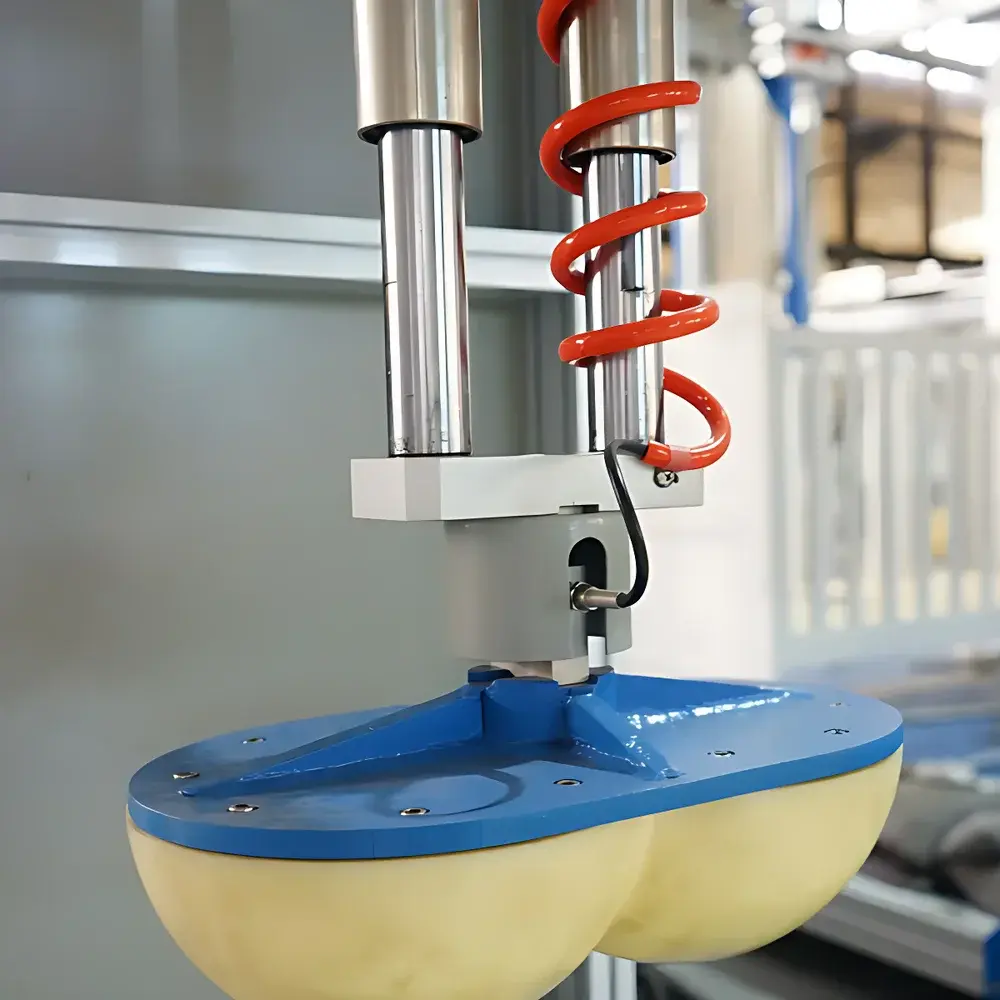
The HAIDA HD-F766 Cornell Mattress Durability Tester is an electromechanical fatigue testing system engineered to evaluate the long-term structural integrity and spring retention performance of innerspring and hybrid mattresses under repetitive dynamic loading. It implements the Cornell-type impact simulation principle—using a servo-driven eccentric cam mechanism to vertically actuate a standardized load mass onto the mattress surface at controlled frequency, amplitude, and force magnitude. This replicates biomechanically relevant pelvic impact conditions experienced during typical seated-to-reclined transitions in real-world usage. The instrument conforms to the mechanical loading profile defined in ASTM F1566–14 (Section 9) and JIS S 1102:2017 (Clause 10.1), making it suitable for quality assurance, product development validation, and regulatory conformance testing in mattress manufacturing, third-party certification labs, and materials R&D facilities.
Key Features
- Robust structural frame fabricated from high-strength anodized aluminum extrusions, ensuring dimensional stability and long-term rigidity under cyclic loading.
- Servo-motor-controlled eccentric cam drive delivers precise, repeatable stroke displacement (0–200 mm adjustable) and consistent impact energy across extended test durations.
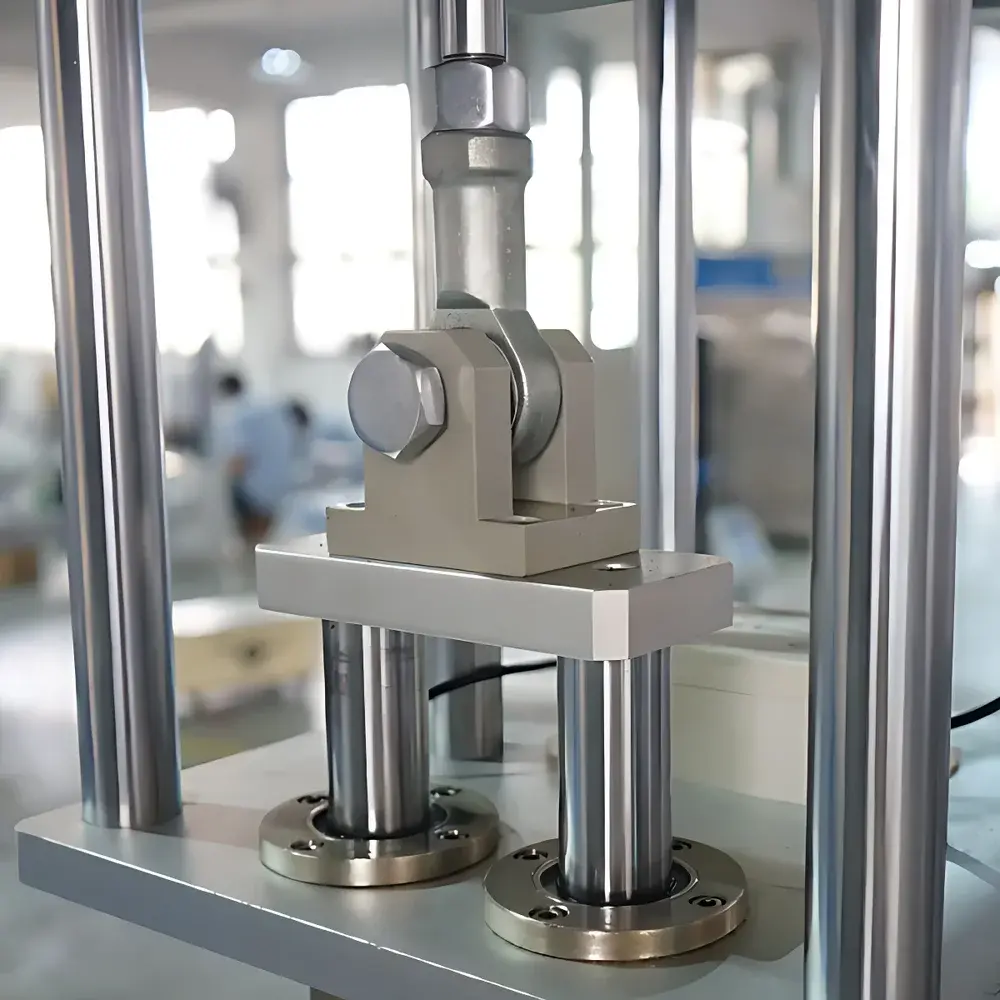
- Dual-range force transducer (2 kN full-scale) with overload protection circuitry automatically halts operation if applied load exceeds user-defined thresholds, safeguarding both specimen and instrumentation.
- Integrated safety architecture includes mechanical end-stop limit switches, ground-fault circuit interrupter (GFCI)-compatible power input, and emergency stop button compliant with IEC 60204-1.
- Forklift-compatible base with heavy-duty industrial casters and adjustable leveling feet (FOMA-type) enables secure anchoring and vibration isolation on standard concrete laboratory floors.
- Full-cycle programmability supports up to 999,999 impact cycles per test sequence; automatic termination and audible/visual alert upon completion.
- Power-loss recovery function retains last executed parameters and cumulative cycle count, allowing seamless resumption after unexpected shutdowns.
Sample Compatibility & Compliance
The HD-F766 accommodates standard domestic and commercial mattress formats up to 2200 mm × 2200 mm in planar footprint and 400 mm in maximum compressed height. It accepts interchangeable loading pads—including 11.5 kg ASTM-compliant steel masses and optional JIS-specified weights—to meet regional regulatory requirements. All mechanical and control subsystems comply with CE marking directives (2006/42/EC Machinery Directive, 2014/30/EU EMC Directive) and are designed to support GLP-aligned test documentation practices. While not inherently 21 CFR Part 11 compliant, audit trails generated via USB export can be integrated into validated LIMS or ELN platforms meeting FDA or ISO/IEC 17025 traceability requirements.
Software & Data Management
Operation is managed through a 7-inch industrial-grade resistive touchscreen running a deterministic real-time PLC firmware environment. Users configure test protocols—including target force (1 N–2 kN), stroke length (0–200 mm), rotational speed (1–165 rpm), and total cycle count—via intuitive numeric entry fields and toggle controls. Real-time feedback includes elapsed cycles, current load reading, motor status, and thermal monitoring of servo driver temperature. All test logs (timestamped start/stop times, cycle-by-cycle peak force values, error codes) are stored internally and exportable as CSV files via USB interface for post-processing in Excel, MATLAB, or statistical analysis software. No cloud connectivity or remote access capabilities are implemented—data sovereignty remains fully under lab administrator control.
Applications
- Validation of coil count, wire gauge, and border rod reinforcement efficacy in pocketed coil and Bonnell spring systems.
- Comparative fatigue assessment between natural latex, memory foam, and polyurethane foam comfort layers when paired with identical innerspring units.
- Pre-shipment QA screening for OEM mattress suppliers serving North American, Japanese, and EU retail channels.
- Root cause analysis of premature sagging, edge collapse, or spring protrusion incidents reported in field failure investigations.
- Supporting technical documentation for ISO 9001:2015 Clause 8.5.1 (Control of Production and Service Provision) and ISO 14001:2015 environmental management system audits.
FAQ
What mattress thicknesses can the HD-F766 accommodate?
The test chamber provides 400 mm of vertical clearance between the platform and impact head—sufficient for most twin through king-size innerspring and hybrid constructions, including those with pillow-top or euro-top layers.
Is calibration certification included with shipment?
Each unit ships with a factory-issued calibration report traceable to CNAS-accredited reference standards; annual recalibration using certified deadweight sets is recommended per ISO/IEC 17025 guidelines.
Can the tester operate continuously for 72+ hours?
Yes—the servo drive and thermal management system are rated for unattended operation over multi-day test sequences; ambient temperature must remain within 15–30 °C and relative humidity below 80% non-condensing.
Does the system support custom test profiles beyond ASTM F1566?
While the core motion profile follows Cornell methodology, users may define arbitrary combinations of speed, stroke, and dwell time within hardware limits; however, deviations from published standards require internal method validation.
What maintenance intervals are recommended?
Lubrication of eccentric cam bearings every 500 operational hours; inspection of load pad mounting hardware and sensor cable integrity prior to each test series; annual verification of PLC firmware version against HAIDA’s latest release notes.
Related Products



