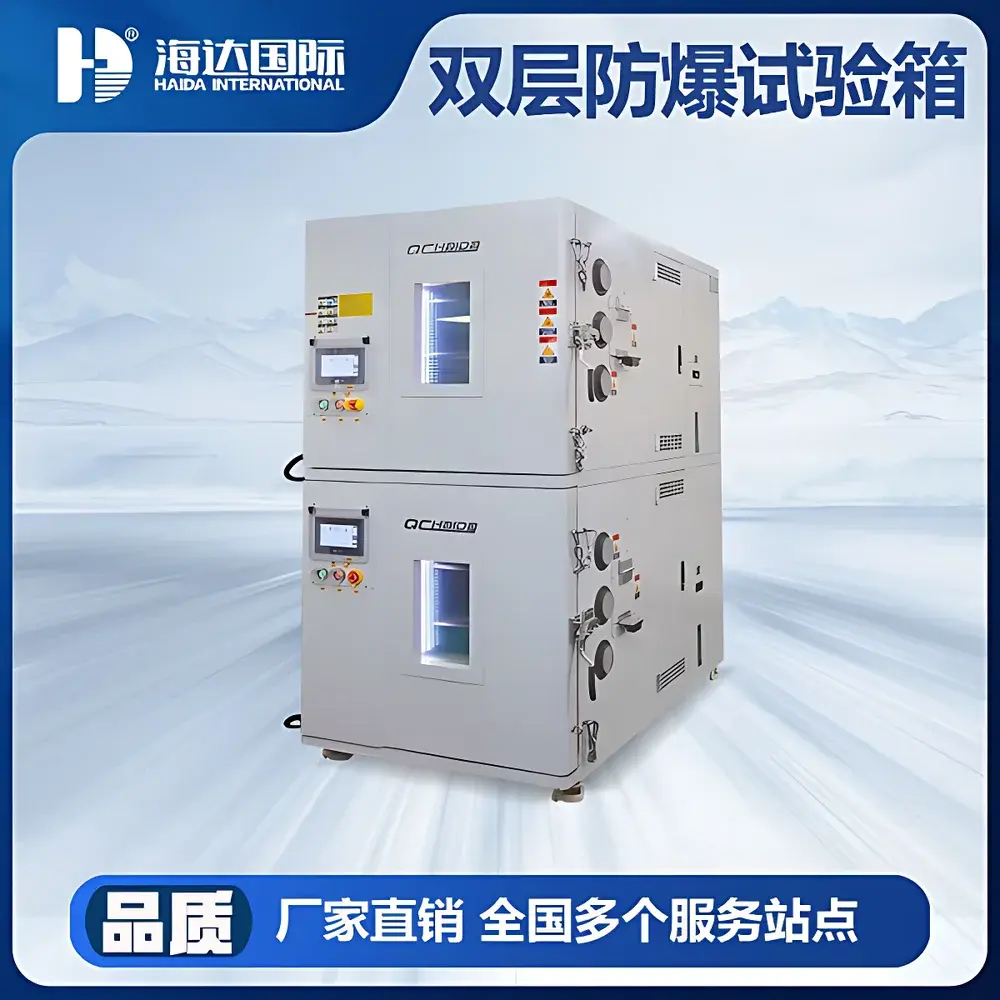
HAIDA HD-H203-1 Dual-Layer Explosion-Proof Battery Test Chamber
| Brand | HAIDA INTERNATIONAL |
|---|---|
| Origin | Guangdong, China |
| Manufacturer Type | Direct Manufacturer |
| Country of Origin | China |
| Model | HD-H203-1 Dual-Layer Explosion-Proof Battery Test Chamber |
| Pricing | Upon Request |
| Internal Chamber Dimensions | 500 × 500 × 500 mm (W × D × H) |
| External Dimensions | 680 × 750 × 1375 mm (W × D × H) |
| Inner Wall Material | 1.2 mm SUS304 Stainless Steel with PTFE Lining |
| Outer Casing | 1.5 mm Powder-Coated Cold-Rolled Steel |
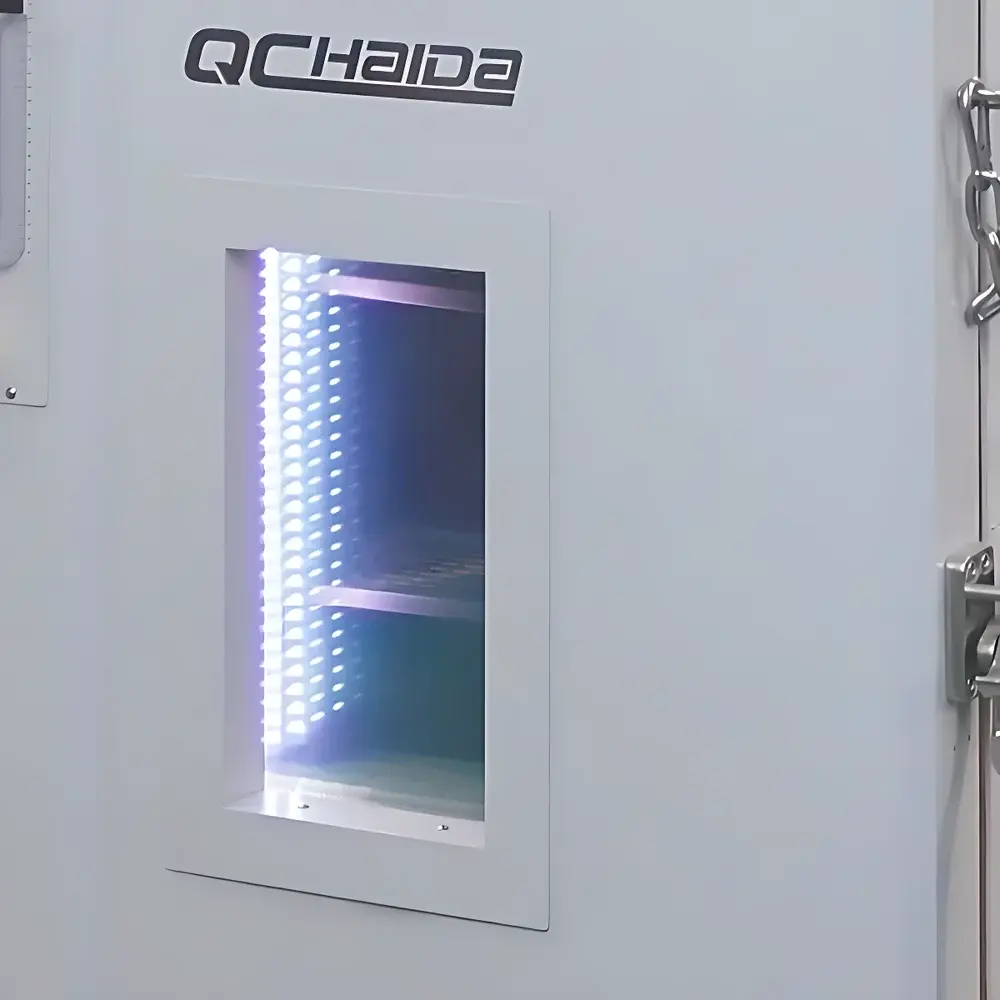
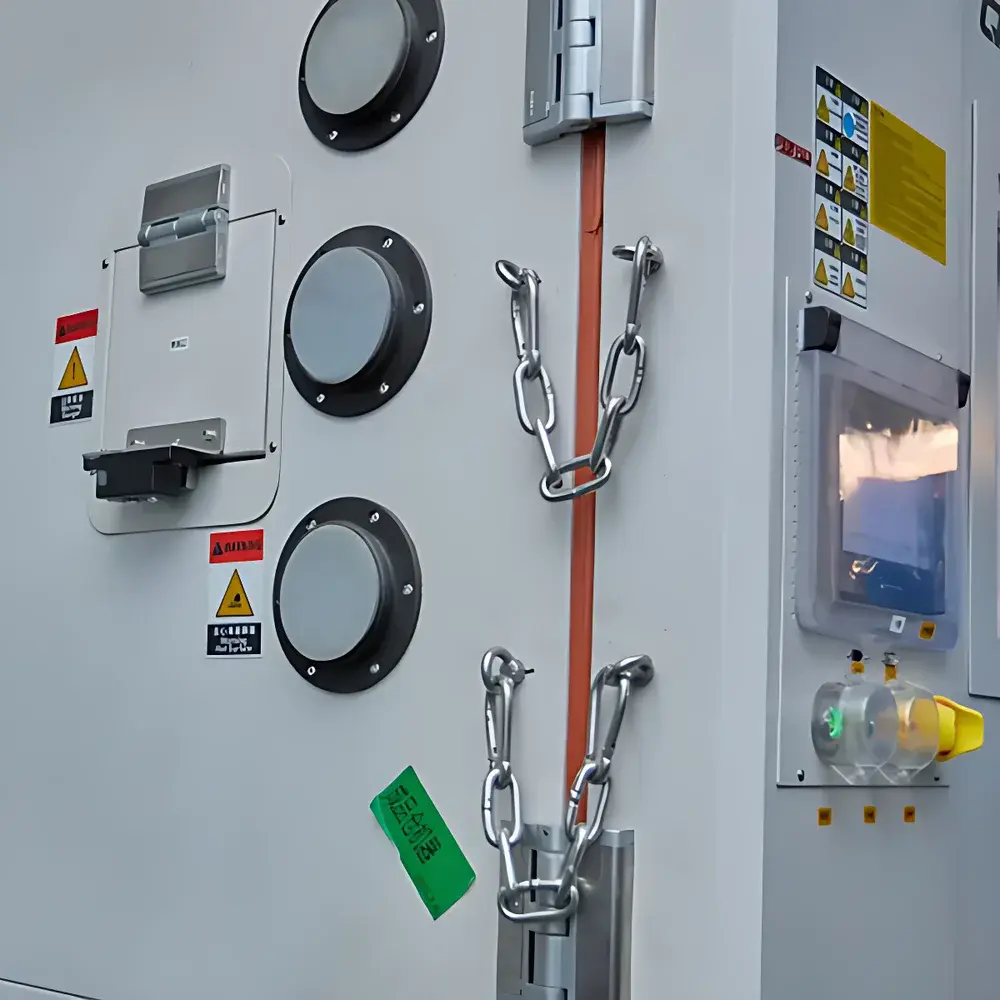
| Observation Window | 250 × 250 mm, Dual-Layer Tempered Glass with Stainless Steel Mesh |
| Exhaust Port | Ø100 mm, Rear-Mounted |
| Pressure Relief Opening | 200 × 200 mm, Rear-Mounted, Spring-Loaded Passive Release Mechanism |
| Door Configuration | Single Left-Swing Door with Explosion-Resistant Safety Chain |
| Test Port | One Ø50 mm Penetration Port on Left Side |
| Mobility | Four Swivel Casters with Locks |
| Illumination | Integrated LED Interior Light |
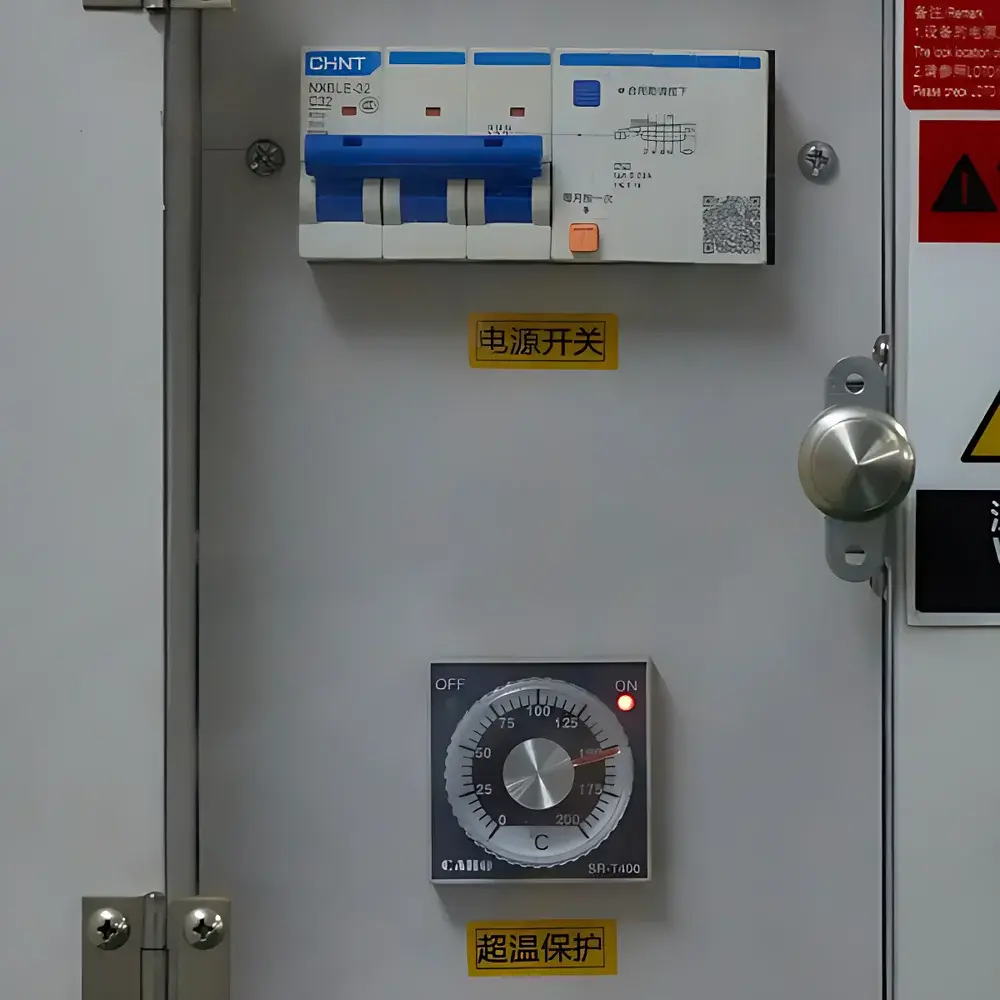
| Control Interface | Push-Button Panel |
| Power Input | AC 220 V, 200 W |
| Net Weight | 65 kg |
Overview
The HAIDA HD-H203-1 Dual-Layer Explosion-Proof Battery Test Chamber is an engineered safety containment system designed for controlled electrochemical stress testing of lithium-ion, solid-state, and emerging battery chemistries under high-risk conditions—including overcharge, overdischarge, external short circuit, thermal runaway initiation, and forced internal failure scenarios. It operates on the principle of passive mechanical pressure containment and rapid energy dissipation, utilizing a dual-layer structural architecture to isolate hazardous events while preserving operator safety and adjacent instrumentation integrity. Unlike generic environmental chambers, this unit integrates purpose-built explosion mitigation features—such as calibrated pressure-relief geometry, flame-arresting venting pathways, and reinforced observation integrity—that align with internationally recognized battery safety evaluation protocols. Its primary application domain spans R&D laboratories, quality assurance departments, third-party certification bodies, and battery manufacturing facilities engaged in compliance validation against regulatory frameworks governing electric vehicles, portable electronics, and stationary energy storage systems.
Key Features
- Dual-layer chamber design: Inner SUS304 stainless steel enclosure (1.2 mm thickness) with PTFE lining ensures chemical resistance to electrolyte vapors and corrosion from off-gassing; outer structural shell (1.5 mm powder-coated cold-rolled steel) provides mechanical reinforcement and grounding continuity.
- Passive pressure-relief system: Rear-mounted 200 × 200 mm spring-loaded relief panel activates at defined overpressure thresholds to direct blast forces away from personnel zones—designed per ISO/IEC 80079-36:2016 principles for equipment protection by enclosure.
- Optically secure observation: 250 × 250 mm dual-pane tempered glass viewport incorporates embedded stainless steel mesh (≤2 mm aperture) to retain visual monitoring capability without compromising fragmentation containment.
- Instrumentation-ready interface: Single Ø50 mm feedthrough port on left side enables routed integration of thermocouples, voltage probes, current shunts, gas sensors, or high-speed camera triggers—compatible with industry-standard data acquisition hardware.
- Operational flexibility: Four locking swivel casters allow repositioning within test bays; integrated LED lighting supports real-time visual assessment during active testing cycles.
- Electrical safety compliance: Fully grounded chassis, isolated power circuitry (AC 220 V, 200 W), and EMI-shielded control panel meet IEC 61000-6-3 emission requirements for laboratory environments.
Sample Compatibility & Compliance
The HD-H203-1 accommodates prismatic, cylindrical, pouch, and custom-format cells up to 500 mm in any dimension. Its internal volume (125 L) supports multi-cell arrays and module-level evaluations when configured with auxiliary mounting fixtures. The chamber meets functional requirements of multiple international standards, including but not limited to: GB/T 31485–2015 (safety testing for EV traction batteries), GB 31241–2014 (portable lithium battery safety), UN Manual of Tests and Criteria, Part III, subsection 38.3 (transport safety), and IEC 62133–2:2017 (secondary cells and batteries containing alkaline or other non-acid electrolytes). While the chamber itself is not certified as a standalone safety device, its mechanical and venting specifications are validated to support test execution under these standards’ procedural clauses—particularly those mandating physical containment during thermal propagation or explosive venting events.
Software & Data Management
The HD-H203-1 operates as a hardware platform without embedded firmware or proprietary software. It is intended for use with externally connected test instrumentation—such as battery cyclers (e.g., Arbin, Bitrode, Neware), thermal imaging systems, or gas chromatography units—whose data logging and analysis workflows remain fully user-defined. All electrical interfaces conform to standard industrial signal isolation practices. For GLP/GMP-regulated environments, the unit’s passive architecture supports full auditability: no internal memory or time-stamped logs exist, eliminating concerns related to FDA 21 CFR Part 11 electronic record integrity. Documentation packages include traceable calibration certificates for structural verification (e.g., relief panel actuation pressure tolerance), material certifications (SUS304 mill test reports), and RoHS/REACH-compliant component declarations.
Applications
- Thermal runaway propagation studies in stacked cell configurations
- Overcharge-induced failure mode analysis under controlled ambient conditions
- Validation of venting cap performance and gas dispersion kinetics
- Pre-certification safety testing prior to submission to UL 2580, IEC 62619, or ISO 12405
- Root-cause investigation of field failures using forensic post-test chamber residue analysis
- Development of next-generation flame-retardant electrolytes and separator materials
FAQ
Does the HD-H203-1 include integrated temperature or pressure monitoring?
No. It is a passive containment enclosure only. All sensing must be performed via external instruments connected through the designated test port.
Can the chamber be modified for custom dimensions or additional ports?
Yes. HAIDA offers OEM engineering services for dimensional adaptation, supplementary venting configurations, and specialized mounting solutions—subject to structural integrity review and revised pressure-relief recalibration.
Is the unit suitable for hydrogen-containing battery systems (e.g., metal hydride or PEM fuel cells)?
It is structurally rated for low-energy combustion events typical of Li-ion thermal runaway. For high-volume hydrogen release or sustained flammable gas accumulation, supplemental inert gas purging or secondary explosion-proof enclosures are recommended per IEC 60079-10-1 zoning guidelines.
What maintenance is required to ensure long-term reliability?
Biannual inspection of relief panel spring tension, viewport seal integrity, caster locking mechanisms, and grounding continuity is advised. PTFE lining should be visually inspected for delamination after each high-severity test event.
Are replacement parts such as relief panels or observation glass available separately?
Yes. All critical wear components—including relief flaps, tempered glass assemblies, and PTFE liner kits—are stocked and supplied with material certification and dimensional conformity documentation.