
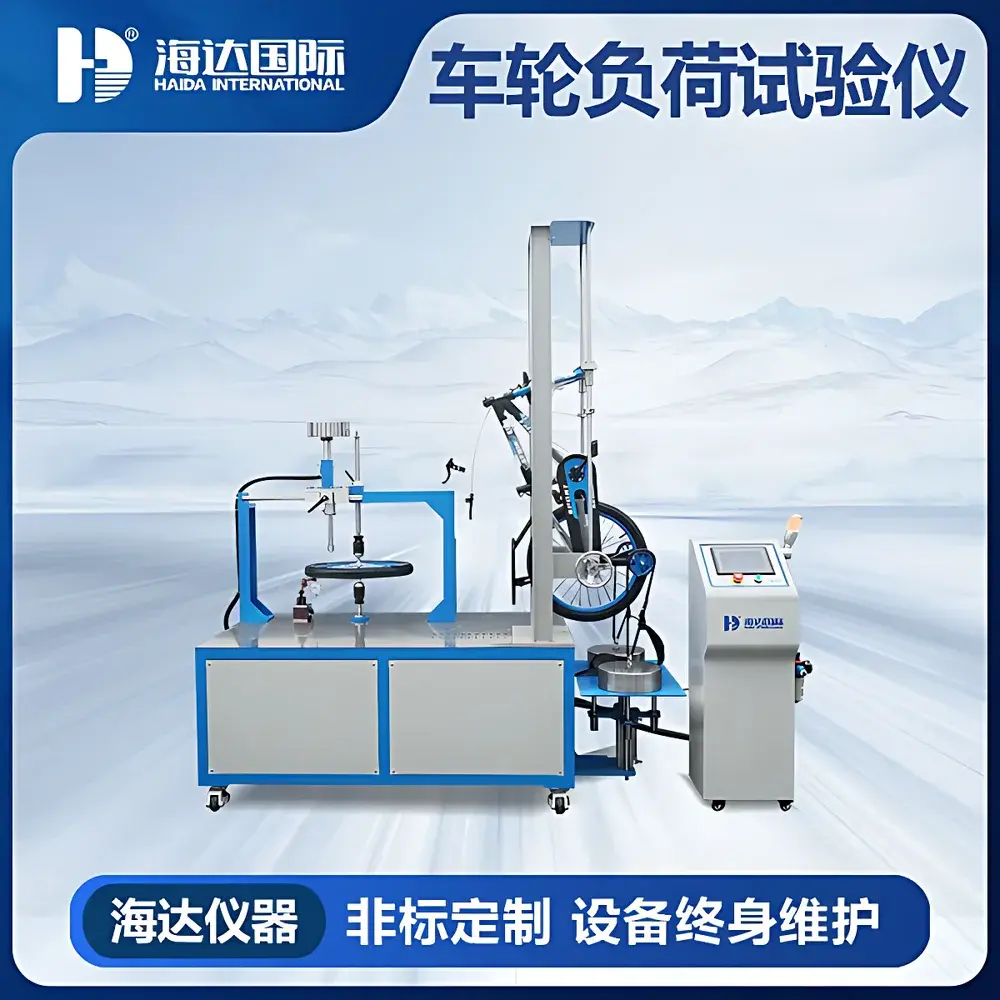
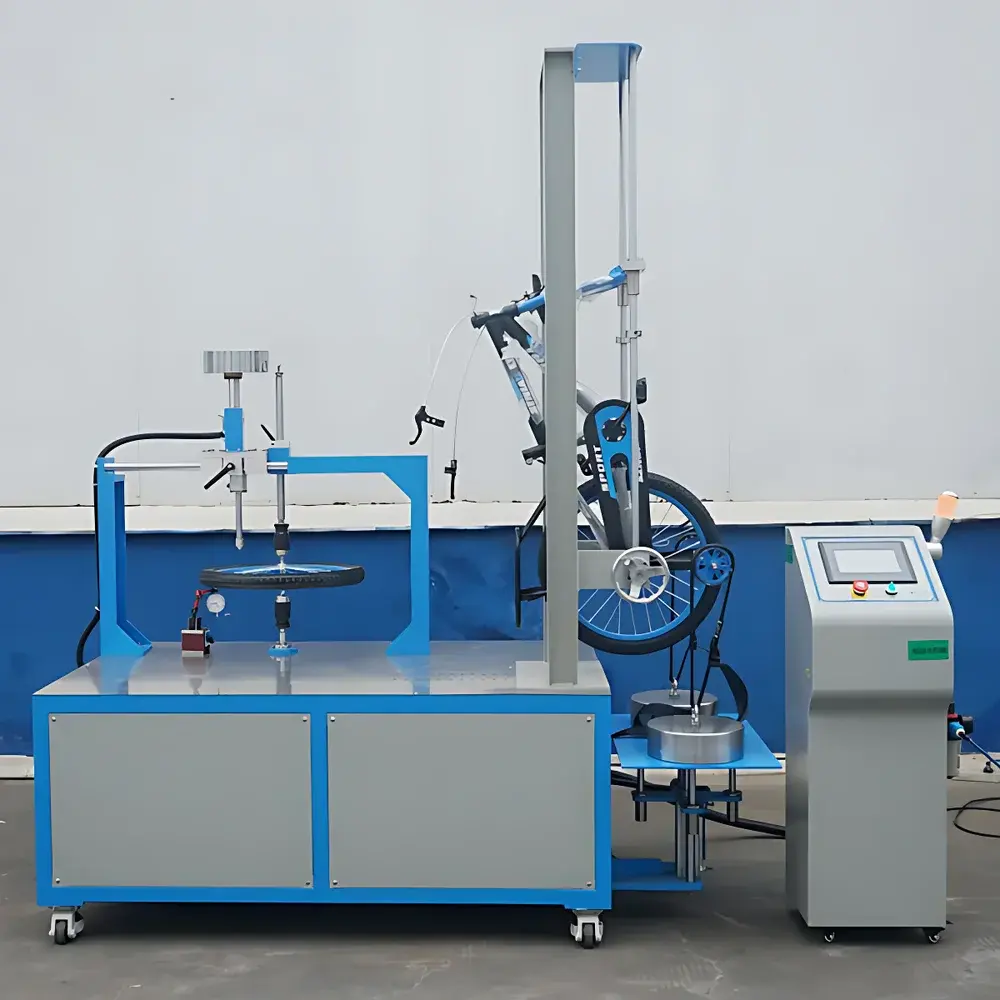
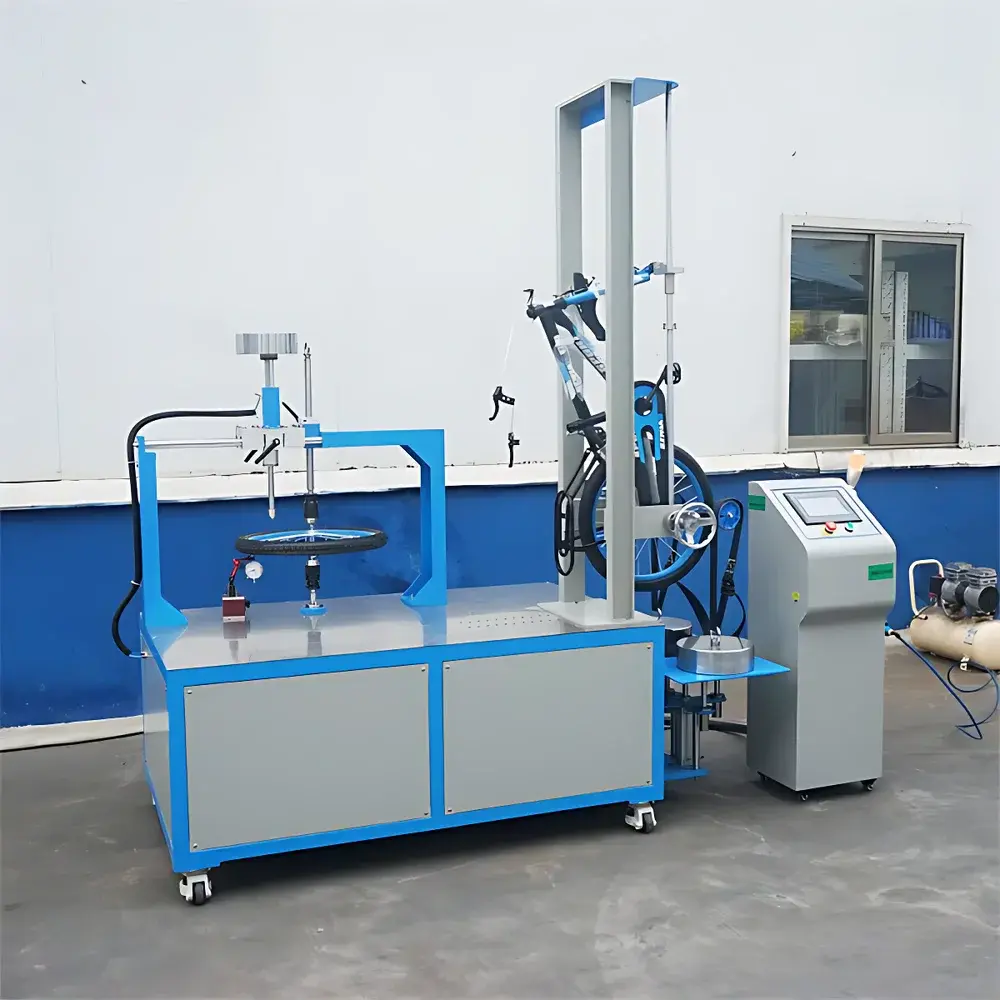
HAIDA HD-J238-1 Static Load Tester for Children’s Bicycle Training Wheels and Wheels
| Brand | HAIDA INTERNATIONAL |
|---|---|
| Origin | Guangdong, China |
| Manufacturer Type | Direct Manufacturer |
| Product Origin | Domestic (China) |
| Model | HD-J238-1 |
| Display | Touchscreen Interface |
| Control System | PLC-based |
| Data Output | USB port |
| Power Supply | 1∮ AC 220 V |
| Dimensions (L×W×H) | 1930 × 970 × 2300 mm |
| Weight | Approx. 650 kg |
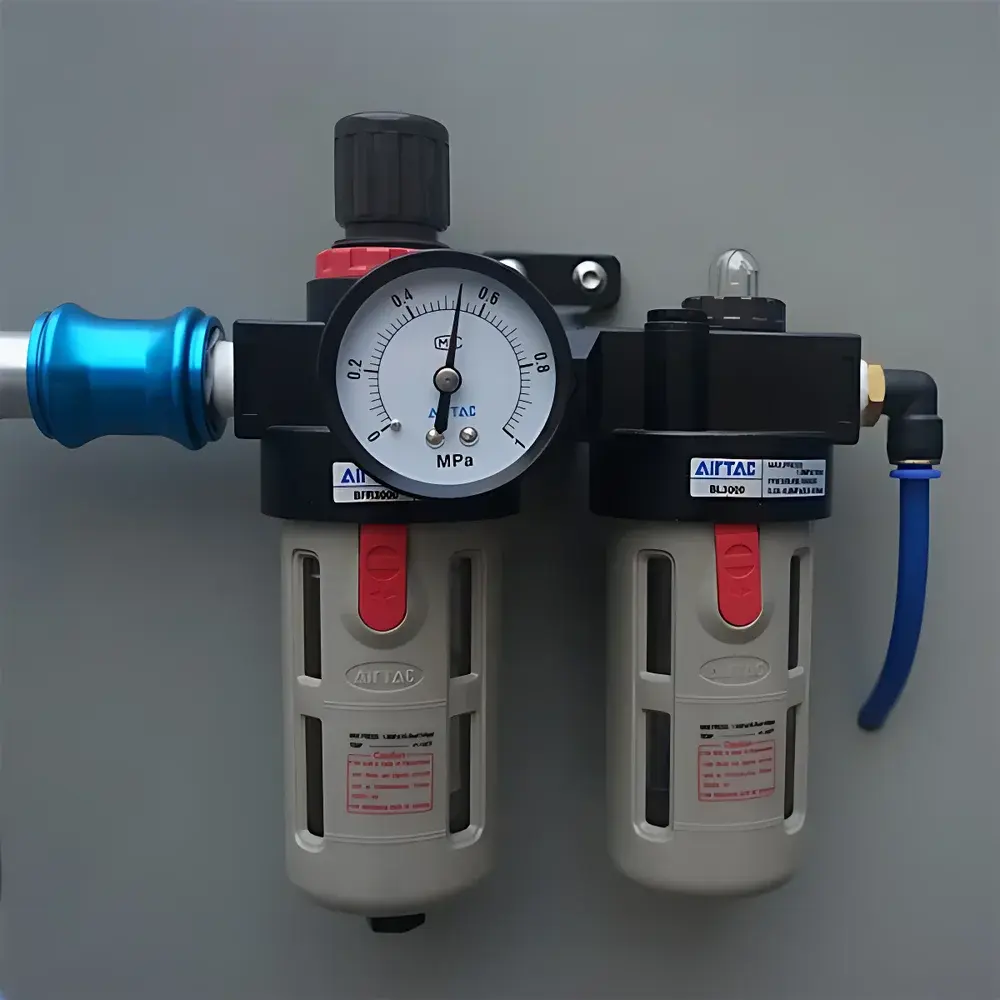
| Pneumatic Supply | ≥0.6 MPa |
| Total Power Consumption | ~100 W |
| Test Capabilities | Static wheel load test, vertical training wheel load test, longitudinal training wheel load test |
| Applicable Wheel Sizes | 12″ to 26″ children’s bicycles |
| Compliance Standard | GB 14746–2006 (Clauses 4.8, 4.12, 4.13) |
Overview
The HAIDA HD-J238-1 Static Load Tester is an engineered mechanical testing system designed specifically for evaluating structural integrity and functional reliability of training wheels and wheels used on children’s bicycles (12″–26″). It performs standardized static mechanical loading tests in accordance with GB 14746–2006 — China’s mandatory safety standard for children’s bicycles — including Clause 4.8 (wheel static load), Clause 4.12 (training wheel vertical load), and Clause 4.13 (training wheel longitudinal load). The instrument applies controlled, time-sustained forces to simulate real-world usage conditions: a 178 N vertical force on the rim (wheel static load), and 30 kg (294.2 N) suspended loads applied either vertically (with frame inverted and secured at the seat post) or longitudinally (with front axle aligned directly above rear axle). These tests assess deformation, permanent set, component slippage, and failure modes under static stress — critical parameters for regulatory compliance, quality assurance, and product durability validation.
Key Features
- Rigid structural frame fabricated from precision-welded square steel tubing, ensuring long-term dimensional stability and minimal deflection during high-load testing.
- Adjustable universal fixture system accommodating diverse frame geometries and wheel sizes across the 12″–26″ range — including variations in dropout spacing, axle diameter, and mounting interface.
- Modular control cabinet design enables rapid reconfiguration between wheel and training wheel test modes without hardware modification.
- Heavy-duty industrial casters with locking福马 (Fuma) leveling feet provide both precise height adjustment and vibration isolation, enhancing repeatability in laboratory or production-floor environments.
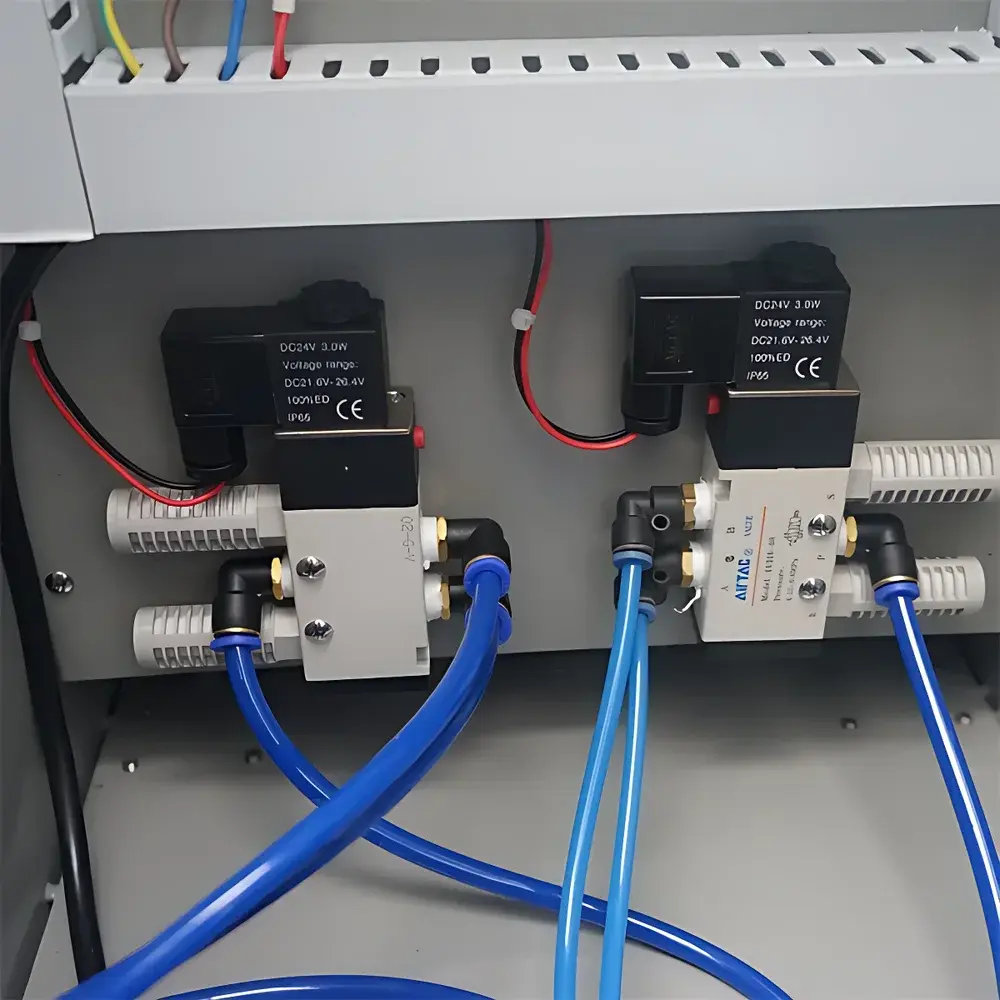
- PLC-driven pneumatic actuation with real-time cylinder position monitoring; automatic fault detection triggers visual and audible alerts if actuator stroke deviation exceeds ±2 mm.
- Non-volatile memory backup ensures full data retention during unexpected power interruption — last test cycle count, elapsed time, and pass/fail status are preserved and recoverable upon restart.
Sample Compatibility & Compliance
The HD-J238-1 supports all common children’s bicycle configurations compliant with GB 14746–2006, including single-speed, coaster-brake, and freewheel-equipped models. It accommodates quick-release and bolt-on axles (10–14 mm diameter), standard training wheel mounting brackets (e.g., L-shaped arms with rubber bushings), and conventional rim profiles (steel or aluminum). All test procedures align strictly with GB 14746–2006’s defined loading points, force magnitudes, dwell durations (3 minutes per test), and pass criteria (no fracture, no permanent deformation exceeding 1.5 mm, no functional impairment post-test). While primarily certified for GB compliance, its mechanical architecture permits adaptation to equivalent clauses in EN 14765:2018 (European standard for children’s bicycles) and ASTM F963–17 (Section 4.23 – Wheel and Tire Requirements), subject to minor fixture customization and calibration verification.
Software & Data Management
Operation is managed via a 7-inch industrial touchscreen HMI integrated with a deterministic PLC controller. Users configure test parameters—including load duration (fixed at 3 min per standard), cycle count (1–999,999), and test sequence (wheel only / training wheel vertical / training wheel longitudinal)—through intuitive menu navigation. All test events are timestamped and logged locally to internal flash memory, with export capability via USB 2.0 to CSV-formatted files compatible with Excel, MATLAB, or LIMS platforms. Audit-trail functionality records operator ID (optional RFID login), start/stop timestamps, load application confirmation, and anomaly logs — supporting GLP-aligned documentation requirements. No cloud connectivity or remote access is implemented, preserving data sovereignty and minimizing cybersecurity exposure in regulated QA labs.
Applications
This tester serves as a core validation tool in multiple operational contexts: incoming material inspection of training wheel assemblies from Tier-2 suppliers; final assembly line end-of-line (EOL) testing prior to packaging; R&D durability benchmarking during new frame or wheelset development; and third-party certification lab verification for GB 14746–2006 conformance. It is routinely deployed by domestic manufacturers exporting to ASEAN, Middle East, and African markets where Chinese national standards serve as de facto technical baselines. Its robust mechanical design and deterministic control logic also make it suitable for use in ISO/IEC 17025-accredited testing laboratories requiring documented traceability, repeatability ≤ ±1.2% (k=2), and measurement uncertainty budgets consistent with force transducer calibration certificates (ISO 376 Class 0.5).
FAQ
What standards does the HD-J238-1 explicitly support?
It is configured and validated for GB 14746–2006 Clauses 4.8, 4.12, and 4.13. Adaptation to EN 14765 or ASTM F963 requires fixture recalibration and procedural review.
Is the 30 kg load applied dynamically or statically?
Strictly static: weights are mechanically suspended for precisely 3 minutes using gravity-only loading — no servo-controlled ramping or impact simulation.
Can test data be exported in machine-readable format?
Yes — USB export generates timestamped CSV files containing cycle number, start/end time, load status, and operator ID (if enabled).
Does the system include force calibration certification?
No — calibration certificates for load cells must be obtained separately from an accredited metrology provider per ISO/IEC 17025.
What maintenance intervals are recommended?
Lubrication of linear guides every 500 test cycles; annual verification of pneumatic pressure regulator accuracy and touchscreen touch-response calibration.



