
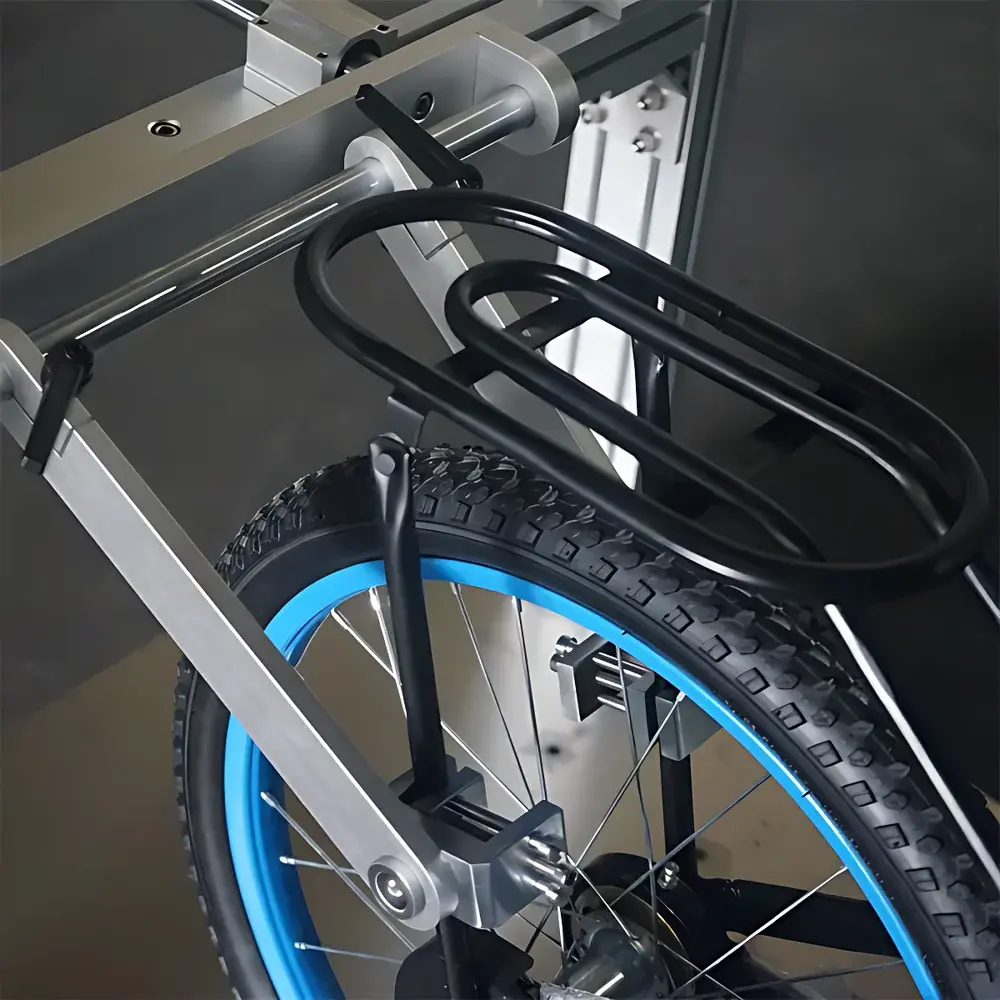
HAIDA HD-J242-1 Static Load Testing System for Drive Systems
| Brand | HAIDA INTERNATIONAL |
|---|---|
| Origin | Guangdong, China |
| Manufacturer Type | Manufacturer |
| Product Category | Domestic Instrument |
| Model | HAIDA HD-J242-1 Static Load Testing System for Drive Systems |
| Pricing | Upon Request |
Overview
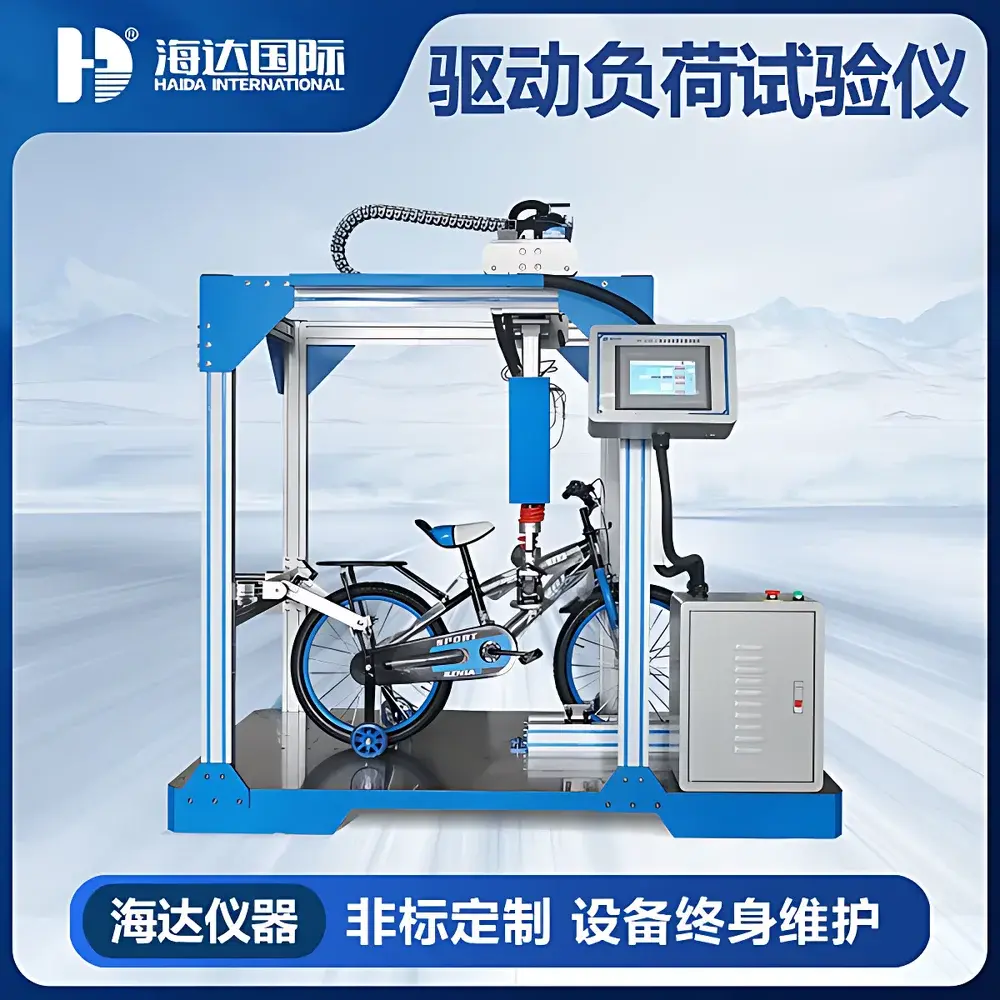
The HAIDA HD-J242-1 Static Load Testing System for Drive Systems is an engineered mechanical test platform designed to evaluate structural integrity and functional reliability of drive system components—particularly in juvenile bicycle applications—under controlled static loading conditions. Based on standardized quasi-static force application principles, the system applies calibrated, time-sustained mechanical loads to simulate real-world service stresses, including vertical and longitudinal loading scenarios defined in international safety standards. Unlike dynamic fatigue testers, this instrument operates under steady-state load conditions (i.e., constant-force application over fixed durations), enabling precise assessment of elastic deformation, permanent set, joint slippage, and component failure thresholds without inertial or vibrational interference. Its architecture adheres to fundamental mechanics-of-materials testing paradigms, where load magnitude, application point, orientation, and dwell time are strictly governed by normative test protocols.
Key Features
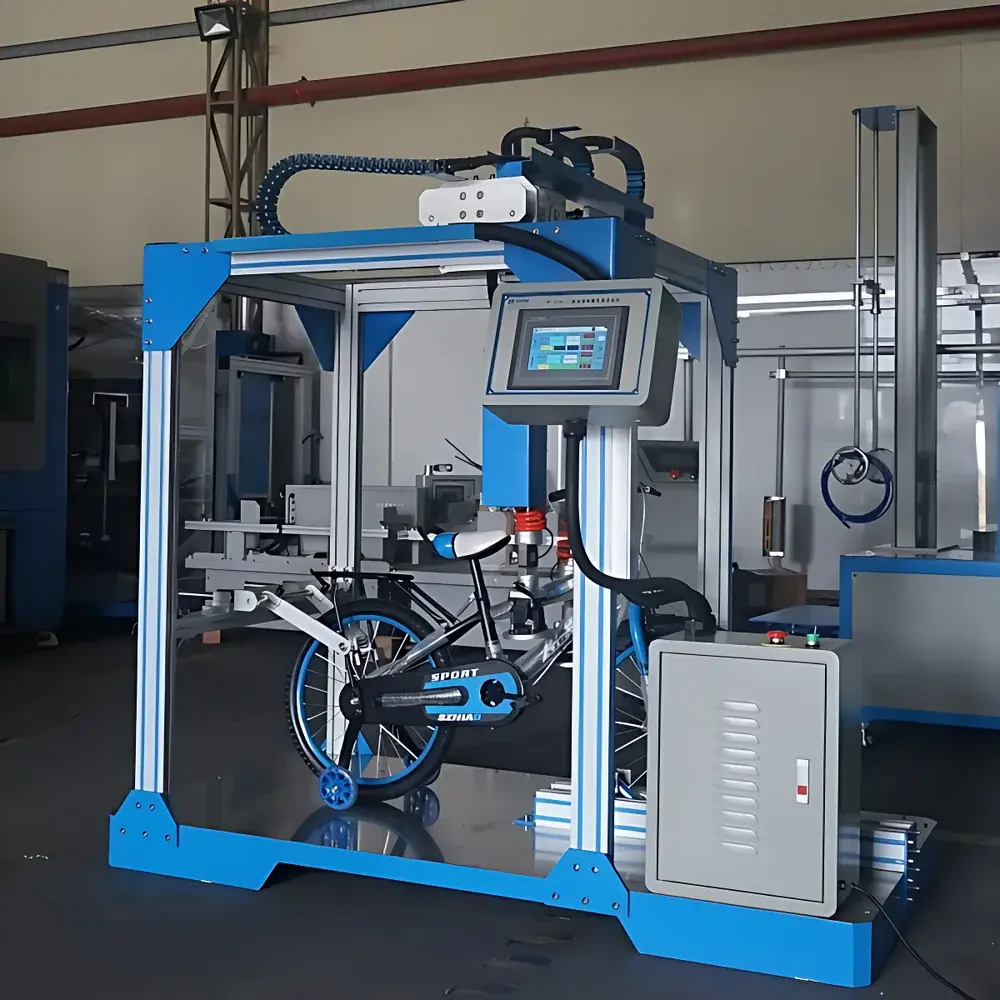
- Robust structural frame constructed from precision-welded square steel tubing, ensuring dimensional stability and long-term rigidity under repeated 30 kg (294 N) and 178 N load cycles.
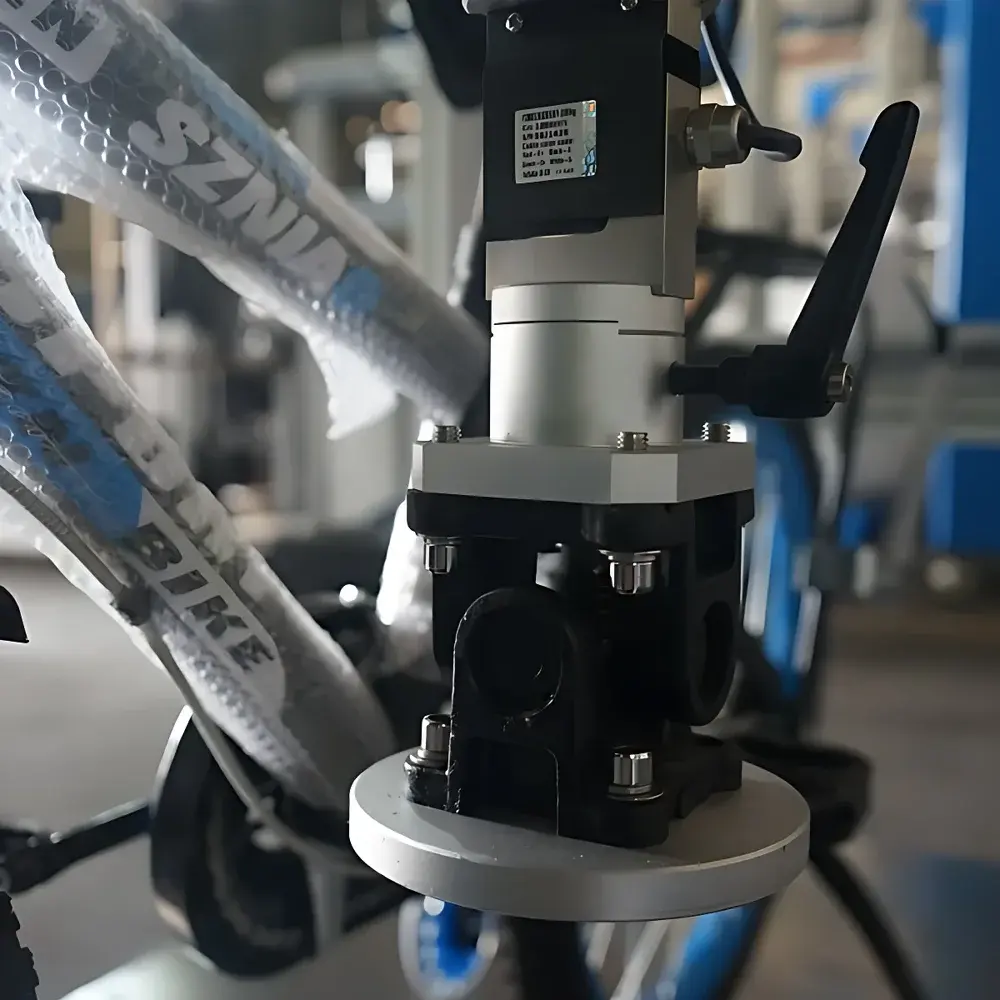
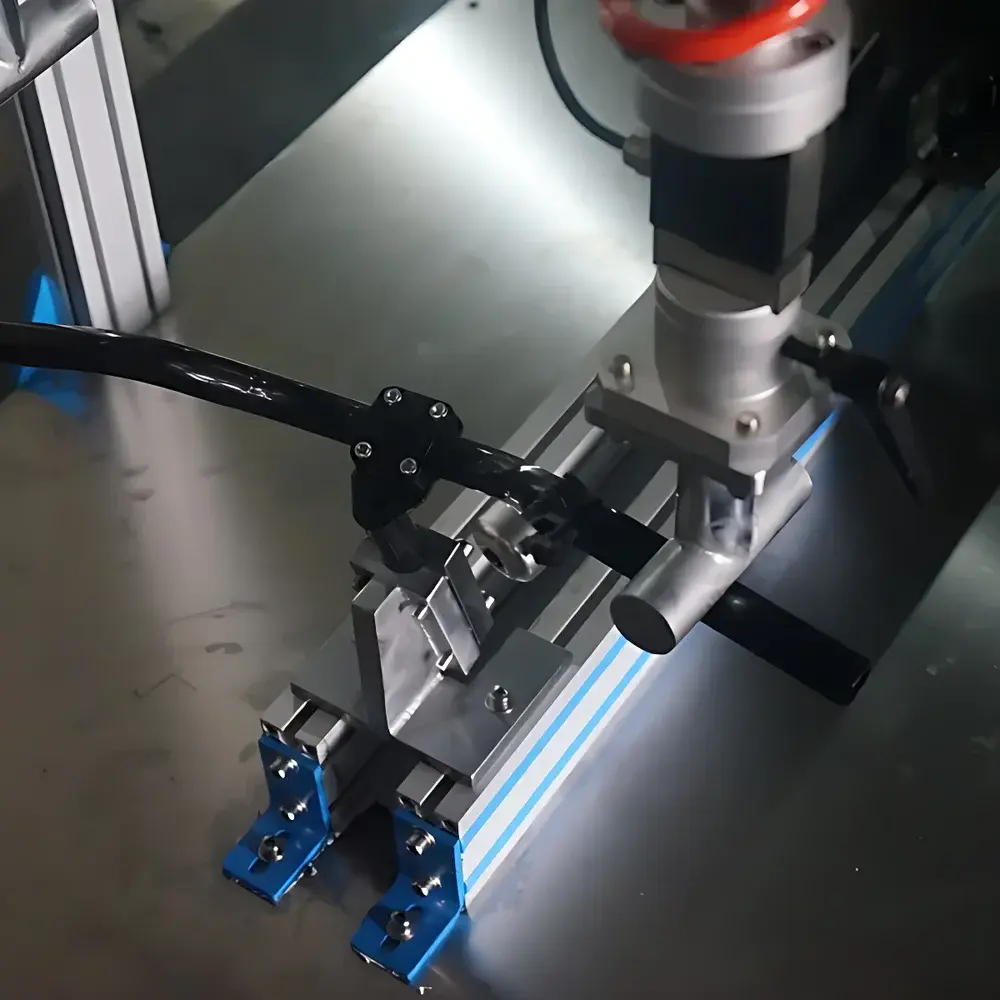
- Modular, height- and angle-adjustable fixture assembly accommodating wheel diameters from 12″ to 26″ (305 mm to 660 mm), with quick-release clamping mechanisms for rapid sample setup and reconfiguration.
- Dedicated dual-mode mounting configuration: inverted frame fixture for vertical balance-wheel loading and upright frame fixture for longitudinal loading—both secured via saddle tube and axle anchoring points per GB 14746-2006 requirements.
- Integrated PLC-based control unit with industrial-grade 7-inch resistive touchscreen interface, supporting programmable test sequences, dwell time (default: 180 s), and cycle count (1–999,999 cycles).
- Fail-safe pneumatic subsystem with pressure monitoring (≥0.6 MPa supply required); automatic fault detection triggers visual/audible alarms upon cylinder stroke deviation or pressure loss.
- Non-volatile memory backup ensures data retention during unexpected power interruption; last-run parameters and cumulative cycle counts persist across power cycles.
Sample Compatibility & Compliance
The HD-J242-1 is validated for static load evaluation of juvenile bicycle drive-related subassemblies—including rear wheels, training wheels (balance wheels), cranksets, and associated frame interfaces—across ISO 8098:2014 and GB 14746-2006 (Sections 4.8, 4.12, 4.13) test clauses. It supports both single-point vertical loading (e.g., 294 N applied to a balance wheel hub for 3 minutes) and axial longitudinal loading (e.g., 294 N applied parallel to the wheel plane while maintaining geometric alignment between front and rear axles). All fixture geometries and load application points conform to dimensional tolerances specified in Annex B of GB 14746-2006. The system does not perform torsional, impact, or cyclic fatigue testing; its scope is limited to static structural verification under defined regulatory boundary conditions.
Software & Data Management
Control firmware implements deterministic real-time logic with microsecond-level timing resolution for load dwell synchronization. Test parameters—including load magnitude (predefined per standard), duration, cycle count, and pass/fail criteria—are configured via the HMI interface and stored in EEPROM. Raw event logs (start time, end time, cycle number, alarm status) are exportable via USB 2.0 port in CSV format for traceability and audit readiness. While the system does not feature network connectivity or FDA 21 CFR Part 11-compliant electronic signatures, its local data persistence, timestamped operation records, and manual calibration log support GLP-aligned laboratory documentation practices when integrated into validated quality management systems.
Applications
- Verification of balance wheel bracket weld integrity and bushing deformation limits under sustained vertical load.
- Evaluation of rear wheel rim stiffness and spoke tension retention after 178 N radial load application at the flywheel-side rim section.
- Assessment of frame-to-axle interface rigidity during longitudinal loading to detect premature bearing play or dropout deformation.
- Pre-shipment compliance screening for OEMs and third-party testing laboratories serving global juvenile product markets.
- Root cause analysis of field failures related to static overload events (e.g., curb strikes, improper mounting torque, material creep).
FAQ
What standards does the HD-J242-1 specifically support?
It is configured for GB 14746-2006 Sections 4.8 (wheel static load), 4.12 (balance wheel vertical load), and 4.13 (balance wheel longitudinal load). Optional calibration documentation aligns with ISO/IEC 17025:2017 general requirements for testing laboratories.
Is the system capable of dynamic or fatigue testing?
No. The HD-J242-1 performs only static load application with fixed dwell times. It lacks servo-controlled actuation, variable frequency loading, or closed-loop strain feedback necessary for fatigue or creep testing.
What pneumatic infrastructure is required for operation?
A minimum 0.6 MPa clean, dry compressed air supply with ≥3 P (horsepower) compressor capacity is recommended to maintain stable cylinder response across extended test sequences.
Can test results be exported for external reporting?
Yes—test logs and cycle counters are exportable via USB flash drive in comma-separated values (CSV) format, compatible with Excel, LIMS, and statistical process control software.
Does the system include calibration certification?
Standard delivery includes factory calibration verification against traceable deadweight standards. ISO/IEC 17025-accredited calibration certificates are available as an optional service.



