
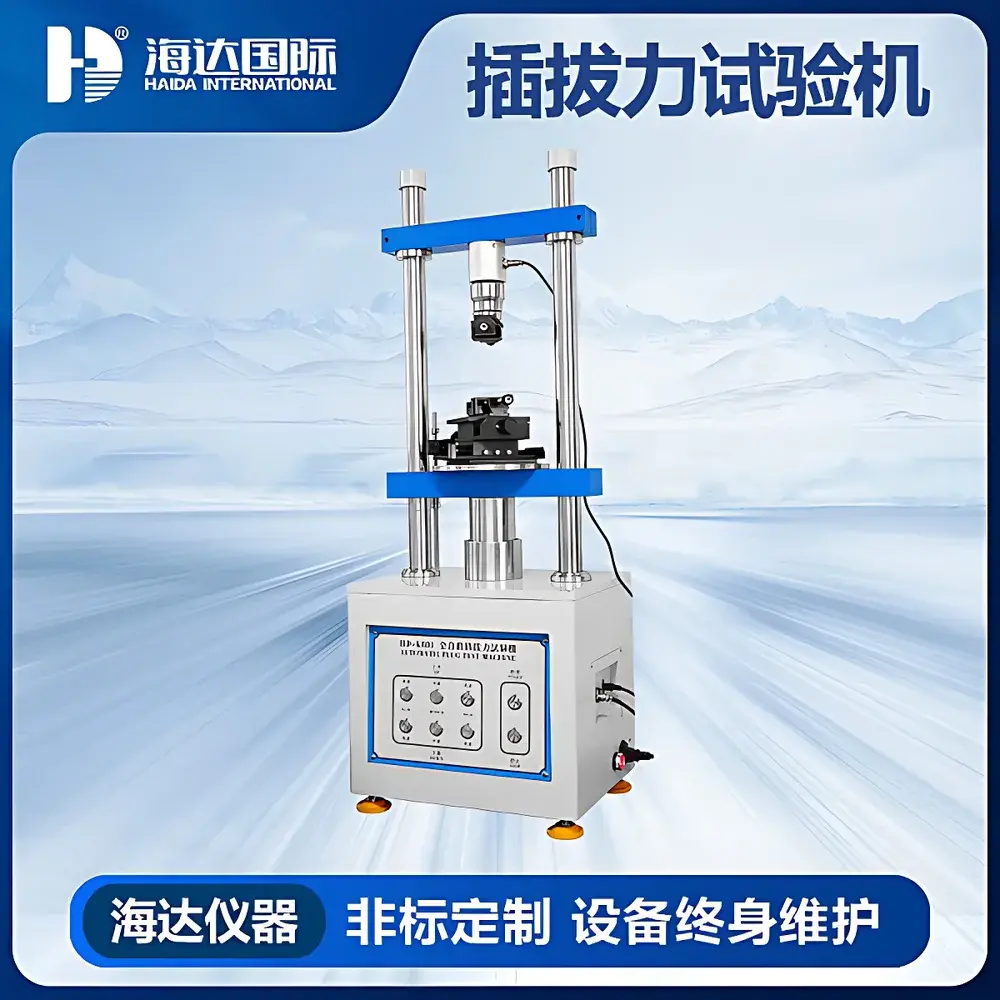
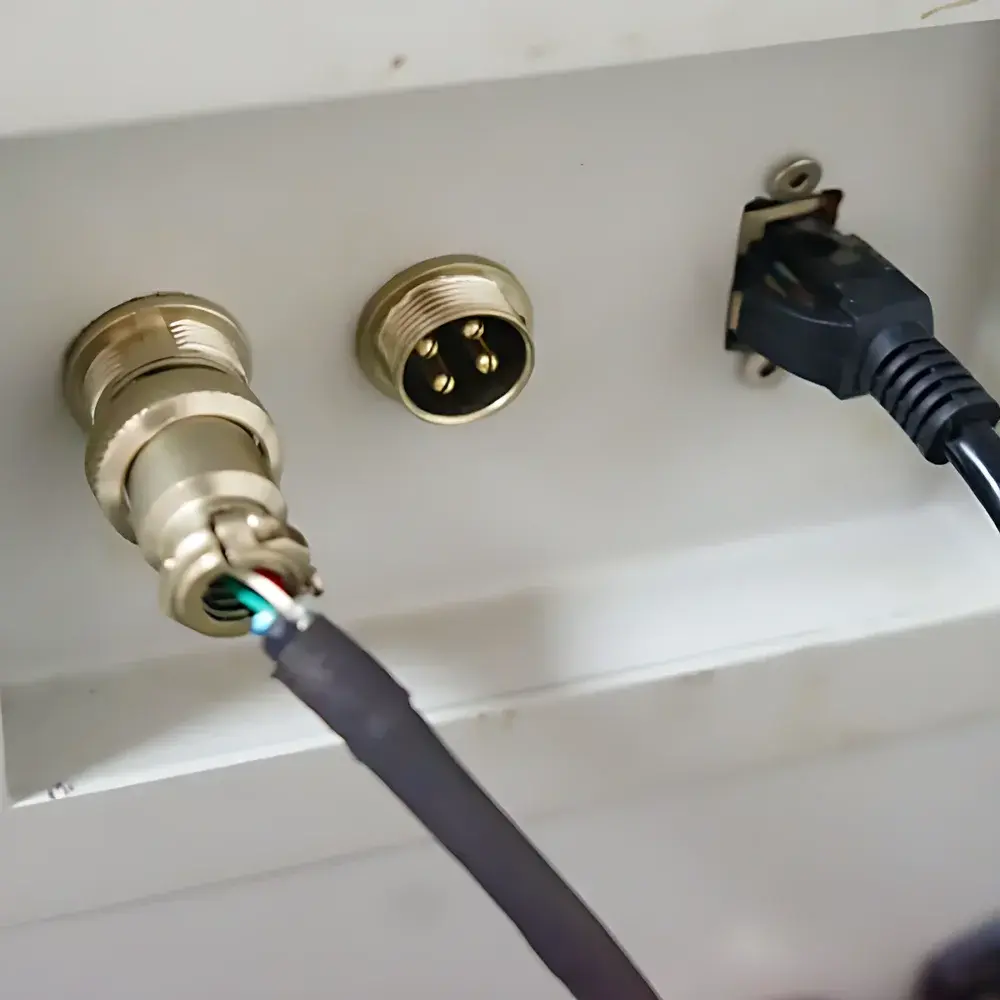
HAIDA HD-K801 Fully Automated Insertion and Extraction Force Tester
| Brand | HAIDA INTERNATIONAL |
|---|---|
| Origin | Guangdong, China |
| Manufacturer Type | Original Equipment Manufacturer (OEM) |
| Product Origin | Domestic (China) |
| Model | HD-K801 |
| Pricing | Upon Request |
Overview
The HAIDA HD-K801 Fully Automated Insertion and Extraction Force Tester is an electromechanical precision instrument engineered for quantitative mechanical evaluation of mating and demating forces in electrical and mechanical connectors. It operates on the principle of controlled axial displacement under closed-loop servo motor actuation, enabling high-reproducibility measurement of insertion force (IF), extraction force (EF), peak load, yield point, and travel-displacement hysteresis. Designed for compliance with international connector testing protocols—including IEC 60512-2, IEC 60512-3, USCAR-2, and MIL-STD-883 Method 2011—the HD-K801 delivers traceable, repeatable data essential for quality assurance in automotive, aerospace, medical device, and consumer electronics manufacturing.
Key Features
- Fully automated bidirectional force profiling: precise control of insertion/extraction speed (0.01–500 mm/min, adjustable in 0.01 mm/min increments), stroke distance (0–100 mm, resolution ±0.001 mm), and cycle count (1–999,999 cycles)
- High-fidelity load sensing: integrated S-type load cell with standard capacity options (50 N, 100 N, 200 N, 500 N), calibrated to ISO/IEC 17025-accredited standards; typical accuracy ±0.5% FS, repeatability ≤0.2% FS
- Real-time force–displacement curve acquisition: synchronized sampling at up to 1 kHz, capturing transient events such as contact bounce, snap-in, and frictional stick-slip phenomena
- Windows-based control software with embedded scripting engine: supports custom test sequences, conditional logic (e.g., abort-on-overload), and multi-step dwell/pause intervals between cycles
- Robust mechanical architecture: hardened steel frame with linear guide rails, anti-backlash ball screw drive, and thermal-stable base plate to minimize mechanical drift during extended testing
- Comprehensive data integrity safeguards: automatic timestamping, operator ID logging, audit trail generation, and optional 21 CFR Part 11-compliant electronic signature modules
Sample Compatibility & Compliance
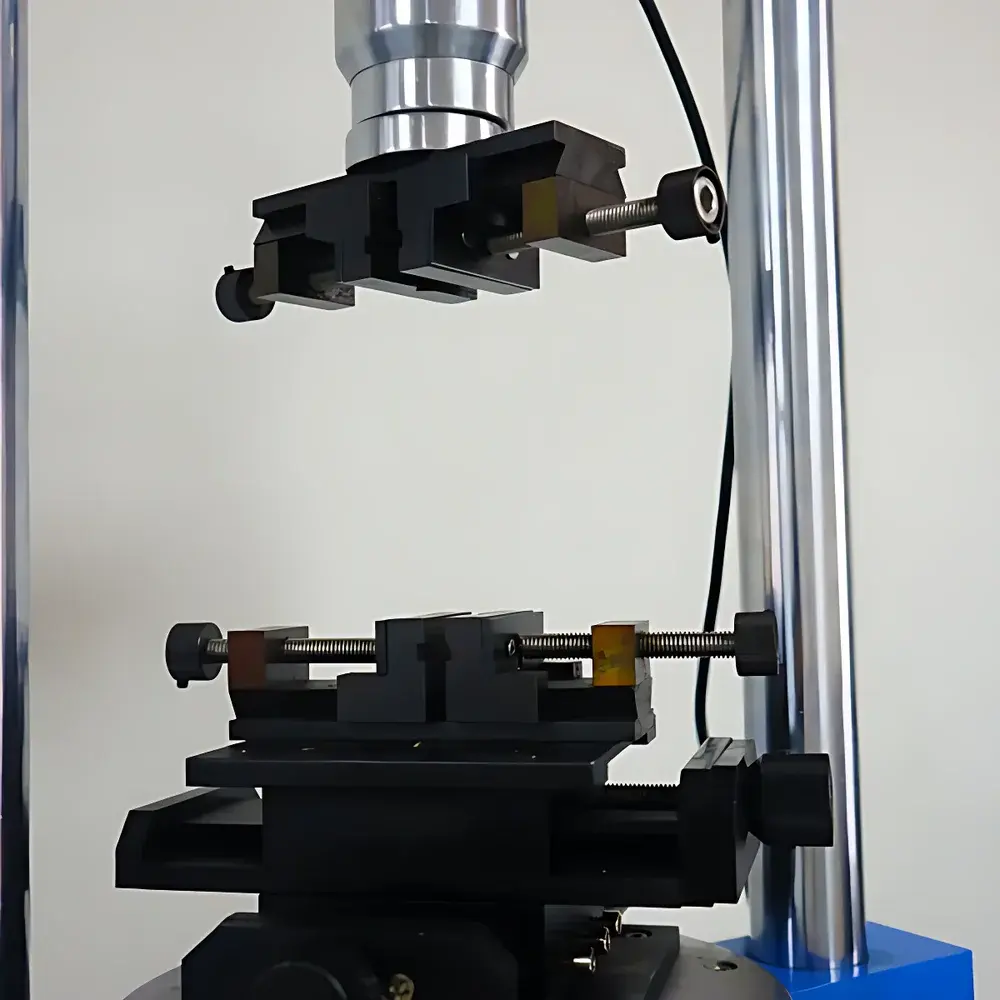
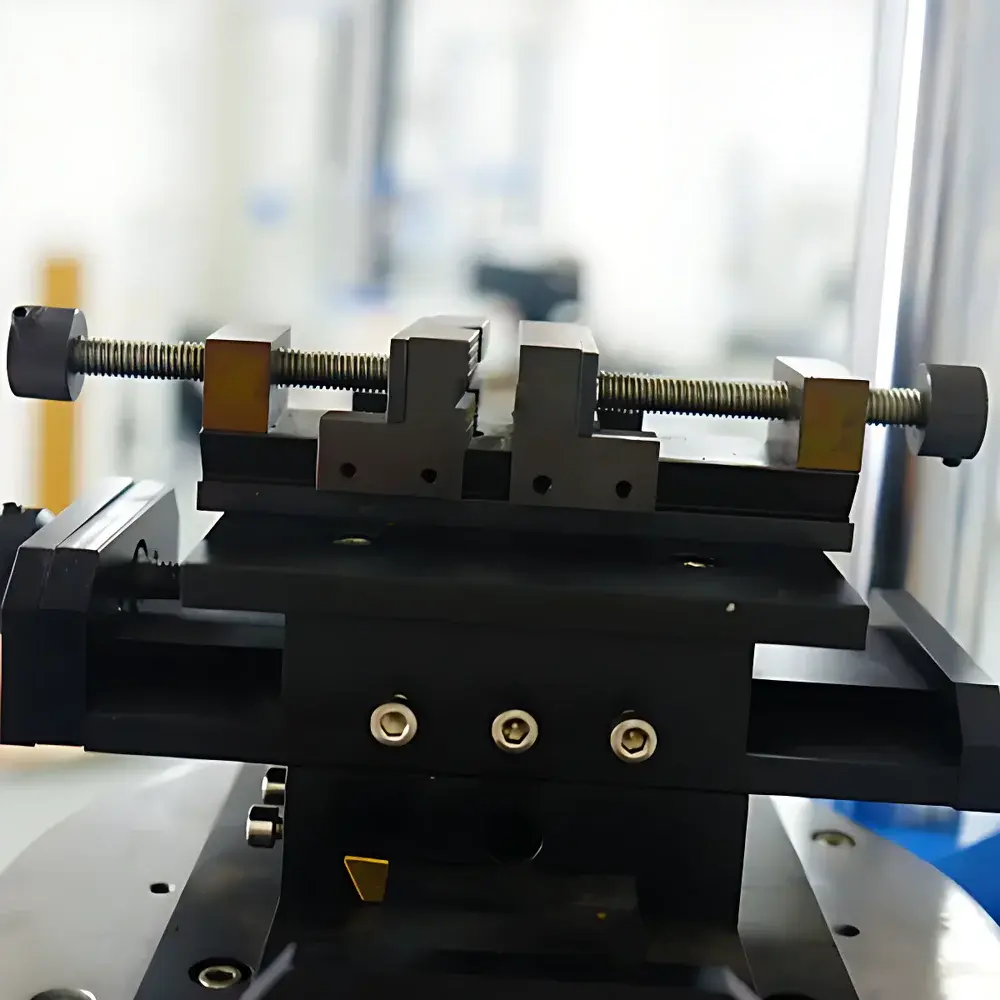
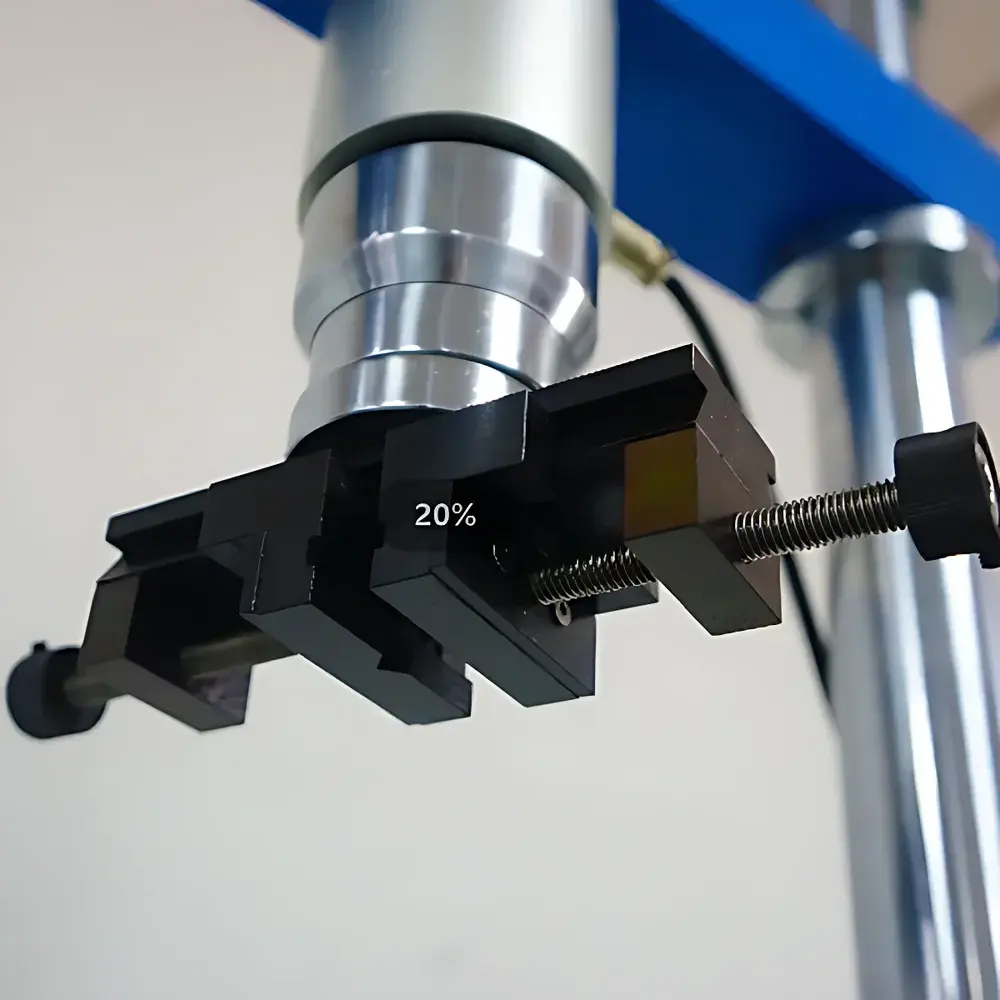
The HD-K801 accommodates a broad range of connector geometries via modular fixture interfaces—including DIN 41612, USB Type-A/B/C, HDMI, RJ45, M12, and custom PCB-mounted headers—using standardized mounting plates (ISO 2768-mK tolerance) and quick-change jaw systems. Fixture adaptability extends to coaxial RF connectors (SMA, SMB), micro-USB pogo pins, and MEMS-based interconnects with sub-0.5 mm pitch. All test methods align with ASTM F1873 (Standard Practice for Measuring Insertion and Withdrawal Forces of Electrical Connectors), IEC 60512-2-1 (Insertion Force Test), and ISO 13849-1 functional safety requirements for Category 3 PLd-rated motion control systems. Optional third-party calibration certificates are available per ISO/IEC 17025:2017.
Software & Data Management
The proprietary HAIDA TestSuite v4.x software runs natively on Windows 10/11 (64-bit) and provides full GLP/GMP-aligned data management. It supports real-time visualization of force–displacement curves with dual-axis scaling, automatic feature detection (e.g., first peak, final plateau, slope inflection), and batch statistical reporting (mean, SD, Cp/Cpk, trend charts). Raw data exports to CSV, XML, and HDF5 formats; processed reports generate PDF with embedded metadata (test ID, calibration due date, environmental conditions). Audit trails record all user actions—including parameter edits, result overrides, and report generation—with immutable timestamps and digital signatures. Integration with LIMS and MES platforms is supported via OPC UA and RESTful API interfaces.
Applications
- Validation of connector mating durability across 10,000+ insertion/extraction cycles under accelerated aging conditions
- Comparative analysis of lubricant efficacy on contact resistance stability and insertion force reduction
- Design verification of spring-loaded contacts, zero-insertion-force (ZIF) sockets, and press-fit interconnects
- Failure mode analysis of cold welding, fretting corrosion, or polymer creep in thermoplastic housings
- Supplier qualification testing per OEM-specific DVP&R (Design Verification Plan & Report) requirements
- Regulatory submission support for FDA 510(k) and IEC 62366 usability engineering files
FAQ
What load cell capacities are available for the HD-K801?
Standard configurations include 50 N, 100 N, 200 N, and 500 N full-scale ranges. Custom load cells up to 2 kN may be integrated upon request, subject to structural recalibration.
Does the system support dynamic force profiling at variable speeds within a single cycle?
Yes—multi-segment velocity profiles can be programmed per cycle, allowing acceleration/deceleration ramps, constant-velocity zones, and dwell periods at defined positions.
Is the software compliant with FDA 21 CFR Part 11 requirements?
The base software includes audit trail, electronic signature, and data integrity features; full Part 11 compliance requires optional validation package and site-specific IQ/OQ/PQ documentation.
Can test fixtures be designed for non-standard connector footprints?
Yes—HAIDA offers custom fixture design services with CAD-based mechanical validation and FEA-supported stress analysis prior to fabrication.
What is the recommended calibration interval for routine QC use?
Annual calibration is advised under normal operating conditions; however, calibration frequency must be justified per internal quality procedures and risk assessment per ISO 9001 Clause 7.1.5.



