
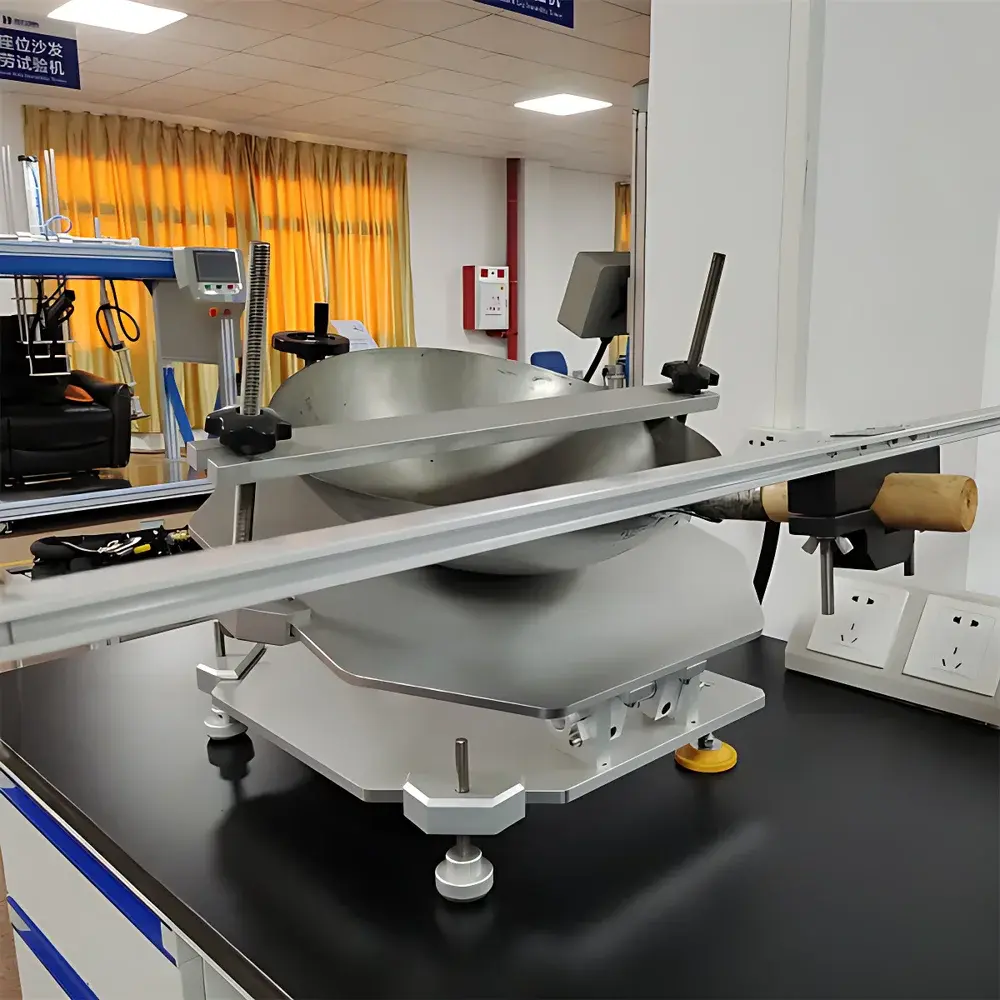
HAIDA HD-M013 Blade Edge Torque Tester
| Brand | HAIDA INTERNATIONAL |
|---|---|
| Origin | Guangdong, China |
| Manufacturer Type | Direct Manufacturer |
| Country of Origin | China |
| Model | HAIDA HD-M013 Blade Edge Torque Tester |
| Pricing | Available Upon Request |
Overview
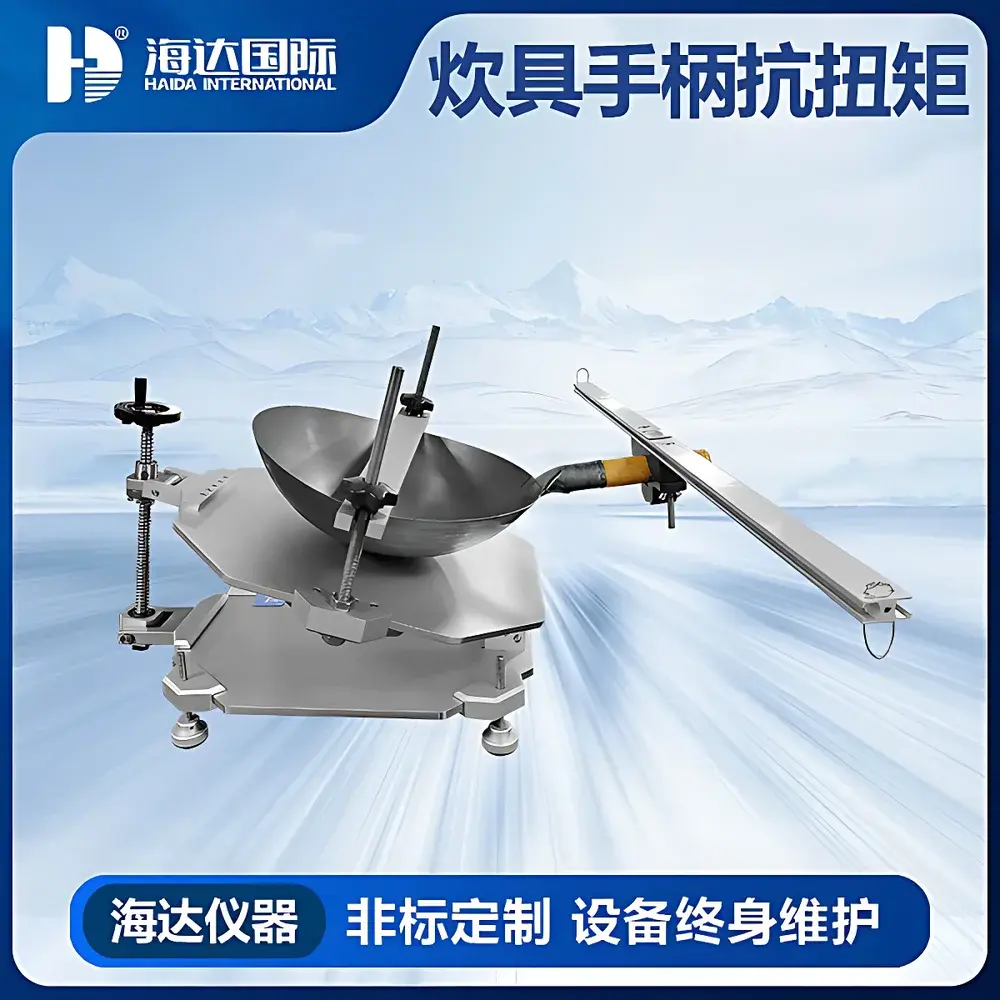
The HAIDA HD-M013 Blade Edge Torque Tester is a precision mechanical testing instrument engineered for quantitative evaluation of torsional resistance at the blade–handle interface of cutting tools—including kitchen knives, chef’s knives, utility blades, and industrial hand-held cutting instruments. Unlike generic torque testers, the HD-M013 implements a calibrated lever-arm methodology grounded in static equilibrium principles: a 1-meter balanced beam applies controlled moment loads (via standardized 1 kg mass) directly to the blade edge or handle junction, while high-resolution angular displacement (0.1° resolution) is captured via an integrated BevelBox DP-180WM digital inclinometer. This configuration enables direct measurement of angular deflection under defined torque—providing objective, repeatable data for structural integrity assessment, failure mode analysis, and compliance verification against international mechanical safety standards.
Key Features
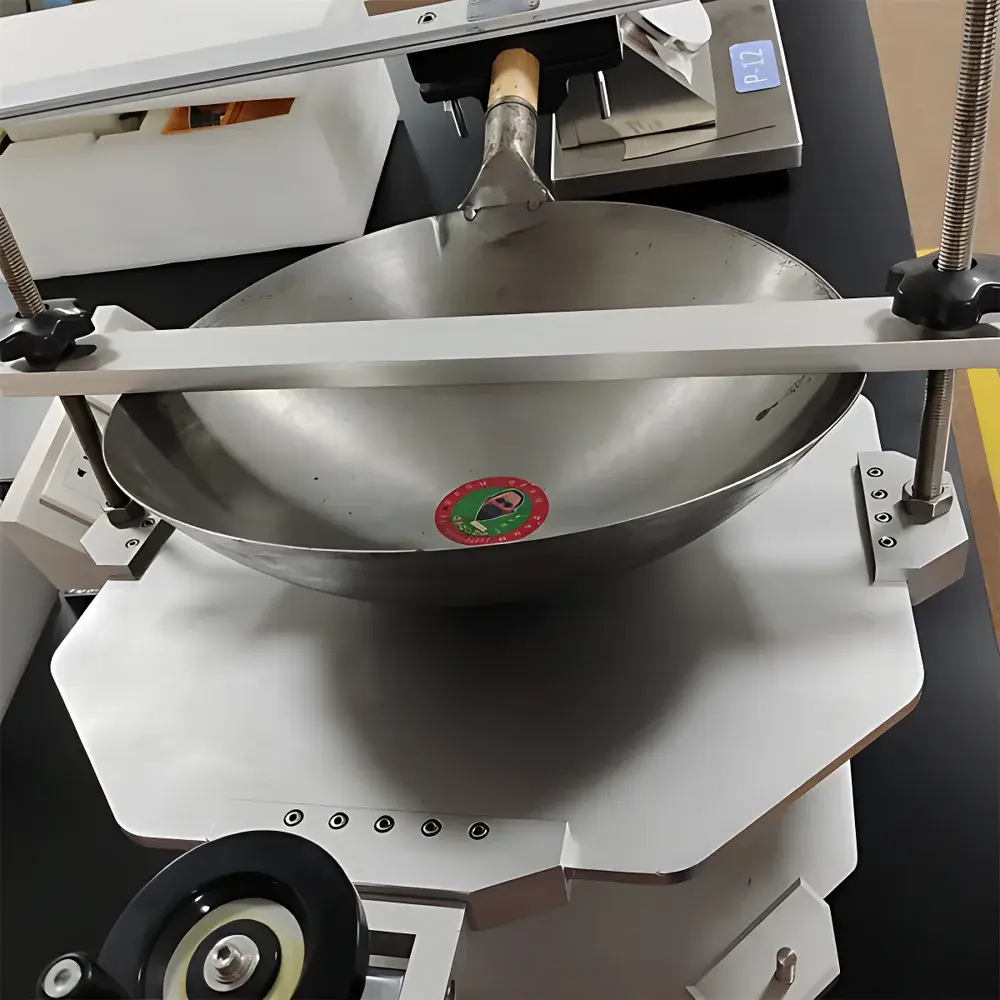
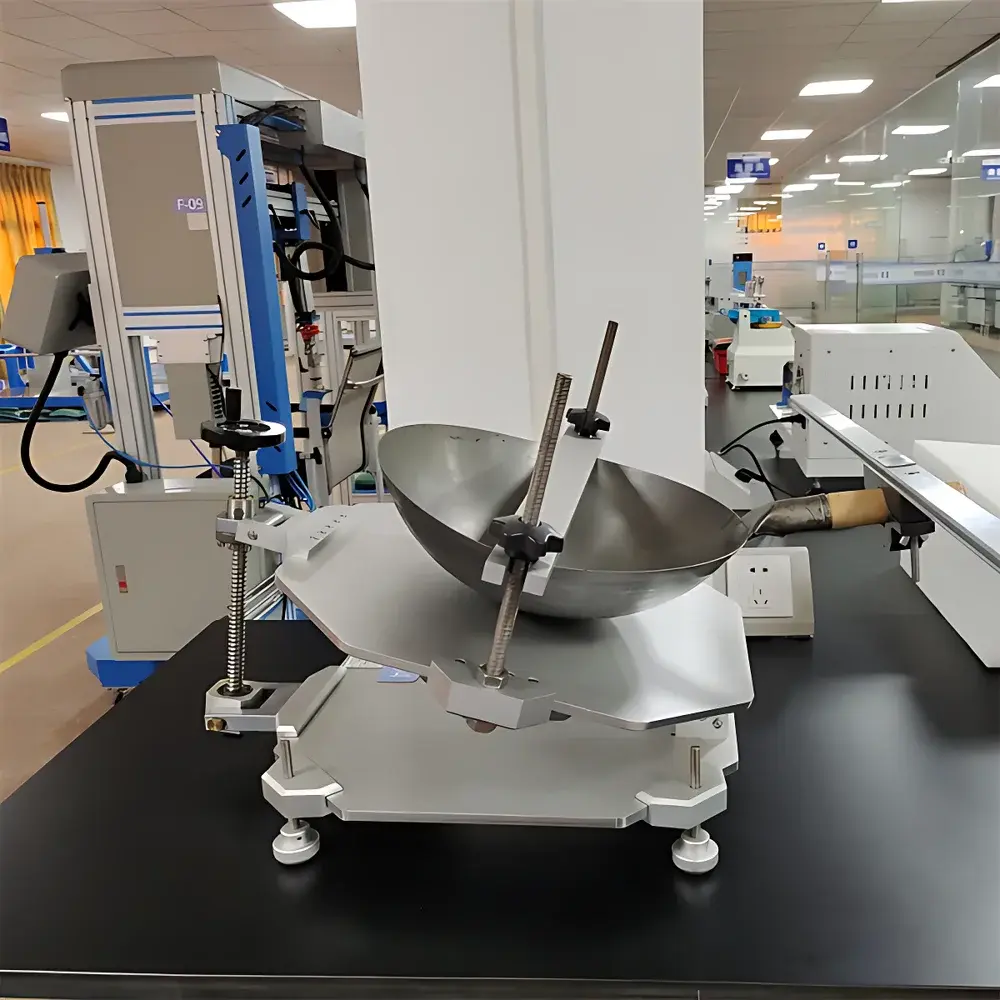
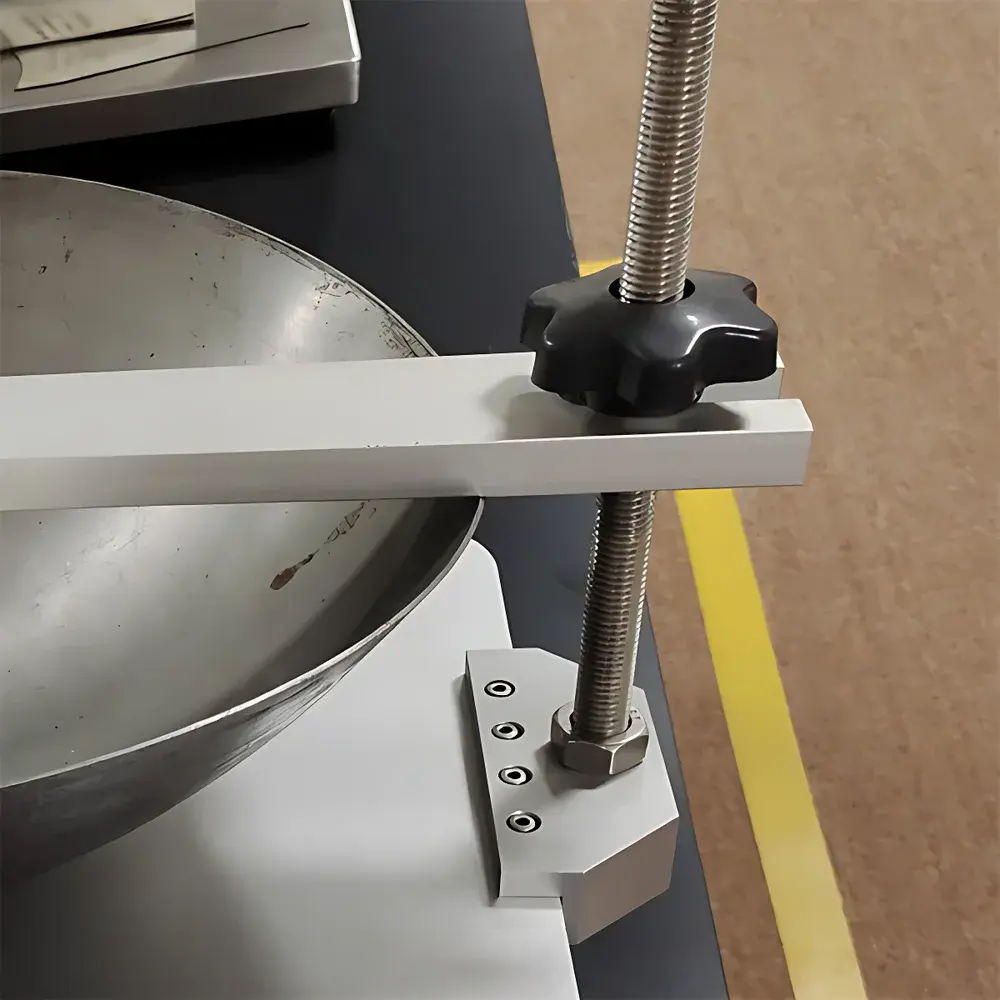
- Adjustable vertical-angle test platform with fine-tuned clamping geometry, accommodating variable handle profiles (e.g., riveted, full-tang, ergonomic polymer, or composite constructions) without retooling.
- Digital bevel protractor (BevelBox DP-180WM, dual-button interface) delivering real-time angular readout with ±0.1° resolution and automatic zero-reference alignment prior to load application.
- Statically balanced 1 kg beam assembly (±0.1 kg tolerance inclusive of pointer, fixture, and adapter), ensuring consistent moment arm length (1000 mm) and eliminating gravitational offset errors.
- Modular fixture system supporting custom-designed blade-holding jaws and edge-contact adapters—enabling adaptation across ISO-standardized blade geometries (e.g., straight-edge, serrated, hollow-ground) and handle diameters from 22 mm to 45 mm.
- Rigid aluminum alloy frame (1100 × 532 × 389 mm L×W×H) with anti-vibration base plate and M6 threaded mounting points for laboratory bench integration or ISO 17025-accredited calibration anchoring.
Sample Compatibility & Compliance
The HD-M013 accommodates specimens up to 450 × 450 × 180 mm (L×W×H), supporting full-length chef knives (up to 30 cm blade), paring knives, cleavers, and multi-tool blades with integrated handles. It is validated for conformance with BS EN 12983-1:2000 + A1:2004 (Domestic cutlery — Safety requirements and test methods — Part 1: General requirements), and its mechanical design aligns with core clauses of ISO 8442-1:2022 (Cutlery — Requirements for knives and their components) regarding handle retention strength and edge-to-handle torsional stability. While not a certified GLP/GMP instrument per se, its traceable angular measurement path supports audit-ready documentation when paired with external calibration certificates (e.g., UKAS-accredited inclinometer verification).
Software & Data Management
The HD-M013 operates as a standalone mechanical tester with no embedded firmware or proprietary software. All measurements are manually recorded from the BevelBox DP-180WM display; however, the device is fully compatible with third-party data acquisition workflows. Users may integrate the inclinometer’s RS-232 output (optional cable available) into LabVIEW, MATLAB, or Excel-based logging systems for time-stamped angular capture, statistical process control (SPC) charting, and batch-level deviation reporting. Audit trails—including operator ID, sample ID, test date/time, and raw angle values—are maintained externally per ISO/IEC 17025 Clause 7.7 (Results Reporting) and FDA 21 CFR Part 11 (when electronic records are implemented with appropriate validation controls).
Applications
- Quantitative verification of handle-to-blade bond integrity during incoming inspection of OEM knife assemblies.
- Design validation testing for new handle materials (e.g., G10, micarta, thermoplastic elastomers) under simulated lateral torsion stress.
- Root-cause analysis of field failures involving handle slippage, tang fracture, or rivet loosening in commercial kitchen environments.
- Quality assurance benchmarking across production lots to ensure ≤10° maximum angular deflection at 9.81 N·m input torque (1 kg × 9.81 m/s² × 1 m).
- Supporting technical documentation for CE marking submissions under the EU Cutlery Directive (2001/95/EC) and UKCA conformity assessments.
FAQ
What torque value does the HD-M013 apply during testing?
The system delivers a nominal torque of 9.81 N·m, calculated from a 1 kg mass applied at a fixed 1 m lever arm (T = F × r). This represents the standard test load specified in BS EN 12983-1.
Is the BevelBox DP-180WM inclinometer calibrated and traceable?
The unit ships with factory calibration; users must perform periodic recalibration using a NIST-traceable reference inclinometer or accredited metrology lab—recommended annually or per internal QA schedule.
Can the HD-M013 test serrated or partially ground blades?
Yes—custom edge-contact fixtures (available upon request) prevent localized deformation at serration peaks and ensure moment transmission occurs at the geometric centerline of the blade–handle junction.
Does HAIDA provide test report templates compliant with ISO 17025?
Standard documentation includes certificate of conformance and operating manual; ISO 17025-compliant report templates (with uncertainty budgets and technician sign-offs) are supplied as optional add-ons for accredited laboratories.



