
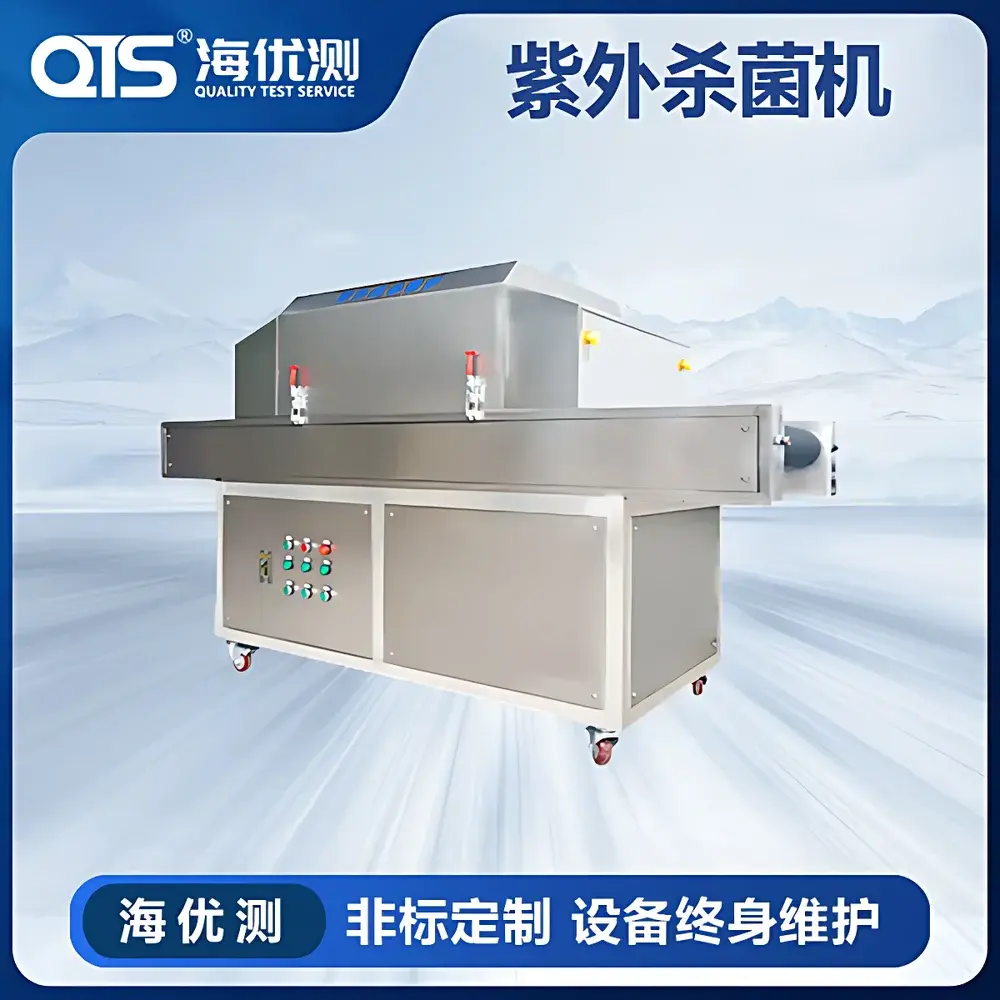
HAIDA UV Sterilization Chamber
| Brand | HAIDA INTERNATIONAL |
|---|---|
| Origin | Guangdong, China |
| Manufacturer Type | Direct Manufacturer |
| Country of Origin | China |
| Model | HAIDA UV Sterilization Chamber |
| Pricing | Available Upon Request |
Overview
The HAIDA UV Sterilization Chamber is a purpose-built, benchtop or floor-standing ultraviolet irradiation system engineered for reliable, non-thermal microbial decontamination of surfaces, tools, and small-volume laboratory equipment. It operates on the principle of germicidal ultraviolet-C (UVC) radiation at 254 nm wavelength—optimized for maximum DNA/RNA absorption by microorganisms—including bacteria, viruses, yeasts, and spores. Unlike chemical or thermal sterilization methods, UVC exposure achieves rapid inactivation without residue, heat damage, or material degradation, making it especially suitable for sensitive optical components, electronic assemblies, pipette tips, Petri dishes, forceps, and other reusable labware. The chamber features a fully enclosed, interlocked safety housing with reflective stainless-steel interior walls to maximize UVC photon distribution and dose uniformity across the treatment zone. All operational parameters—including exposure time, lamp status, and door interlock verification—are monitored and controlled via an integrated digital interface compliant with basic laboratory safety protocols.
Key Features
- Germicidal UVC lamps emitting at 254 nm ± 5 nm peak wavelength, conforming to IEC 62471 photobiological safety classification for risk group 2 (RG2) devices
- Interlocked access door with automatic UVC shutoff circuitry—lamp power is cut within <100 ms upon door opening, meeting EN 60335-1 and IEC 61000-6-4 electromagnetic compatibility requirements
- Stainless-steel 304 interior chamber with high-reflectivity electropolished finish (>85% UVC reflectance) to ensure spatial dose homogeneity
- Digital timer with adjustable exposure duration from 1 to 999 seconds, supporting repeatable, protocol-driven disinfection cycles
- Integrated UVC intensity monitoring port (optional calibration-ready socket) for periodic radiometric validation using NIST-traceable UVC meters
- CE-marked design with conformity to RoHS Directive 2011/65/EU and WEEE Directive 2012/19/EU
Sample Compatibility & Compliance
The HAIDA UV Sterilization Chamber accommodates standard laboratory items up to 300 mm × 300 mm × 300 mm (W × D × H), including glassware, plastic consumables, metal instruments, and printed circuit boards. It is not intended for sterilizing liquids, porous materials (e.g., fabrics or filter membranes), or shadowed geometries where line-of-sight UVC exposure is obstructed. The device supports routine validation per ISO 15883-1 (washer-disinfectors) and ASTM E3135 (standard guide for UV disinfection of surfaces), and its construction aligns with ISO 9001:2015 quality management systems. As a Class II medical device under China’s NMPA regulatory framework (registration number available upon request), it complies with GB/T 28235–2020 “Ultraviolet Disinfection Equipment for Air and Surfaces” and meets key performance criteria for log3–log6 reduction of Staphylococcus aureus, Escherichia coli, and Bacillus subtilis spores under validated conditions.
Software & Data Management
This model operates as a standalone hardware unit without embedded software or network connectivity. However, it supports external documentation and audit readiness through manual logbook entries aligned with GLP (Good Laboratory Practice) and ISO/IEC 17025 traceability requirements. Optional accessories include a calibrated UVC dosimeter kit (traceable to NIM, China) and a validation protocol template compatible with FDA 21 CFR Part 11-compliant electronic records when used in conjunction with third-party LIMS or ELN platforms. Firmware updates are not applicable; all functional logic resides in hardwired control circuitry to eliminate cybersecurity vulnerabilities associated with connected instrumentation.
Applications
- Routine decontamination of biosafety cabinet work surfaces and ancillary tools between experiments
- Pre-sterilization conditioning of microscopy slides, cuvettes, and optical sensors prior to high-precision measurement
- Surface disinfection of reusable sample holders, fixtures, and jigs used in mechanical testing (e.g., tensile grips, peel test plates)
- Validation support for cleanroom gowning procedures and pass-through chamber hygiene protocols
- Complementary treatment step in packaging integrity workflows—particularly for sterile barrier systems undergoing ISO 11607-1 qualification
FAQ
What is the recommended UVC dose for effective microbial inactivation?
Dose requirements vary by organism and surface geometry; typical targets range from 20–100 mJ/cm² for vegetative bacteria and 100–300 mJ/cm² for bacterial spores. Users must validate cycle parameters using biological indicators or radiometric measurement.
Can the chamber be used for sterilizing liquids or powders?
No. This device is designed exclusively for surface disinfection of solid, non-porous objects. Liquids and powders require alternative methods such as autoclaving, filtration, or chemical immersion.
Is ozone generation a concern during operation?
The installed low-pressure mercury lamps emit negligible ozone (<0.01 ppm), well below OSHA PEL and WHO air quality thresholds. No ventilation ducting is required under normal use.
How often should UVC lamp output be verified?
Lamp intensity should be measured at installation, after 1,000 hours of cumulative operation, and annually thereafter—or whenever visual inspection reveals darkening or flickering.
Does HAIDA provide IQ/OQ documentation for GMP environments?
Yes. Installation Qualification (IQ) and Operational Qualification (OQ) templates are available upon request and may be customized to meet site-specific SOPs and regulatory expectations (e.g., EU Annex 15, PIC/S TR 13).
Related Products



