
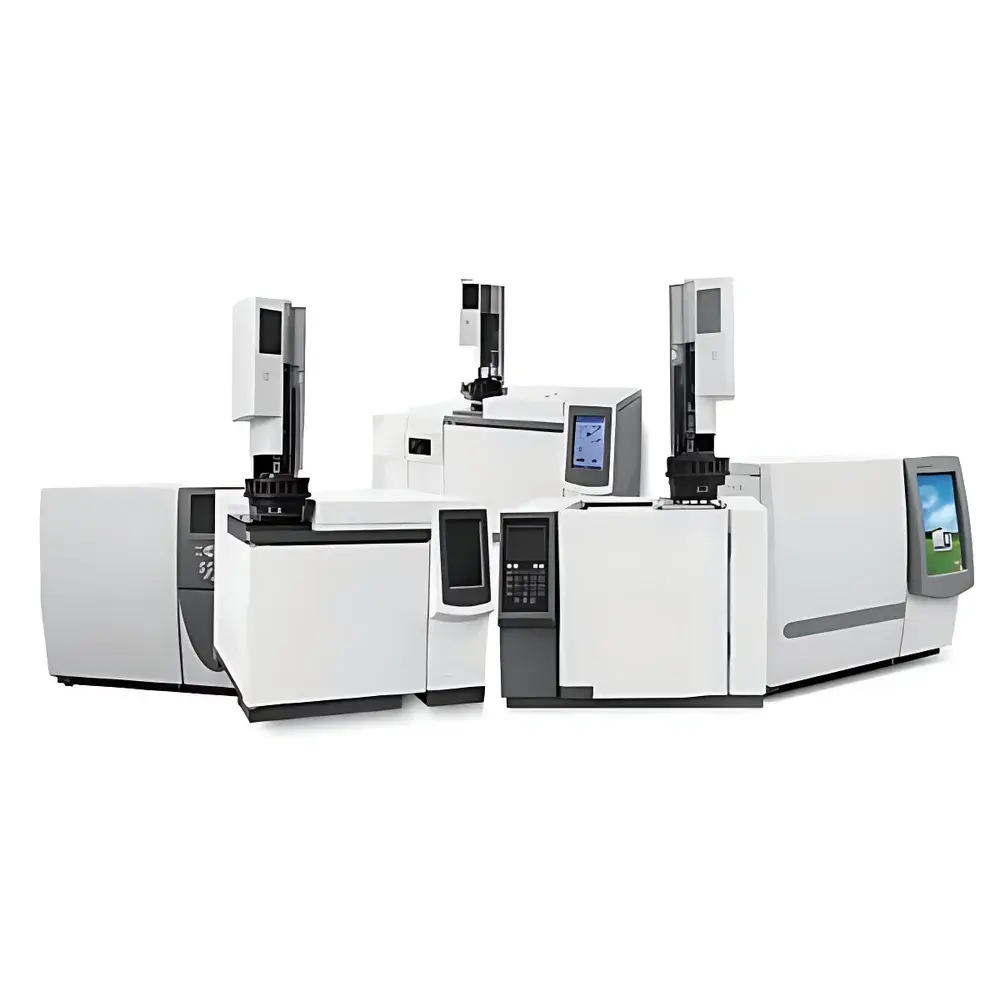
Hailong GC-LC Hybrid Chromatography System
| Brand | Hailong |
|---|---|
| Origin | China |
| Manufacturer Type | Authorized Distributor |
| Configuration | Integrated Gas Chromatography (GC) and Liquid Chromatography (LC) Platform |
| EPC Capability | Optional Electronic Pressure Control for GC Carrier/Gas Lines |
| Flow Rate Range (LC) | 0.1–10.0 mL/min |
| Maximum Backpressure (LC) | Up to 30 MPa (≈306 kg/cm²) |
| Column Efficiency | ≥5,000 plates/meter |
| Temperature Program | 7–10 ramp segments with post-run oven cooling |
| Safety Features | Overtemperature cutoff, real-time self-diagnosis, intelligent rear-door airflow control |
| Display | Backlit LCD with Chinese/English bilingual interface |
| Compliance | Designed to support ISO/IEC 17025 workflows, compatible with GLP/GMP data integrity requirements when paired with validated software |
Overview
The Hailong GC-LC Hybrid Chromatography System is a dual-mode analytical platform engineered for laboratories requiring flexible, high-fidelity separation of volatile, semi-volatile, and non-volatile organic compounds. Unlike standalone GC or LC instruments, this integrated system enables method development continuity across phases—allowing analysts to transition seamlessly from gas-phase thermal volatility screening (via capillary GC) to polar, thermally labile, or high-molecular-weight compound resolution (via high-pressure liquid chromatography). Its core architecture adheres to fundamental chromatographic principles: GC separation relies on partitioning between a gaseous mobile phase (carrier gas) and a stationary liquid phase coated on the column wall (gas–liquid partition chromatography), while LC separation follows reversed-phase or normal-phase mechanisms governed by solute polarity, mobile phase composition, and stationary phase surface chemistry. The system supports both isothermal and programmable temperature ramping (7–10 heating/cooling segments), ensuring precise retention time reproducibility and robust peak resolution under regulated laboratory conditions.
Key Features
- Modular dual-configuration design: Independent GC and LC modules share common control electronics, power management, and data acquisition hardware—reducing footprint and cross-platform calibration drift.
- Intelligent thermal management: Self-diagnostic oven with real-time sensor feedback, programmable ramp rates (0.1–40 °C/min), and active rear-door airflow control for rapid cool-down (<10 min from 300 °C to 50 °C).
- Optional EPC integration for GC: Electronic pressure control modules regulate carrier gas (He, H₂, N₂), fuel gas (H₂), and oxidant (air) flow with ±0.01 psi precision—enabling retention time locking, method transferability, and compliance with ASTM D3606 and ISO 6416 protocols.
- High-pressure LC capability: Dual-piston reciprocating pump delivering stable flow from 0.1 to 10.0 mL/min at up to 30 MPa; pulse dampening and solvent compressibility compensation ensure <0.1% RSD flow stability over 24 h.
- Bilingual operator interface: 7-inch backlit LCD with context-sensitive menus in English and Simplified Chinese—designed for multi-national QA/QC teams and contract testing labs operating under bilingual SOPs.
- Fail-safe operation: Hardware-enforced overtemperature cutoff (±2 °C tolerance), continuous voltage/current monitoring, and automatic shutdown upon detector signal anomaly or column pressure deviation >15% from setpoint.
Sample Compatibility & Compliance
The system accommodates a broad range of sample matrices—including environmental water extracts, pharmaceutical actives, petrochemical distillates, food additives, and polymer degradation products—without requiring dedicated instrumentation reconfiguration. GC inlet options include split/splitless, PTV, and cold-on-column; LC autosampler supports 1–2 mL vials with needle wash and carryover <0.005%. All fluidic pathways use biocompatible stainless steel or PEEK-lined components rated for pH 1.5–12.5 and organic solvent compatibility (ACN, MeOH, THF, chloroform). From a regulatory standpoint, the platform is architected to align with FDA 21 CFR Part 11 requirements when deployed with audit-trail-enabled chromatography data systems (CDS); its deterministic timing engine, electronic signature support, and immutable raw data storage (in .CDF or .D format) facilitate inspection readiness per ICH M7 and USP analytical instrument qualification guidelines.
Software & Data Management
Control and analysis are executed via Hailong Chromatography Suite v4.x—a Windows-based application supporting method building, sequence definition, real-time chromatogram visualization, and peak integration using ISO 17991-compliant algorithms. Raw data files include full instrument configuration metadata (oven temp, flow rates, detector voltages, valve states) embedded per IETF RFC 822 standards. The software supports export to CSV, PDF, and AIA/ANDI formats for LIMS integration. For regulated environments, optional 21 CFR Part 11 Add-On Pack provides role-based access control, electronic signatures with biometric or PKI authentication, and tamper-evident audit trails covering all user actions, method edits, and report generation events—fully traceable to individual analyst IDs and timestamps.
Applications
- Environmental analysis: Quantification of BTEX, PAHs, PCBs, and chlorinated pesticides in soil and aqueous samples per EPA Methods 8260D (GC-MS) and 8081B (GC-ECD).
- Pharmaceutical QC: Assay and impurity profiling of APIs and excipients per USP , including chiral separations on polysaccharide-based LC columns and residual solvent testing via headspace-GC.
- Food safety: Detection of mycotoxins (aflatoxin B1, ochratoxin A), pesticide residues (organophosphates, carbamates), and adulterants (melamine, Sudan dyes) following AOAC Official Method guidelines.
- Polymer characterization: Molecular weight distribution analysis of synthetic polymers using SEC-GPC mode (with optional refractive index detector), and additive migration studies via GC-FID.
- Fuel and lubricant testing: Hydrocarbon type analysis (PIONA), oxidation stability assessment (Rancimat-LC), and sulfur speciation (GC-SCD) in accordance with ASTM D6730, D7097, and D5453.
FAQ
Can this system operate GC and LC simultaneously?
No—GC and LC modules operate independently but share a unified control interface and data repository; concurrent analysis requires sequential method execution.
Is the EPC module factory-calibrated and NIST-traceable?
Yes—each EPC unit ships with a certificate of calibration valid for 12 months, referencing NIST SRM 1960 (gas flow standards) and certified against ISO/IEC 17025-accredited procedures.
What LC detectors are supported?
Standard configurations include UV-Vis (190–700 nm, 1 nm resolution) and fluorescence detection; optional interfaces for MS, CAD, and ELSD are available via OEM-certified analog/digital I/O ports.
Does the software support automated system suitability testing (SST)?
Yes—predefined SST templates for USP, EP, and JP monographs are included, with pass/fail logic based on theoretical plates, tailing factor, resolution, and %RSD criteria.
How is firmware updated and validated?
Firmware updates are delivered as signed binary packages via secure HTTPS; installation triggers automated functional verification tests (FVT) covering temperature accuracy, flow linearity, and detector response—results logged in the audit trail.





