
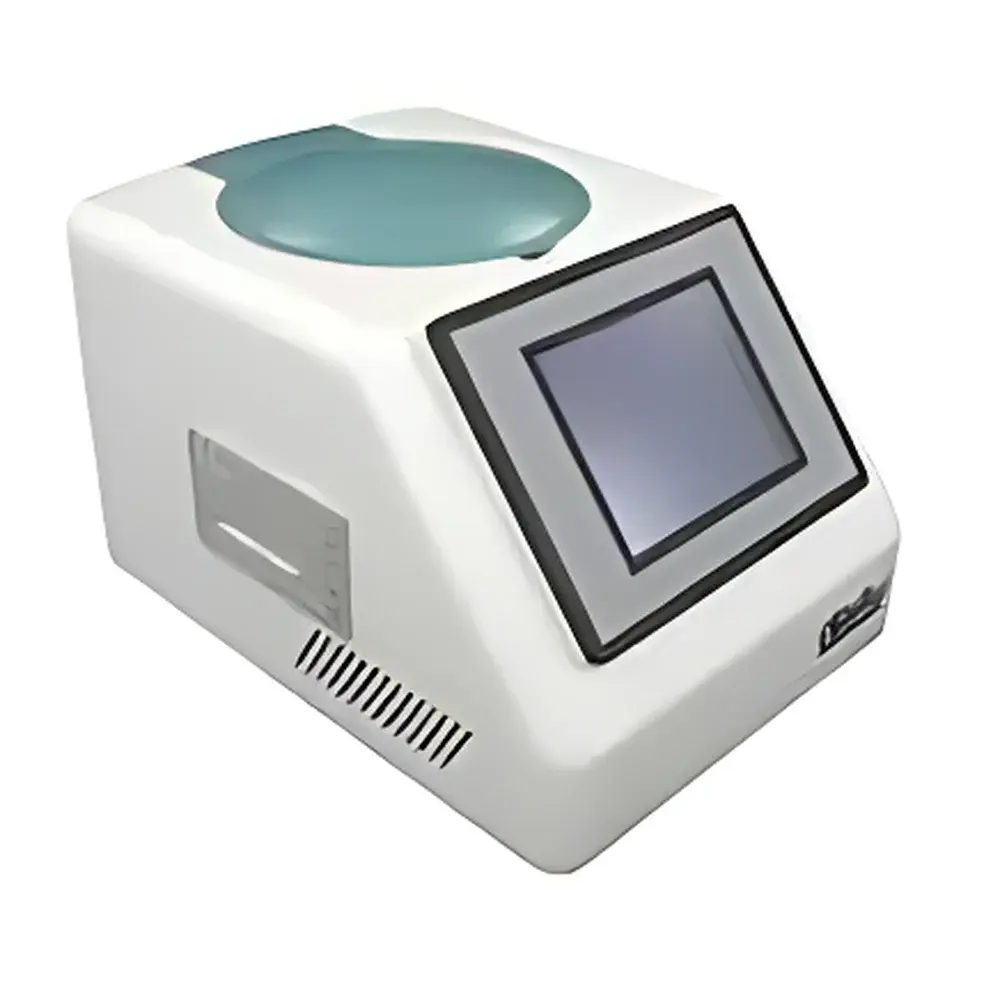
Hamamatsu BHP9511 Rapid Water Toxicity Analyzer
| Brand | Hamamatsu Photonics (BHP) |
|---|---|
| Model | BHP9511 |
| Detection Principle | Bioluminescent Bacteria Assay |
| Sample Capacity | 18 positions |
| Detector | Photomultiplier Tube (PMT) |
| Spectral Response Range | 300–650 nm |
| Operating Temperature | 5–40 °C |
| Display | Integrated LCD Touchscreen |
| Data Output | Built-in thermal printer, USB data export, PC connectivity |
| Onboard Data Storage | Yes |
| Software Interface | Windows-compatible analysis software with statistical tools |
| Compliance Context | Designed for GLP-compliant workflows |
Overview
The Hamamatsu BHP9511 Rapid Water Toxicity Analyzer is a laboratory-grade bioluminescence-based instrument engineered for quantitative assessment of acute aquatic toxicity in water samples. It operates on the standardized principle of bacterial bioluminescence inhibition: genetically stable strains of Aliivibrio fischeri (formerly Vibrio fischeri) emit constant, measurable blue-green light (λmax ≈ 490 nm) under optimal physiological conditions. Upon exposure to toxicants—including heavy metals, pesticides, organic pollutants, disinfectants, and antimicrobial agents—the metabolic activity of these luminous bacteria is disrupted, resulting in dose-dependent suppression of photon emission. The BHP9511 precisely quantifies this luminescence decay using a high-sensitivity photomultiplier tube (PMT), enabling rapid (15–30 min assay time) estimation of EC50 or % inhibition relative to control. Its design aligns with internationally recognized frameworks for rapid toxicity screening, including EPA Method 100.1 and ISO 11348-3, and serves as a functional equivalent to Microtox®-based systems in regulatory pre-screening and emergency response contexts.
Key Features
- 18-position automated sample carousel for unattended sequential analysis—reducing operator intervention and improving throughput consistency.
- High-gain, low-noise photomultiplier tube detector with calibrated spectral response from 300 nm to 650 nm—optimized for native bioluminescence detection while rejecting ambient stray light.
- Integrated 7-inch capacitive touchscreen interface supporting intuitive method selection, real-time luminescence curve visualization, and on-device result interpretation.
- Built-in thermal printer for immediate hard-copy documentation of raw luminescence values, inhibition percentages, and calculated toxicity indices—critical for field-deployable QA/QC records.
- Onboard non-volatile memory storing ≥10,000 test records with timestamp, operator ID, sample ID, and environmental metadata (temperature, assay duration).
- USB 2.0 interface and Hamamatsu BHP-Analysis Suite software (Windows 10/11 compatible) enabling full data traceability, batch reporting, statistical outlier detection, and export to CSV, PDF, or LIMS-ready XML formats.
- Embedded calibration verification routine using certified neutral-density filters—supporting daily performance checks required under ISO/IEC 17025 Clause 6.5.2.
Sample Compatibility & Compliance
The BHP9511 accepts liquid samples in standard 13 × 100 mm borosilicate glass tubes or disposable polystyrene cuvettes. It accommodates undiluted surface water, wastewater effluents, drinking water post-treatment, industrial process streams, and elutriates from sediment or soil extracts—provided turbidity remains below 50 NTU (pre-filtration recommended). The system supports serial dilution protocols per ISO 11348-3 Annex B and enables direct integration into emergency response workflows used by Chinese CDC provincial centers and municipal environmental monitoring stations. While not FDA-cleared, its operational logic and data structure comply with principles outlined in USP Chapter 1227 (Validation of Microbiological Analytical Procedures) and support 21 CFR Part 11–compliant electronic record implementation when paired with validated software configuration and access controls.
Software & Data Management
The BHP-Analysis Suite provides role-based user accounts, configurable report templates, and automated generation of dose–response curves with nonlinear regression (log-logistic 4-parameter fit). Audit trail functionality logs all data modifications, method changes, and user logins with immutable timestamps—meeting GLP requirements for environmental testing laboratories. Raw PMT output (photons/sec) is stored alongside processed metrics (e.g., % inhibition at 5/15/30 min), enabling retrospective re-analysis without instrument re-run. Data exports conform to ASTM E2500-17 Annex A3 specifications for analytical instrument data interchange, facilitating ingestion into enterprise LIMS platforms via ODBC or HL7-compatible middleware.
Applications
- Rapid triage of drinking water safety during natural disasters (e.g., post-earthquake contamination events) and public health emergencies.
- Wastewater treatment plant process control—monitoring influent toxicity spikes, evaluating biological treatment efficiency, and verifying discharge compliance.
- Regulatory screening of industrial effluents prior to release—particularly for sectors subject to China’s GB 8978-1996 and EU Water Framework Directive Annex X substance lists.
- Pharmaceutical QC: semi-quantitative assessment of antibiotic residual activity in rinse waters and cleaning validation swabs.
- Academic research in ecotoxicology, oxidative stress biology (via ROS-sensitive bacterial mutants), and nanomaterial hazard ranking.
- Method development and cross-validation studies against Daphnia magna or fish bioassays per OECD Test Guidelines 202 and 203.
FAQ
What bacterial strain is used in the BHP9511 assay?
The instrument is validated for use with freeze-dried Aliivibrio fischeri lyophilized cultures supplied by Hamamatsu-certified vendors—ensuring consistent luminescence intensity (>1 × 10⁴ RLU) and sensitivity to reference toxicants (e.g., ZnSO₄, 3,5-dichlorophenol).
Can the BHP9511 quantify specific contaminants?
No—it measures integrated acute toxicity response, not compound-specific identification. Positive results require follow-up chemical analysis (e.g., ICP-MS, GC-MS) for contaminant characterization.
Is temperature control built into the instrument?
The BHP9511 operates within 5–40 °C ambient range but does not include active thermostating; users must precondition samples to 15 ± 1 °C per ISO 11348-3 prior to measurement.
How often does the PMT require recalibration?
Annual factory recalibration is recommended; daily verification using the included ND filter set satisfies ISO/IEC 17025 intermediate checks.
Does the system support multi-laboratory data sharing?
Yes—encrypted CSV exports and standardized metadata fields (sample matrix, dilution factor, exposure time) enable interoperability across collaborative monitoring networks and national water quality databases.
Related Products







