
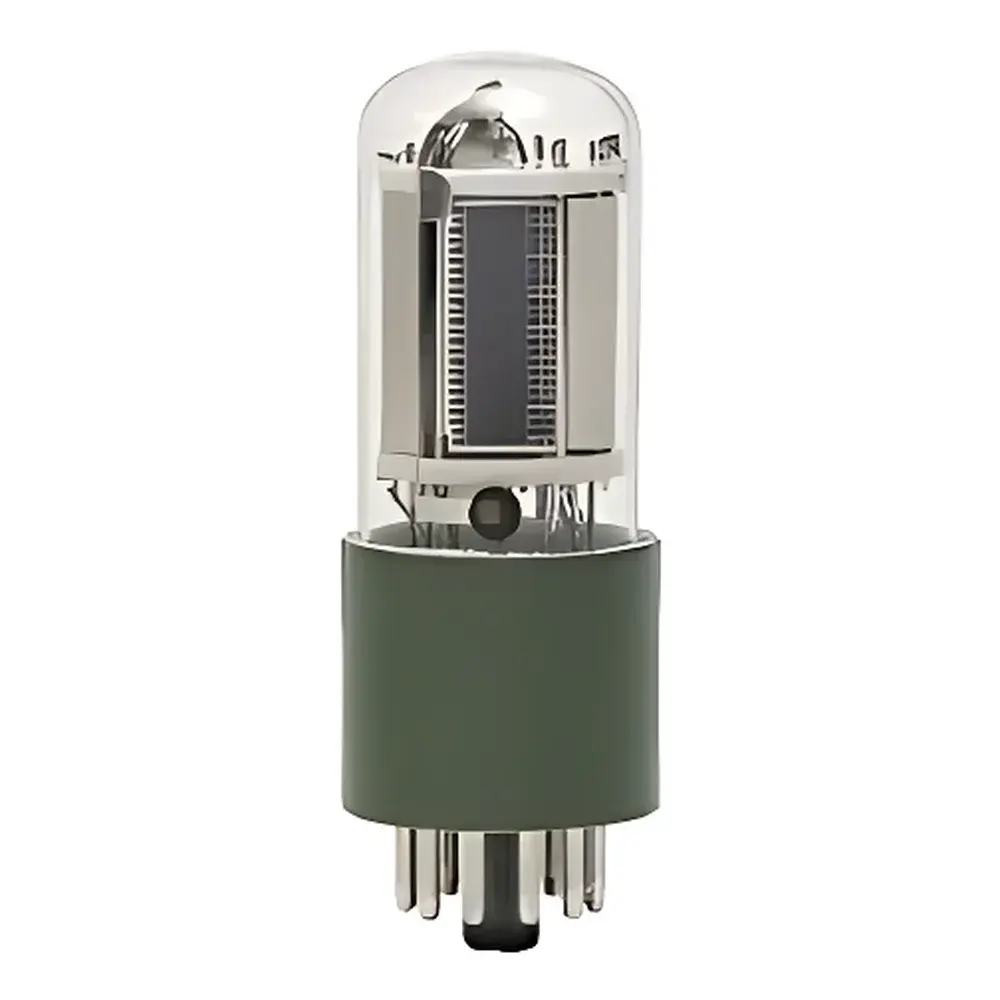
Hamamatsu Photomultiplier Tube R10699
| Brand | Hamamatsu |
|---|---|
| Origin | Japan |
| Manufacturer Type | Original Equipment Manufacturer (OEM) |
| Product Category | Optical Component |
| Model | R10699 |
| Housing Type | Side-Window |
| Cathode Shape | Rectangular |
| Cathode Dimensions | 8 mm × 24 mm |
| Spectral Response Range | 185–900 nm |
| Short-Wavelength Cutoff | 185 nm |
| Long-Wavelength Cutoff | 900 nm |
| Spectral Response Curve Code | 557U |
| Red/White Ratio (R-68, typical) | 0.43 |
| Cathode Radiant Sensitivity (typ.) | 109 mA/W |
| Anode Luminous Sensitivity (min.) | 1600 A/lm |
| Anode Luminous Sensitivity (typ.) | 8500 A/lm |
| Anode Radiant Sensitivity (typ.) | 1.4 × 10⁶ A/W |
| Anode Gain (typ.) | 1.3 × 10⁷ |
| Anode Dark Current (30 min warm-up, typ.) | 2 nA |
| Anode Dark Current (30 min warm-up, max.) | 10 nA |
| Rise Time (typ.) | 2.2 ns |
| Transit Time (typ.) | 22 ns |
Overview
The Hamamatsu R10699 is a high-performance side-window photomultiplier tube (PMT) engineered for ultra-low-light detection in demanding scientific and industrial applications. Built upon Hamamatsu’s proprietary multi-alkali (Sb-Rb-Cs-K) photocathode technology, the R10699 delivers broad spectral sensitivity from deep ultraviolet (185 nm) to near-infrared (900 nm), making it suitable for spectroscopy, time-resolved fluorescence, radiation monitoring, and particle physics experiments where wide-band photon capture and nanosecond-scale temporal resolution are critical. Its rectangular 8 × 24 mm effective photocathode area ensures high collection efficiency across extended optical paths—particularly advantageous in imaging spectrometers, scintillation counters, and laser-induced breakdown spectroscopy (LIBS) systems. The device operates under standard negative high-voltage bias (typically −1000 V to −1500 V), with internal 10-stage linear-focused dynode structure optimized for stable gain and minimal pulse amplitude variation.
Key Features
- Side-window quartz envelope enabling direct UV transmission down to 185 nm
- Rectangular multi-alkali photocathode (8 × 24 mm active area) with high quantum efficiency across UV-VIS-NIR
- Ultrafast temporal response: 2.2 ns rise time and 22 ns transit time—enabling time-correlated single-photon counting (TCSPC) and picosecond-gated detection
- High anode gain of 1.3 × 10⁷ at recommended operating voltage, supporting single-photon-level signal amplification with low statistical spread
- Low dark current: ≤2 nA (typ.) after 30-minute stabilization—critical for long-integration measurements and low-background experiments
- Stable luminous and radiant sensitivity specifications traceable to NIST-calibrated standards; compliant with ISO/IEC 17025-accredited calibration practices
- Robust mechanical design with 28 mm diameter metal-ceramic package, compatible with standard PMT sockets and magnetic shielding assemblies
Sample Compatibility & Compliance
The R10699 is designed for integration into vacuum-compatible, temperature-stabilized optical benches and OEM instrumentation platforms. It interfaces seamlessly with standard high-voltage power supplies (e.g., Hamamatsu C11204 series) and fast digitizers (≥1 GS/s sampling rate). The device complies with RoHS Directive 2011/65/EU and meets IEC 61000-6-3 electromagnetic emission limits for laboratory equipment. While not certified as medical or safety-critical hardware per IEC 62304 or FDA 21 CFR Part 11, its performance parameters are fully documented in accordance with GLP-aligned test protocols—including dark current drift monitoring, gain linearity assessment over 5-log light intensity range, and spectral responsivity mapping per ISO 11146-3. Traceable calibration data sheets are available upon request for audit-ready installations.
Software & Data Management
Though the R10699 is an analog detector requiring external signal conditioning, it is fully supported by industry-standard data acquisition ecosystems. When paired with Hamamatsu’s C12390-series counting modules or third-party solutions such as National Instruments PXIe-5171R digitizers, the tube enables synchronized timestamping, histogram-based decay analysis, and real-time pulse-height discrimination. Firmware-level integration supports IEEE 1451.4 TEDS (Transducer Electronic Data Sheet) emulation via optional adapter boards—allowing automatic configuration of gain, HV setpoint, and spectral correction factors within LabVIEW, MATLAB, or Python-based control frameworks (e.g., PyVISA + NumPy). All raw pulse train data can be exported in HDF5 or ASCII formats, ensuring compatibility with FAIR (Findable, Accessible, Interoperable, Reusable) data principles mandated in EU Horizon-funded research infrastructures.
Applications
- Time-resolved fluorescence lifetime imaging (FLIM) in confocal and multiphoton microscopes
- UV-VIS-NIR spectrofluorometry with sub-nanosecond gating for quenching studies
- Scintillation detection in gamma-ray spectroscopy using NaI(Tl) or LaBr₃(Ce) crystals
- Laser-induced fluorescence (LIF) diagnostics in plasma and combustion research
- Cherenkov radiation detection in neutrino observatories and accelerator beamlines
- Single-molecule spectroscopy setups requiring high signal-to-noise ratio and precise photon arrival timing
FAQ
What is the recommended operating voltage range for optimal gain stability?
The R10699 achieves nominal gain (1.3 × 10⁷) at −1250 V with ±2% variation across batch-tested units; operation between −1000 V and −1500 V is permissible but requires recalibration of gain vs. voltage curves per unit.
Is the R10699 suitable for use in vacuum environments?
Yes—the metal-ceramic hermetic seal supports continuous operation at pressures ≤10⁻⁴ Pa; however, bake-out above 80 °C is not recommended due to potential cathode activation degradation.
How does the red/white ratio (R-68 = 0.43) impact measurement accuracy in broadband sources?
This value reflects relative sensitivity at 680 nm versus photopic luminosity function peak (555 nm); users applying the R10699 in radiometric applications must apply wavelength-specific correction factors derived from the published 557U spectral response curve.
Can the R10699 be used with pulse-counting electronics?
Yes—its fast rise time and low excess noise factor (δ ≈ 1.15) make it well-suited for photon counting; however, dead-time corrections become necessary above ~1 MHz average count rate due to pulse pile-up.




