
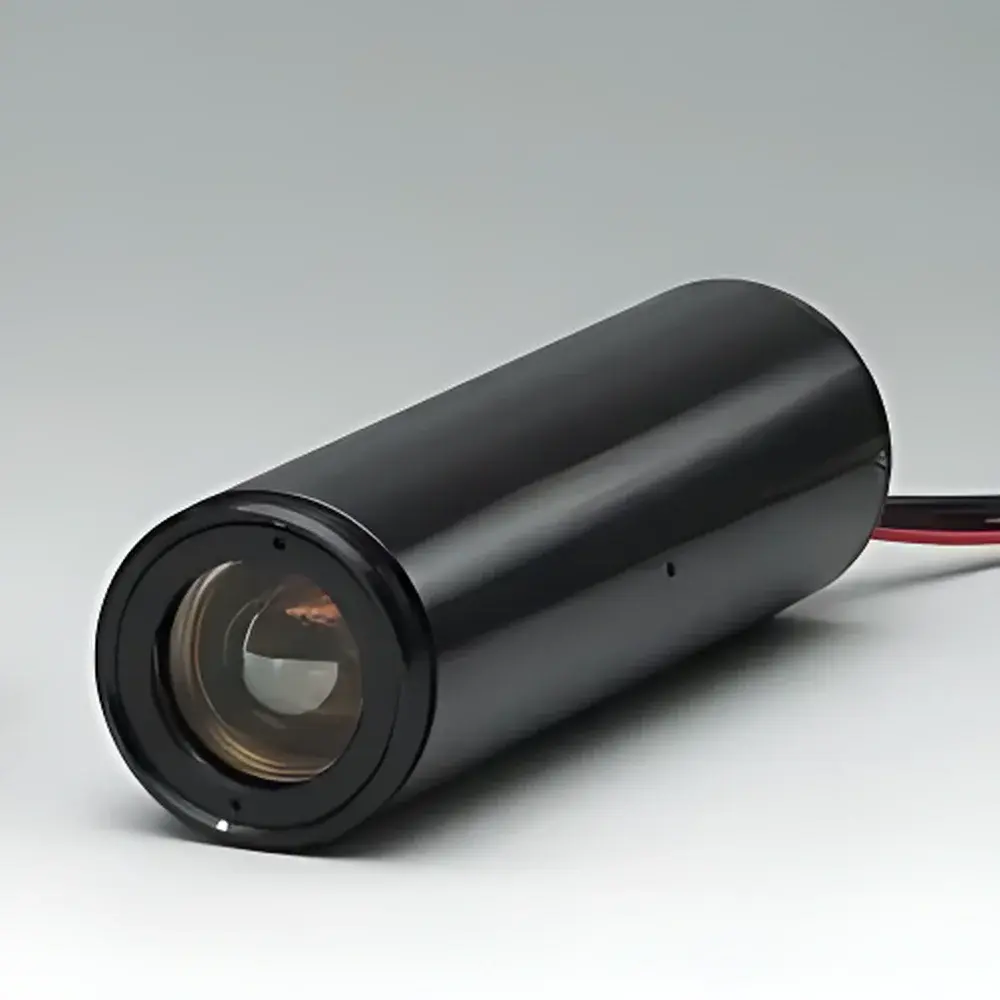
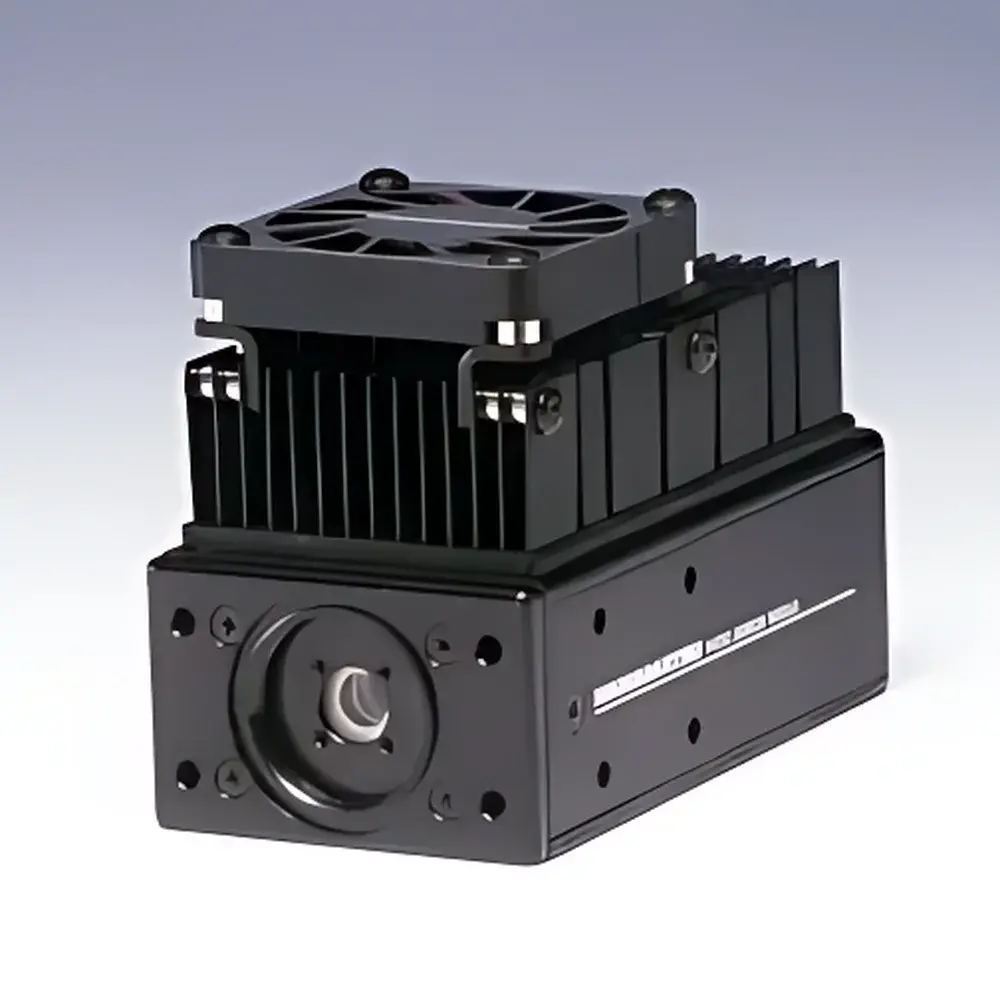
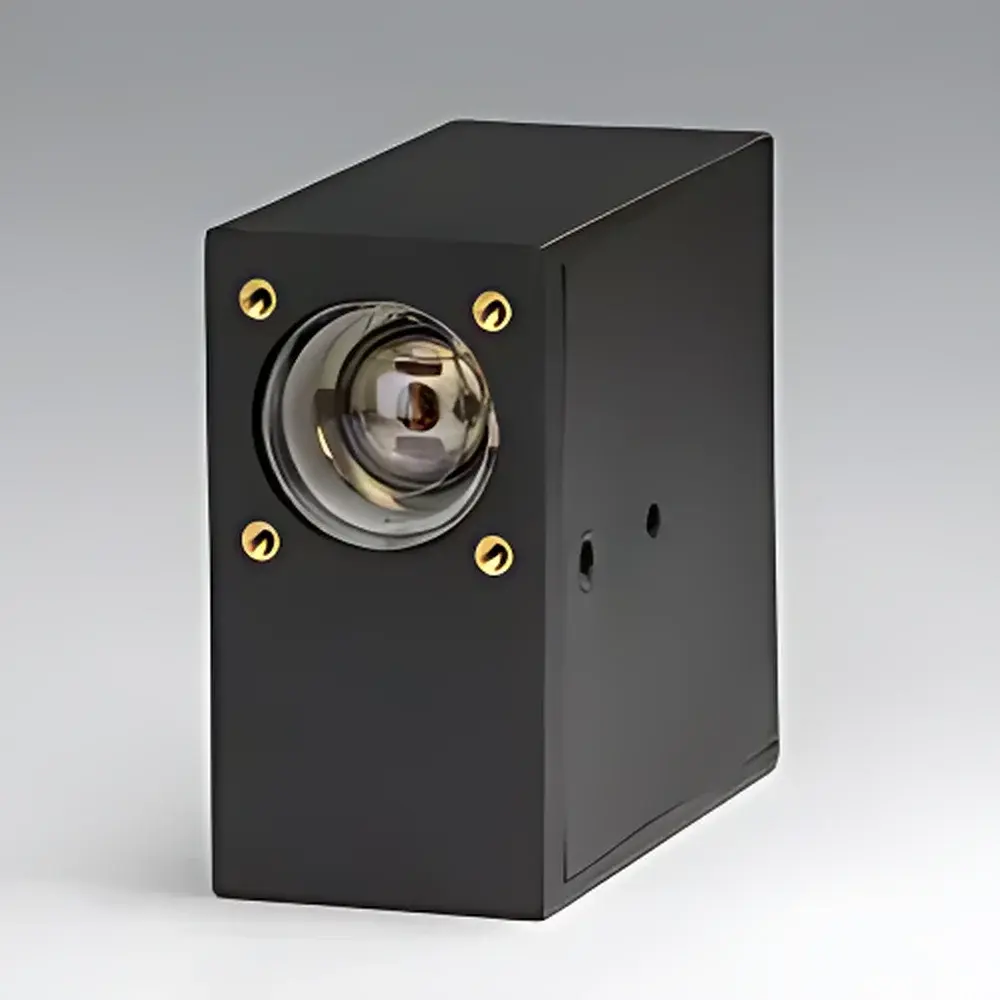
Hamamatsu Photon Counting Head H7
| Brand | Hamamatsu |
|---|---|
| Origin | Japan |
| Manufacturer Type | Original Equipment Manufacturer (OEM) |
| Import Status | Imported |
| Model | H7 |
| Pricing | Available Upon Request |
Overview
The Hamamatsu Photon Counting Head H7 is a high-performance, OEM-integrated photomultiplier tube (PMT)-based detection module engineered for ultra-low-light spectral measurements in analytical and scientific instrumentation. Operating on the principle of single-photon avalanche detection via secondary electron multiplication within a vacuum-sealed dynode chain, the H7 delivers exceptional signal-to-noise ratio (SNR), sub-nanosecond temporal resolution, and linear response over six orders of magnitude in photon flux. Designed specifically for integration into spectroscopy accessories—including monochromator-coupled fluorescence spectrometers, Raman systems, time-resolved luminescence analyzers, and UV-Vis-NIR spectrophotometers—the H7 supports rigorous quantitative photometry where photon-limited conditions prevail. Its compact, shielded housing incorporates magnetic shielding, thermally stabilized base electronics, and low-noise HV supply conditioning to ensure stable gain and minimal dark count rate—critical for GLP-compliant trace-level analysis.
Key Features
- High quantum efficiency photocathode optimized for peak responsivity at 420 nm (typical), with spectral response spanning 300–650 nm (UV-Vis range)
- Integrated low-noise preamplifier and pulse-shaping circuitry enabling direct TTL/CMOS-compatible digital output
- Dark current < 100 counts/sec at 20 °C (typical), supporting long integration times without significant background accumulation
- Time resolution < 2.5 ns FWHM for time-correlated single-photon counting (TCSPC) applications
- Ruggedized stainless-steel and mu-metal housing compliant with IEC 61326-1 for electromagnetic compatibility in laboratory environments
- OEM-ready mechanical interface with standardized 25.4 mm mounting flange and 12-pin LEMO connector for HV and signal routing
Sample Compatibility & Compliance
The H7 is compatible with liquid, solid, and gaseous samples when coupled to optical interfaces such as fiber-optic bundles, free-space coupling optics, or integrated flow cells. It meets essential regulatory requirements for analytical instrumentation used in regulated environments: compliant with ISO/IEC 17025 calibration traceability protocols; supports audit-ready operation under FDA 21 CFR Part 11 when integrated with validated data acquisition software; and conforms to IEC 61000-4 series immunity standards for electrostatic discharge (ESD), radiated RF fields, and fast transient bursts. The device is not intended for direct human exposure or in vivo use; all operational parameters must be referenced against Hamamatsu’s official datasheet H7-DS-EN-01 (Rev. D).
Software & Data Management
The H7 operates as a hardware-level photon detection node and does not include embedded firmware or onboard storage. It interfaces seamlessly with third-party data acquisition platforms including National Instruments DAQmx, Keysight U1051A, and custom LabVIEW or Python-based TCSPC frameworks. When deployed in GxP-regulated workflows, raw pulse train data can be timestamped and logged with full audit trail integrity using compliant software suites that implement electronic signatures, user access controls, and change management per ALCOA+ principles. Hamamatsu provides SDKs (C/C++, .NET, Python) for real-time histogramming, decay curve fitting (e.g., multi-exponential deconvolution), and synchronization with laser pulsers or chopper wheels.
Applications
- Fluorescence lifetime imaging microscopy (FLIM) and confocal spectral unmixing
- Low-concentration chemiluminescence and bioluminescence assays (e.g., ATP quantification, reporter gene expression)
- UV-induced phosphorescence decay analysis in pharmaceutical solid-state characterization
- Environmental monitoring of trace hydrocarbons via laser-induced fluorescence (LIF) in water or air
- Plasma diagnostics in semiconductor process chambers via emission line intensity tracking
- High-energy physics scintillation readout in calorimetry and neutrino detection prototypes
FAQ
What is the recommended operating temperature range for stable photon counting performance?
The H7 is specified for continuous operation between 15 °C and 35 °C ambient; active cooling is not required but thermal stabilization below ±0.5 °C improves dark count repeatability.
Can the H7 be used with fiber-optic input without coupling loss penalties?
Yes—when mated with SMA905 or FC/PC terminated multimode fibers (core diameter ≤ 600 µm), coupling efficiency exceeds 85% with appropriate index-matching gel and alignment fixtures.
Is the H7 compatible with existing Hamamatsu C-series power supplies?
It requires the C11202 series high-voltage module (−1000 V DC, 0.1% stability) with programmable ramp control; legacy C9232 units are not supported due to insufficient current regulation.
Does Hamamatsu provide NIST-traceable calibration certificates for individual H7 units?
Yes—certificates of calibration (including spectral responsivity, gain uniformity, and pulse height distribution) are available upon request under Hamamatsu Certificate Code HCAL-H7-EN.




